Head to head · tallest vs highest
Denali vs Everest: The Tallest Mountain Is Not the Highest
This is one of the few mountain arguments with a clean answer, because the two sides are measuring different things and both are right. Height above sea level is a position. Base-to-summit relief is a rise. Everest wins the first by a distance nothing else approaches; Denali wins the second, on land, outright.
The distinction is not pedantry — it explains why Denali is a serious expedition despite being 2,600 metres shorter, and why its weather is closer to polar than alpine. Here is how the two compare on what actually matters to a visitor or a climber.
Denali
The greatest rise on land
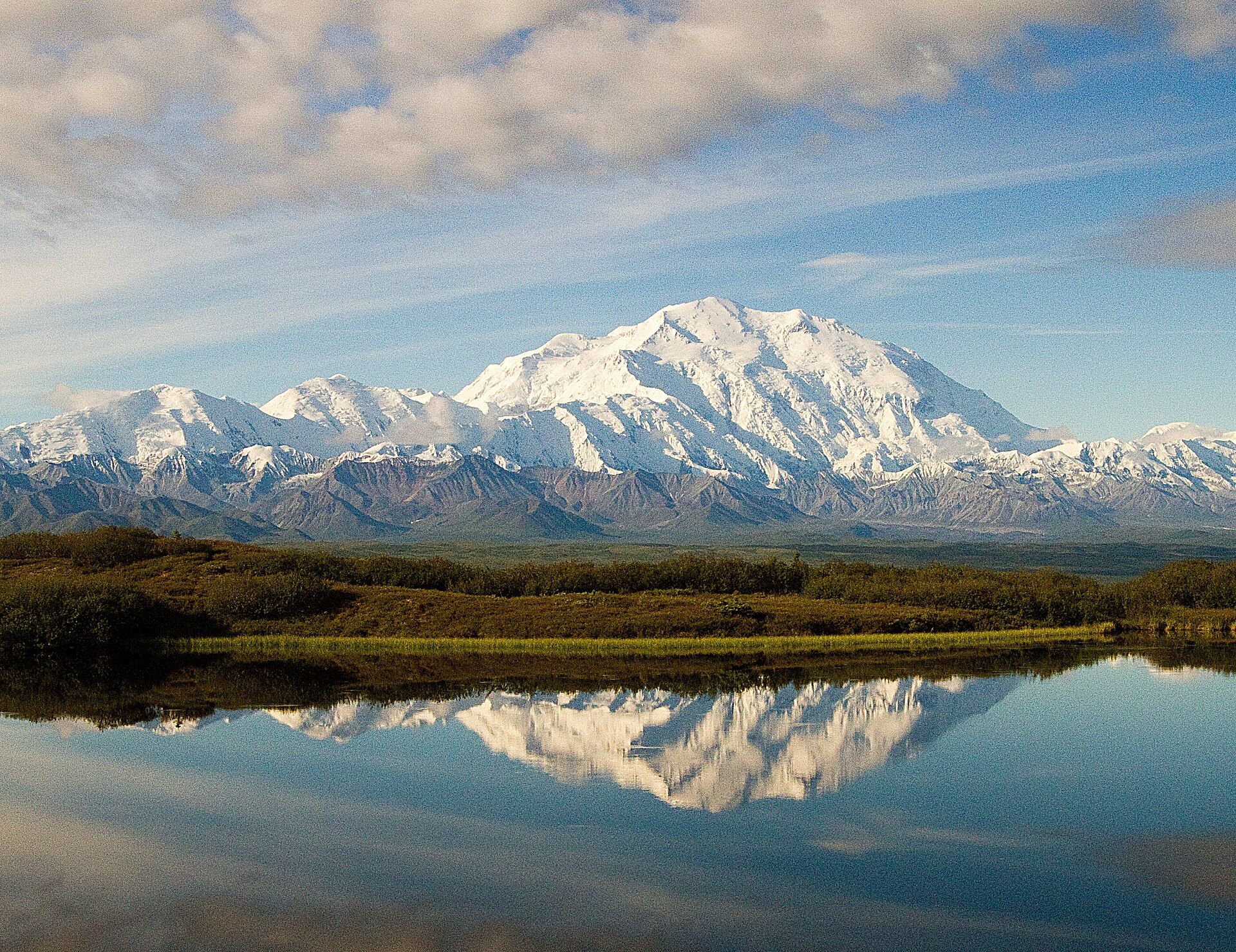
North America's highest peak at 6,190 metres, standing almost alone above interior Alaska. Because it lifts off lowland at roughly 600 metres, it climbs about 5,500 metres in one continuous sweep — the largest base-to-summit relief of any mountain on land. Its position at 63°N also thins the atmosphere at a given altitude, so conditions near the summit are among the most severe on any mountain anywhere.
- The greatest base-to-summit rise of any land mountain
- Genuinely polar-grade cold and weather
- Six million acres of subarctic wilderness around it
- Accessible big-wildlife viewing from a single park road
Mount Everest
The highest point on Earth
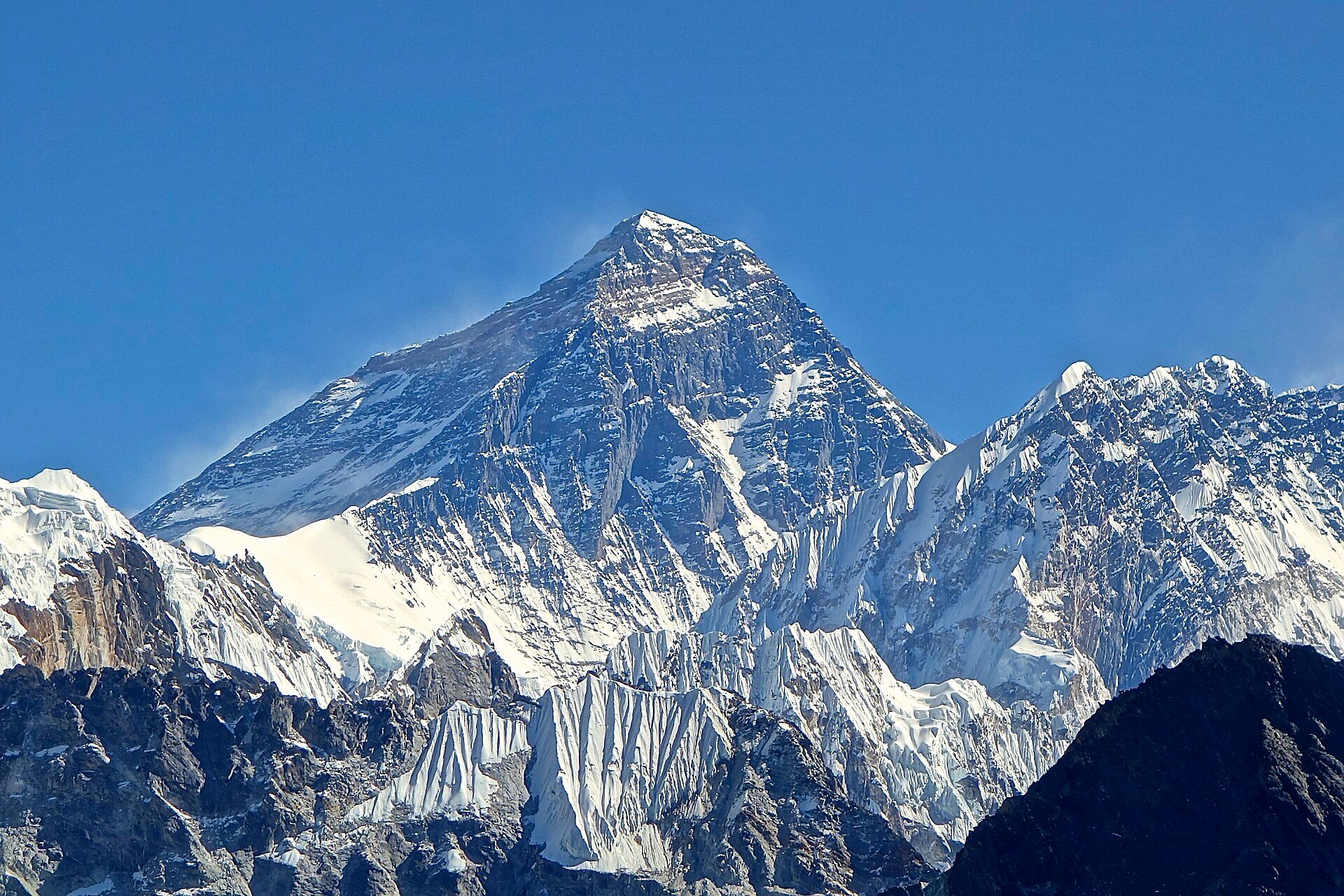
The highest point on the planet's surface at 8,849 metres above sea level, on the Nepal–Tibet border. It rises from the already very high Tibetan Plateau, so its own base-to-summit rise is roughly 3,600 metres — substantially less than Denali's — but its summit sits in air thin enough that the region above 8,000 metres is called the death zone. Its approach through the Khumbu is a destination in its own right, walkable without any climbing.
- The highest elevation on Earth, unambiguously
- The Khumbu trek reaches base camp with no technical climbing
- Extraordinary Sherpa cultural landscape en route
- Genuine extreme altitude — nothing else compares above 8,000 m
Head to head
| What matters | Denali | Mount Everest |
|---|---|---|
| Height above sea level Edge: Mount Everest | 6,190 m — the highest in North America, but not close to Everest. | 8,849 m — the highest point on the planet, by a margin nothing rivals. |
| Base-to-summit rise Edge: Denali | About 5,500 m in one sweep off a ~600 m lowland base. | Roughly 3,600 m, because it starts from the high Tibetan Plateau. |
| Cold and weather Edge: Toss-up | At 63°N the atmosphere is thinner for a given altitude; among the coldest mountains on Earth outside the poles. | Extreme altitude and jet-stream winds, but at 28°N — warmer than Denali at equivalent elevation. |
| Seeing it without climbing Edge: Mount Everest | A park road and shuttle bus reach viewpoints, though the summit is cloud-hidden much of the time. | The Everest Base Camp trek is a walk, not a climb — the most accessible way to stand beneath an 8,000er. |
| Wildlife and surroundings Edge: Denali | Grizzlies, wolves, caribou and moose across open tundra — a genuine wildlife destination. | High, sparse Himalayan valleys; the draw is the mountains and the villages, not the fauna. |
| Getting there Edge: Denali | Fly to Anchorage or Fairbanks, then road or rail into the park. | Fly to Kathmandu, then the flight to Lukla and roughly two weeks on foot. |
Which should you choose?
Choose Denali if…
Anyone who wants raw vertical scale and subarctic wilderness with wildlife, reachable on a normal holiday — you can see Denali and its ecosystem without any mountaineering at all.
Choose Mount Everest if…
Anyone drawn by extreme altitude and the Himalayan approach, and willing to give up two to three weeks to walk into it properly.
The honest verdict
Both records are true, and the argument only exists because 'tallest' and 'highest' get used interchangeably. Everest is the highest point on Earth; Denali has the greatest rise of any mountain on land.
If the question is which is more impressive to stand in front of, Denali arguably wins — you see the whole 5,500-metre sweep at once, whereas Everest is partly hidden behind its neighbours and its base is already at 5,300 metres.
For an actual trip they are barely comparable. Denali is a wildlife-and-wilderness destination you can do in a week; Everest base camp is a two-to-three-week trek at altitude.
Wonders mentioned here
Added