Head to head · Europe's two great island volcanoes
Teide vs Etna: Which Volcano Should You Climb?
Teide and Etna are the two big-name volcanoes of southern Europe's islands, and both are World Heritage Sites with a cable car up their flanks. They suit different trips. Teide, on Tenerife in the Canary Islands, is the higher and calmer of the two: its last eruption was in 1909, and the attraction is the scale of the cone and the lava desert of Las Cañadas around it. Etna, on Sicily, is lower but continuously active, and what you can do on it depends on what it is doing that week.
The practical difference is how the summit is controlled. On Teide, the last stretch to the top is closed to everyone without a free permit, and the daily numbers are capped. On Etna, the summit craters are open only to groups with an authorised guide, inside a boundary that moves with volcanic activity.
Teide
Spain's highest peak, rising from a 24 km caldera
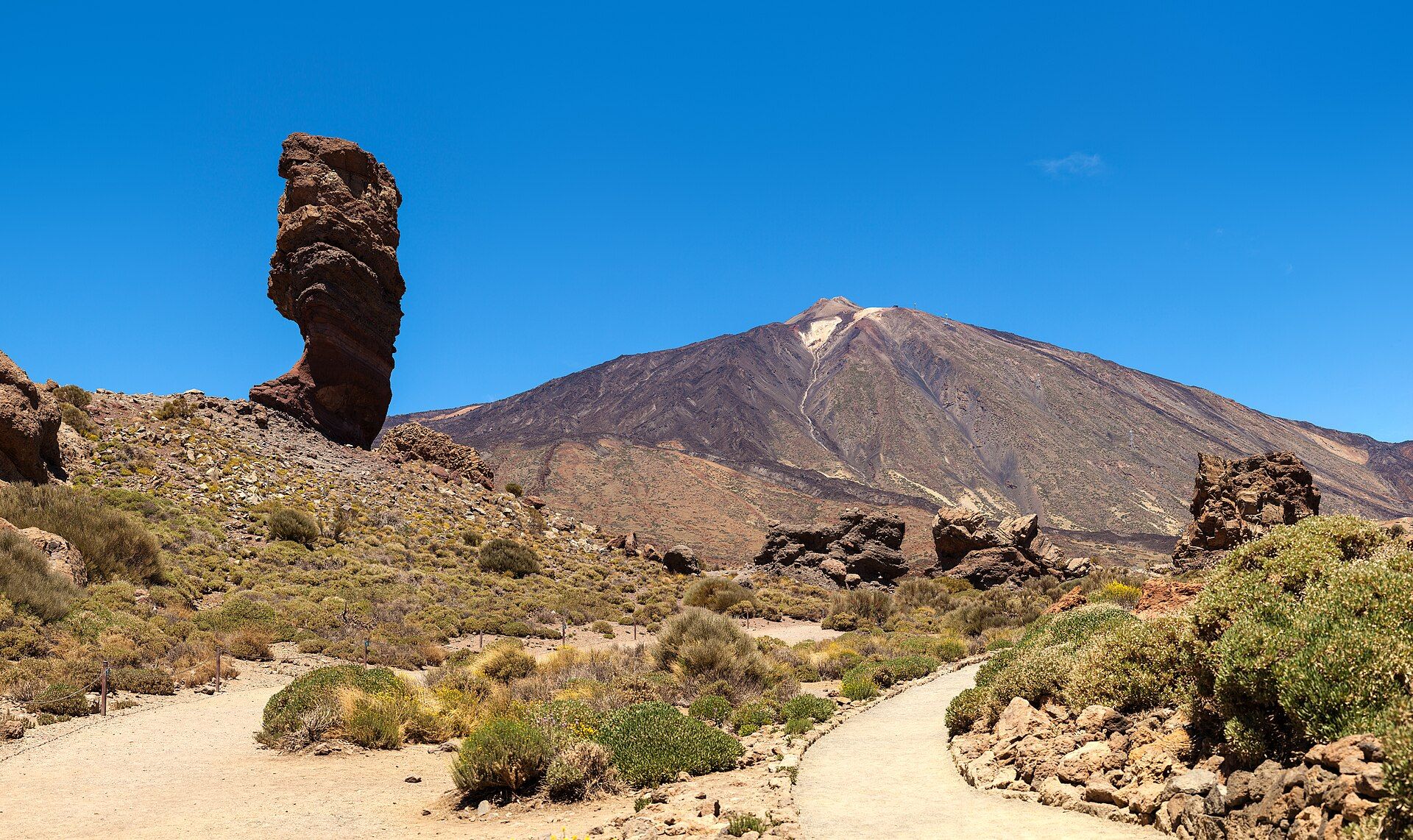
Teide is a 3,715-metre stratovolcano, the highest point in Spain and in the whole Atlantic, and measured from its base on the ocean floor one of the largest volcanoes on Earth. It stands inside Las Cañadas, a caldera about 24 km across left by the collapse of an older volcano, surrounded by lava flows and pumice in ochre, black and rust. It last erupted in 1909. A cable car climbs to about 3,555 m; the path to the summit beyond needs a free permit booked in advance.
- The higher summit, often standing in sun above a sea of cloud
- A free, capped summit permit rather than a paid guide
- Some of the darkest, clearest skies in Europe for stargazing
Etna
Europe's largest active volcano, above Catania
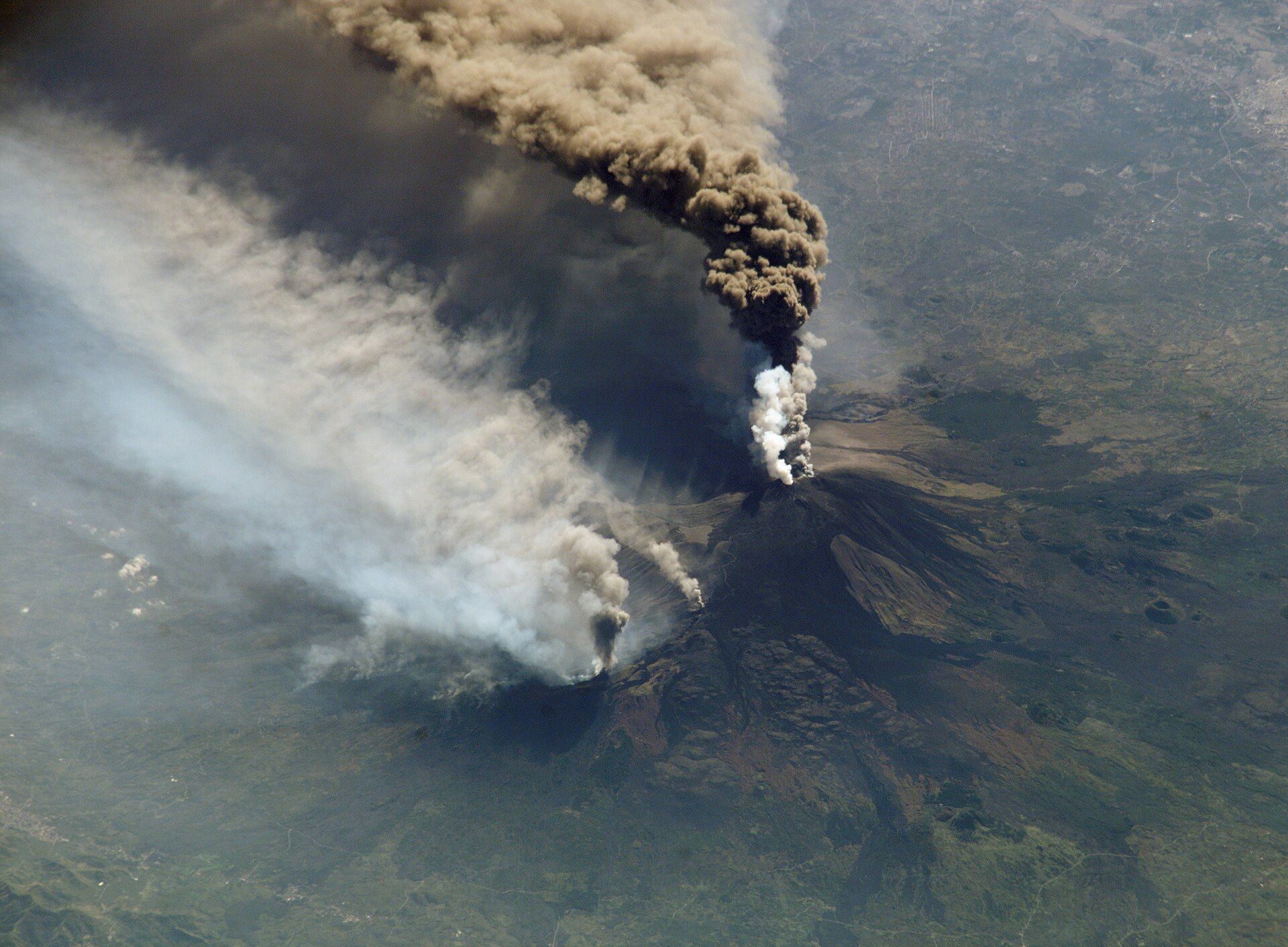
Etna rises about 3,350 metres, a height that changes with its eruptions, and it is Europe's largest active volcano and one of the most active anywhere. A road runs from Catania to Rifugio Sapienza, and a cable car and 4x4 track continue to about 2,900 metres. Above that you must be with an authorised alpine or volcanological guide. Its lower slopes are covered in vineyards, orchards and the pistachio groves of Bronte.
- An active volcano, with a chance of glowing eruptions at night
- Smoking craters and fresh lava fields under two hours from Catania
- Etna DOC wineries and Bronte pistachios on the lower slopes
Head to head
| What matters | Teide | Etna |
|---|---|---|
| Height Edge: Teide | 3,715 m, Spain's highest point. The upper cable-car station is at about 3,555 m, 160 m below the summit. | About 3,350 m, varying with eruptions. The cable car and 4x4 track reach about 2,900 m. |
| Volcanic activity Edge: Etna | Active but quiet: the last eruption was in 1909. You see a frozen volcanic landscape rather than a working one. | Near-constant activity, in episodes. When it is erupting you may see night glow from Taormina or the Valle del Bove; between episodes, steaming craters. |
| Reaching the summit Edge: Teide | Ride the cable car, then walk the final path with a free summit permit. The daily quota fills weeks ahead, and the cable car stops in high wind. | Summit craters only with an authorised guide, inside a boundary that moves with the volcano. Paroxysms can close sections and halt the cable car at short notice. |
| Getting there Edge: Toss-up | Fly to Tenerife, then drive up into the national park: roughly 1h–1h30 from the coast to the cable-car base. | Fly to Catania, then drive or take a bus to Rifugio Sapienza: roughly 1h–1h30, under two hours to the cable car. |
| Time needed Edge: Toss-up | Half a day for the viewpoints and cable car; a full day with the summit path. | Half a day for the Sapienza craters and cable car; a full day with a guided ascent. |
| Best months Edge: Toss-up | April–June and September–October. Winter snow on the black cone is striking, but wind closes the cable car more often. | April–June and September–October. Winter brings skiing on the upper slopes; summit access depends on activity in any season. |
| Beyond the volcano Edge: Toss-up | Stargazing after dark, the red tajinaste in flower in late spring, and the rest of Tenerife's coast. | Wineries, orchards and villages on the lower slopes, Taormina, and eastern Sicily. |
Which should you choose?
Choose Teide if…
…you want to stand on the actual summit, like the idea of a free permit rather than a guided group, and want a vast volcanic landscape with clear skies and stargazing.
Choose Etna if…
…you want a volcano that is actually erupting, are based in eastern Sicily, or want to combine craters and lava fields with a day among the wineries.
The honest verdict
Choose Teide if the summit itself is the goal. It is the higher mountain, the cable car leaves you 160 metres below the top, and the last stretch needs only a free permit — booked weeks ahead, because the quota is small. It is a quiet volcano: the reward is the scale of the cone, the caldera and the view over the clouds, not eruptions.
Choose Etna if you want to see a volcano at work. You can be among smoking craters in half a day from Catania, and on some weeks see lava glowing at night. The trade-off is uncertainty: the summit is guide-only, the boundary moves, and an eruptive episode can close the upper mountain the day you arrive.
Both share the same best months, April–June and September–October, and both need warm, windproof layers whatever the weather on the coast. Check the Teide permit system before you book flights, and the INGV Osservatorio Etneo bulletins before you go up Etna.
Wonders mentioned here
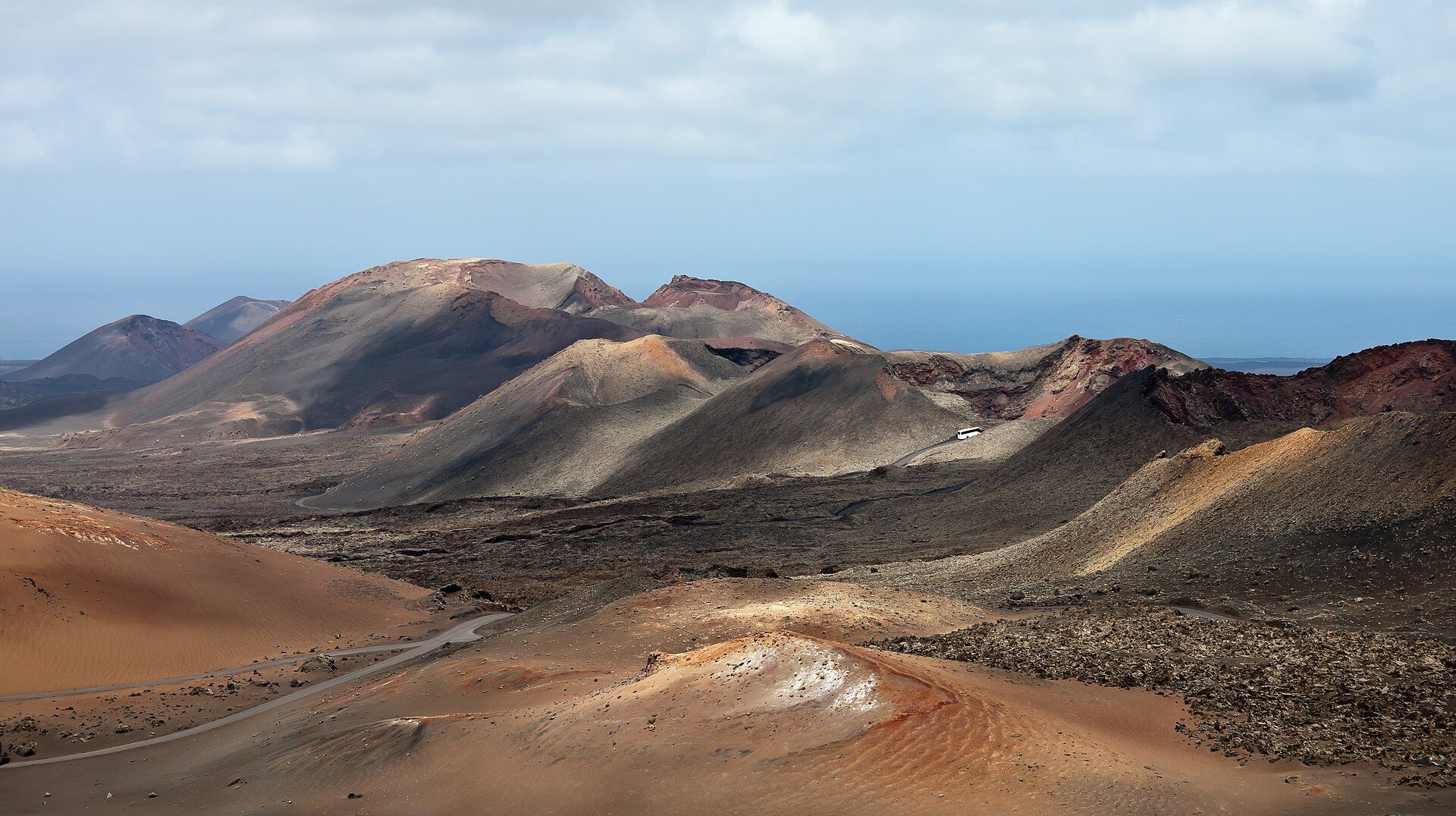
Timanfaya National Park
South-west Lanzarote, Canary Islands, Spain, in the municipalities of Yaiza and Tinajo
Added