Head to head · South Iceland's two Ring Road waterfalls
Skógafoss vs Seljalandsfoss: Which Iceland Waterfall Should You See?
Skógafoss and Seljalandsfoss are the two waterfalls every South Coast trip passes, and both sit right beside Route 1, the Ring Road. Both fall about 60 metres over the same line of old sea cliffs that marks Iceland's former coastline. Both are fed by meltwater from the Eyjafjallajökull ice cap, and Skógafoss also from Mýrdalsjökull.
Seljalandsfoss is about 120 km from Reykjavík and Skógafoss about 150 km along the same Ring Road (Route 1), so most people see both on one drive. If you only have time for one, the choice is between walking behind a waterfall and standing in front of a much bigger one.
Skógafoss
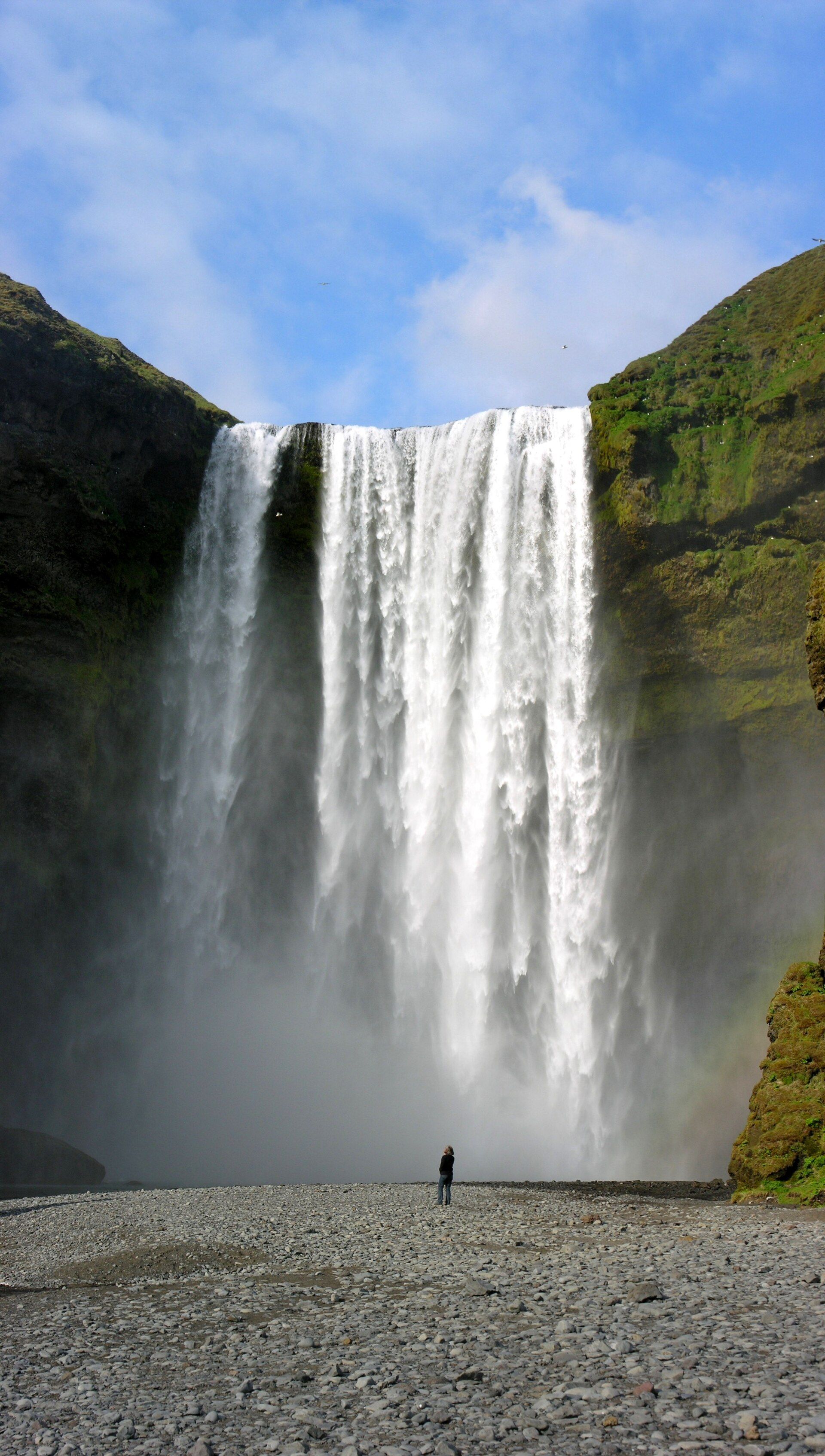
The wide curtain and the rainbow
The Skógá river drops 60 metres over a lip about 25 metres wide, throwing up so much spray that a rainbow often hangs in front of it on sunny days. You can walk on the flat path to the base, and a steep steel staircase on the east side climbs to a viewing platform at the top, where the Fimmvörðuháls trail begins. Entry is free, and there is a car park, a café, a hotel and a campsite at Skógar.
- The bigger, more powerful-looking fall, as a broad, even sheet of water
- A rainbow in the spray on most sunny days
- A clifftop viewpoint up the staircase, and the start of the Fimmvörðuháls trail
Seljalandsfoss
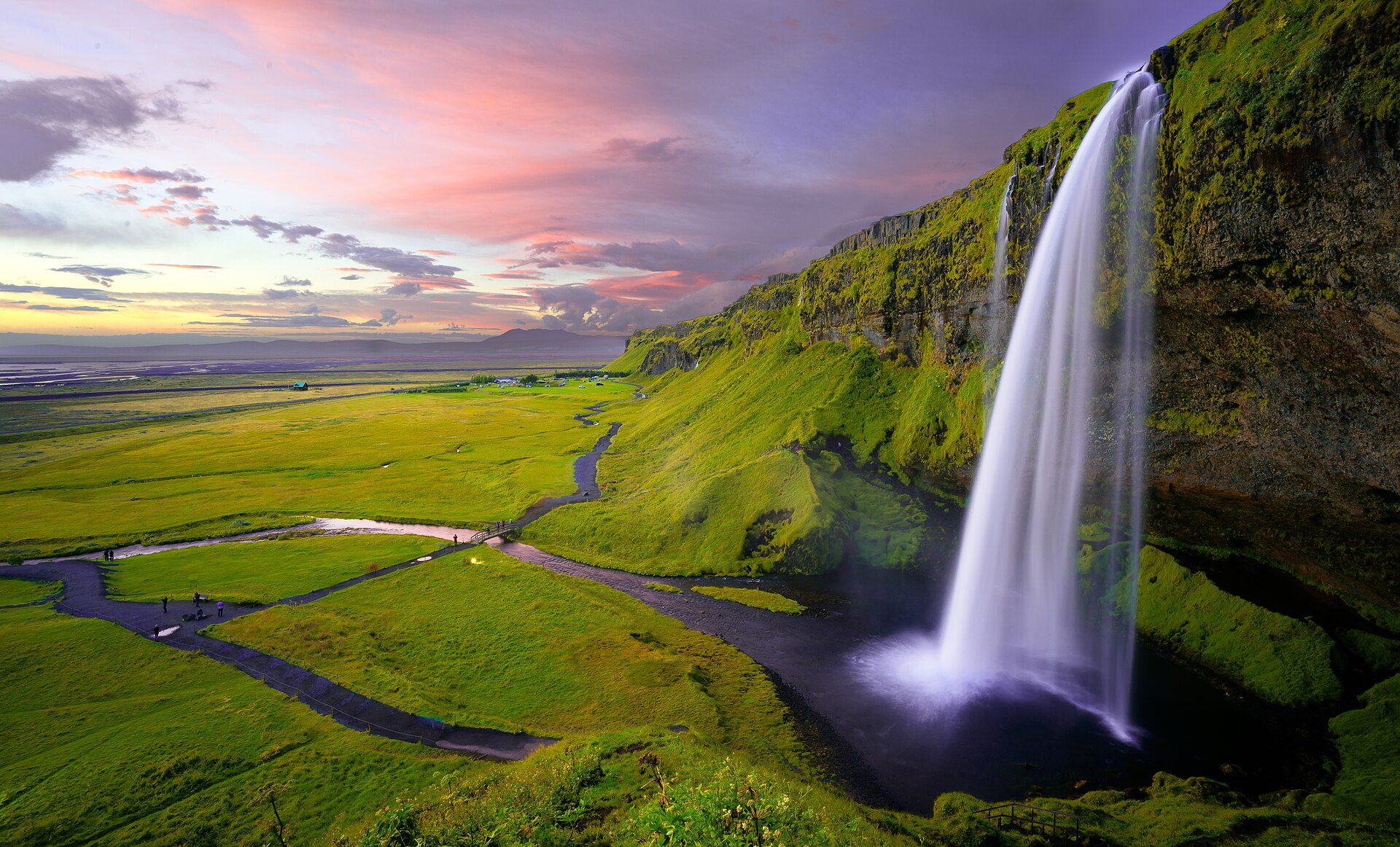
The waterfall you walk behind
The Seljalandsá drops 60 metres as a slender ribbon into a mossy amphitheatre. The water has hollowed a recess in the cliff behind it, and a loop path lets you walk right around behind the falling column. In summer the low evening sun can shine straight through the water. A few minutes' walk north, Gljúfrabúi is hidden inside a narrow slot canyon. The car park at the base is paid.
- The loop path behind the falls, which is rare anywhere
- Evening sun through the water in summer, the classic photo
- Gljúfrabúi, a second fall in a slot canyon, five minutes away
Head to head
| What matters | Skógafoss | Seljalandsfoss |
|---|---|---|
| The waterfall itself Edge: Skógafoss | Wide and heavy. A 25-metre-wide curtain looks far more powerful than its neighbour, and the wind it pushes ahead of it reaches you at the base. | Narrow and graceful. It is a thinner column of water, and its appeal is the setting and the path behind it rather than sheer volume. |
| The experience Edge: Seljalandsfoss | Stand at the base in the spray, then climb the long staircase to look down from the top. | Walk the loop behind the water and look out through the curtain. It is short, wet and unlike most waterfall visits. |
| Getting there Edge: Toss-up | Beside the Ring Road at Skógar, about 150 km from Reykjavík, roughly 2–2h30 by road. Free entry. | Beside the Ring Road where Route 249 branches off, about 120 km from Reykjavík, roughly 2 hours by road. Paid car park. |
| Effort Edge: Toss-up | A flat, easy walk to the base. The staircase to the top is long and steep. | A short loop, but it is wet, uneven and slippery behind the falls, with steps. |
| Winter Edge: Skógafoss | Still a full experience from the base. The clifftop staircase can be icy and is sometimes closed. | Spray freezes the loop path into ice, and the route behind the falls is often closed or roped off, which takes away its main draw. |
| Photography Edge: Toss-up | The full curtain with a rainbow, best with the sun behind you in mid-morning or late afternoon. Put a person at the base for scale. | The view from behind the falls looking out, best with summer evening sun shining through the water. Bring a waterproof cover. |
| Crowds Edge: Toss-up | One of the busiest South Coast stops. Early morning and evening are calmer. | Equally busy, and the narrow path behind the falls can queue. Early morning and late evening are calmer. |
Which should you choose?
Choose Skógafoss if…
…you want the bigger, more powerful waterfall, a rainbow, a clifftop view or the start of a hike, or you are visiting in winter when the path behind Seljalandsfoss may be closed.
Choose Seljalandsfoss if…
…you want to walk behind a waterfall, are visiting between May and September, and can be there for the summer evening light. Add Gljúfrabúi while you are there.
The honest verdict
In summer, don't choose. They sit on the same stretch of the Ring Road, and seeing both takes a few hours. Do Seljalandsfoss in the evening for the light through the water, and Skógafoss in the morning or afternoon for the rainbow.
If you only have time for one in summer, Seljalandsfoss gives the more unusual experience, and Skógafoss is the more impressive waterfall. Choose by which you care about more.
In winter, Skógafoss is the safer pick, because you still get the full fall from the base while the path behind Seljalandsfoss is often iced or closed. At both, wear full waterproofs, and check road and path conditions on safetravel.is before you set out.
Wonders mentioned here
Added