Head to head · Hebridean island vs the Highlands' great glen
Isle of Skye vs Glen Coe: Which Scottish Highlands Trip Should You Choose?
Skye and Glen Coe are two of the Scottish Highlands' best-known landscapes, and they lie on the same road north: the A82 runs the length of Glen Coe on the way from Glasgow to Fort William, and Skye is beyond, over the Skye Bridge. Many trips see both — but with limited days, the choice is between a big island that rewards slow exploring and a single, spectacular glen you can reach easily.
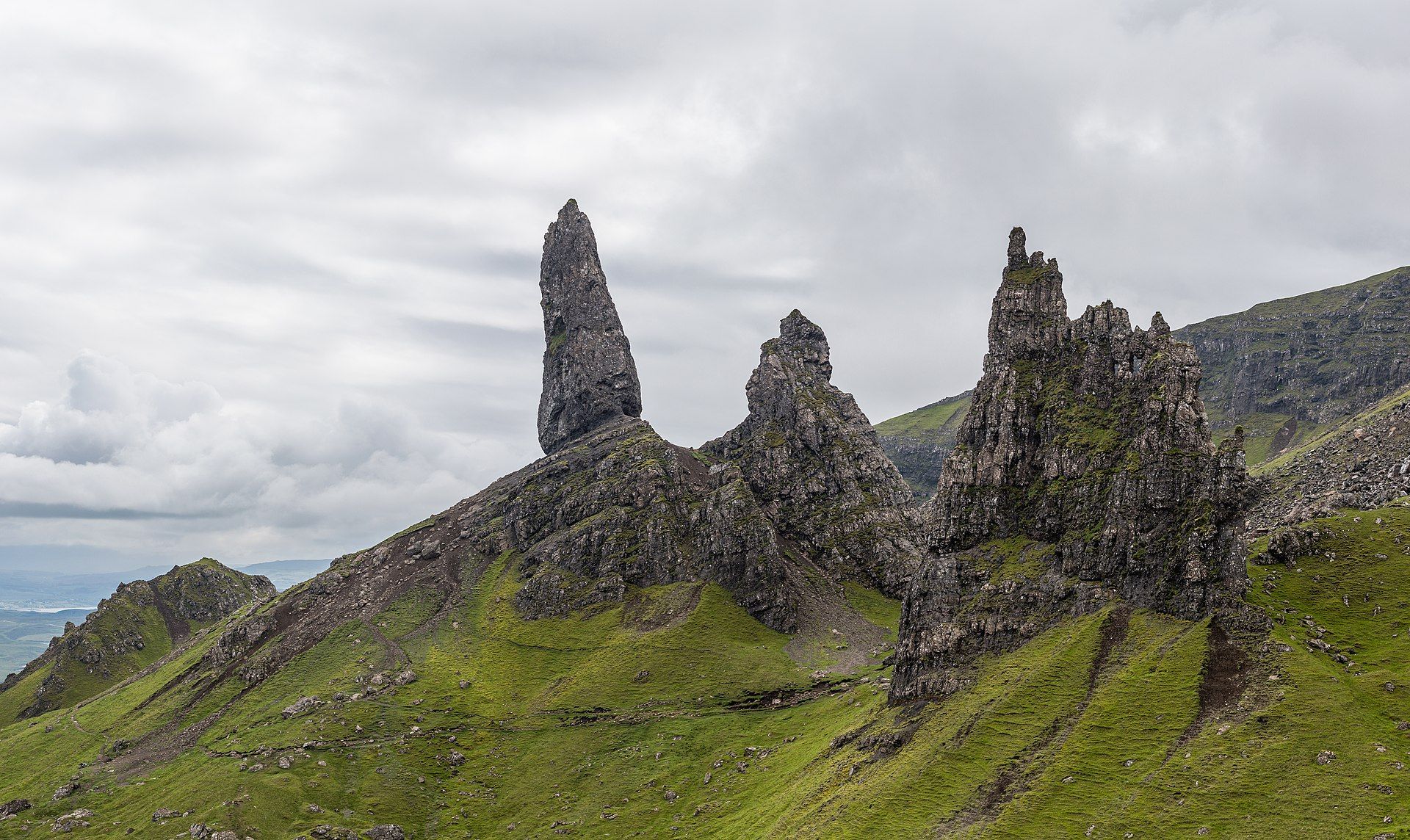
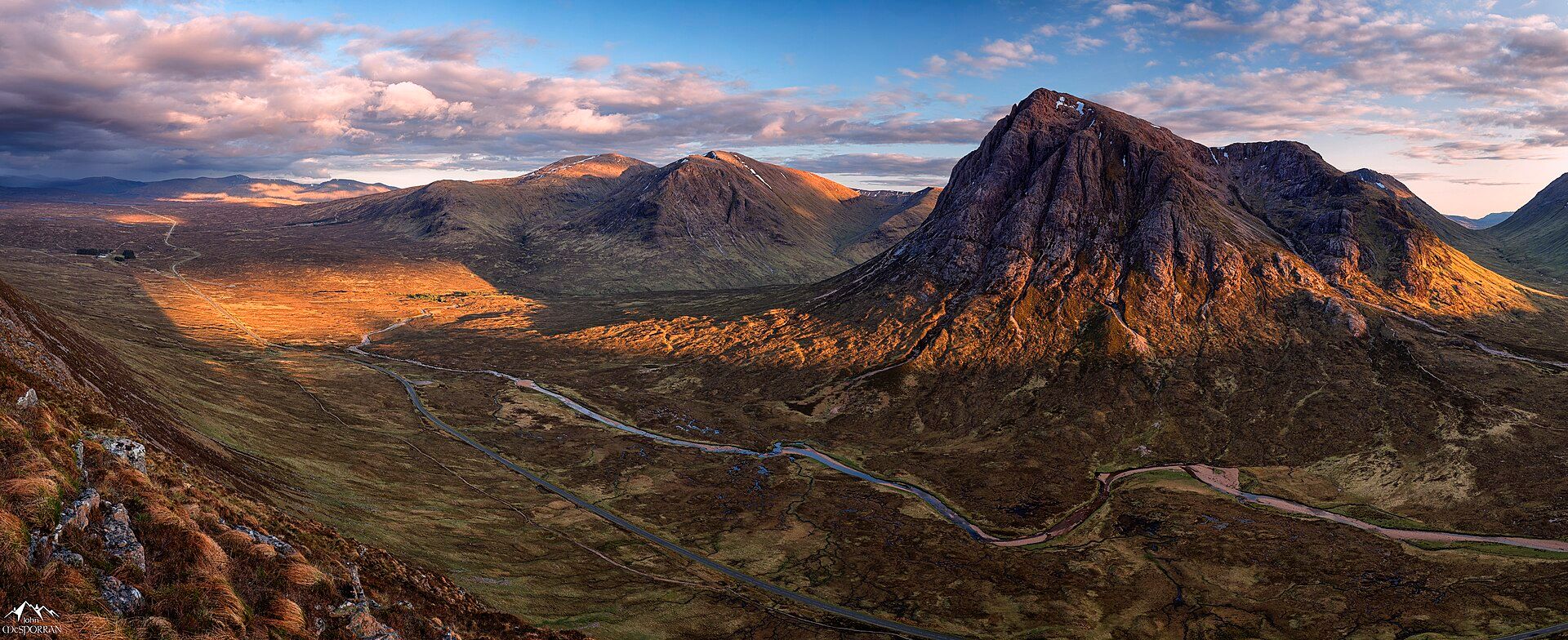
Glen Coe is a U-shaped valley carved by Ice Age glaciers through the roots of an ancient collapsed volcano, its walls rising over 1,000 metres. Skye is a Hebridean island of jagged Cuillin peaks to about 992 metres, pinnacles like the Old Man of Storr, sea cliffs, waterfalls and lochs.
Isle of Skye
Pinnacles, peaks and sea cliffs
A wild island in the Inner Hebrides reached by road bridge or ferry: the black Cuillin, the Quiraing and the Old Man of Storr, the Fairy Pools and sea cliffs, linked by slow single-track roads. Portree has full services; elsewhere fuel, food and cash machines are sparse.
- The Storr, the Quiraing and the Fairy Pools
- The Cuillin ridge for serious mountaineers
- Coast, cliffs and lochs as well as mountains
Glen Coe
One great glen beside the road
A glacier-scoured valley through the roots of a supervolcano that collapsed some 420 million years ago. Buachaille Etive Mòr (1,022 m) guards the eastern entrance, the Three Sisters line the south wall and the Aonach Eagach ridge is among mainland Britain's most serious scrambles. Free to drive and walk, with a National Trust for Scotland visitor centre.
- Buachaille Etive Mòr and the Three Sisters from the roadside
- About 2.5 hours from Glasgow, 30–40 minutes from Fort William
- Half a day for viewpoints, or big hill days
Head to head
| What matters | Isle of Skye | Glen Coe |
|---|---|---|
| Getting there Edge: Glen Coe | About 2h30–3h from Inverness via the Skye Bridge, about 5 hours from Glasgow; island roads are slow and single-track. | About 2.5 hours from Glasgow on the A82 across Rannoch Moor; 30–40 minutes from Fort William. |
| Time needed Edge: Glen Coe | Three to four days; a week with the Cuillin. | Half a day for viewpoints; a full day or more for the hills. |
| Variety Edge: Isle of Skye | Mountains, pinnacles, sea cliffs, waterfalls and lochs spread across an island. | One concentrated mountain glen. |
| Walking Edge: Toss-up | Many short walks to famous sights over boggy, rocky, eroded paths; the Cuillin ridge is mountaineering, not hillwalking. | Roadside viewpoints and lower paths, or serious summits and the Aonach Eagach; winter needs ice axe and crampons. |
| Costs and access Edge: Glen Coe | Open access under Scottish access rights; charged car parks at the Quiraing, the Old Man of Storr and the Fairy Pools. | No entry fee to the glen; parking at the visitor centre. |
| Best months Edge: Toss-up | May–September for long days, but rain, wind and midges (roughly June–September) come with it. | May–June and September for long days and clearer tops; midges peak in high summer. |
| Crowds Edge: Toss-up | The Storr and Fairy Pools car parks fill from mid-morning in summer; walk half an hour away and they vanish. | Roadside viewpoints are popular in season; the high ridges thin out quickly. |
Which should you choose?
Choose Isle of Skye if…
…you have three days or more, a car, and want the variety of an island — pinnacles, cliffs, waterfalls and the Cuillin.
Choose Glen Coe if…
…you have a day or less, are driving between Glasgow and Fort William, or want big mountain scenery right from the road.
The honest verdict
With one day, Glen Coe: it is on the A82, two and a half hours from Glasgow, and its best views need no hiking at all.
With three days or more, Skye: the island's sights are spread out and its roads are slow, and they reward slow exploring.
On a longer trip you pass through Glen Coe on the way to Skye anyway. Pack full waterproofs and midge repellent for both, and treat the Cuillin and the Aonach Eagach as serious mountain ground.
Wonders mentioned here
Added