Giant's Causeway
📍 County Antrim, Northern Ireland
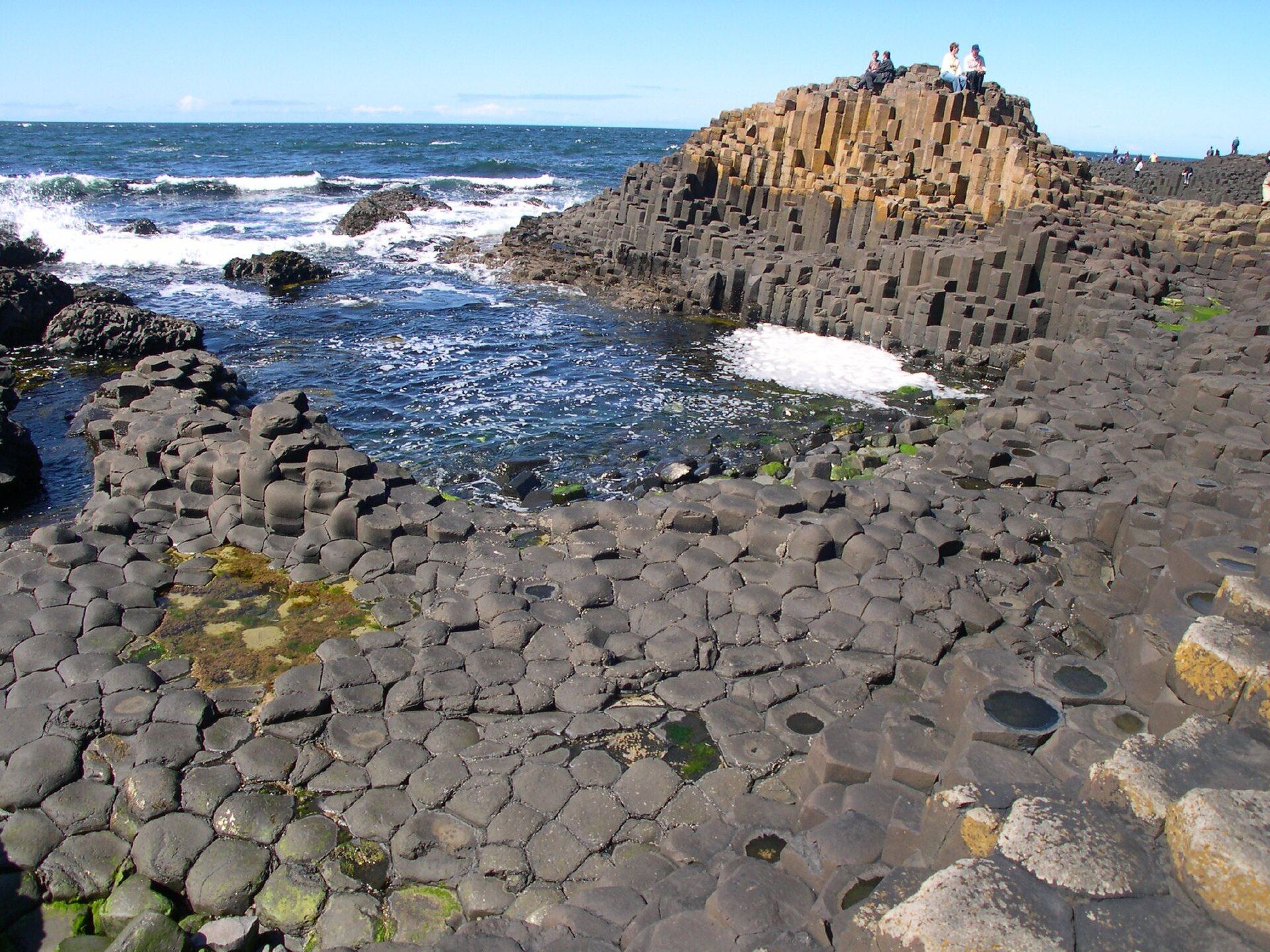
Around 40,000 interlocking basalt columns, mostly perfect hexagons, stepping down into the North Atlantic — one of the most remarkable geometric formations in nature.
What makes it marvelous
The Giant's Causeway looks engineered, and that is exactly why it has astonished people for centuries: some 40,000 basalt columns, the great majority of them near-perfect hexagons, packed together like a honeycomb and stepping down into the sea. The explanation is beautifully simple. Around 60 million years ago, thick lava flows cooled slowly and evenly, and as the rock contracted it cracked — and the most efficient way to relieve that tension across a surface is a hexagonal pattern, the same geometry that shapes drying mud and beehives. The columns rise up to about 12 metres, forming natural steps, stools, and organ pipes along the wild Antrim coast. The same lava flow surfaces again across the water at Fingal's Cave on the Scottish island of Staffa, in columns of identical geometry. It became Northern Ireland's first UNESCO World Heritage Site.
Why visit
Walking out onto a pavement of thousands of perfect stone hexagons, with Atlantic waves breaking over them, is one of those rare landscapes that genuinely looks too regular to be natural — and it's easily reached on a coastal path.
What to know before you go
🗓️ Best time
Late spring to early autumn (roughly May–September) for the mildest weather and longest days; the site is open year-round, and winter storms make for dramatic seas.
🧭 Getting there & access
On the Causeway Coast in County Antrim, Northern Ireland, about an hour from Belfast; a visitor centre sits above the site, with a short walk or shuttle bus down to the columns.
Good to know
- Go early or late to avoid the crowds and catch the best coastal light.
- The stones are slippery when wet — wear proper footwear and take care.
- Walk the wider Causeway Coast path for cliffs and views beyond the columns.
Plan your visit
Easy🧭 Getting there
From Belfast (BFS or BHD), Northern Ireland
- Fly into Belfast
- Drive the Antrim coast road to Bushmills — roughly 1h15–1h30
- Visitor centre to the stones — about 15 minutes downhill on foot, or a shuttle bus
- Total travel
- Half a day from Belfast
- Time at site
- 2–3 hours; a full day if you walk the clifftop path as well
- Access
- The causeway itself is open access as a National Trust site; the visitor centre, car park and audio guide are charged, and you can walk in from the road without paying for them. The clifftop and Shepherd's Steps routes close in high winds.
🎒 What to bring & consider
- A waterproof and windproof layer — this is an exposed Atlantic headland and the weather changes within the hour
- Shoes with grip; the basalt columns are wet, uneven and genuinely slippery, and people fall on them regularly
- The judgement to stay well back from the sea edge, where waves come over the lower columns without warning
- Layers even in summer; the wind chill off the North Channel is significant
👁️ What to expect
- Crowds
- Busy from mid-morning with coach parties. Early and late in the day the stones can be almost empty.
- Conditions
- A steady downhill walk to the stones and a real climb back up. The columns themselves need careful footing.
- Facilities
- Full at the visitor centre — cafe, toilets, shop. Nothing down at the stones.
- The view
- Low side-light picks out the hexagons; flat grey overcast, which is common, flattens them completely. A rising or setting sun along the coast is the one to aim for.
Times and requirements are approximate and change with season, weather, and local rules — confirm permits, fares, and schedules with operators before you travel.
Natural riches of the area
- ~40,000 interlocking basalt columns, mostly hexagonal
- Formed by slow, even cooling of ~60-million-year-old lava
- Columns up to ~12 m forming natural steps and organ pipes
- The same lava flow resurfaces at Fingal's Cave in Scotland
Local food
- Ulster fry
- Northern Ireland's hearty cooked breakfast, with soda and potato bread.
- Atlantic seafood
- Fresh crab, mussels, and fish from the Antrim coast.
- Irish stew & soda bread
- Traditional slow-cooked lamb stew with home-baked soda bread.
The Giant’s Causeway looks manufactured, and that is precisely why it has amazed people for centuries. Some 40,000 basalt columns — the great majority near-perfect hexagons — stand packed together like a honeycomb, stepping down off the Antrim coast into the North Atlantic.
The explanation is elegantly simple. Around 60 million years ago, thick lava flows cooled slowly and evenly, and as the rock contracted it cracked. The most efficient way to relieve that tension across a flat surface is a hexagonal pattern — the same geometry you see in drying mud and honeycomb. The result is columns up to twelve metres tall, forming natural steps, stools, and organ pipes along a wild coastline. The formation does not stop at the Irish coast: the very same lava flow surfaces again across the water at Fingal’s Cave on Staffa, off western Scotland, in columns of the same geometry.
Giant's Causeway: common questions
How do you get to Giant's Causeway?
From Belfast (BFS or BHD), Northern Ireland: Fly into Belfast; Drive the Antrim coast road to Bushmills — roughly 1h15–1h30; Visitor centre to the stones — about 15 minutes downhill on foot, or a shuttle bus. Total travel time: Half a day from Belfast.
When is the best time to visit Giant's Causeway?
Late spring to early autumn (roughly May–September) for the mildest weather and longest days; the site is open year-round, and winter storms make for dramatic seas.
How long should you spend at Giant's Causeway?
2–3 hours; a full day if you walk the clifftop path as well. Total travel time: Half a day from Belfast.
What should you bring to Giant's Causeway?
A waterproof and windproof layer — this is an exposed Atlantic headland and the weather changes within the hour Shoes with grip; the basalt columns are wet, uneven and genuinely slippery, and people fall on them regularly The judgement to stay well back from the sea edge, where waves come over the lower columns without warning Layers even in summer; the wind chill off the North Channel is significant
Do you need a permit or guide for Giant's Causeway?
The causeway itself is open access as a National Trust site; the visitor centre, car park and audio guide are charged, and you can walk in from the road without paying for them. The clifftop and Shepherd's Steps routes close in high winds.
Is Giant's Causeway crowded, and what are conditions like?
Busy from mid-morning with coach parties. Early and late in the day the stones can be almost empty. A steady downhill walk to the stones and a real climb back up. The columns themselves need careful footing. Facilities: Full at the visitor centre — cafe, toilets, shop. Nothing down at the stones.
Added Updated
More wonders to explore