Head to head · Norway's two World Heritage fjords
Geirangerfjord vs Nærøyfjord: Which Norwegian Fjord Should You See?
Geirangerfjord and Nærøyfjord are the two fjords that earned the West Norwegian Fjords their UNESCO World Heritage listing. They are a long way apart — Geiranger is reached from Ålesund in Sunnmøre, Nærøyfjord from Bergen via Flåm — so on a short trip most people pick one.
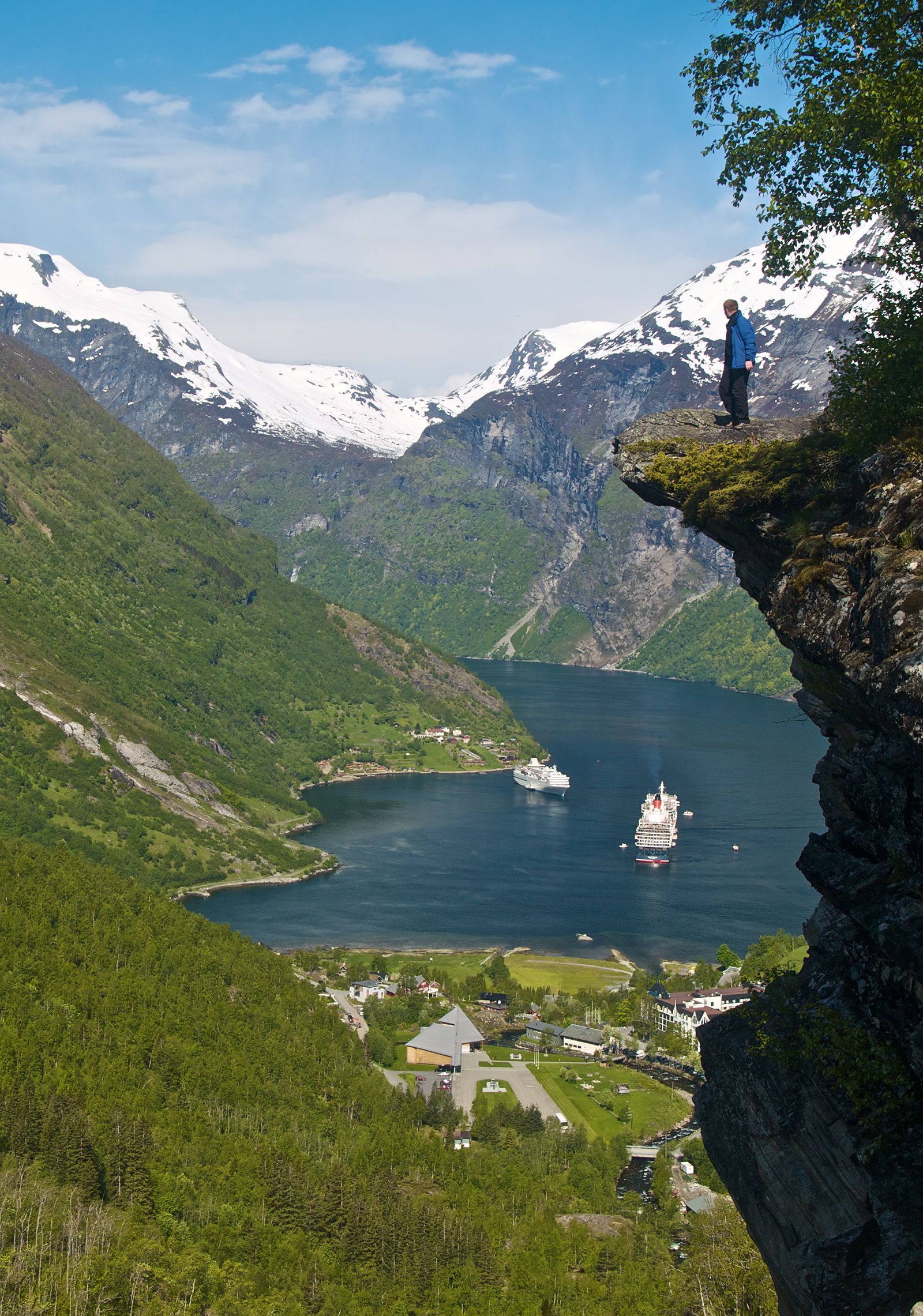
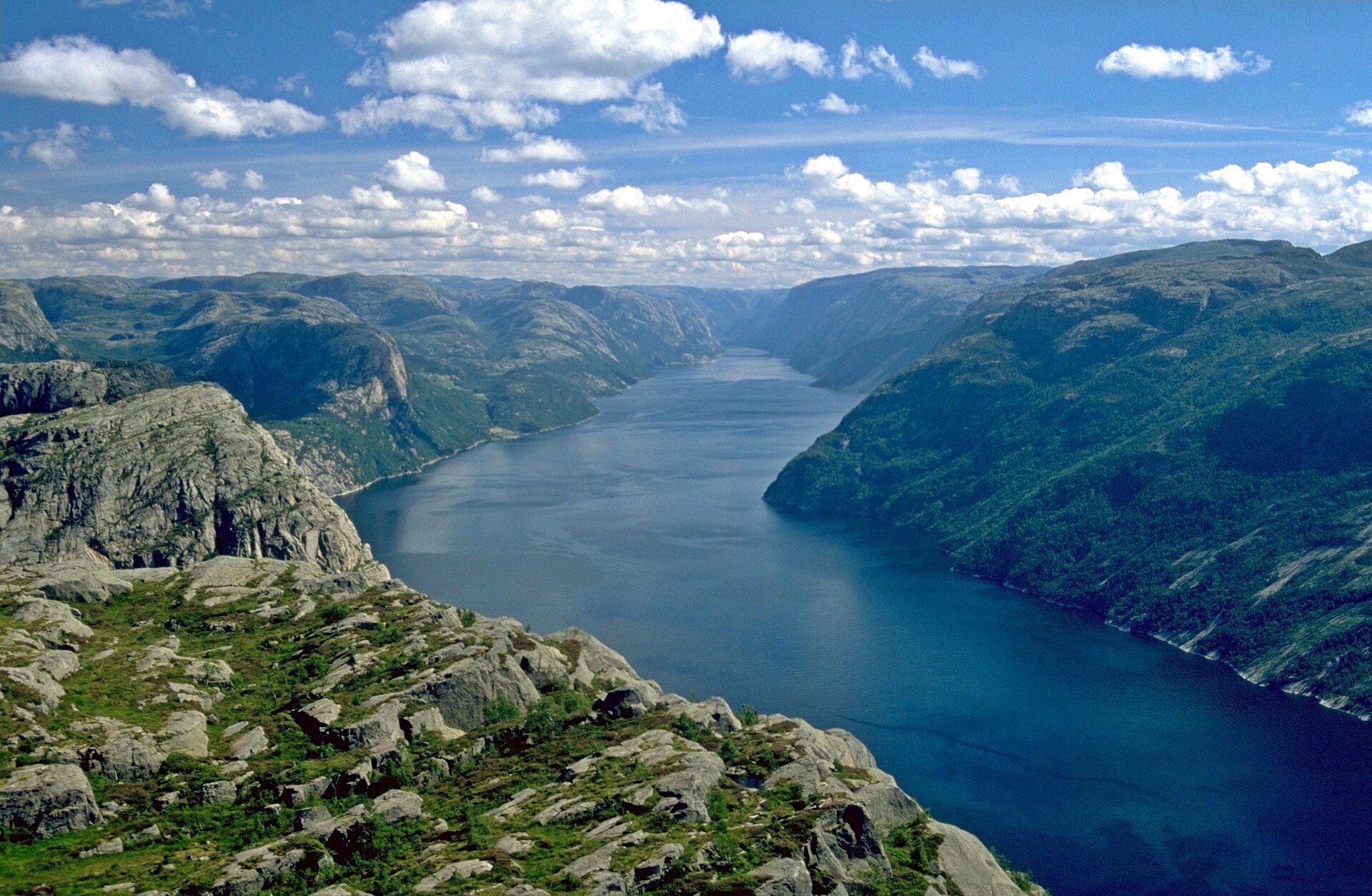
Geirangerfjord is about 15 kilometres long, over 250 metres deep and walled by cliffs to around 1,000 metres, with the Seven Sisters and other waterfalls pouring down them. Nærøyfjord, an arm of the Sognefjord, is about 17 kilometres long and squeezes to roughly 250 metres wide between walls that rise more than 1,200 metres.
Geirangerfjord
Waterfalls, ledge farms and mountain viewpoints
Glaciers gouged a valley below sea level and the sea flooded in. Dozens of waterfalls — the Seven Sisters, the Suitor, the Bridal Veil — streak the walls, and ruined farms worked until the early twentieth century cling to ledges high above the water. Dalsnibba and the Eagle Road look down on the whole channel.
- The Seven Sisters and other big waterfalls
- Classic views from above: Eagle Road, Flydalsjuvet, Dalsnibba
- Kayaks and boats from Geiranger village
Nærøyfjord
The narrowest cruising fjord in the world
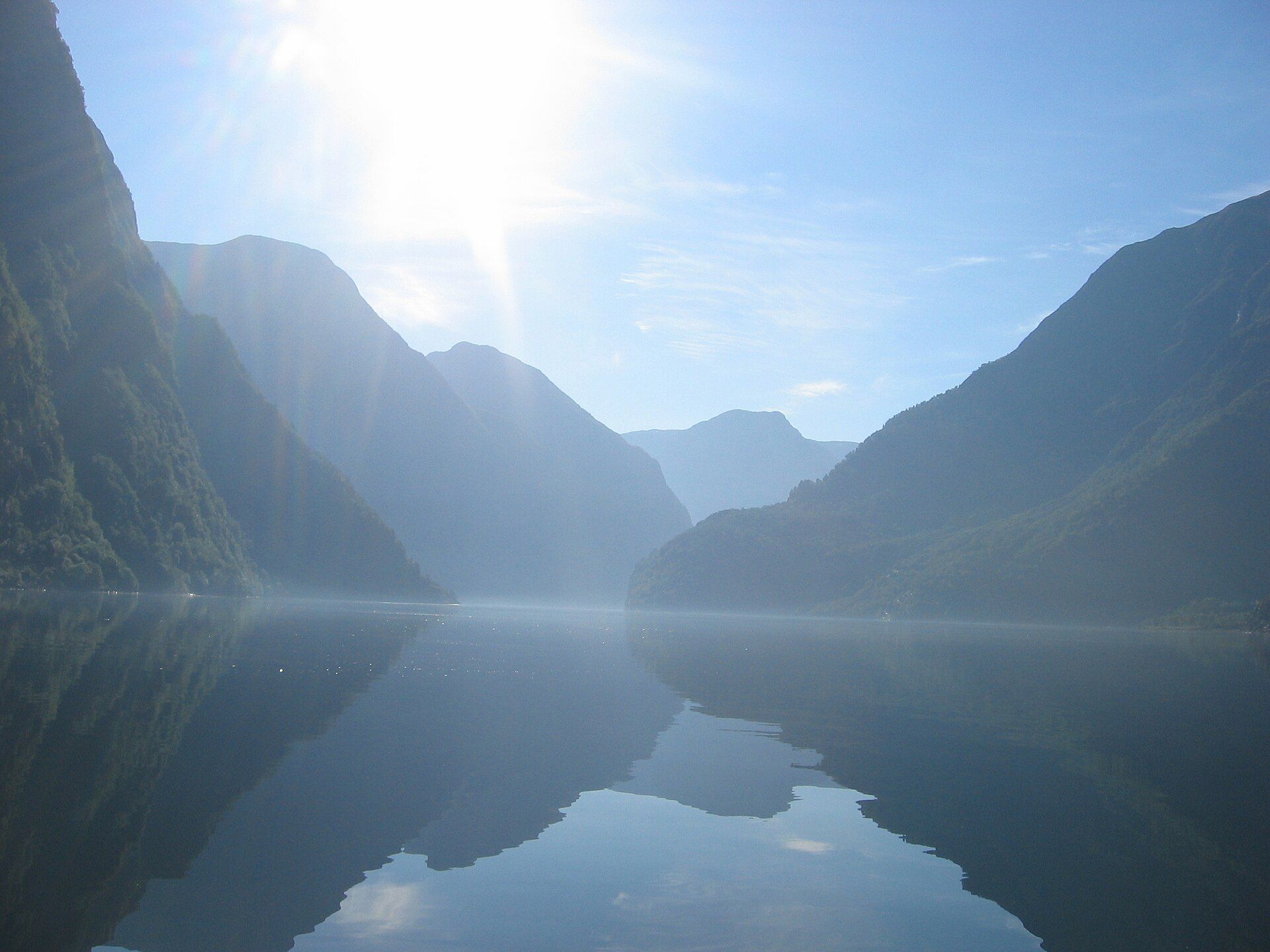
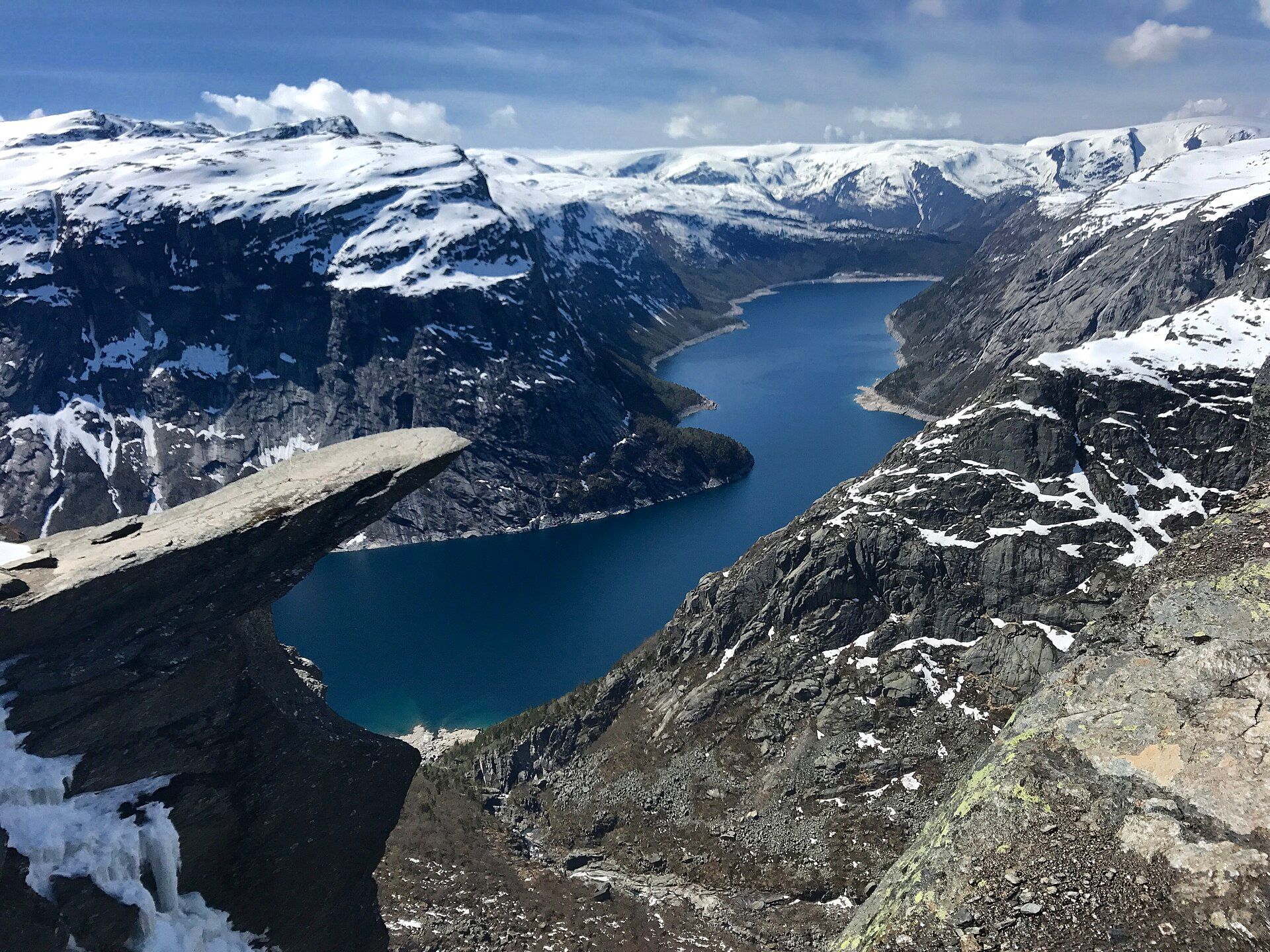
A branch of the Sognefjord where the water is only about 250 metres wide at its tightest and the rock rises more than 1,200 metres on both sides. Waterfalls thread down the walls, snow lingers on the heights into summer, and electric ferries make the crossing near-silent.
- The narrows from the water — walls closing in
- No car needed: Bergen Railway, Flåm Line and the fjord cruise
- Year-round cruise, on a reduced winter timetable
Head to head
| What matters | Geirangerfjord | Nærøyfjord |
|---|---|---|
| The scenery Edge: Toss-up | Wider, with big waterfalls and the drama best seen from mountain viewpoints above. | Narrower and more enclosed — the experience is being down between the walls on the water. |
| Getting there Edge: Nærøyfjord | Fly to Ålesund, then roughly 2½–3 hours by road including a ferry. | Half a day from Bergen by train to Myrdal and the Flåm Line, then the Flåm–Gudvangen cruise; buses link Gudvangen back to Voss and Bergen. |
| Time needed Edge: Nærøyfjord | One to two days for the fjord, viewpoints and a boat trip. | Two to three hours for the cruise; a full day with the railway and villages. |
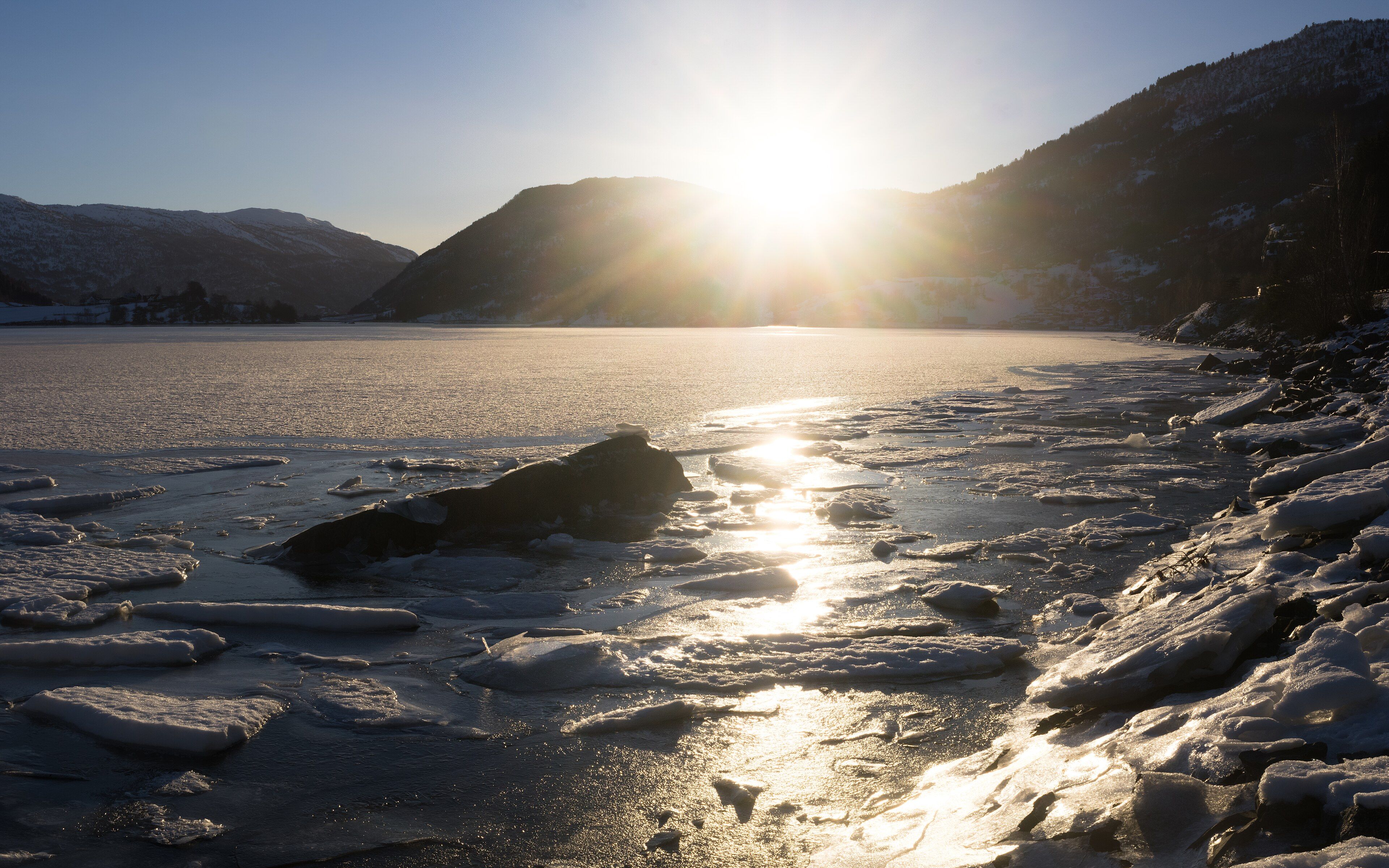
| Winter Edge: Nærøyfjord | The mountain roads, including Trollstigen and the Eagle Road, close for winter and reopen when snow clearing allows. | The fjord cruise runs year-round on a reduced timetable, and the railways reach the area without mountain roads. |
| Crowds Edge: Toss-up | Heavy when cruise ships are berthed at Geiranger, calm when they are not — check the port schedule. | Busy in peak summer and when cruise ships are in Flåm; quieter early and late in the day. |
| Active options Edge: Geirangerfjord | Kayaking and steep walks up to Skageflaa and the old ledge farms. | Easy at water level; the surrounding hikes are steep. |
Which should you choose?
Choose Geirangerfjord if…
…you want waterfalls and the famous views from above, are driving Norway's scenic routes, and are visiting between late spring and September.
Choose Nærøyfjord if…
…you are based in Bergen, travelling without a car, short on time, or visiting outside summer.
The honest verdict
For the postcard view, Geirangerfjord: the Seven Sisters and the Eagle Road panorama are what most people picture as a Norwegian fjord. It needs a car or a tour and the summer road season.
For the feeling of being inside a fjord, Nærøyfjord: the narrows are startling from the deck, and the Bergen–Flåm–Gudvangen loop makes it easy to reach without a car.
In both, cruise-ship days change the villages completely. Check the operator's timetable and, for Geiranger, the Norwegian roads authority's pass status before you go.
Wonders mentioned here
Added