The Burren
📍 County Clare, Ireland
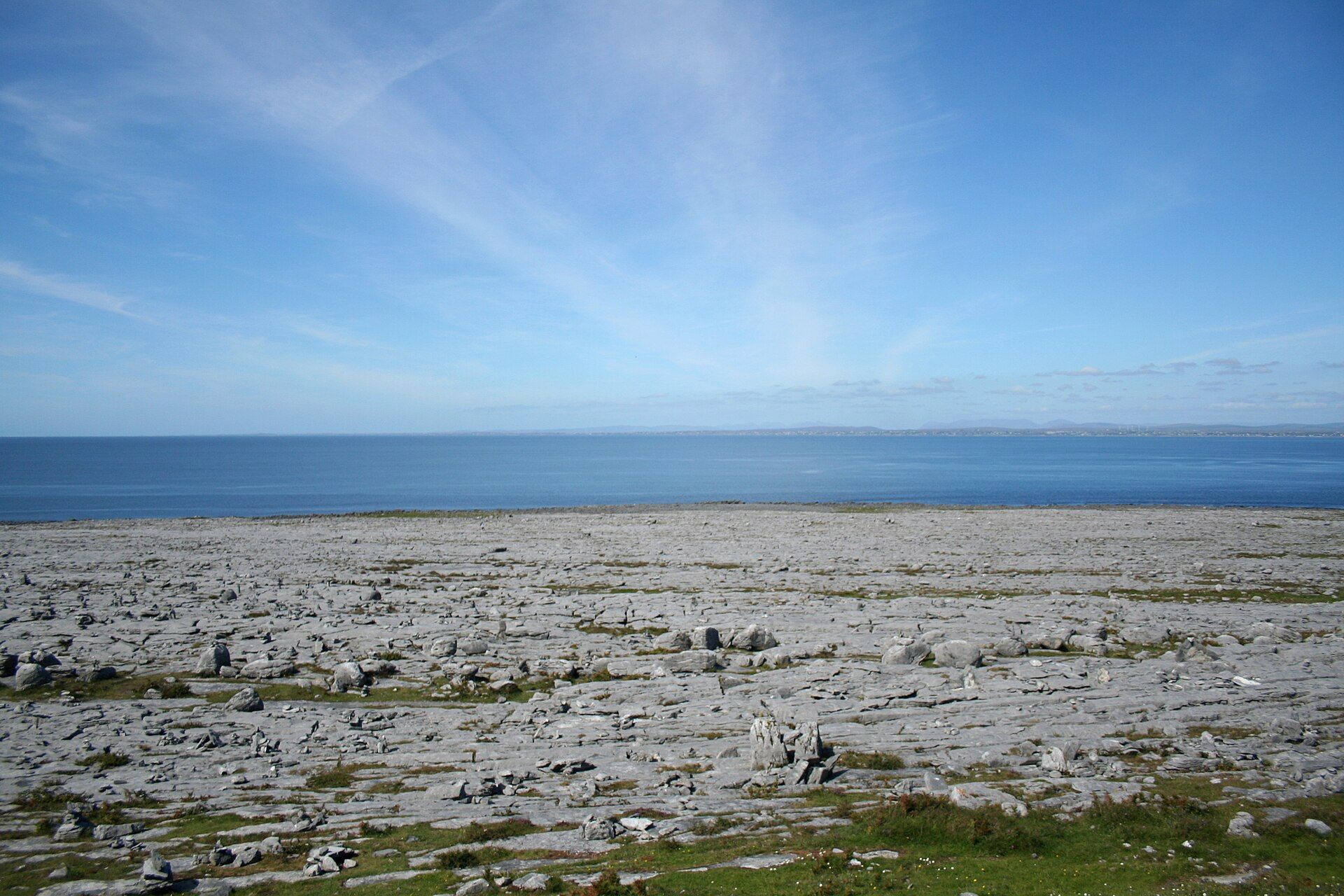
A silver-grey moonscape of bare limestone pavement in County Clare — one of Europe's finest karst landscapes, where Arctic, alpine and Mediterranean wildflowers bloom together in the cracks of the naked rock.
What makes it marvelous
The Burren, from the Irish boireann or 'great rock', is a vast expanse of exposed limestone pavement spread across County Clare, formed on the floor of a tropical sea some 340 million years ago and later scoured bare by glaciers. Rainwater has dissolved the rock into a grid of flat slabs, the clints, split by deep fissures, the grikes, and honeycombed with caves and underground rivers. In those sheltered cracks grows one of the strangest floras in Europe: Arctic-alpine and Mediterranean plants side by side, gentians and orchids flowering on what looks, at first glance, like a lunar desert. The landscape is dotted with ancient tombs and forts, marking thousands of years of human life.
Why visit
To walk the Burren is to cross a landscape unlike anywhere else in Ireland — pale, spare and strangely beautiful, with the Atlantic on the horizon and the Aran Islands offshore. In late spring the rock erupts with wildflowers, geologists and botanists come from across the world, and the Neolithic dolmen of Poulnabrone stands stark against the sky as it has for over five thousand years.
More views of The Burren
Additional photographs of the actual site — each freely licensed, with its photographer and licence credited.
What to know before you go
🗓️ Best time
May and June are magical, when the wildflowers peak on the warming rock; spring through autumn offers the best walking, and the pavement can be slick and bleak in winter.
🧭 Getting there & access
Reached by road from Galway or Ennis into County Clare, with the Burren National Park, the Poulnabrone dolmen and the coast road all within easy driving distance.
Good to know
- The limestone is slippery when wet — wear boots with good grip and step carefully across the grikes.
- Tread lightly and never pick the wildflowers; the flora is fragile and protected.
- Combine the Burren with the nearby Cliffs of Moher and the Aran Islands for a fuller trip.
Plan your visit
Easy🧭 Getting there
From Galway or Shannon (airport SNN)
- Drive from Galway or Ennis into the Burren of north County Clare, under an hour
- Explore the national park, the Poulnabrone dolmen and the coastal pavement by short walks
- Total travel
- A day trip from Galway or a base in Clare
- Time at site
- Half a day to a full day of walking and sites
- Access
- Open access to the landscape and the free national park; a shuttle serves the park in summer to limit car traffic.
🎒 What to bring & consider
- Boots with grip for slippery, uneven limestone
- Rain jacket for the changeable Atlantic weather
- A map or app, as the pavement can be disorienting
- Care around deep grikes underfoot
👁️ What to expect
- Crowds
- The Poulnabrone dolmen draws tour traffic; the wider pavement is quiet and open.
- Conditions
- Uneven, fissured rock underfoot; exposed to wind and sudden Atlantic rain.
- Facilities
- Visitor centres at the park and villages such as Kilfenora; cafés in nearby towns.
- The view
- The Poulnabrone dolmen silhouetted against sky, or wildflowers in a sunlit grike.
Times and requirements are approximate and change with season, weather, and local rules — confirm permits, fares, and schedules with operators before you travel.
Natural riches of the area
- Vast exposed limestone pavement
- Arctic-alpine and Mediterranean wildflowers together
- Caves and underground rivers
- Ancient dolmens, tombs and stone forts
Local food
- Burren smoked salmon
- Oak-smoked salmon from the region's small smokehouses.
- Farmhouse cheese
- Artisan cheeses made on Burren farms grazed on the herb-rich pasture.
- Seafood chowder
- A creamy Atlantic fish-and-shellfish soup served with soda bread.
The Burren is one of Ireland’s strangest and most captivating landscapes — a silver-grey expanse of bare limestone pavement covering much of north County Clare. Its name comes from the Irish boireann, “great rock”, and that is exactly what it looks like: mile upon mile of pale, naked stone. The limestone formed on the bed of a warm tropical sea around 340 million years ago, was lifted up with the land, and then scraped clean by ice-age glaciers, leaving the rock exposed to the sky.
Rain has been at work on it ever since, dissolving the stone into a giant grid of flat slabs — the clints — divided by deep, shadowed fissures called grikes, and boring caves and rivers through the ground below. Sheltered in those cracks grows one of Europe’s most remarkable plant communities: Arctic and alpine flowers blooming alongside Mediterranean species, gentians, orchids and avens flourishing together on what seems, from a distance, a lifeless desert of rock. In late spring the grey pavement is quietly ablaze with colour.
People have lived here for thousands of years, and the Burren wears their mark lightly across its stone. The Neolithic portal tomb of Poulnabrone has stood for more than five millennia, and ring forts and ancient churches lie scattered through the rock. With the Atlantic glinting to the west and the Aran Islands offshore, a walk across the Burren feels like stepping onto the moon — a spare, luminous, deeply Irish wilderness of stone and flower.
The Burren: common questions
How do you get to The Burren?
From Galway or Shannon (airport SNN): Drive from Galway or Ennis into the Burren of north County Clare, under an hour; Explore the national park, the Poulnabrone dolmen and the coastal pavement by short walks. Total travel time: A day trip from Galway or a base in Clare.
When is the best time to visit The Burren?
May and June are magical, when the wildflowers peak on the warming rock; spring through autumn offers the best walking, and the pavement can be slick and bleak in winter.
How long should you spend at The Burren?
Half a day to a full day of walking and sites. Total travel time: A day trip from Galway or a base in Clare.
What should you bring to The Burren?
Boots with grip for slippery, uneven limestone Rain jacket for the changeable Atlantic weather A map or app, as the pavement can be disorienting Care around deep grikes underfoot
Do you need a permit or guide for The Burren?
Open access to the landscape and the free national park; a shuttle serves the park in summer to limit car traffic.
Is The Burren crowded, and what are conditions like?
The Poulnabrone dolmen draws tour traffic; the wider pavement is quiet and open. Uneven, fissured rock underfoot; exposed to wind and sudden Atlantic rain. Facilities: Visitor centres at the park and villages such as Kilfenora; cafés in nearby towns.
Added