Head to head · Two great elephant parks of southern Africa
Chobe vs Hwange: Which Elephant Park Should You Choose for Your Safari?
Chobe and Hwange are two of southern Africa's great elephant parks, and both are often added to a trip built around Victoria Falls. Both are at their best late in the dry season, when the bush thins and animals concentrate at water — but the water is different: a permanent river in Chobe, waterholes in Hwange.
Chobe National Park, about 11,700 km² in northern Botswana, is part of the Kavango–Zambezi Transfrontier Conservation Area; some of the largest elephant herds on Earth gather along the Chobe River in the dry season. Hwange, about 14,650 km² in north-western Zimbabwe, is that country's largest national park, with its biggest elephant population, painted dogs, roan and sable, and around 100 mammal species.
Chobe
Elephants along a river, by boat
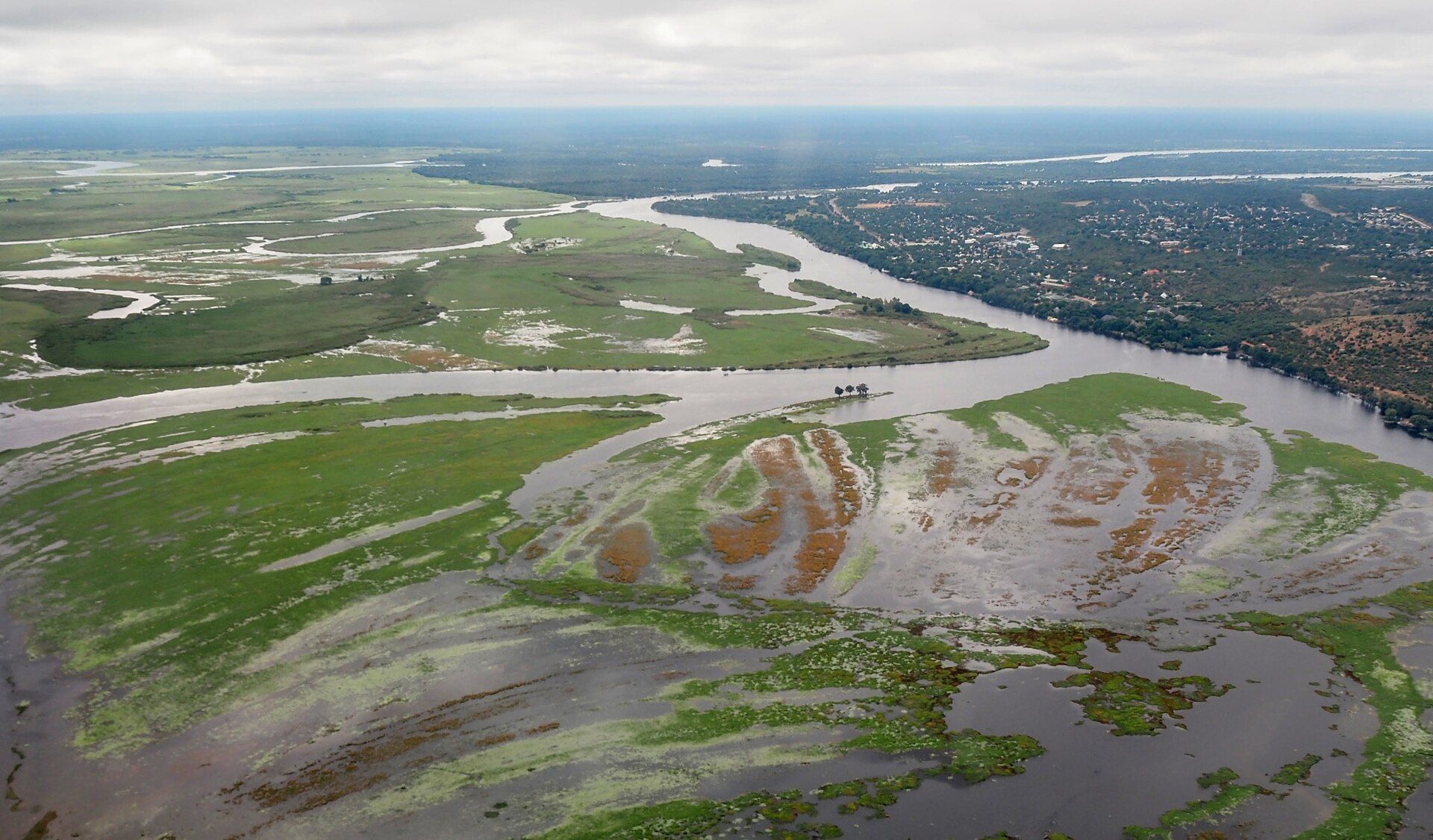
Floodplains, marsh and woodland along the Chobe River. The riverfront section starts at the edge of Kasane and is seen on guided drives and boat trips; the interior — Savuti, Linyanti and Nogatsaa — needs a capable 4x4 for deep sand in the dry months and mud in the rains. Park entry fees apply; lodges and campsites in and around Kasane.
- Boat trips among dry-season elephant herds
- The riverfront begins right at Kasane
- Remote interior for well-equipped 4x4s
Hwange
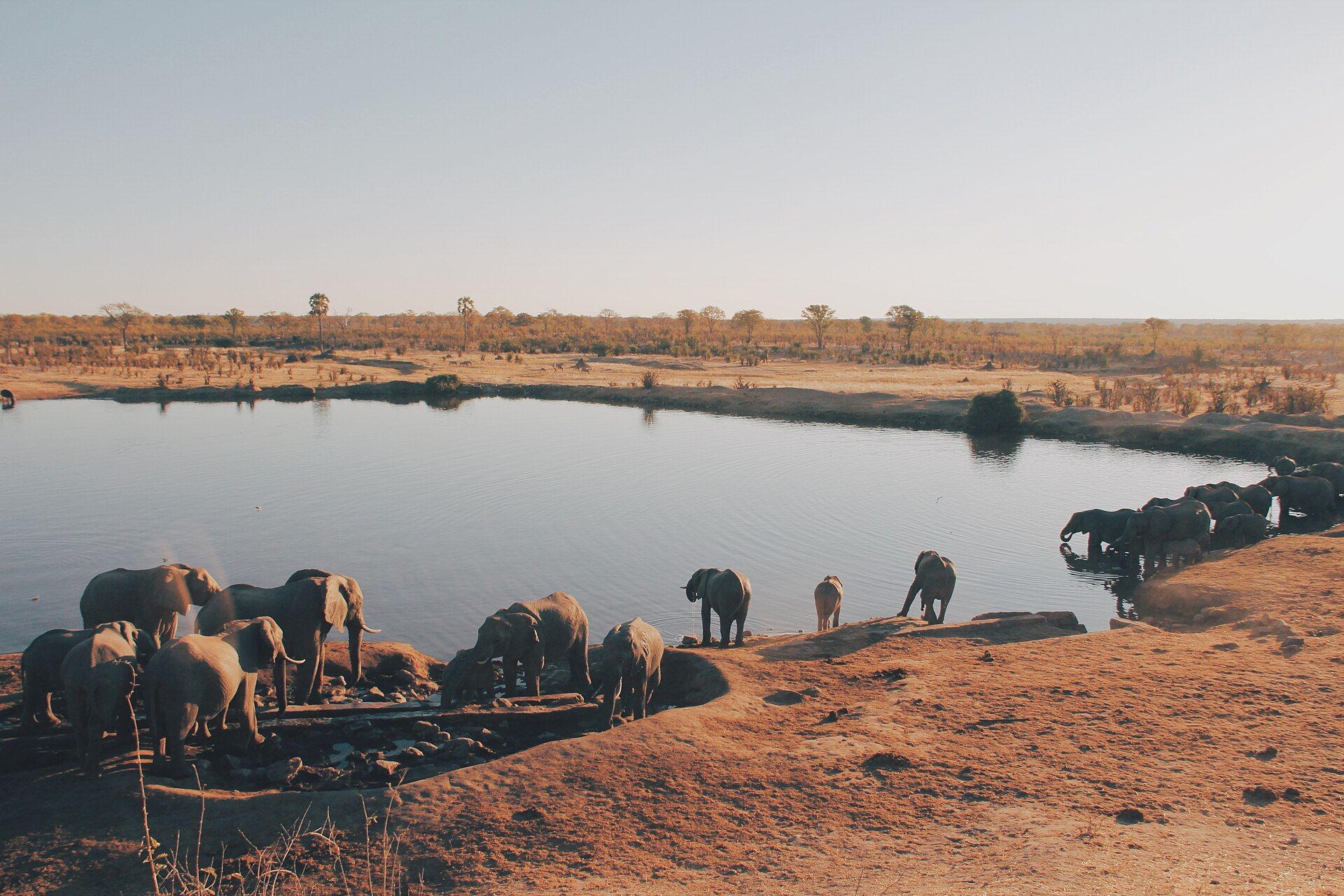
Zimbabwe's largest park and its waterholes
Grassland, teak and mopane woodland. Main Camp lies 23 km off the Bulawayo–Victoria Falls highway — 172 km from Victoria Falls or 283 km from Bulawayo, all on tar; Robins Camp is reached via the Pandamatenga turn-off. ZimParks camps and private lodges; fees paid to ZimParks.
- Painted dogs, roan and sable as well as elephants
- Visitors spread thinly across a very large park
- Sealed road from Victoria Falls; self-catering park camps
Head to head
| What matters | Chobe | Hwange |
|---|---|---|
| Getting there Edge: Chobe | Fly or drive to Kasane; the riverfront section starts at the edge of town. | About 195 km on tar from Victoria Falls to Main Camp — roughly 2.5–3.5 hours. |
| Size Edge: Hwange | About 11,700 km². | About 14,650 km² — Zimbabwe's largest national park. |
| How you watch game Edge: Chobe | Guided drives and boat trips on the river; 4x4 expeditions to the interior. | Game drives on dirt roads between waterholes and camps. |
| Wildlife highlights Edge: Toss-up | Some of the largest elephant herds on Earth at the river in the dry season. | Zimbabwe's biggest elephant population, painted dogs, roan and sable. |
| Time needed Edge: Toss-up | 2–3 days for the riverfront; a week to add Savuti and Linyanti. | Two to four days to drive more than one section. |
| Best months Edge: Chobe | Roughly May–October, when elephants gather at the river; rains bring muddy, sometimes impassable roads. | Roughly July–October, when wildlife concentrates at the remaining water; November–March scatters game. |
| Crowds Edge: Hwange | The riverfront near Kasane is the busiest section; the interior is far quieter. | Visitors spread thinly, though popular waterholes can draw several vehicles at one sighting. |
Which should you choose?
Choose Chobe if…
…you want elephants from a boat, have two or three days around Kasane, or are equipped for a remote 4x4 trip to Savuti and Linyanti.
Choose Hwange if…
…you want a big, quiet park on a sealed road from Victoria Falls, hope to see painted dogs, roan or sable, or plan to self-cater in park camps.
The honest verdict
For elephants by boat and the shortest transfer, Chobe's riverfront: it begins at Kasane, and in the dry season the herds along the river are the reason to come. Expect company near town.
For a quieter, bigger park, Hwange: about three hours on tar from Victoria Falls, with game spread across waterholes, painted dogs among the draws, and ZimParks camps for self-drivers.
Go late in the dry season for either — May–October for Chobe, July–October for Hwange — arrange malaria precautions with a travel clinic before Hwange, and confirm current park fees with each park authority.
Wonders mentioned here
Hwange National Park
Matabeleland North, north-western Zimbabwe, off the Bulawayo–Victoria Falls highway
Added