Zhangye Danxia
📍 Gansu Province, China
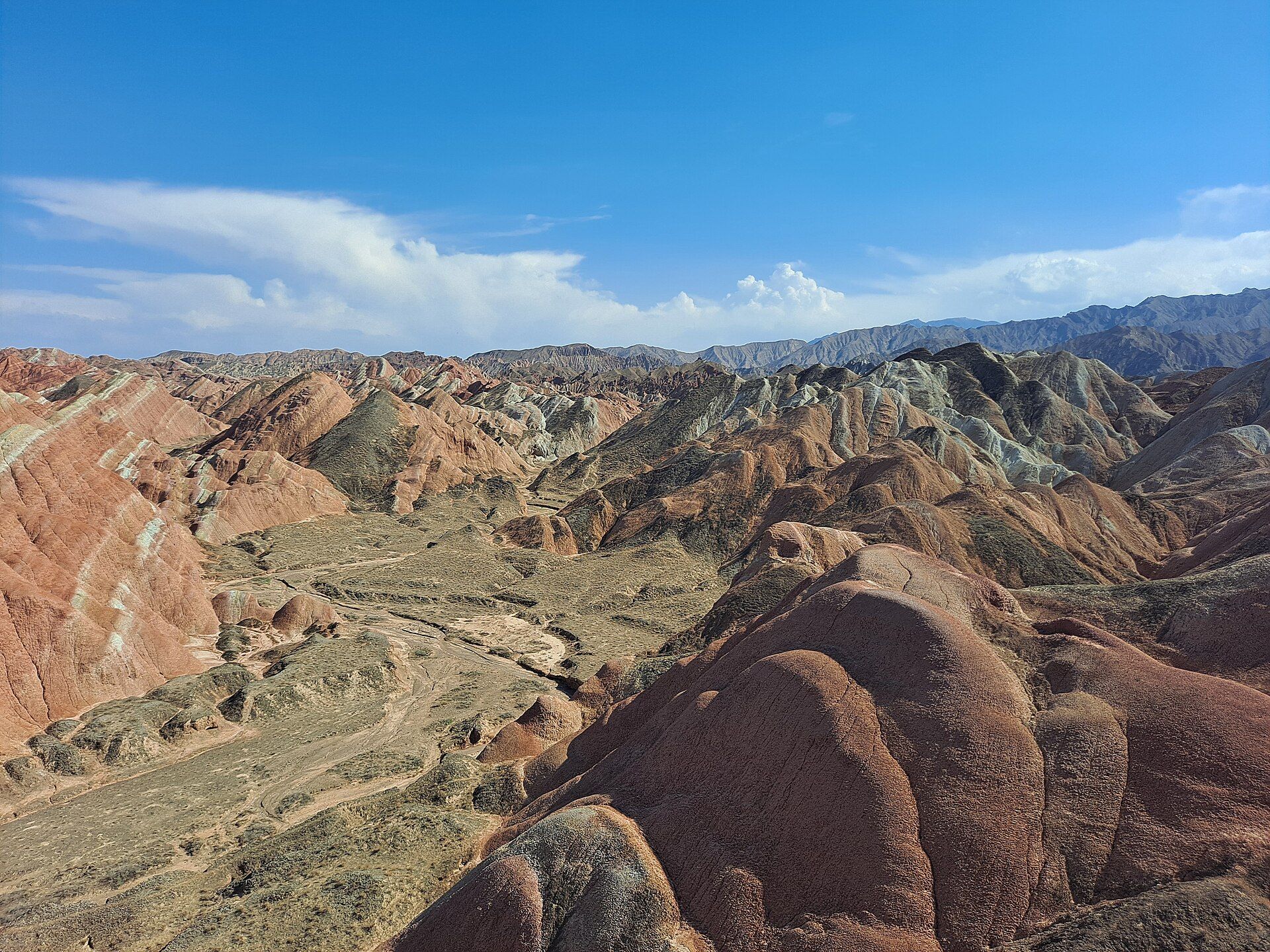
Hills painted in stripes of red, orange, gold, and green — a landscape of 'rainbow mountains' where millions of years of layered sediment have been folded and eroded into vivid bands of colour.
What makes it marvelous
The Zhangye Danxia landform is one of the most colourful landscapes on Earth: a range of low hills striped in brilliant bands of red, orange, yellow, green, and blue, as though poured from a painter's palette. The colours come from layers of sandstone and mineral-rich sediment laid down over some 24 million years, coloured by iron and trace minerals, then tilted by the same tectonic forces that raised the Himalaya and carved by wind and rain into ridges and folds that lay the stripes bare. In low, slanting light the hills seem to glow. It is the best known of China's 'Danxia' landforms — a type of red-bed sandstone scenery recognized as a UNESCO World Heritage category — and one of the most photographed natural sights in the country's northwest.
Why visit
Watching the striped hills shift and intensify in the light of sunrise or sunset — waves of red, gold, and green rolling to the horizon — is a surreal, unforgettable spectacle unlike any other landscape.
Still deciding?
Zhangye Danxia comes up most often against one other place — each one weighs cost, effort, season and crowds side by side.
What to know before you go
🗓️ Best time
Summer and early autumn (roughly June–September) for reliable weather and the richest colour; the bands glow most vividly in the low light after rain or near sunrise and sunset.
🧭 Getting there & access
Near the city of Zhangye in Gansu Province, on the old Silk Road; the Zhangye Danxia geological park has boardwalks and shuttle buses linking a series of viewing platforms.
Good to know
- Come near sunrise or sunset, when the colours are richest.
- Colours pop most after rain — an overcast-then-clearing day is ideal.
- Use the park shuttle and stay on the boardwalks to protect the fragile rock.
Plan your visit
Easy🧭 Getting there
From Zhangye, Gansu — by high-speed rail or Zhangye Ganzhou (YZY)
- High-speed rail Lanzhou → Zhangye — roughly 2h30–3h
- Taxi or bus Zhangye → the Danxia geopark — about 40min–1h
- A shuttle links the four viewing platforms inside the park
- Total travel
- Half a day from Lanzhou
- Time at site
- 2–3 hours, best weighted toward late afternoon
- Access
- Geopark entry ticket including the internal shuttle. You must stay on the built platforms and walkways — the painted hills are soft sandstone and footprints on them do not heal. Note this is a separate site from the Binggou Danxia park nearby, which is sometimes confused with it.
🎒 What to bring & consider
- Sun protection and water; this is arid high desert and the platforms carry no shade at all
- A windproof layer, because the platforms are exposed and the temperature drops sharply at dusk
- Dust protection for camera gear
- Comfortable shoes for the flights of steps up to each viewpoint
- A local payment app or cash
👁️ What to expect
- Crowds
- Heaviest at sunset, when everyone converges on the same platform. Midday is quiet, but the colour is not worth having.
- Conditions
- Shuttle between platforms with a staircase up to each. Very little walking overall.
- Facilities
- Toilets and small shops at the entrance and the platforms.
- The view
- The stripes only really appear under low, warm light, and are strongest just after rain — which is rare here. Midday sun bleaches them almost flat. Timing is the entire difference at this site.
Times and requirements are approximate and change with season, weather, and local rules — confirm permits, fares, and schedules with operators before you travel.
Natural riches of the area
- Multicoloured banded sandstone from ~24 million years of deposition
- Iron and mineral pigments in tilted, eroded strata
- Classic Danxia red-bed landform scenery
- Silk Road desert-mountain surroundings
Local food
- Gansu hand-pulled noodles
- Lanzhou-style beef noodle soup, a signature of the province.
- Silk Road lamb
- Grilled and stewed lamb dishes of China's northwest.
- Local melons & apricots
- Fruit grown in the arid oases of the Hexi Corridor.
The hills at Zhangye look painted. Across a range of low ridges in China’s arid northwest, the rock is striped in vivid bands of red, orange, gold, green, and blue, as if colour had been poured over the landscape and left to dry. The stripes are layers of sandstone and mineral-rich sediment, laid down over some 24 million years and tinted by iron and trace minerals, then tilted by the tectonic forces that raised the Himalaya and stripped bare by wind and rain.
In the low, slanting light of early morning or evening — and especially after rain — the bands seem to glow, waves of colour rolling to the horizon. This is the most famous of China’s ‘Danxia’ landforms, a type of red-bed scenery honoured as a UNESCO World Heritage category, and one of the most surreal and photographed landscapes anywhere in the country. Boardwalks and viewpoints let you take it in without ever quite believing your eyes.
Zhangye Danxia: common questions
How do you get to Zhangye Danxia?
From Zhangye, Gansu — by high-speed rail or Zhangye Ganzhou (YZY): High-speed rail Lanzhou → Zhangye — roughly 2h30–3h; Taxi or bus Zhangye → the Danxia geopark — about 40min–1h; A shuttle links the four viewing platforms inside the park. Total travel time: Half a day from Lanzhou.
When is the best time to visit Zhangye Danxia?
Summer and early autumn (roughly June–September) for reliable weather and the richest colour; the bands glow most vividly in the low light after rain or near sunrise and sunset.
How long should you spend at Zhangye Danxia?
2–3 hours, best weighted toward late afternoon. Total travel time: Half a day from Lanzhou.
What should you bring to Zhangye Danxia?
Sun protection and water; this is arid high desert and the platforms carry no shade at all A windproof layer, because the platforms are exposed and the temperature drops sharply at dusk Dust protection for camera gear Comfortable shoes for the flights of steps up to each viewpoint A local payment app or cash
Do you need a permit or guide for Zhangye Danxia?
Geopark entry ticket including the internal shuttle. You must stay on the built platforms and walkways — the painted hills are soft sandstone and footprints on them do not heal. Note this is a separate site from the Binggou Danxia park nearby, which is sometimes confused with it.
Is Zhangye Danxia crowded, and what are conditions like?
Heaviest at sunset, when everyone converges on the same platform. Midday is quiet, but the colour is not worth having. Shuttle between platforms with a staircase up to each. Very little walking overall. Facilities: Toilets and small shops at the entrance and the platforms.
Added
More wonders to explore