Zhangjiajie (Wulingyuan)
📍 Hunan Province, China
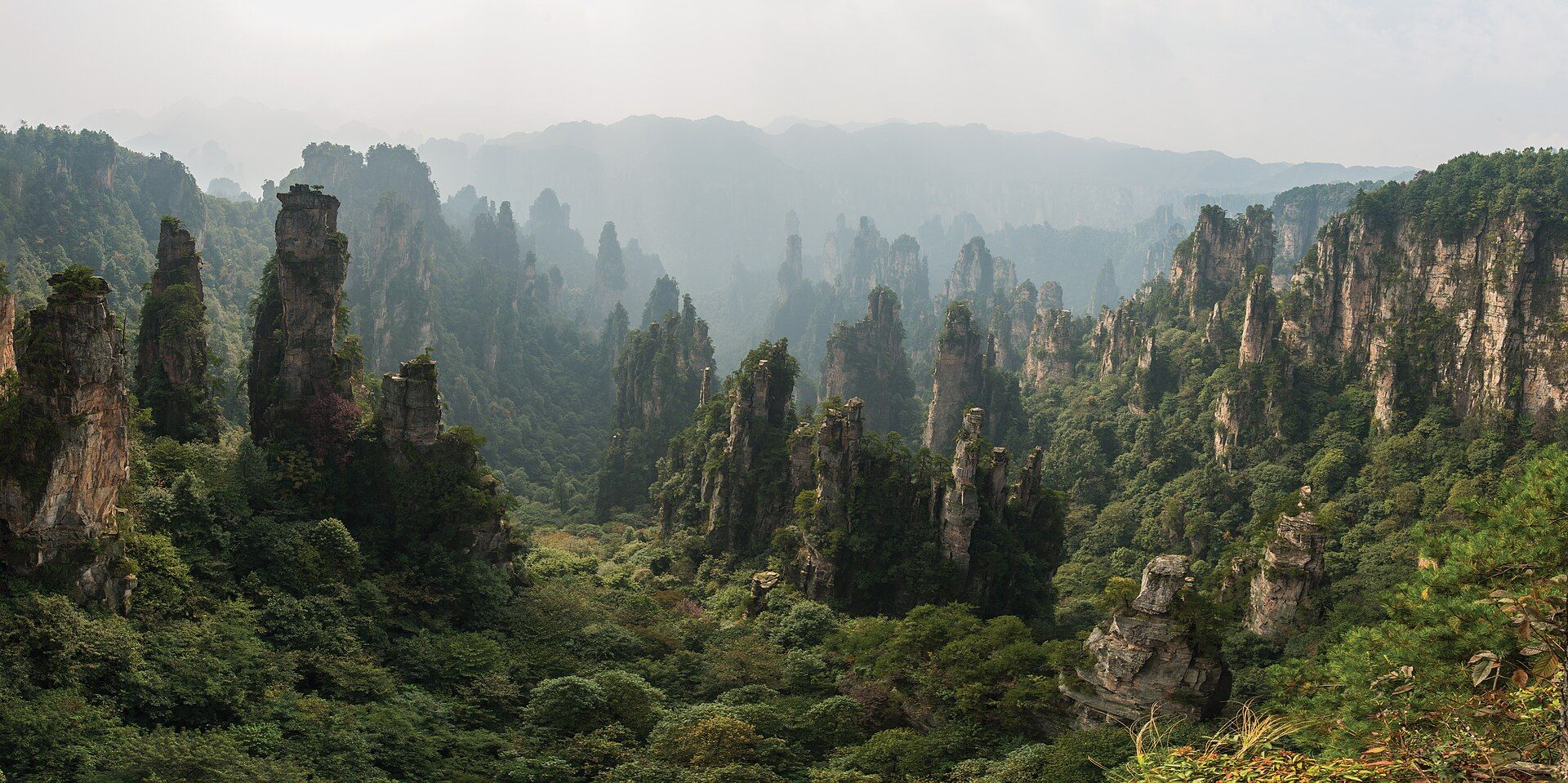
A forest of thousands of towering quartzite-sandstone pillars rising hundreds of metres from misty subtropical forest — an ethereal landscape of floating peaks that helped inspire the world of Avatar.
What makes it marvelous
The Wulingyuan area holds more than 3,000 near-vertical pillars and peaks of quartzite sandstone, some over 200 metres tall, carved over millions of years as water and freeze-thaw weathering ate away at fractured rock, leaving the harder columns standing. Frequently wreathed in cloud and forest, the pillars seem to hover in mid-air — a scene so striking it inspired the floating 'Hallelujah Mountains' of the film Avatar. It is a UNESCO World Heritage Site of exceptional geology and biodiversity.
Why visit
Glass-floored viewing platforms, a soaring outdoor elevator, the world's longest cable car, and clifftop trails carry you among and above the pillars, with the mist drifting between them. It is one of the most surreal and photogenic landscapes in China.
Still deciding?
Zhangjiajie (Wulingyuan) comes up most often against one other place — each one weighs cost, effort, season and crowds side by side.
More views of Zhangjiajie (Wulingyuan)
Additional photographs of the actual site — each freely licensed, with its photographer and licence credited.
What to know before you go
🗓️ Best time
Spring and autumn (roughly April–June and September–November) for mild weather and atmospheric mist; expect crowds at peak times and holidays.
🧭 Getting there & access
Via Zhangjiajie city in Hunan Province (by air or high-speed rail), then into Wulingyuan / Zhangjiajie National Forest Park. Cable cars, lifts, and shuttle buses connect the viewpoints.
Good to know
- Go early or stay overnight in the park to beat the crowds at the famous viewpoints.
- Mist is common and often enhances the 'floating peaks' effect.
- Allow at least two days — the park is large and the highlights are spread out.
Plan your visit
Moderate🧭 Getting there
From Zhangjiajie (DYG), Hunan, or the high-speed rail station
- Fly or take high-speed rail to Zhangjiajie
- Bus to the park gates — about 40min–1h
- Inside, a network of shuttle buses plus the Bailong lift and cable cars
- Total travel
- Most of a day from Beijing or Shanghai
- Time at site
- Two to three days; the park is far larger than most people expect
- Access
- A multi-day park ticket with fingerprint registration. The Bailong elevator, the cable cars and the glass bridge in the neighbouring canyon are ticketed separately, and the bridge caps daily numbers. Sections close in ice and heavy rain.
🎒 What to bring & consider
- Rain gear — this is a misty subtropical massif and rain is the default rather than the exception
- Shoes with grip for wet stone steps
- A power bank; navigation and ticket QR codes will flatten a phone by mid-afternoon
- Patience and a plan for queues, because shuttle and lift lines are a real part of the day
- A local payment app where possible, with cash as the fallback
👁️ What to expect
- Crowds
- Very heavy in Chinese holidays and through summer, with long shuttle queues. Early entry and the less famous sectors such as Yangjiajie are calmer.
- Conditions
- Paved paths and a great many steps, with long transfers between sectors. The walking is easy; the day is long.
- Facilities
- Good throughout — toilets, food and shops across the park.
- The view
- The sandstone pillars look best with mist threading between them, which is common after rain. Clear blue days actually flatten the depth out of the scene.
Times and requirements are approximate and change with season, weather, and local rules — confirm permits, fares, and schedules with operators before you travel.
Natural riches of the area
- Thousands of quartzite-sandstone pillars and peaks
- Subtropical broadleaf forest and high biodiversity
- Deep ravines, caves, and clear streams
- Endemic plants and wildlife of the Wuling range
Local food
- Tujia hot pot & cured meats
- Smoky bacon and spicy stews of the local Tujia people.
- Sour fish soup
- A tangy Hunan-style river-fish soup.
- Rice tofu & spicy Hunan fare
- Bold, chilli-forward cooking typical of the region.
Zhangjiajie looks like a landscape from a dream — thousands of sheer sandstone pillars soaring hundreds of metres out of subtropical forest, their tops frequently lost in drifting cloud so that they seem to float free of the ground. The pillars are quartzite sandstone, carved over millions of years as water and repeated freezing and thawing pried apart fractured rock and washed away the weaker stone, leaving the hardest columns standing like a stone forest.
The effect is so otherworldly that it helped inspire the floating mountains of the film Avatar. Today glass walkways, a towering outdoor elevator, and long cable cars let you wander among and above the peaks as the mist moves through them. Part of the UNESCO-listed Wulingyuan area, it is one of the strangest and most beautiful rock landscapes on the planet — a place that genuinely looks unreal until you’re standing in it.
The thousands of sheer pillars here are quartz sandstone, cut over millions of years as water widened the joints in a thick sandstone bed and left the harder columns standing, many draped in pine and often wreathed in cloud. Protected within the Wulingyuan scenic area, the forest of spires famously helped inspire the floating “Hallelujah Mountains” of the film Avatar, and one pillar was later given that nickname. Visitors ride the Bailong glass elevator up a cliff face and cross the glass-floored bridge over the Zhangjiajie Grand Canyon — engineering added to let people stand among and above the pinnacles that early landscape painters could only imagine.
Zhangjiajie (Wulingyuan): common questions
How do you get to Zhangjiajie (Wulingyuan)?
From Zhangjiajie (DYG), Hunan, or the high-speed rail station: Fly or take high-speed rail to Zhangjiajie; Bus to the park gates — about 40min–1h; Inside, a network of shuttle buses plus the Bailong lift and cable cars. Total travel time: Most of a day from Beijing or Shanghai.
When is the best time to visit Zhangjiajie (Wulingyuan)?
Spring and autumn (roughly April–June and September–November) for mild weather and atmospheric mist; expect crowds at peak times and holidays.
How long should you spend at Zhangjiajie (Wulingyuan)?
Two to three days; the park is far larger than most people expect. Total travel time: Most of a day from Beijing or Shanghai.
What should you bring to Zhangjiajie (Wulingyuan)?
Rain gear — this is a misty subtropical massif and rain is the default rather than the exception Shoes with grip for wet stone steps A power bank; navigation and ticket QR codes will flatten a phone by mid-afternoon Patience and a plan for queues, because shuttle and lift lines are a real part of the day A local payment app where possible, with cash as the fallback
Do you need a permit or guide for Zhangjiajie (Wulingyuan)?
A multi-day park ticket with fingerprint registration. The Bailong elevator, the cable cars and the glass bridge in the neighbouring canyon are ticketed separately, and the bridge caps daily numbers. Sections close in ice and heavy rain.
Is Zhangjiajie (Wulingyuan) crowded, and what are conditions like?
Very heavy in Chinese holidays and through summer, with long shuttle queues. Early entry and the less famous sectors such as Yangjiajie are calmer. Paved paths and a great many steps, with long transfers between sectors. The walking is easy; the day is long. Facilities: Good throughout — toilets, food and shops across the park.
Added Updated
More wonders to explore