Sossusvlei & Deadvlei
📍 Namib-Naukluft National Park, Namibia
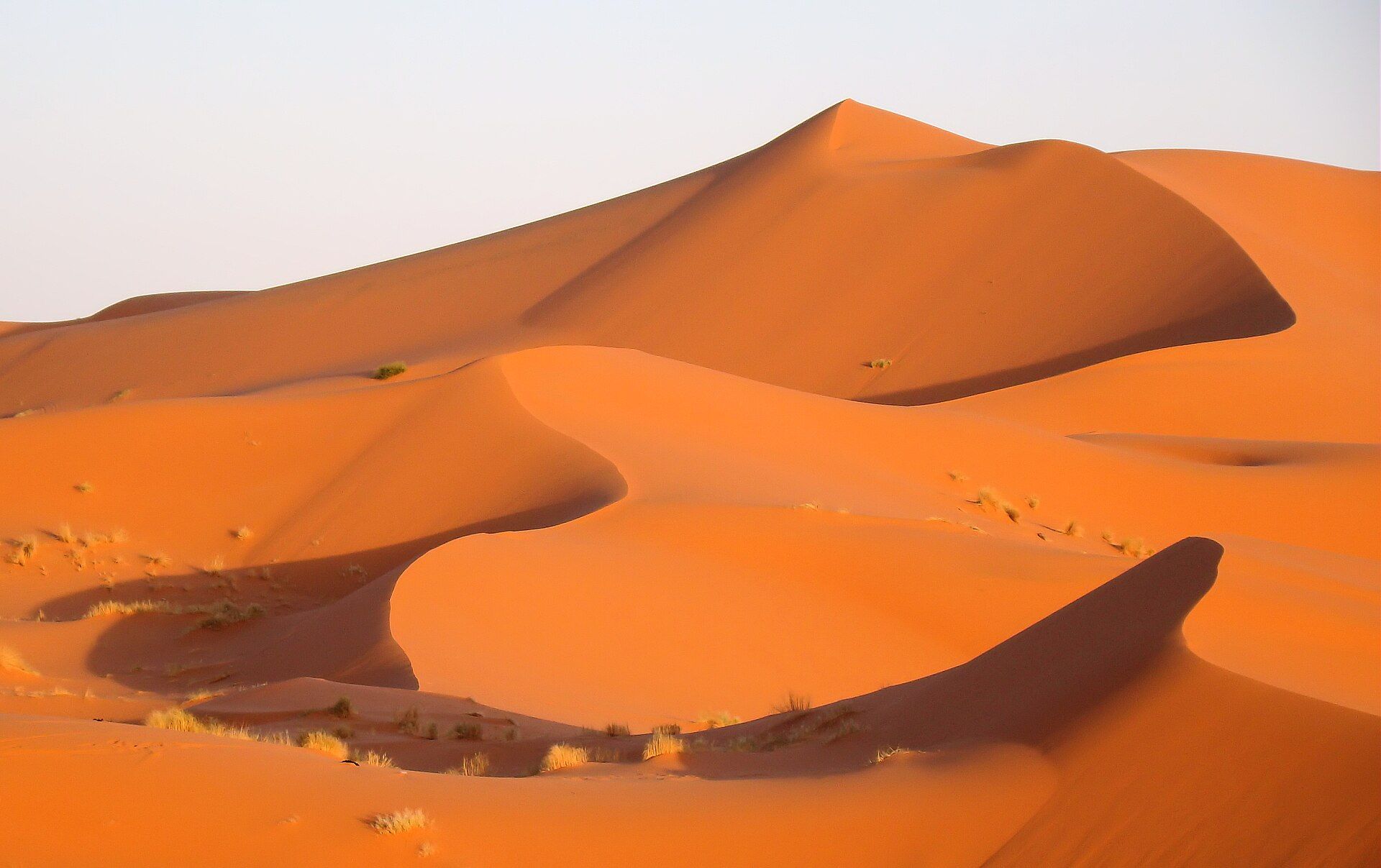
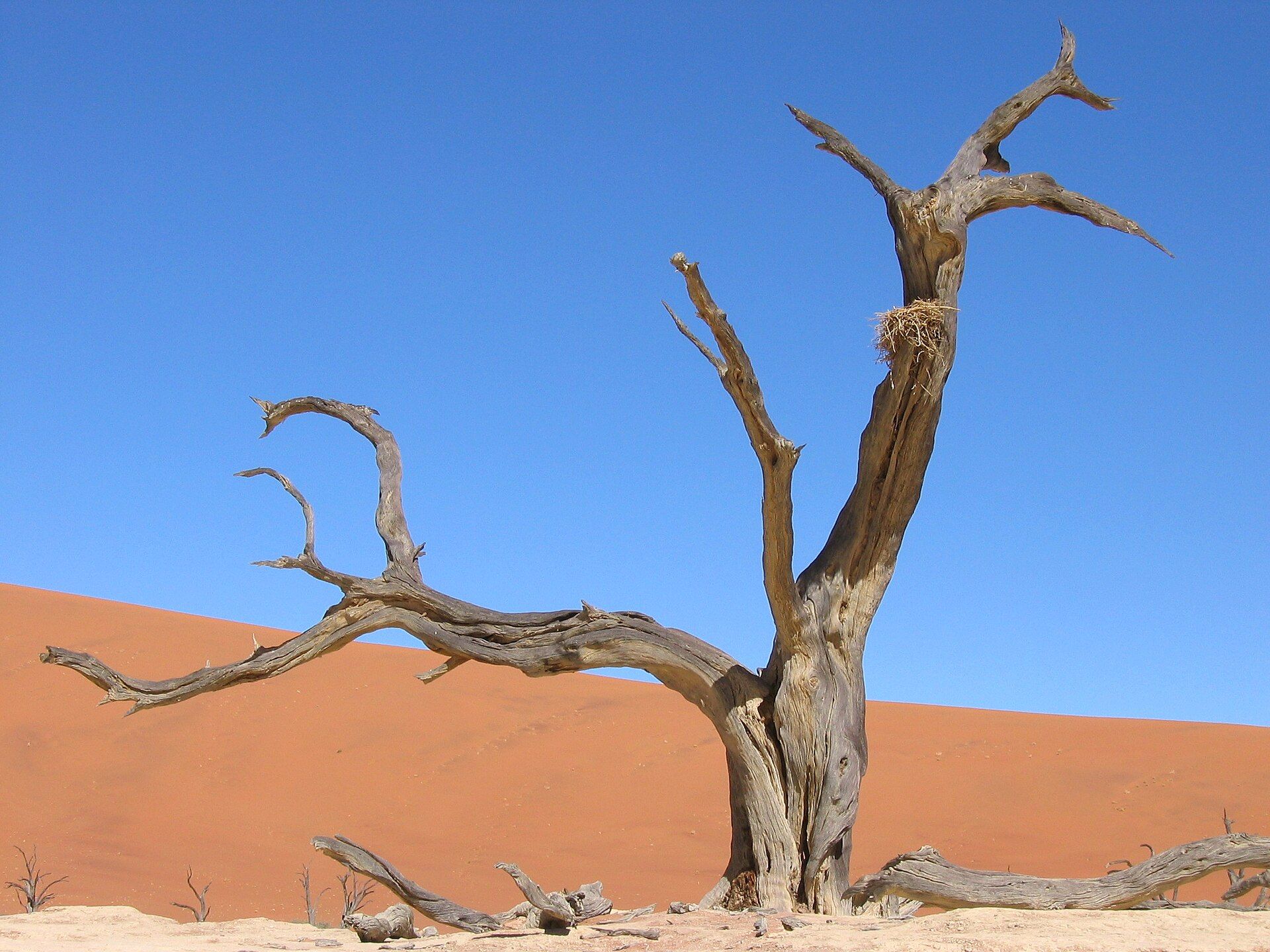
The soaring red dunes of the ancient Namib — among the tallest on Earth — surrounding the surreal white clay pan of Deadvlei, where 900-year-old blackened trees stand skeletal against orange sand and blue sky.
What makes it marvelous
The Namib is one of the oldest deserts in the world, and its iron-rich sand has oxidised over millions of years to a deep rust-red. At Sossusvlei the dunes rise to some of the greatest heights anywhere — 'Big Daddy' tops 300 metres — their crests carving sharp lines between sunlit and shadowed faces. Nearby lies Deadvlei, a white clay pan cut off from water centuries ago, where the camelthorn trees died but, too dry to rot, still stand: charcoal-black silhouettes against the pale ground, red dunes, and vivid sky, roughly 900 years old.
Why visit
The colour and geometry are otherworldly — climbing a towering red dune at sunrise, then descending into the ghostly, painterly scene of Deadvlei, is one of the most photographed and unforgettable desert experiences on the planet.
Still deciding?
Sossusvlei & Deadvlei comes up most often against one other place — each one weighs cost, effort, season and crowds side by side.
What to know before you go
🗓️ Best time
The cooler months of roughly April–October for comfortable dune climbing; dawn light gives the dunes their sharpest colour and shadow.
🧭 Getting there & access
From Sesriem gate in the Namib-Naukluft National Park (via Windhoek). A road leads toward the dunes; the final stretch to Sossusvlei/Deadvlei needs 4x4 or a shuttle. Arrive at dawn.
Good to know
- Enter at first light to climb the dunes before the heat and to catch the colour.
- Bring plenty of water; there is no shade among the dunes.
- Don't touch or climb on the ancient Deadvlei trees — they're irreplaceable.
Plan your visit
Moderate🧭 Getting there
From Windhoek (WDH), then Sesriem
- Fly into Windhoek
- Drive Windhoek → Sesriem — roughly 5h–6h, largely on gravel
- Sesriem gate → Sossusvlei — about 1h, with the last few kilometres deep sand needing 4x4 or the park shuttle
- Total travel
- Most of a day from Windhoek
- Time at site
- Two nights, so you can be inside the gate for sunrise
- Access
- Namib-Naukluft park entry at Sesriem. The gate opens earlier for guests staying inside than for those outside, and that difference decides whether you reach Deadvlei in the good light — it is worth planning your accommodation around. No guide required.
🎒 What to bring & consider
- Considerably more water than you expect; the dunes are shadeless, hot, and far harder to climb than they look
- Sun protection and a hat — there is no shade anywhere out there
- Shoes you can empty easily, or bare feet, because the sand gets into everything
- A spare tyre and the knowledge to change it; punctures on the gravel approach are extremely common
- Fuel at every opportunity, since stations are far apart and occasionally dry
👁️ What to expect
- Crowds
- Deadvlei sees a steady stream through the morning, but the dune field is vast enough to spread people out.
- Conditions
- Soft deep sand, steep dune climbs, and severe heat by mid-morning. Start at first light and be finished by ten.
- Facilities
- Fuel, a shop and toilets at Sesriem. Inside, little beyond basic toilets at the 2x4 car park.
- The view
- Deadvlei's dead camelthorn trees against the orange dune wall work best in the first hour of light, while the dune face is still in shadow. By midday the contrast has gone flat.
Times and requirements are approximate and change with season, weather, and local rules — confirm permits, fares, and schedules with operators before you travel.
Natural riches of the area
- One of the oldest deserts on Earth, with iron-reddened sand
- Among the tallest dunes in the world
- Fog-fed desert-adapted life (beetles, oryx, ostrich)
- The white clay pans of Sossusvlei and Deadvlei
Local food
- Game meat (oryx, kudu)
- Namibian desert-adapted game, often grilled or dried as biltong.
- Potjiekos
- A slow-cooked stew prepared in a cast-iron pot over coals.
- Vetkoek & pap
- Fried dough and maize porridge, Southern African staples.
Sossusvlei looks like another planet. Here the Namib — one of the oldest deserts on Earth — throws up some of the tallest dunes in the world, their iron-rich sand oxidised over millions of years to a deep, glowing rust-red. Climb one at sunrise, when the low light splits each dune into a bright face and a black shadow along a knife-edge crest, and the scale is staggering: ‘Big Daddy’ rises more than 300 metres.
Tucked among them lies Deadvlei, and it is unforgettable. Centuries ago the clay pan was cut off from water, and the camelthorn trees rooted there died — but in air this dry they could not rot, so they still stand, blackened skeletons perhaps 900 years old, against the white pan, the orange dunes, and a hard blue sky. It is one of the most surreal and beautiful desert scenes anywhere, a place that feels painted rather than real.
Sossusvlei & Deadvlei: common questions
How do you get to Sossusvlei & Deadvlei?
From Windhoek (WDH), then Sesriem: Fly into Windhoek; Drive Windhoek → Sesriem — roughly 5h–6h, largely on gravel; Sesriem gate → Sossusvlei — about 1h, with the last few kilometres deep sand needing 4x4 or the park shuttle. Total travel time: Most of a day from Windhoek.
When is the best time to visit Sossusvlei & Deadvlei?
The cooler months of roughly April–October for comfortable dune climbing; dawn light gives the dunes their sharpest colour and shadow.
How long should you spend at Sossusvlei & Deadvlei?
Two nights, so you can be inside the gate for sunrise. Total travel time: Most of a day from Windhoek.
What should you bring to Sossusvlei & Deadvlei?
Considerably more water than you expect; the dunes are shadeless, hot, and far harder to climb than they look Sun protection and a hat — there is no shade anywhere out there Shoes you can empty easily, or bare feet, because the sand gets into everything A spare tyre and the knowledge to change it; punctures on the gravel approach are extremely common Fuel at every opportunity, since stations are far apart and occasionally dry
Do you need a permit or guide for Sossusvlei & Deadvlei?
Namib-Naukluft park entry at Sesriem. The gate opens earlier for guests staying inside than for those outside, and that difference decides whether you reach Deadvlei in the good light — it is worth planning your accommodation around. No guide required.
Is Sossusvlei & Deadvlei crowded, and what are conditions like?
Deadvlei sees a steady stream through the morning, but the dune field is vast enough to spread people out. Soft deep sand, steep dune climbs, and severe heat by mid-morning. Start at first light and be finished by ten. Facilities: Fuel, a shop and toilets at Sesriem. Inside, little beyond basic toilets at the 2x4 car park.
Added
More wonders to explore