Head to head · the world's white dunes
White Sands vs Lençóis Maranhenses: Which White Dunes Should You See?
Both are fields of dazzling white dunes, and both look unreal in photographs. But they are white for different reasons, sit in very different climates, and ask very different things of a visitor.
White Sands is a dry gypsum dunefield you can drive into. Lençóis Maranhenses is a rain-soaked quartz dunefield whose famous lagoons exist for only part of the year.
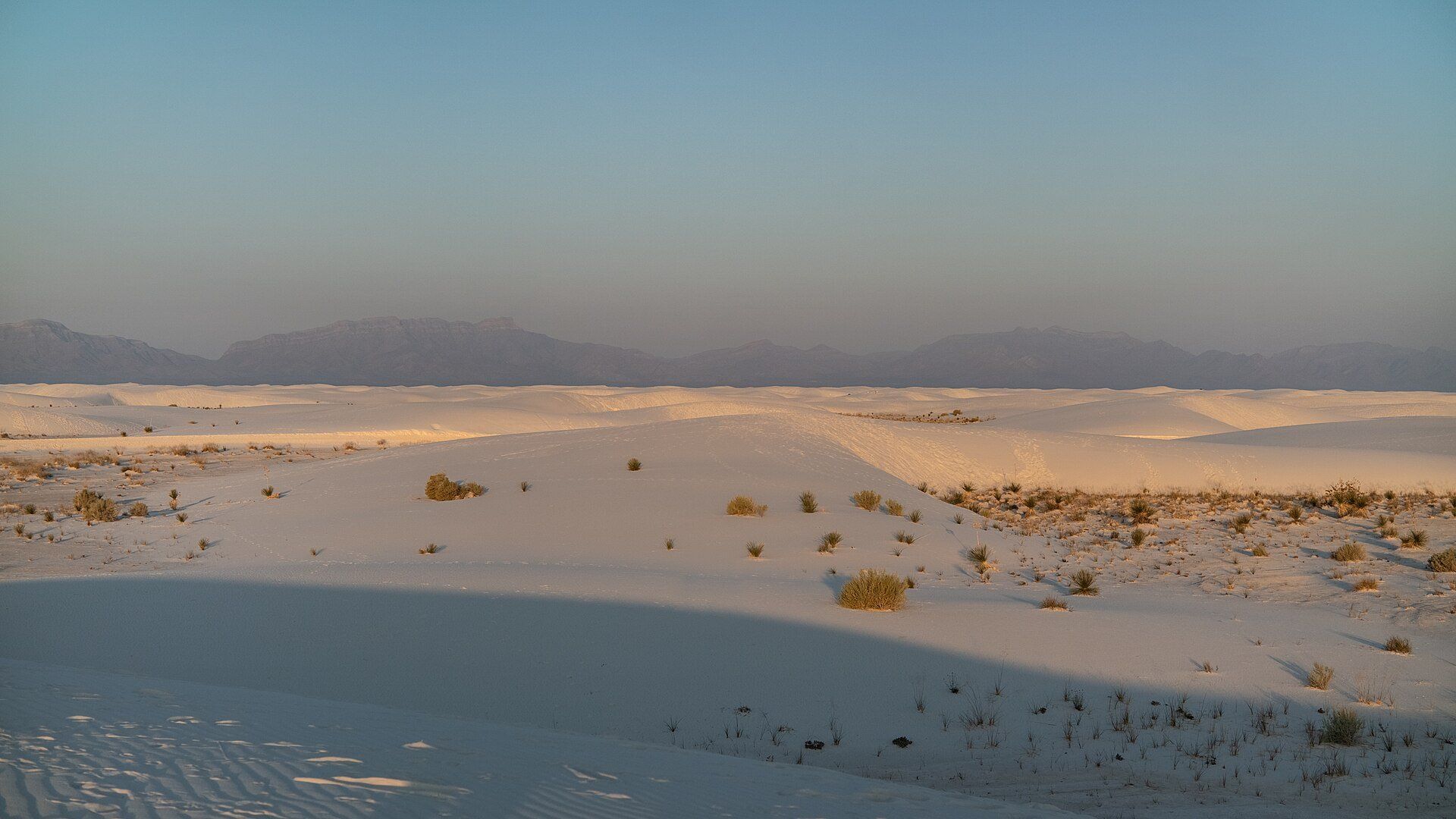
White Sands
Gypsum dunes you can drive into
The largest gypsum dunefield on Earth, in New Mexico's Tularosa Basin. An 8-mile road runs into the dunes, which are cool underfoot, perfect for sledding and open all year — except when missile tests close the road.
- The largest gypsum dunefield on Earth
- Drive straight in on Dunes Drive — no tour needed
- Visitable year-round
- Easy sledding and short walks from the road
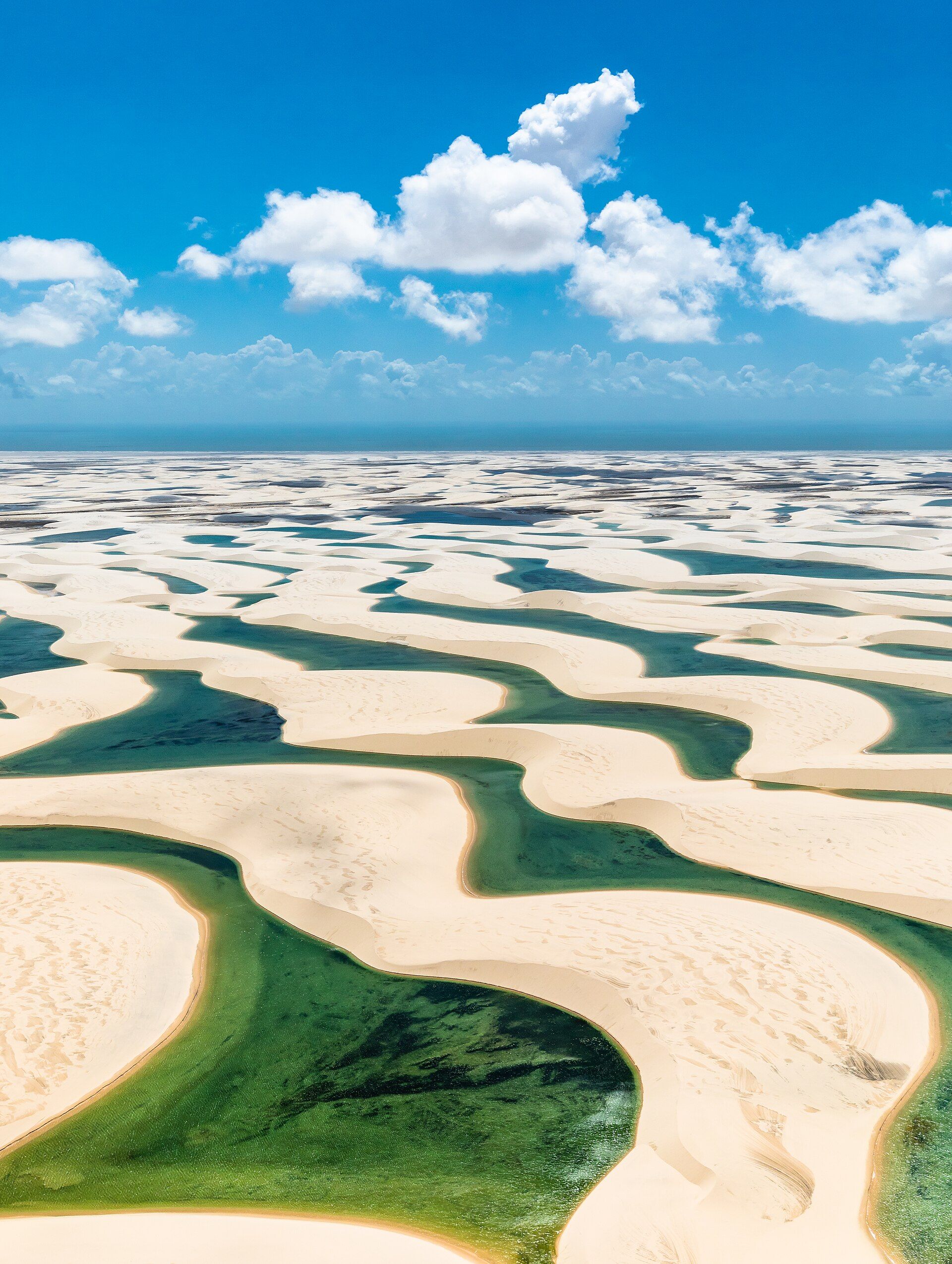
Lençóis Maranhenses
White dunes stitched with blue lagoons
About 1,500 km² of white dunes in north-eastern Brazil that fill with thousands of turquoise rainwater lagoons each wet season. Reached by licensed 4x4 from Barreirinhas or Atins; the lagoons are fullest roughly July to September.
- Thousands of swimmable turquoise lagoons between the dunes
- A far larger, wilder dunefield
- No road into the dunes — it feels remote
Head to head
| What matters | White Sands | Lençóis Maranhenses |
|---|---|---|
| What makes it white Edge: Toss-up | Gypsum crystals, left behind as ancient lakes evaporated and blown into dunes by the wind. | Pale sand over impermeable rock, which traps rainwater near the surface and creates the lagoons. |
| Water Edge: Lençóis Maranhenses | None — a dry dunefield in a desert basin. | Seasonal lagoons between the dunes, at their fullest roughly July to September. |
| Getting there Edge: White Sands | Drive from Alamogordo along US-70, then the 8-mile Dunes Drive. Missile tests can close the road for up to three hours. | Fly to São Luís, about 4 hours by road to Barreirinhas, then a licensed 4x4 and guide into the dunes. |
| Season Edge: White Sands | Year-round; spring and autumn are the most comfortable. | Strongly seasonal — outside the lagoon months you get beautiful dunes but little or no water. |
| Effort Edge: White Sands | Easy — short walks from paved and packed-gypsum road. | Moderate — a rough 4x4 ride, then soft sand in strong heat. |
| Scale Edge: Lençóis Maranhenses | The park protects the southern 41% of a 710 km² dunefield. | About 1,500 km² of dunes and seasonal lagoons. |
Which should you choose?
Choose White Sands if…
…you want white dunes on a road trip, at almost any time of year, with no tour and an easy walk from the car.
Choose Lençóis Maranhenses if…
…you can travel between about July and September and want the extraordinary sight of blue lagoons among the dunes — and don't mind a 4x4 journey to get there.
The honest verdict
Lençóis Maranhenses is the more astonishing sight — when the lagoons are full. Time it wrong and the magic largely drains away.
White Sands is the easier, more reliable trip: open all year, a drive from Alamogordo, and the largest gypsum dunefield on Earth whenever you arrive.
If your dates are fixed outside July–September, choose White Sands. If you can plan around the lagoons, Lençóis is the once-in-a-lifetime one.
Wonders mentioned here
Added