Słowiński Sand Dunes
📍 Słowiński National Park, Pomerania, Poland
Europe's largest field of shifting sand dunes — a wandering desert on Poland's Baltic coast, where wind-driven dunes rise dozens of metres and creep inland, burying forest as they go, between the sea and Lake Łebsko.
What makes it marvelous
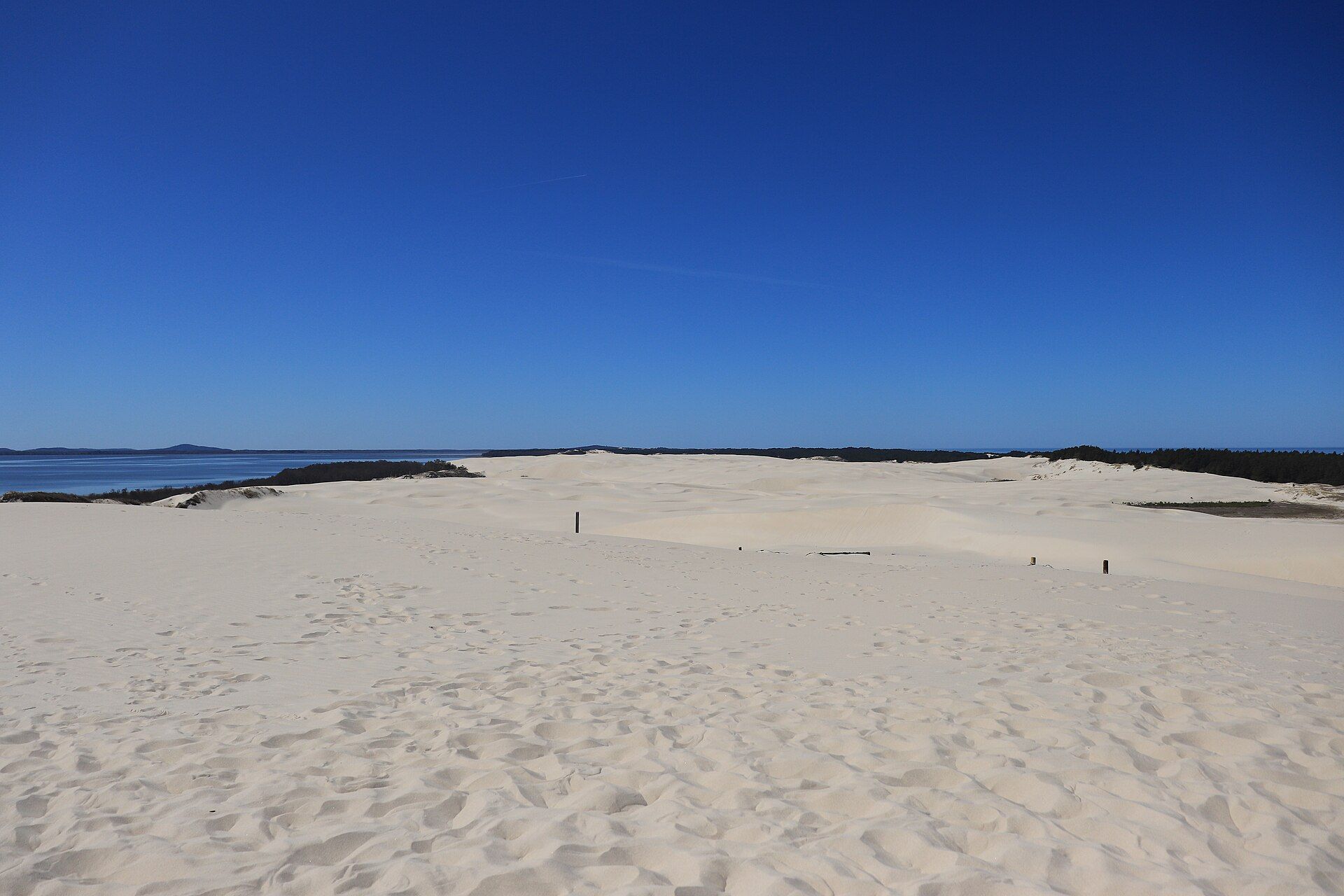
On a narrow spit between the Baltic Sea and the shallow coastal lake of Łebsko lies one of the strangest landscapes in Europe: a field of live, moving sand dunes, the largest of its kind on the continent. Wind sweeping off the sea drives the sand steadily inland, so that the dunes actually travel — several metres a year — swallowing forest and later releasing the bleached skeletons of long-buried trees. The greatest of them, the Łącka dune, rears over 40 metres high. The whole shifting world is protected within Słowiński National Park, a UNESCO Biosphere Reserve of dunes, lakes, bog and coastal woodland.
Why visit
Cresting the vast white flank of the Łącka dune, with the Baltic on one side and forest and lake on the other, feels like stepping into a desert that has no business being in northern Europe. Watching the wind hiss sand across the ridgelines, and knowing the whole dune is slowly on the march, gives the place a rare, living drama — and the surrounding park brims with birds and quiet coastal trails.
More views of Słowiński Sand Dunes
Additional photographs of the actual site — each freely licensed, with its photographer and licence credited.
What to know before you go
🗓️ Best time
Late spring to early autumn brings the best weather for walking the dunes and the coast; summer is warmest but busiest, and the park is open year-round.
🧭 Getting there & access
Reached from the seaside town of Łeba; from the park entrance at Rąbka a path, electric cart or bike leads several kilometres to the foot of the dunes.
Good to know
- It is a few kilometres from the car park to the dunes — walk, cycle or take the electric shuttle.
- There is no shade on the sand; bring water, sun protection and sturdy shoes.
- Stay on marked routes to protect the fragile, shifting dune ecosystem.
Plan your visit
Easy🧭 Getting there
From Gdańsk (airport GDN), then Łeba
- Travel to the resort town of Łeba on the Baltic coast, about 2h30 from Gdańsk
- From the Rąbka park entrance, walk, cycle or ride the electric cart several kilometres to the dunes
- Total travel
- A half to full day from Łeba
- Time at site
- Two to four hours to reach and walk the main dune
- Access
- National park entry fee at Rąbka; the dunes are a few kilometres in by foot, bike or shuttle cart.
🎒 What to bring & consider
- Sun hat, sunscreen and water for the shadeless sand
- Sturdy shoes; sand gets into open footwear
- A windproof layer, as the exposed dunes are breezy
- Cash for park entry and the shuttle
👁️ What to expect
- Crowds
- Busy on summer weekends and Polish holidays; quieter in shoulder season.
- Conditions
- Flat approach then a soft, tiring climb up open sand; fully exposed to sun and wind.
- Facilities
- Parking, toilets and cart hire at Rąbka; services in Łeba town.
- The view
- Footprint-free dune ridgelines with the Baltic behind, in low morning light.
Times and requirements are approximate and change with season, weather, and local rules — confirm permits, fares, and schedules with operators before you travel.
Natural riches of the area
- Europe's largest field of moving dunes
- The 40-metre Łącka wandering dune
- The shallow coastal Lake Łebsko
- Bog, coastal forest and rich birdlife
Local food
- Ryba z grilla
- Grilled Baltic fish such as cod or flounder, sold along the Łeba seafront.
- Śledź
- Marinated Baltic herring, a staple of the Pomeranian coast.
- Gofry
- Crisp seaside waffles with cream and fruit, a Polish beach treat.
On Poland’s Baltic coast lies a landscape that seems to belong to another continent: a desert of shifting sand, the largest field of moving dunes in Europe. It sits on a narrow spit between the open sea and the shallow coastal lake of Łebsko, within Słowiński National Park, and its dunes are genuinely alive — driven by the wind off the Baltic, they creep steadily inland, several metres every year.
As they march, the dunes bury everything in their path. Whole stretches of pine forest have been swallowed by the advancing sand, only for the skeletons of the dead trees to emerge again, bleached and bare, once the dune has passed on. The greatest of them, the Łącka dune, rises more than 40 metres, a vast pale flank of sand that walkers climb for sweeping views of sea, forest and lake — a “wandering desert” that never sits still.
The park around the dunes is a UNESCO Biosphere Reserve, a mosaic of coastal lakes, peat bog and woodland alive with birds. Reaching the sand takes a few kilometres of walking, cycling or an electric cart from the town of Łeba, but the effort is repaid the moment you crest the ridge and feel the wind hissing sand past your feet — a reminder that here, on the edge of northern Europe, the land itself is on the move.
Słowiński Sand Dunes: common questions
How do you get to Słowiński Sand Dunes?
From Gdańsk (airport GDN), then Łeba: Travel to the resort town of Łeba on the Baltic coast, about 2h30 from Gdańsk; From the Rąbka park entrance, walk, cycle or ride the electric cart several kilometres to the dunes. Total travel time: A half to full day from Łeba.
When is the best time to visit Słowiński Sand Dunes?
Late spring to early autumn brings the best weather for walking the dunes and the coast; summer is warmest but busiest, and the park is open year-round.
How long should you spend at Słowiński Sand Dunes?
Two to four hours to reach and walk the main dune. Total travel time: A half to full day from Łeba.
What should you bring to Słowiński Sand Dunes?
Sun hat, sunscreen and water for the shadeless sand Sturdy shoes; sand gets into open footwear A windproof layer, as the exposed dunes are breezy Cash for park entry and the shuttle
Do you need a permit or guide for Słowiński Sand Dunes?
National park entry fee at Rąbka; the dunes are a few kilometres in by foot, bike or shuttle cart.
Is Słowiński Sand Dunes crowded, and what are conditions like?
Busy on summer weekends and Polish holidays; quieter in shoulder season. Flat approach then a soft, tiring climb up open sand; fully exposed to sun and wind. Facilities: Parking, toilets and cart hire at Rąbka; services in Łeba town.
Added
More wonders to explore