Lake Titicaca
📍 Peru–Bolivia border, Andes
The highest large navigable lake on Earth — a vast, luminous inland sea at 3,812 metres in the Andes, ringed by snow peaks and dotted with floating reed islands.
What makes it marvelous
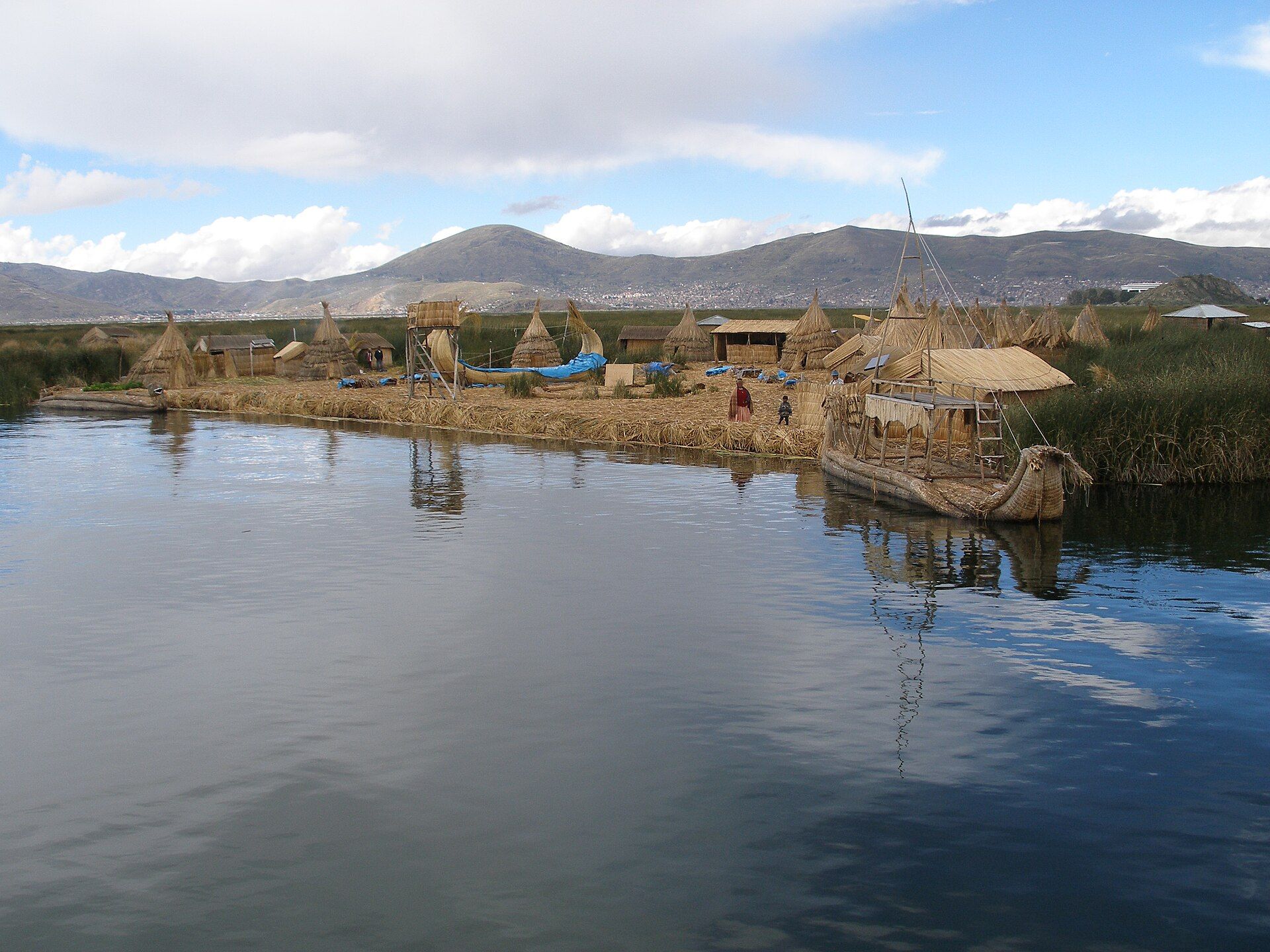
Lake Titicaca spreads over 8,000 square kilometres across the Altiplano at 3,812 metres, making it the highest large navigable lake in the world and the biggest lake in South America by volume. At that altitude the air is thin and the light extraordinary — the water takes on an intense, almost metallic blue beneath the snow-capped Cordillera Real. Its depths hold species found nowhere else, including the Titicaca water frog, one of the world's most fully aquatic frogs, which breathes through folds of loose skin. The lake is also a cultural heartland: Andean tradition holds it as the birthplace of the sun and of the first Inca, and the Uros people still live on floating islands they build and rebuild from totora reeds harvested at the shore, a way of life sustained for centuries on the water itself.
Why visit
Crossing an impossibly blue high-altitude sea beneath Andean snow peaks — visiting reed islands that float, and communities living as they have for centuries — is unlike any other lake experience on Earth.
Still deciding?
Lake Titicaca comes up most often against one other place — each one weighs cost, effort, season and crowds side by side.
What to know before you go
🗓️ Best time
The dry season (roughly May–October) for clear skies, calm water, and the best mountain views; nights are freezing year-round at this altitude.
🧭 Getting there & access
On the Peru–Bolivia border, reached via Puno (Peru) or Copacabana (Bolivia); boats run to the Uros floating islands, Taquile, Amantaní, and Bolivia's Isla del Sol.
Good to know
- Acclimatize before arriving — the lake sits at nearly 3,900 m.
- Stay overnight on Amantaní or Taquile with a local family, not just a day trip.
- Nights are bitterly cold at altitude; bring serious warm layers.
Plan your visit
Easy🧭 Getting there
From Puno, Peru
- Fly Lima → Juliaca (JUL), then drive to Puno — roughly 1h
- Or take the scenic train or bus from Cusco → Puno — a long, high day
- Board a boat from Puno harbour to the Uros, Taquile or Amantaní islands
- Total travel
- A short flight and transfer, or a full day overland from Cusco
- Time at site
- Two days with an island homestay
- Access
- The lake is reached by boat from Puno, and the Uros floating reed islands, Taquile and an Amantaní homestay are the standard circuit, run by community operators. The overriding fact is the altitude: at roughly 3,810m this is the highest large navigable lake in the world, and even resting here leaves you breathless if you have come up too quickly — acclimatise in Cusco, Puno or Arequipa before any exertion. The high-altitude sun is intense off the water by day, and the nights, especially on a homestay island without heating, are bitterly cold.
🎒 What to bring & consider
- Real acclimatisation before arriving, since 3,810m is high enough that people fall ill stepping off the bus, let alone walking Taquile's hills
- A warm sleeping layer for an island homestay, where there is no heating and the night cold at this altitude is severe
- Fierce sun protection for the glare coming off the water under thin, high-altitude air
- Small denominations of local currency for the islands, for crafts, the homestay hosts and boat tips
- Warm and windproof clothing for the open boat crossings, which are cold even when the sun is out
👁️ What to expect
- Crowds
- The nearest Uros islands see constant day-boats; Taquile and Amantaní are calmer, especially overnight.
- Conditions
- Bright, thin-aired and cold out of the sun. Gentle walking on the islands, hard only because of the altitude.
- Facilities
- Full in Puno. On the islands, simple homestays and little else — bring what you need.
- The view
- The reed boats and reed islands of the Uros against the deep blue lake, or the terraced hills and traditional dress of Taquile. Low morning and evening light is kindest to the water's colour.
Times and requirements are approximate and change with season, weather, and local rules — confirm permits, fares, and schedules with operators before you travel.
Natural riches of the area
- The highest large navigable lake on Earth (3,812 m)
- South America's largest lake by volume
- Endemic species including the Titicaca water frog
- Totora reed beds that sustain the Uros floating islands
Local food
- Trucha (trout)
- Lake trout, grilled or fried, the signature dish of Titicaca's shores.
- Quinoa & Andean potatoes
- High-altitude staples, with hundreds of native potato varieties.
- Chuño
- Freeze-dried potato, preserved using the Altiplano's frigid nights.
Lake Titicaca is an inland sea in the sky. Spread across more than 8,000 square kilometres of the Andean Altiplano at 3,812 metres, it is the highest large navigable lake on Earth and the biggest in South America by volume. At that altitude the thin air does something remarkable to the light, and the water takes on an intense, almost metallic blue beneath the snow-capped peaks of the Cordillera Real.
Its depths hold life found nowhere else, including the Titicaca water frog, which breathes through folds of loose skin in water too oxygen-poor for most amphibians. But Titicaca is as much a cultural heartland as a natural one: Andean tradition holds it to be the birthplace of the sun and of the first Inca, and the Uros people still live out on the lake itself, on floating islands they weave and continually rebuild from totora reeds — a way of life carried on the water for centuries.
Lake Titicaca: common questions
How do you get to Lake Titicaca?
From Puno, Peru: Fly Lima → Juliaca (JUL), then drive to Puno — roughly 1h; Or take the scenic train or bus from Cusco → Puno — a long, high day; Board a boat from Puno harbour to the Uros, Taquile or Amantaní islands. Total travel time: A short flight and transfer, or a full day overland from Cusco.
When is the best time to visit Lake Titicaca?
The dry season (roughly May–October) for clear skies, calm water, and the best mountain views; nights are freezing year-round at this altitude.
How long should you spend at Lake Titicaca?
Two days with an island homestay. Total travel time: A short flight and transfer, or a full day overland from Cusco.
What should you bring to Lake Titicaca?
Real acclimatisation before arriving, since 3,810m is high enough that people fall ill stepping off the bus, let alone walking Taquile's hills A warm sleeping layer for an island homestay, where there is no heating and the night cold at this altitude is severe Fierce sun protection for the glare coming off the water under thin, high-altitude air Small denominations of local currency for the islands, for crafts, the homestay hosts and boat tips Warm and windproof clothing for the open boat crossings, which are cold even when the sun is out
Do you need a permit or guide for Lake Titicaca?
The lake is reached by boat from Puno, and the Uros floating reed islands, Taquile and an Amantaní homestay are the standard circuit, run by community operators. The overriding fact is the altitude: at roughly 3,810m this is the highest large navigable lake in the world, and even resting here leaves you breathless if you have come up too quickly — acclimatise in Cusco, Puno or Arequipa before any exertion. The high-altitude sun is intense off the water by day, and the nights, especially on a homestay island without heating, are bitterly cold.
Is Lake Titicaca crowded, and what are conditions like?
The nearest Uros islands see constant day-boats; Taquile and Amantaní are calmer, especially overnight. Bright, thin-aired and cold out of the sun. Gentle walking on the islands, hard only because of the altitude. Facilities: Full in Puno. On the islands, simple homestays and little else — bring what you need.
Added Updated
More wonders to explore
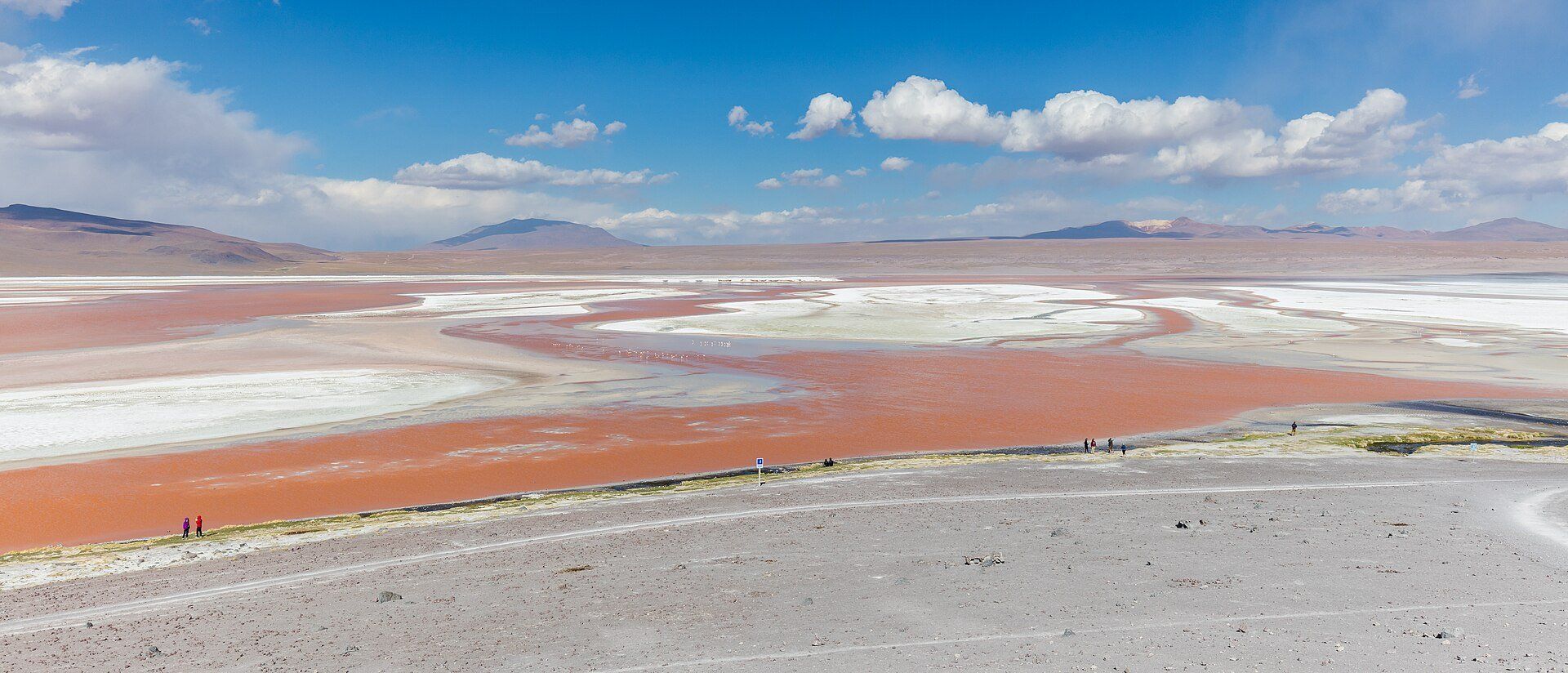
Laguna Colorada
Eduardo Avaroa Andean Fauna National Reserve, Sur Lípez, Potosí Department, southwestern Bolivia