Lake Tekapo (Takapō)
📍 Mackenzie Basin, Canterbury, South Island, New Zealand
A glacier-fed turquoise lake in the Mackenzie Basin, at the heart of the Aoraki Mackenzie International Dark Sky Reserve — milky blue water by day and some of the clearest night skies on Earth.
What makes it marvelous
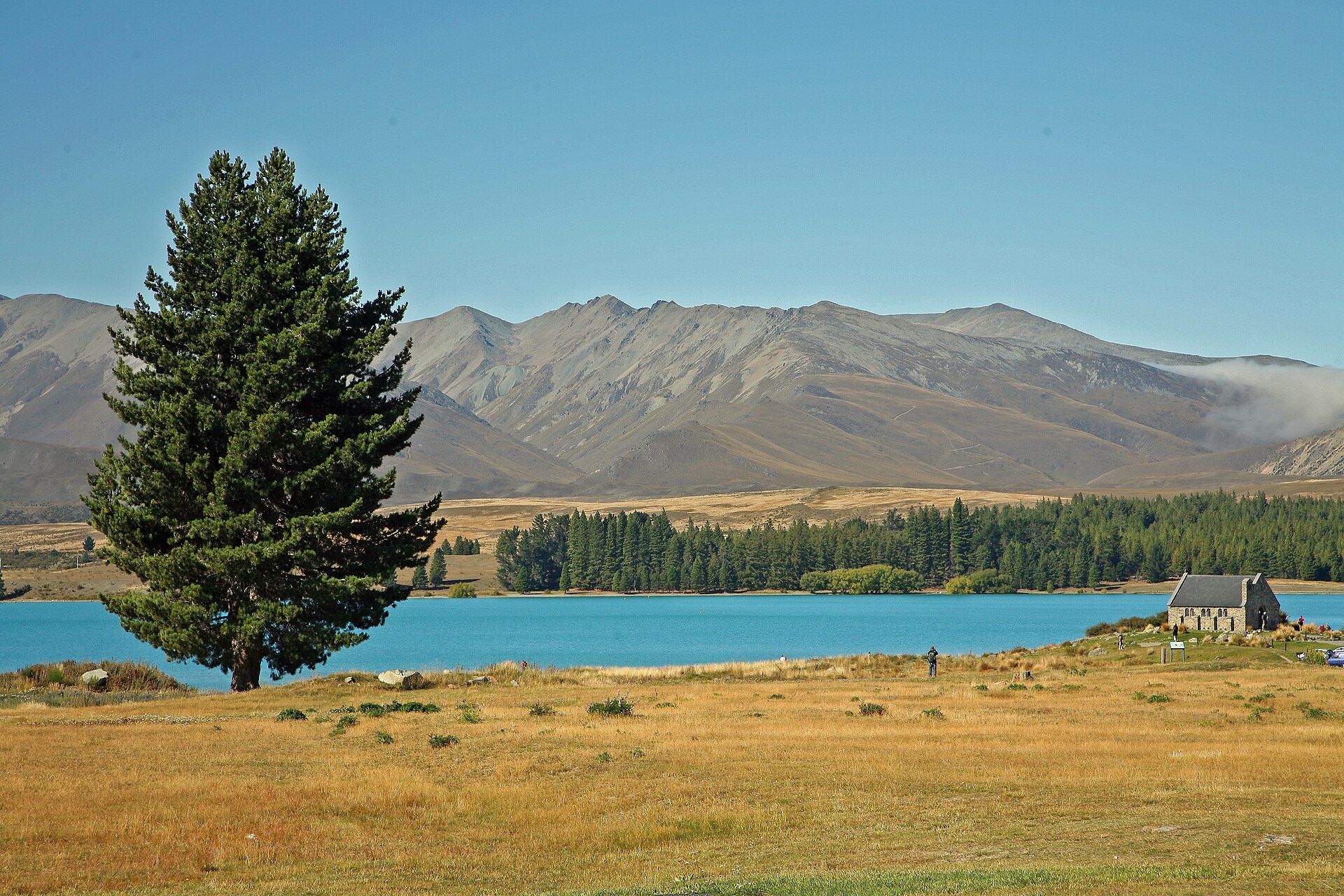
Lake Tekapo covers 83 km² at 710 metres above sea level, the second-largest of three roughly parallel lakes along the northern edge of the Mackenzie Basin, with Pukaki and Ōhau. The braided Godley and Macaulay rivers feed it from the Southern Alps, and the fine glacial silt they carry tints the water a light turquoise. It is one of the sunniest places in New Zealand, with more than 2,400 hours of sunshine a year, and since 2012 the lake and the surrounding district have been part of the Aoraki Mackenzie International Dark Sky Reserve, which covers 4,367 km². Mount John, beside the town, carries an astronomical observatory.
Why visit
Turquoise water and golden tussock by day, then a night sky dark enough to see the Milky Way and the Magellanic Clouds with the naked eye.
Still deciding?
Lake Tekapo (Takapō) comes up most often against one other place — each one weighs cost, effort, season and crowds side by side.
What to know before you go
🗓️ Best time
Any clear night for stargazing; the lake is at its most vivid on bright summer days. Surface water is coldest in September (about 6 °C) and warmest in January (about 17 °C).
🧭 Getting there & access
State Highway 8 runs past the southern end of the lake at the township of Lake Tekapo.
Good to know
- Stay overnight and book a guided stargazing tour on a clear night — the dark-sky reserve is the point of staying over.
- Turn off your headlights and let your eyes adjust for 20 minutes before judging the sky.
- Combine it with Lake Pukaki and Aoraki / Mount Cook, a short drive to the south-west.
- The water is cold even in summer.
Plan your visit
Easy🧭 Getting there
From Christchurch (CHC) or Queenstown (ZQN), South Island
- Fly into Christchurch or Queenstown
- Drive State Highway 8 into the Mackenzie Basin to Lake Tekapo township
- Total travel
- Several hours' drive from Christchurch or Queenstown
- Time at site
- One or two nights, to allow for a clear night
- Access
- The lakeshore, regional park and township are open to all. Guided stargazing tours operate around the township; check with operators for current options.
🎒 What to bring & consider
- Warm layers for night-time stargazing — the basin gets cold after dark, even in summer
- A red-light torch, so you don't spoil your night vision or anyone else's
- Sun protection by day; the high, clear air means strong sun
👁️ What to expect
- Crowds
- The lakeshore by the township is busy with day-trippers; it is far quieter after dark.
- Conditions
- High, dry and sunny, with a big temperature drop at night and strong winds at times.
- Facilities
- Hotels, motels, cafés and fuel in Lake Tekapo township.
- The view
- The turquoise lake with the stone Church of the Good Shepherd on the shore — or the same scene under the Milky Way.
Times and requirements are approximate and change with season, weather, and local rules — confirm permits, fares, and schedules with operators before you travel.
Natural riches of the area
- Glacier-fed turquoise water coloured by glacial silt
- Braided rivers flowing from the Southern Alps
- Golden tussock grassland of the Mackenzie Basin
- Exceptionally dark, clear night skies
Local food
- Mackenzie salmon
- Chinook salmon raised in the glacier-fed hydro canals of the Mackenzie Basin.
- High-country lamb
- From the sheep stations that surround the basin.
Lake Tekapo — Takapō, as the Mackenzie District now also names it — is a lake for both day and night. By day it is a sheet of milky turquoise in a basin of golden tussock, coloured by fine glacial silt carried down from the Southern Alps by the braided Godley and Macaulay rivers. The lake covers 83 km² at 710 metres above sea level, the second-largest of the three parallel lakes, with Pukaki and Ōhau, along the northern edge of the Mackenzie Basin.
By night it belongs to the stars. The basin is one of the sunniest places in New Zealand, with more than 2,400 hours of sunshine a year, and its clear, dry air and lack of light pollution led to the creation in 2012 of the Aoraki Mackenzie International Dark Sky Reserve, covering 4,367 km² around the lake. An astronomical observatory stands on Mount John, just north of the township.
On a clear day the snow peaks of Aoraki / Mount Cook National Park are visible from the lake. Stay at least one night, wrap up warm, and give your eyes time to adjust — the sky over the Mackenzie is the reason to be here.
Lake Tekapo (Takapō): common questions
How do you get to Lake Tekapo (Takapō)?
From Christchurch (CHC) or Queenstown (ZQN), South Island: Fly into Christchurch or Queenstown; Drive State Highway 8 into the Mackenzie Basin to Lake Tekapo township. Total travel time: Several hours' drive from Christchurch or Queenstown.
When is the best time to visit Lake Tekapo (Takapō)?
Any clear night for stargazing; the lake is at its most vivid on bright summer days. Surface water is coldest in September (about 6 °C) and warmest in January (about 17 °C).
How long should you spend at Lake Tekapo (Takapō)?
One or two nights, to allow for a clear night. Total travel time: Several hours' drive from Christchurch or Queenstown.
What should you bring to Lake Tekapo (Takapō)?
Warm layers for night-time stargazing — the basin gets cold after dark, even in summer A red-light torch, so you don't spoil your night vision or anyone else's Sun protection by day; the high, clear air means strong sun
Do you need a permit or guide for Lake Tekapo (Takapō)?
The lakeshore, regional park and township are open to all. Guided stargazing tours operate around the township; check with operators for current options.
Is Lake Tekapo (Takapō) crowded, and what are conditions like?
The lakeshore by the township is busy with day-trippers; it is far quieter after dark. High, dry and sunny, with a big temperature drop at night and strong winds at times. Facilities: Hotels, motels, cafés and fuel in Lake Tekapo township.
Added
More wonders to explore