The Drakensberg
📍 KwaZulu-Natal, South Africa (bordering Lesotho)
South Africa's great basalt rampart — a UNESCO World Heritage range of soaring escarpment walls, plunging waterfalls and the world's richest gallery of San rock art, rising along the border with Lesotho.
What makes it marvelous
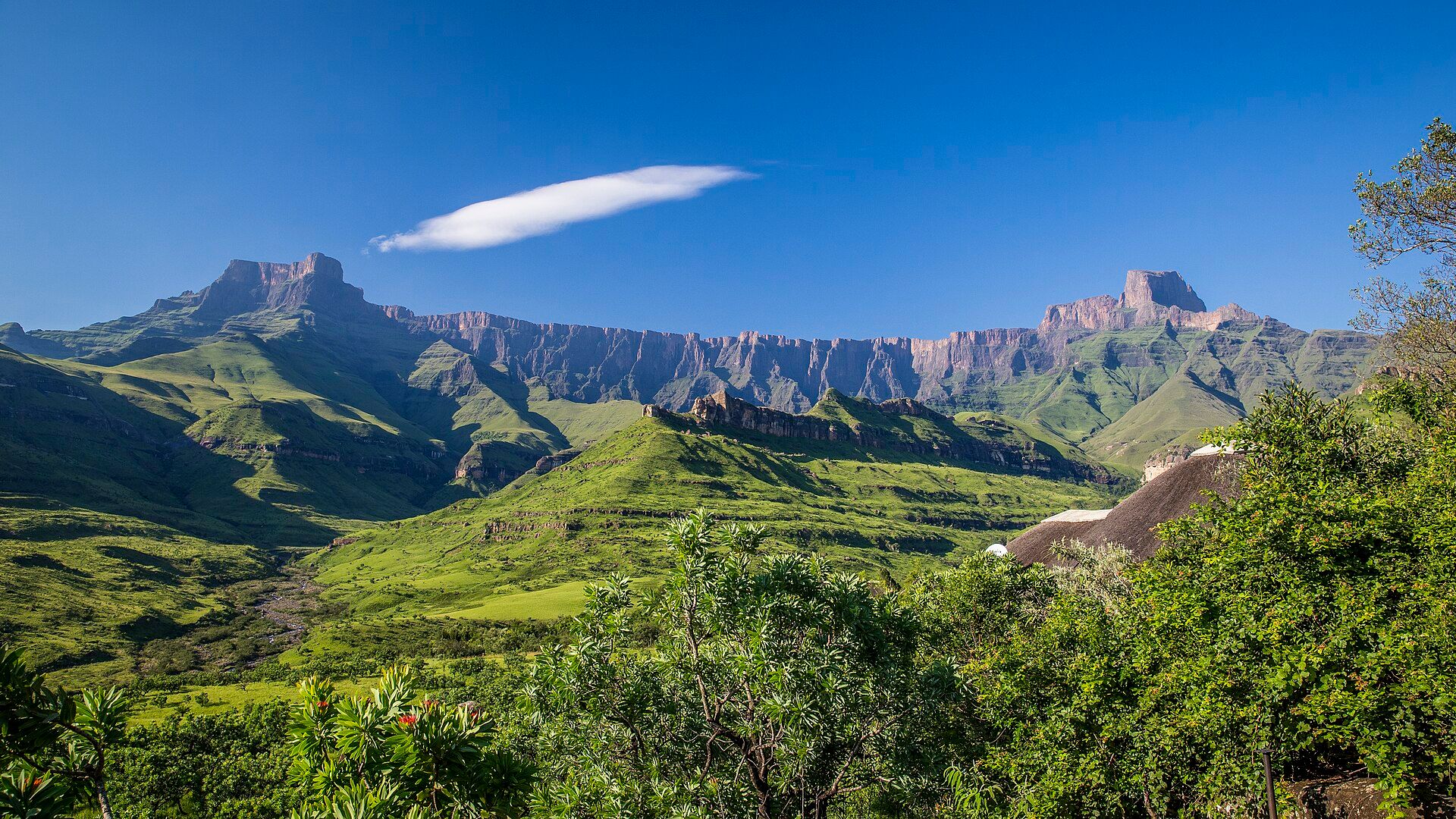
The Drakensberg — uKhahlamba, the 'barrier of spears' — is a vast escarpment where layers of ancient lava were uplifted and then eroded into a wall of basalt cliffs standing over sandstone foothills. Its signature is the Amphitheatre, a sheer rock face roughly 5 km long and up to 1,200 m high, over whose lip the Tugela plunges as one of the world's tallest waterfalls at close to 950 m in a series of leaps. Just across the crest in Lesotho rises Thabana Ntlenyana (3,482 m), the highest peak in southern Africa. UNESCO inscribed the park as a mixed World Heritage Site for both this scenery and its unmatched cultural treasure: thousands of San rock paintings, some more than 4,000 years old, sheltered in caves and overhangs throughout the range.
Why visit
This is one of Africa's finest mountain wildernesses — a place to hike beneath towering basalt walls, stand at the foot of the Amphitheatre, seek out ancient painted caves, and watch bearded vultures ride the updraughts. Trails range from gentle valley walks to the exposed chain-ladder ascent onto the escarpment summit plateau.
More views of The Drakensberg
Additional photographs of the actual site — each freely licensed, with its photographer and licence credited.
What to know before you go
🗓️ Best time
The dry winter months (May–September) bring clear skies, crisp air and the best long-distance views; summer (November–March) is greener but brings afternoon thunderstorms, mist and flash-flood risk in the gorges.
🧭 Getting there & access
The range runs along the KwaZulu-Natal–Lesotho border. The Royal Natal (Amphitheatre), Cathedral Peak, Champagne Valley and Giant's Castle areas are reached by road from Durban (3–4 hours) or Johannesburg (4–5 hours).
Good to know
- Weather changes fast on the escarpment — carry warm, waterproof layers and start summit walks early.
- The Tugela Gorge and chain-ladder routes cross exposed ground; check conditions and turn back in storms.
- Sign the mountain register at the trailhead and carry enough water; sources can be scarce on the tops.
Plan your visit
Strenuous🧭 Getting there
From Durban (DUR) or Johannesburg (JNB) by road
- Fly to Durban, then drive to the Central or Northern Drakensberg — about 3–4 hours
- From Johannesburg, drive south via Harrismith to the Amphitheatre area — roughly 4–5 hours
- Total travel
- A half-day drive from either Durban or Johannesburg
- Time at site
- Two to four days for a proper range of hikes and rock-art visits
- Access
- The park areas charge a conservation fee at the gate. Most trails are self-guided; the escarpment summit routes are strenuous and weather-dependent, and rock-art sites are often visited with a guide.
🎒 What to bring & consider
- Warm and waterproof layers for cold, fast-changing mountain weather
- Sturdy boots and navigation for long, exposed escarpment routes
- Plenty of water and sun protection at altitude
- A head for heights on the chain-ladder and gorge scrambles
👁️ What to expect
- Crowds
- Resort valleys are busy in holidays; the high escarpment and back-country stay quiet.
- Conditions
- Big, serious mountain terrain — hot valleys, cold tops, and violent summer storms.
- Facilities
- Good in the resort areas — lodges, camps and gate offices; nothing high on the escarpment.
- The view
- The Amphitheatre wall glowing at sunrise from the Tugela Gorge trail.
Times and requirements are approximate and change with season, weather, and local rules — confirm permits, fares, and schedules with operators before you travel.
Natural riches of the area
- A towering basalt escarpment, including the ~1,200 m Amphitheatre wall
- The Tugela Falls, among the world's highest waterfalls, dropping close to 950 m
- Thousands of San rock-art sites, some over 4,000 years old
- Endemic alpine flora and rare raptors, including the bearded vulture
Local food
- Potjiekos
- A slow-cooked stew of meat and vegetables simmered in a three-legged cast-iron pot.
- Biltong
- Air-dried, spiced cured meat, a staple trail snack across South Africa.
- Boerewors
- A coiled farmer's sausage of coarsely minced beef, grilled over coals.
The Drakensberg is South Africa’s great mountain barrier — uKhahlamba, the “barrier of spears” in isiZulu — a wall of basalt cliffs standing more than a kilometre above green sandstone foothills along the border with the mountain kingdom of Lesotho. Its most famous face is the Amphitheatre, a sheer curved rampart some five kilometres long, over whose lip the Tugela River throws itself in a chain of leaps that ranks among the tallest waterfalls on Earth.
Behind that wall lies a high, cold plateau; just across the crest rises Thabana Ntlenyana, at 3,482 metres the highest peak in southern Africa. But the range is prized for more than its scale. UNESCO inscribed it as a mixed World Heritage Site because its caves and overhangs shelter the world’s richest concentration of San rock art — thousands of paintings, some more than four thousand years old, left by the hunter-gatherers who knew these mountains long before anyone else.
For visitors it offers everything from gentle valley strolls beneath the peaks to the exposed chain-ladder climb onto the escarpment, all under skies patrolled by soaring bearded vultures.
The Drakensberg: common questions
How do you get to The Drakensberg?
From Durban (DUR) or Johannesburg (JNB) by road: Fly to Durban, then drive to the Central or Northern Drakensberg — about 3–4 hours; From Johannesburg, drive south via Harrismith to the Amphitheatre area — roughly 4–5 hours. Total travel time: A half-day drive from either Durban or Johannesburg.
When is the best time to visit The Drakensberg?
The dry winter months (May–September) bring clear skies, crisp air and the best long-distance views; summer (November–March) is greener but brings afternoon thunderstorms, mist and flash-flood risk in the gorges.
How long should you spend at The Drakensberg?
Two to four days for a proper range of hikes and rock-art visits. Total travel time: A half-day drive from either Durban or Johannesburg.
What should you bring to The Drakensberg?
Warm and waterproof layers for cold, fast-changing mountain weather Sturdy boots and navigation for long, exposed escarpment routes Plenty of water and sun protection at altitude A head for heights on the chain-ladder and gorge scrambles
Do you need a permit or guide for The Drakensberg?
The park areas charge a conservation fee at the gate. Most trails are self-guided; the escarpment summit routes are strenuous and weather-dependent, and rock-art sites are often visited with a guide.
Is The Drakensberg crowded, and what are conditions like?
Resort valleys are busy in holidays; the high escarpment and back-country stay quiet. Big, serious mountain terrain — hot valleys, cold tops, and violent summer storms. Facilities: Good in the resort areas — lodges, camps and gate offices; nothing high on the escarpment.
Added
More wonders to explore