Head to head · Two faces of the Drakensberg escarpment
Drakensberg vs Blyde River Canyon: Which South African Mountain Trip Is Right for You?
Blyde River Canyon cuts through the northern Drakensberg escarpment, so the two share a geology — and both are best in the dry winter (roughly May–September), and both are about a half-day's drive from Johannesburg. But they are different kinds of trip: the Drakensberg is a mountain range you hike in for days, while Blyde River Canyon is a scenic drive you can see in one.
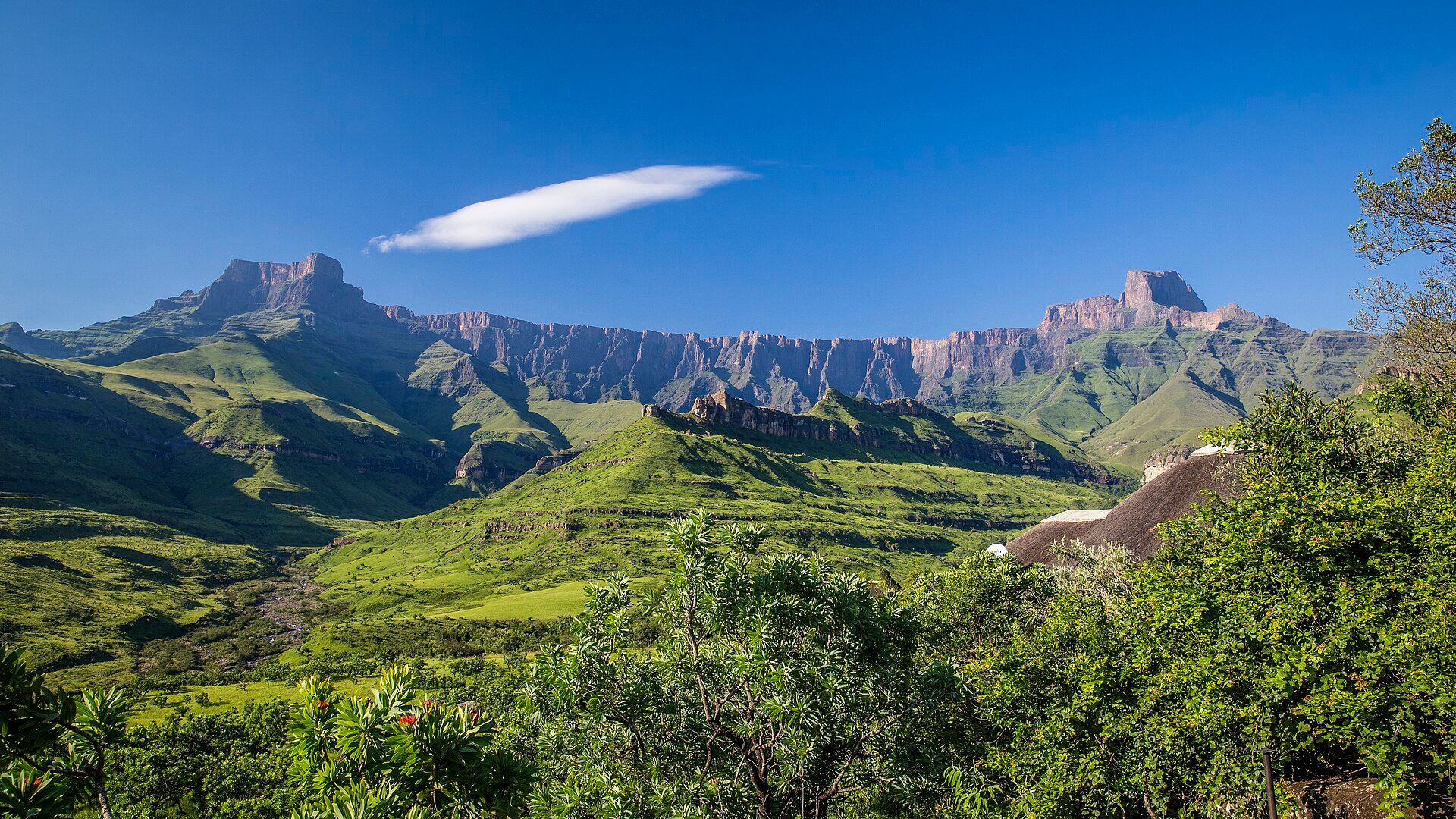
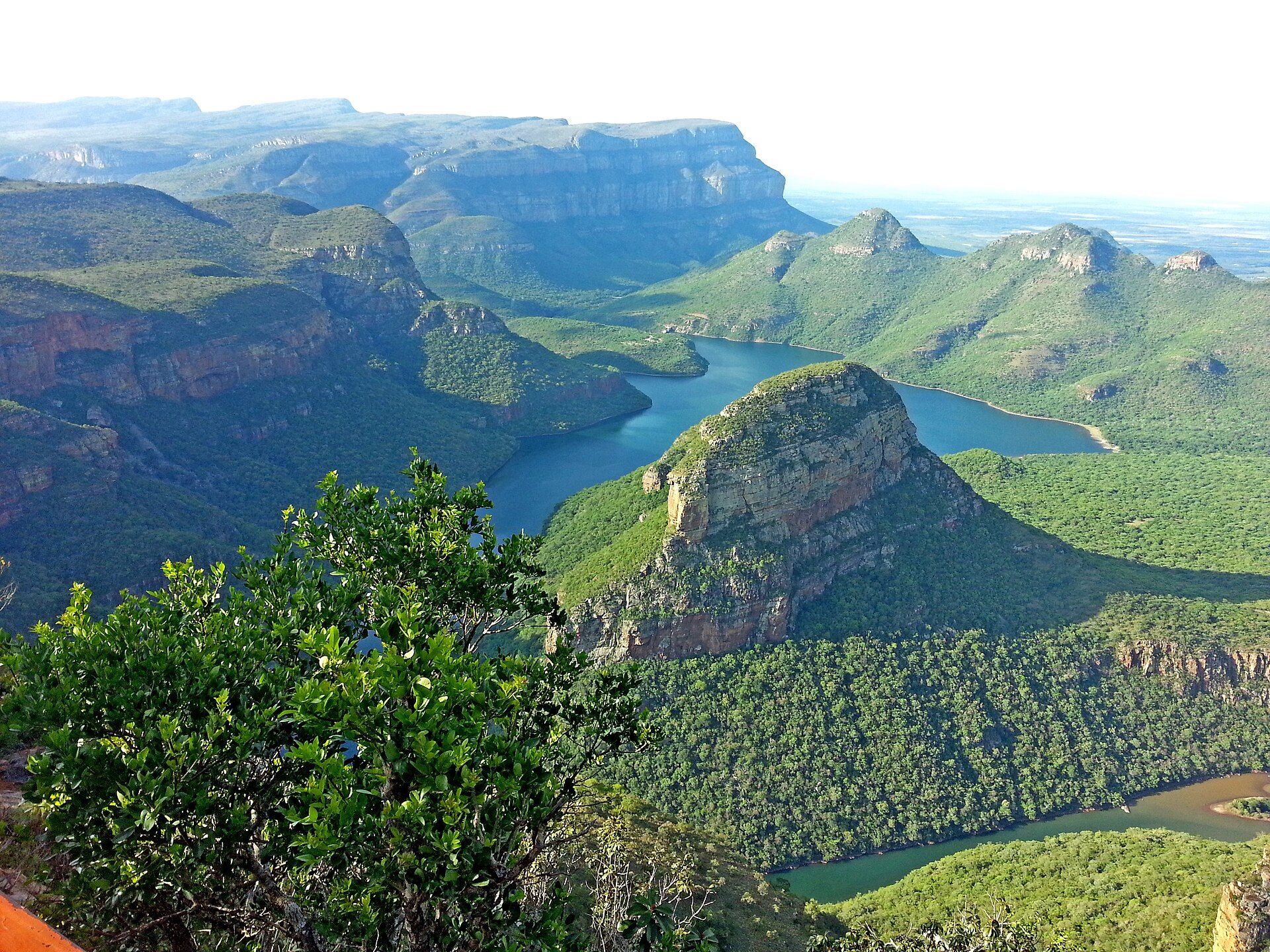
The Drakensberg runs along the KwaZulu-Natal–Lesotho border, a UNESCO mixed World Heritage range with an escarpment above 3,000 metres, the Amphitheatre's wall up to 1,200 metres high and the world's richest gallery of San rock art. Blyde River Canyon, in Mpumalanga, is about 25 kilometres long with cliffs up to ~700 metres — one of the world's largest canyons, and green and forested — strung along the R532 Panorama Route.
Drakensberg
A hiking range of walls and rock art
uKhahlamba-Drakensberg Park: the Royal Natal (Amphitheatre), Cathedral Peak, Champagne Valley and Giant's Castle areas, each reached by road — 3–4 hours from Durban, 4–5 from Johannesburg. Most trails are self-guided; escarpment summit routes are strenuous and weather-dependent, with chain ladders and gorge scrambles, and rock-art sites are often visited with a guide. Conservation fees at the gates.
- The Amphitheatre and long escarpment hikes
- The world's richest gallery of San rock art
- Quiet back-country beyond the resort valleys
Blyde River Canyon
A green canyon on the Panorama Route
A subtropical gorge of red-rock buttresses and forested cliffs, seen from viewpoints on the R532 loop — God's Window, Bourke's Luck Potholes and the Three Rondavels — most a short walk from the car park, each with a small entry fee. About 4.5–5 hours from Johannesburg via Graskop, or 1.5–2 hours from Hoedspruit and Kruger's central gates.
- Big views for little effort
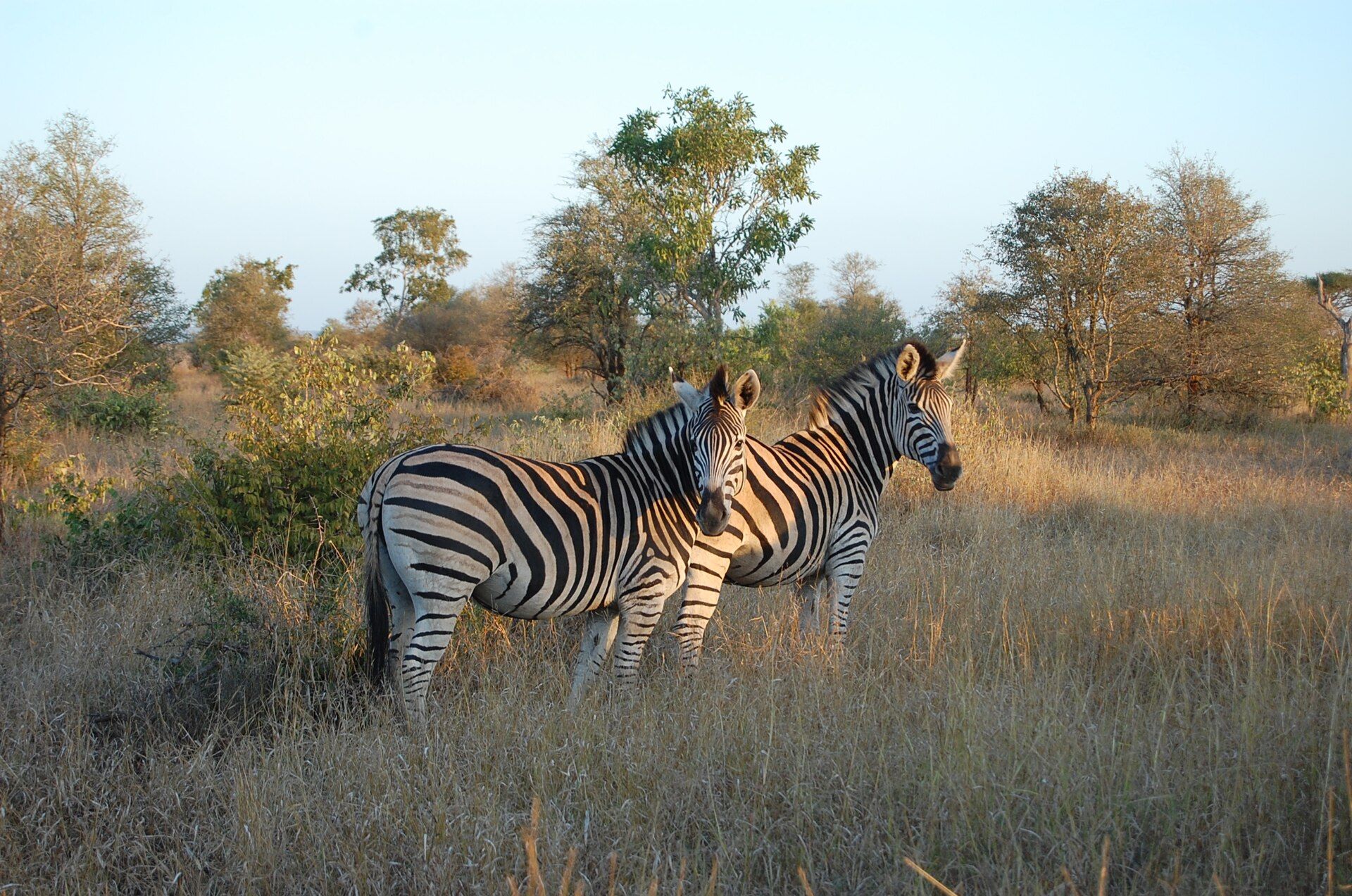
- An easy add-on to a Kruger safari
- One full day covers the main viewpoints
Head to head
| What matters | Drakensberg | Blyde River Canyon |
|---|---|---|
| Getting there Edge: Blyde River Canyon | 3–4 hours from Durban or 4–5 hours from Johannesburg to the park areas. | 4.5–5 hours from Johannesburg; 1.5–2 hours from Hoedspruit or Kruger's central gates. |
| Time needed Edge: Blyde River Canyon | Two to four days for a proper range of hikes and rock-art visits. | A full day for the Panorama Route viewpoints; longer to hike or raft. |
| Effort Edge: Blyde River Canyon | Strenuous: big, exposed mountain terrain, long escarpment routes, a head for heights on chain ladders. | Easy: a scenic drive with short walks; longer canyon trails need booking and in places a guide. |
| Scale Edge: Drakensberg | A whole range: escarpment above 3,000 m, the Amphitheatre wall up to 1,200 m. | One canyon about 25 km long, cliffs up to ~700 m. |
| Culture Edge: Drakensberg | San rock art — the world's richest gallery — often seen with a guide. | Mainly scenery. |
| Best months Edge: Toss-up | May–September for clear, crisp views; summer brings afternoon thunderstorms, mist and flash-flood risk in the gorges. | May–August for the clearest air; summer rains bring mist and storms, and God's Window can cloud over any time. |
| Crowds Edge: Drakensberg | Resort valleys busy in holidays; the high escarpment stays quiet. | Viewpoints busy midday and in holidays; early mornings calmer and clearer. |
Which should you choose?
Choose Drakensberg if…
…you're a hiker with several days, want big mountain walls and San rock art, or are travelling between Durban and Johannesburg.
Choose Blyde River Canyon if…
…you're heading to or from Kruger, have a day, and want spectacular views without serious hiking.
The honest verdict
With a Kruger safari on the itinerary, Blyde River Canyon: it is 1.5–2 hours from Kruger's central gates and its main viewpoints fit in one day by car.
For hiking, the Drakensberg: two to four days in the Amphitheatre, Cathedral Peak or Giant's Castle areas give you a real mountain range and the San rock art — but treat the escarpment routes as serious, weather-dependent mountain days.
Go in the dry winter for both, start early for clear views, and carry warm and waterproof layers — the escarpment is cold and misty when the lowveld below is hot.
Wonders mentioned here
Added