The Azores
📍 Azores archipelago, Atlantic Ocean
A remote archipelago of green volcanic islands rising from the mid-Atlantic — crater lakes, hot springs, hydrangea-lined roads, and some of the best whale watching on Earth.
What makes it marvelous
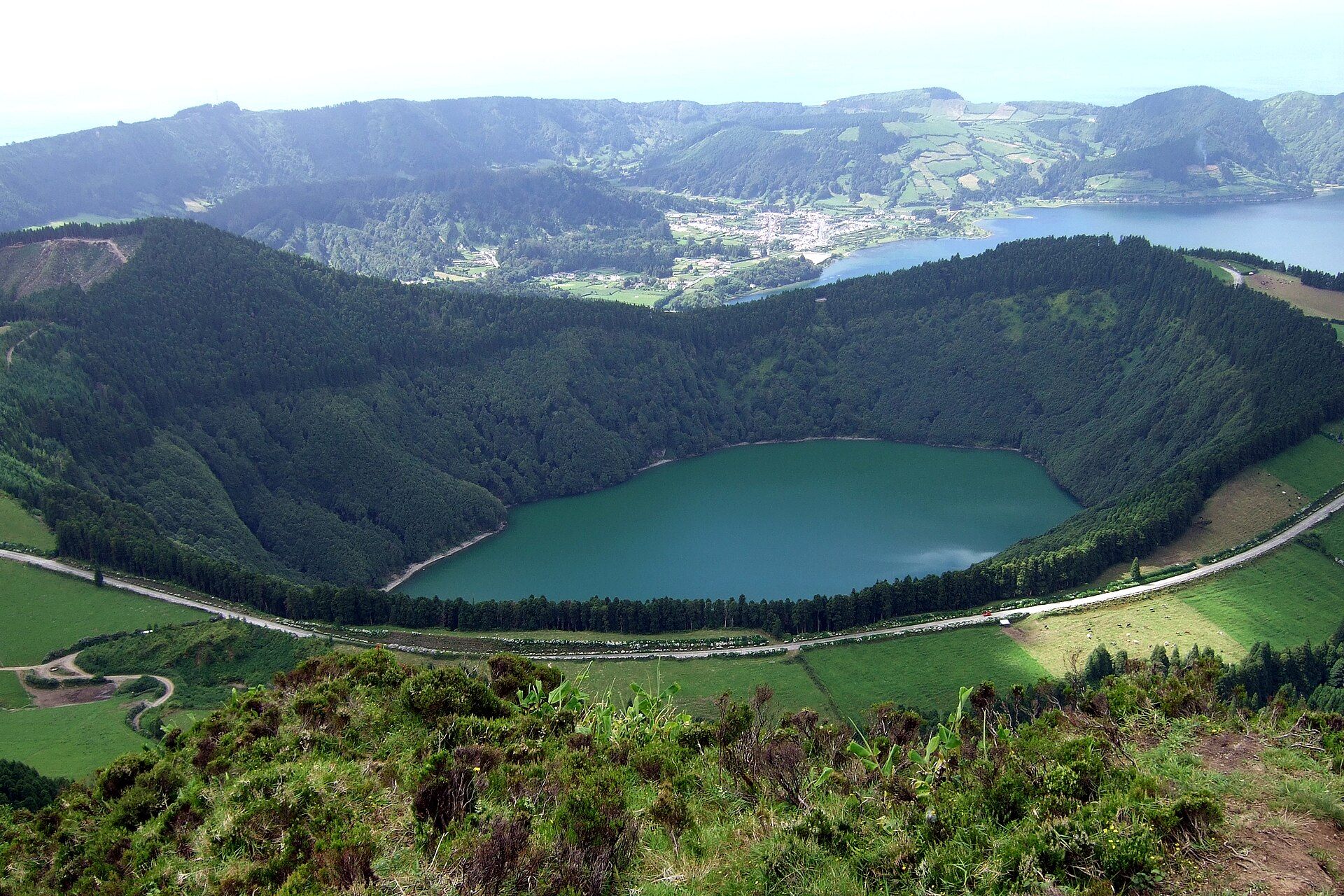
The Azores are nine volcanic islands scattered across the middle of the Atlantic, where the Mid-Atlantic Ridge lifts the seabed above the waves. Born of fire, they are startlingly green: rolling pastures divided by hedges of blue hydrangea, calderas cradling twin crater lakes like Sete Cidades — one green, one blue — and geothermal valleys where hot springs steam and food is cooked in the volcanic ground. Pico, on its namesake island, is Portugal's highest peak. The surrounding deep waters are a global hotspot for cetaceans: around a third of the world's whale and dolphin species pass through, making the Azores one of the finest places on Earth to watch sperm whales, blue whales, and dolphins. Mild, lush, and far from anywhere, they feel like Europe's own mid-ocean secret.
Why visit
Hiking to a rim above twin crater lakes, soaking in a geothermal pool, and heading out to sea among whales and dolphins make the Azores a green, uncrowded escape unlike anywhere else in Europe.
Still deciding?
The Azores comes up most often against one other place — each one weighs cost, effort, season and crowds side by side.
What to know before you go
🗓️ Best time
Late spring to early autumn (roughly May–September) for the warmest, driest weather and peak whale watching; the hydrangeas bloom in summer.
🧭 Getting there & access
An autonomous region of Portugal, reached by air from Lisbon or seasonally from North America and Europe; São Miguel is the main hub, with inter-island flights and ferries to the rest.
Good to know
- Come May–September for the best weather and whale watching.
- Rent a car on each island — sights are spread out and roads are scenic.
- Pack layers and rain gear; Atlantic weather shifts quickly.
Plan your visit
Moderate🧭 Getting there
From Ponta Delgada, São Miguel, Azores
- Fly Lisbon → Ponta Delgada (PDL) — roughly 2h15
- Base on São Miguel and drive to the crater lakes and hot springs
- Fly or ferry between islands if you want more than one — schedules vary by season
- Total travel
- A little over two hours from Lisbon
- Time at site
- Four or five days for one island, more for several
- Access
- The islands are open and easy to tour by hire car, with no permits for the headline sights — the crater lakes of Sete Cidades and Furnas, the hot springs, the coastal walks. What governs an Azores trip is the Atlantic weather, which changes hour to hour and island to island; a viewpoint can be clear at breakfast and buried in cloud by the time you drive up. Whale-watching and other boat trips are weather-dependent and cancel in swell. Treat the forecast as a rough guide and keep your plans flexible rather than fixed to one day.
🎒 What to bring & consider
- A flexible itinerary and a hire car, because the weather shifts fast and the trick is chasing the clear island or the clear hour rather than committing to a fixed plan
- Layers and a waterproof for genuine four-seasons-in-a-day conditions, even in summer
- A swimsuit for the thermal pools at Furnas and the coastal hot springs, which are a highlight in any weather
- Boots with grip for trails that are frequently wet, muddy and slick underfoot
- Motion-sickness precautions for the whale-watching boats, which run in real Atlantic swell
👁️ What to expect
- Crowds
- Modest outside the July-August peak. The famous viewpoints get busy midday when tours arrive.
- Conditions
- Green, wet and changeable, with mild temperatures and frequent low cloud on the high ground.
- Facilities
- Good — Ponta Delgada is a full town, and villages across the islands have food and lodging.
- The view
- The twin blue-and-green lakes of Sete Cidades from the Vista do Rei viewpoint, on one of the clear windows. The cloud is the whole challenge; being ready to drive up the moment it lifts is the whole technique.
Times and requirements are approximate and change with season, weather, and local rules — confirm permits, fares, and schedules with operators before you travel.
Natural riches of the area
- Nine volcanic islands on the Mid-Atlantic Ridge
- Crater lakes, calderas, and geothermal hot springs
- Pico (2,351 m), Portugal's highest mountain
- A migratory highway for a third of the world's cetacean species
Local food
- Cozido das Furnas
- A stew slow-cooked underground by volcanic heat in the Furnas valley.
- Azorean cheese & beef
- Rich dairy and beef from the islands' green volcanic pastures.
- Fresh Atlantic fish & pineapple
- Tuna and limpets from the sea, plus greenhouse-grown Azorean pineapple.
The Azores rise green and remote from the middle of the Atlantic, nine volcanic islands lifted above the waves where the Mid-Atlantic Ridge splits the seabed. Born of fire, they are astonishingly lush — rolling pastures hedged with blue hydrangea, calderas cradling twin crater lakes like Sete Cidades, one green and one blue, and geothermal valleys where hot springs steam and stews are cooked slowly in the warm ground. Pico, the volcano that names one island, is the highest peak in all of Portugal.
Their deep surrounding waters are one of the great gatherings of whales on Earth: around a third of the world’s whale and dolphin species pass through, making the Azores among the finest places anywhere to watch sperm whales, blue whales, and dolphins. Mild, uncrowded, and far from any mainland, they feel like Europe’s own secret in the ocean — a place to hike volcanic rims, soak in geothermal pools, and put to sea among giants.
The Azores: common questions
How do you get to The Azores?
From Ponta Delgada, São Miguel, Azores: Fly Lisbon → Ponta Delgada (PDL) — roughly 2h15; Base on São Miguel and drive to the crater lakes and hot springs; Fly or ferry between islands if you want more than one — schedules vary by season. Total travel time: A little over two hours from Lisbon.
When is the best time to visit The Azores?
Late spring to early autumn (roughly May–September) for the warmest, driest weather and peak whale watching; the hydrangeas bloom in summer.
How long should you spend at The Azores?
Four or five days for one island, more for several. Total travel time: A little over two hours from Lisbon.
What should you bring to The Azores?
A flexible itinerary and a hire car, because the weather shifts fast and the trick is chasing the clear island or the clear hour rather than committing to a fixed plan Layers and a waterproof for genuine four-seasons-in-a-day conditions, even in summer A swimsuit for the thermal pools at Furnas and the coastal hot springs, which are a highlight in any weather Boots with grip for trails that are frequently wet, muddy and slick underfoot Motion-sickness precautions for the whale-watching boats, which run in real Atlantic swell
Do you need a permit or guide for The Azores?
The islands are open and easy to tour by hire car, with no permits for the headline sights — the crater lakes of Sete Cidades and Furnas, the hot springs, the coastal walks. What governs an Azores trip is the Atlantic weather, which changes hour to hour and island to island; a viewpoint can be clear at breakfast and buried in cloud by the time you drive up. Whale-watching and other boat trips are weather-dependent and cancel in swell. Treat the forecast as a rough guide and keep your plans flexible rather than fixed to one day.
Is The Azores crowded, and what are conditions like?
Modest outside the July-August peak. The famous viewpoints get busy midday when tours arrive. Green, wet and changeable, with mild temperatures and frequent low cloud on the high ground. Facilities: Good — Ponta Delgada is a full town, and villages across the islands have food and lodging.
Added Updated
More wonders to explore