Geysir & Strokkur
📍 Haukadalur geothermal field, Southwest Iceland
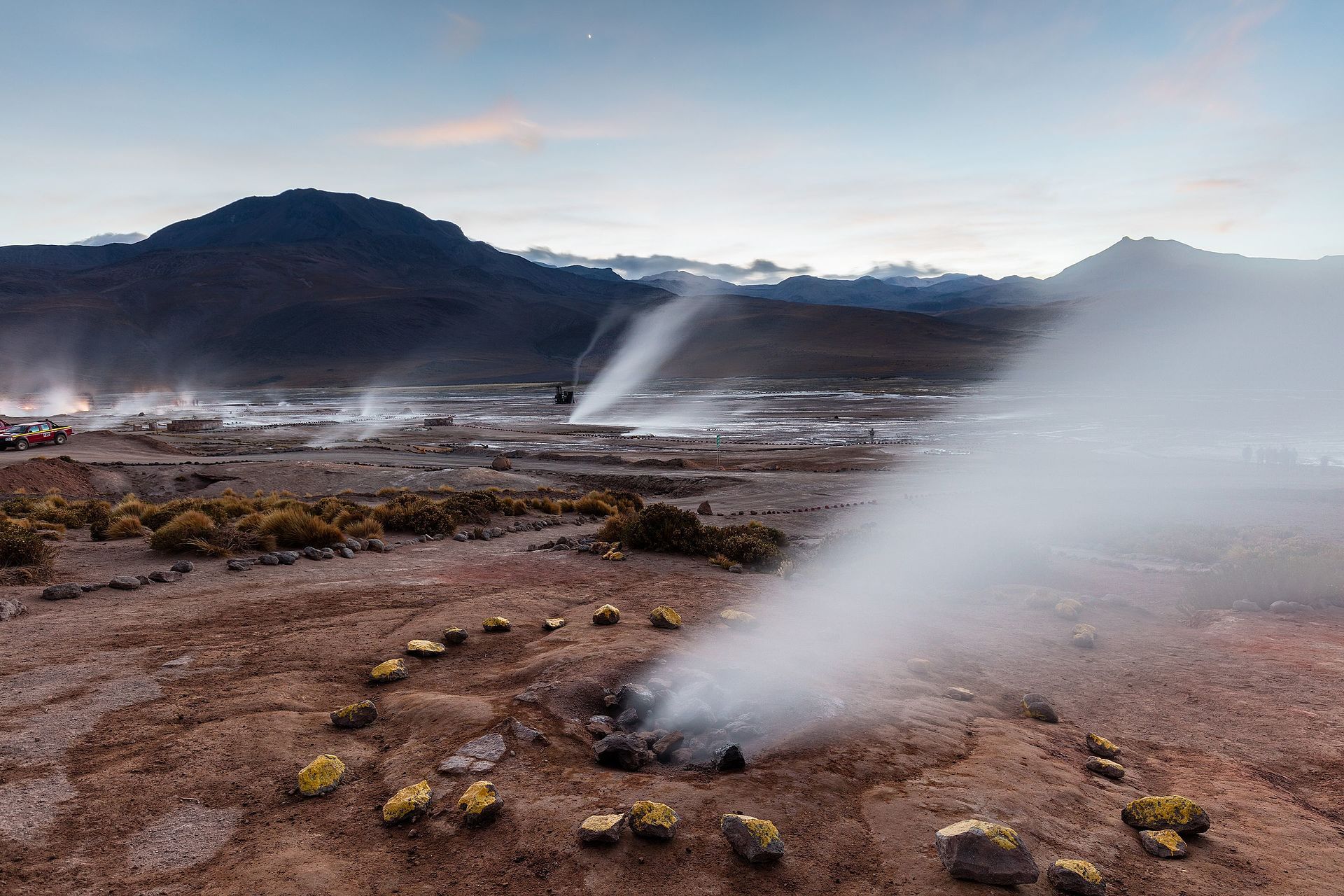
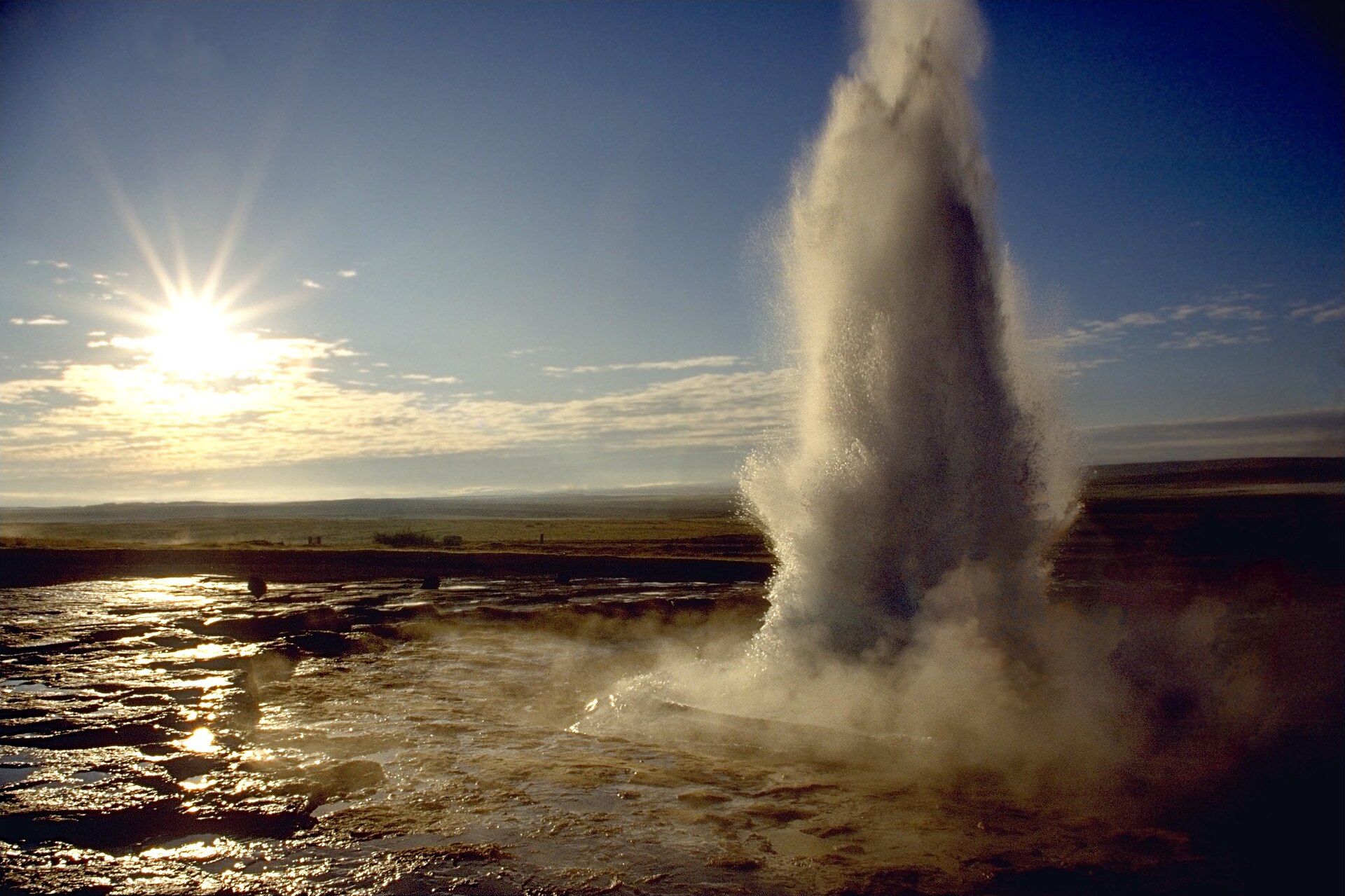
The geothermal valley that gave the world the word 'geyser' — where the reliable Strokkur spout blasts boiling water 15–20 metres skyward every few minutes amid steaming vents and mineral pools.
What makes it marvelous
Beneath the Haukadalur valley, groundwater seeps down to rock heated by Iceland's volcanic plumbing. It superheats under pressure until it flashes to steam and erupts. The Great Geysir — the original, from which all others are named — is now mostly dormant, but its neighbour Strokkur performs on cue every 5–10 minutes. The valley is a living diagram of geothermal energy, the same heat that warms most of Iceland's homes.
Why visit
Watching Strokkur is a small thrill of anticipation and release: the pool domes into a blue bubble, then bursts upward in a column of scalding water and steam, again and again. The whole field hisses and steams, with hot springs in improbable colours from dissolved minerals.
Still deciding?
Geysir & Strokkur comes up most often against these — each one weighs cost, effort, season and crowds side by side.
What to know before you go
🗓️ Best time
Year-round; summer for easy access and long daylight, winter for steam dramatic against snow. It's a core stop on the Golden Circle.
🧭 Getting there & access
About 1.5 hours from Reykjavík on the Golden Circle, next to Gullfoss. Free entry, with a visitor centre and marked paths.
Good to know
- Stand upwind of Strokkur and behind the ropes — the water is boiling.
- Watch a few eruptions; the pre-eruption 'bubble' is the moment to have your camera ready.
- Never touch the hot springs or step off the paths; the ground and water can scald.
Plan your visit
Easy🧭 Getting there
From Reykjavík, Iceland
- Fly → Keflavík (KEF), then road to Reykjavík — roughly 45–50 minutes
- Drive Reykjavík → Haukadalur geothermal field — about 1h30
- Or take a Golden Circle coach, which combines it with Gullfoss and Þingvellir
- Total travel
- Around 90 minutes from Reykjavík
- Time at site
- An hour is plenty
- Access
- Open access at all hours with no entry fee, though parking is charged at the service area. There are no barriers around most of the vents beyond a rope line and a warning sign — the water in those pools is at boiling point and people are scalded here. In winter the boardwalks ice over and the site is unlit outside the short daylight hours.
🎒 What to bring & consider
- The discipline to stay behind the ropes on ground that is thin crust over boiling water, which is the one genuine hazard at an otherwise trivial stop
- A position upwind of Strokkur, because the spray is scalding as it leaves and merely unpleasant by the time the wind carries it to you
- Microspikes or grippy boots between roughly November and April, when the boardwalks are sheet ice
- A windproof layer — this is an exposed valley and the wind is the reason Iceland feels colder than the thermometer says
- Patience of about ten minutes, which is roughly the interval you are waiting on
👁️ What to expect
- Crowds
- Heavy through the day as Golden Circle coaches cycle through. Early morning and after dark are quiet.
- Conditions
- Flat, easy boardwalks across steaming ground. Windy, and icy in winter.
- Facilities
- Good — a large visitor building with food, shops and toilets across the road.
- The view
- Strokkur is the one that performs, roughly every five to ten minutes; Geysir itself, which gave every geyser in the world its name, has been largely dormant for a long time and you should not go expecting it. The frame worth waiting for is the blue bubble that domes up a half-second before the eruption.
Times and requirements are approximate and change with season, weather, and local rules — confirm permits, fares, and schedules with operators before you travel.
Natural riches of the area
- High-temperature geothermal field (superheated groundwater)
- Geothermal energy powering heat and electricity nationwide
- Mineral-rich hot springs and sinter deposits
- Fertile geothermally heated soils and greenhouses nearby
Local food
- Geothermal rye bread (hverabrauð)
- Dense sweet rye slow-baked underground by geothermal heat.
- Tomatoes & greens
- Grown year-round in geothermally heated greenhouses in nearby Reykholt and Flúðir.
- Lamb & skyr
- Free-ranging Icelandic lamb and thick cultured skyr, the national staples.
Haukadalur is where the word ‘geyser’ was born. The Great Geysir, which named the phenomenon for every language, has erupted here for centuries, though it now sleeps most of the time. Its neighbour Strokkur has taken over the show, and it is wonderfully reliable — every five to ten minutes its pool swells into a smooth blue dome and then bursts fifteen to twenty metres into the air in a plume of boiling water and steam.
The mechanism is elegant: groundwater trickles down to rock heated by Iceland’s volcanic underworld, superheats under pressure, and flashes explosively to steam. The same heat, tapped across the country, warms Iceland’s houses, powers its grid, and grows tomatoes in the snow. Standing in the hissing, steaming valley, you are looking at the engine of the whole island.
Geysir & Strokkur: common questions
How do you get to Geysir & Strokkur?
From Reykjavík, Iceland: Fly → Keflavík (KEF), then road to Reykjavík — roughly 45–50 minutes; Drive Reykjavík → Haukadalur geothermal field — about 1h30; Or take a Golden Circle coach, which combines it with Gullfoss and Þingvellir. Total travel time: Around 90 minutes from Reykjavík.
When is the best time to visit Geysir & Strokkur?
Year-round; summer for easy access and long daylight, winter for steam dramatic against snow. It's a core stop on the Golden Circle.
How long should you spend at Geysir & Strokkur?
An hour is plenty. Total travel time: Around 90 minutes from Reykjavík.
What should you bring to Geysir & Strokkur?
The discipline to stay behind the ropes on ground that is thin crust over boiling water, which is the one genuine hazard at an otherwise trivial stop A position upwind of Strokkur, because the spray is scalding as it leaves and merely unpleasant by the time the wind carries it to you Microspikes or grippy boots between roughly November and April, when the boardwalks are sheet ice A windproof layer — this is an exposed valley and the wind is the reason Iceland feels colder than the thermometer says Patience of about ten minutes, which is roughly the interval you are waiting on
Do you need a permit or guide for Geysir & Strokkur?
Open access at all hours with no entry fee, though parking is charged at the service area. There are no barriers around most of the vents beyond a rope line and a warning sign — the water in those pools is at boiling point and people are scalded here. In winter the boardwalks ice over and the site is unlit outside the short daylight hours.
Is Geysir & Strokkur crowded, and what are conditions like?
Heavy through the day as Golden Circle coaches cycle through. Early morning and after dark are quiet. Flat, easy boardwalks across steaming ground. Windy, and icy in winter. Facilities: Good — a large visitor building with food, shops and toilets across the road.
Added Updated