Head to head · iconic peaks
Matterhorn vs Aoraki/Mount Cook: Alpine Icon vs Southern Giant
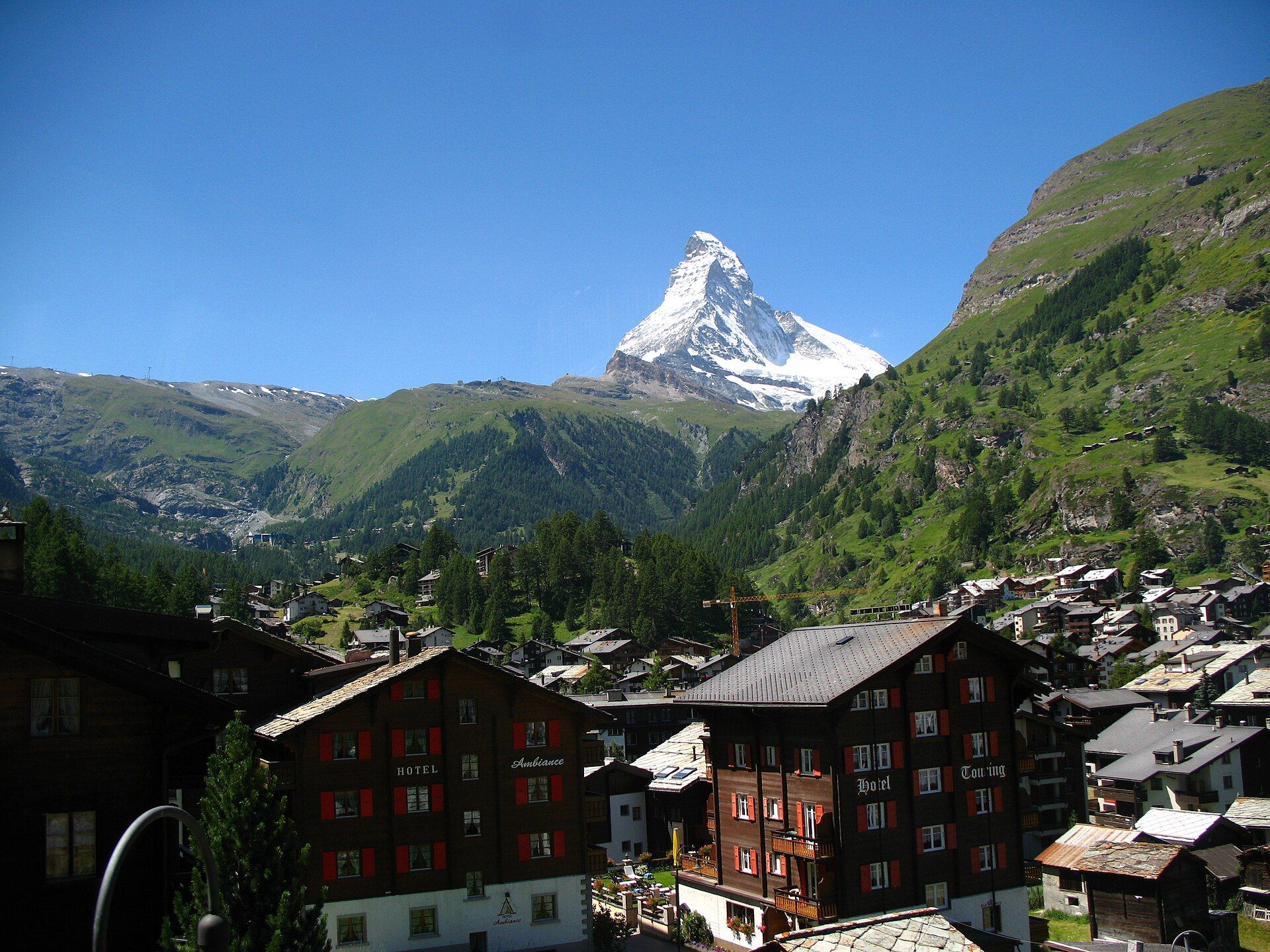
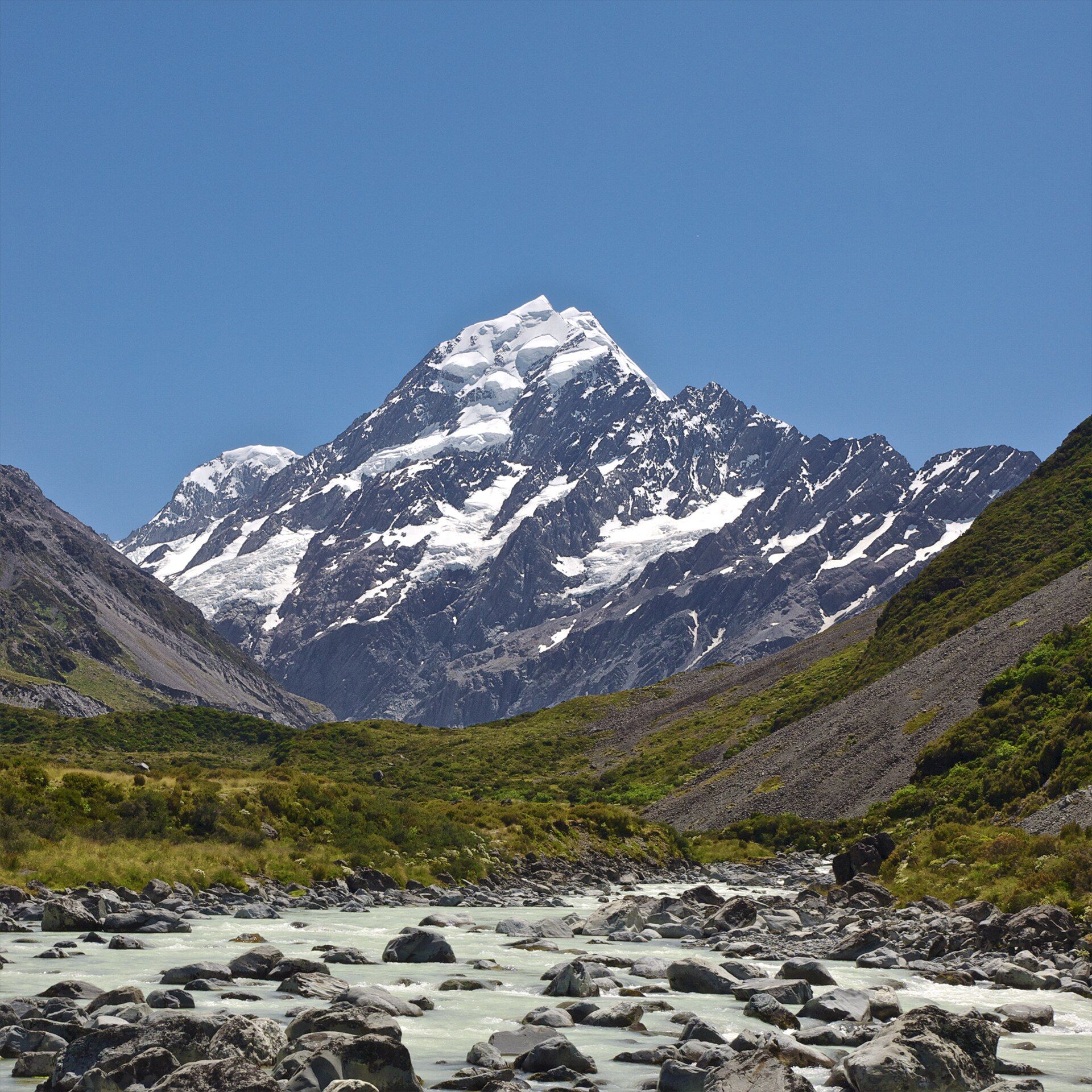
They are the defining peaks of their hemispheres: the Matterhorn, the near-perfect pyramid above Zermatt that is perhaps the most recognisable mountain on Earth, and Aoraki/Mount Cook, New Zealand's highest summit, rising in ice and cloud above glacier valleys and turquoise lakes.
Here's how the Matterhorn and Aoraki compare across what actually shapes a visit, and how to decide which great peak to build a trip around.
The Matterhorn
The perfect pyramid of the Alps
The iconic horn above Zermatt, its four steep faces meeting in a near-symmetrical peak that has become the very symbol of the Alps. It sits in one of the world's most developed mountain regions: a car-free resort town, cog railways and cable cars to high viewpoints, and a web of well-marked trails, so ordinary visitors can stand face to face with a legendary peak in comfort.
- The most recognisable mountain silhouette on Earth
- Superb infrastructure — trains, lifts, and trails
- Car-free Zermatt with high-altitude viewpoints
- Faces the peak in comfort, no climbing needed
Aoraki / Mount Cook
The cloud piercer of the south
New Zealand's highest mountain at over 3,700 metres, a great ridge of ice and rock in the heart of the Southern Alps, ringed by glaciers, moraine lakes, and the country's biggest ice fields. Its national park is wilder and quieter than the Alps, with valley walks to glacier lakes, some of the darkest night skies on Earth, and the turquoise of nearby Lake Pukaki — a raw alpine wilderness rather than a resort.
- New Zealand's highest peak amid glaciers and ice fields
- Wild, uncrowded valleys and moraine lakes
- World-class dark skies for stargazing
- Turquoise glacial lakes nearby
Head to head
| What matters | The Matterhorn | Aoraki / Mount Cook |
|---|---|---|
| The mountain itself Edge: Toss-up | A near-perfect isolated pyramid — the more iconic profile. | A higher, glaciated ridge of ice and rock — grander in scale. |
| Infrastructure & comfort Edge: The Matterhorn | Exceptional — town, trains, lifts, and refined mountain hospitality. | Modest — a village, a lodge, and valley trails; wilder and simpler. |
| Wildness & crowds Edge: Aoraki / Mount Cook | Beautiful but busy and highly developed. | Quiet, remote, and genuinely wild. |
| Beyond the peak Edge: Toss-up | Alpine villages, high lifts, and a dense trail network. | Glacier lakes, dark skies, and the turquoise of Lake Pukaki. |
| Access Edge: The Matterhorn | Train to car-free Zermatt from Swiss cities — very easy. | A long, scenic drive from Christchurch or Queenstown. |
| Best season Edge: Toss-up | June to September for high trails and lifts; winter for skiing. | November to April (southern summer) for walks and clear skies. |
Which should you choose?
Choose The Matterhorn if…
…you want to stand before the most iconic peak in the Alps in comfort, with trains, lifts, trails, and a polished car-free resort at its foot.
Choose Aoraki / Mount Cook if…
…you want a higher, wilder mountain amid glaciers and turquoise lakes, with quiet valley walks and some of the best stargazing on Earth.
The honest verdict
This is the perfect icon versus the wild giant: the Matterhorn wins on silhouette, comfort, and access, while Aoraki wins on scale, wildness, and dark-sky solitude.
For an effortless encounter with a legendary peak, choose the Matterhorn; for a raw alpine wilderness under brilliant stars, choose Aoraki/Mount Cook.
They anchor very different trips — a Swiss Alps circuit or a South Island road trip — so the wider journey usually decides.
Wonders mentioned here
Added