Head to head · the northern Rockies
Glacier vs Banff: Which Rocky Mountain Park Should You Visit?
Glacier in Montana and Banff in Alberta sit on the same northern Rocky Mountains, either side of the Canada–US border, and both are UNESCO World Heritage parks of glacier-carved peaks, turquoise lakes and grizzly country. People weighing a Rockies trip often ask which one to pick.
The difference is mostly in how you experience them. Glacier is a wilderness park crossed by one famous summer road and explored on foot, with a short season. Banff is Canada's first national park, with a town and a village inside it, lakes you can reach by shuttle or a short walk, and a visit that works in every season.
Glacier
One great road and a short, wild summer
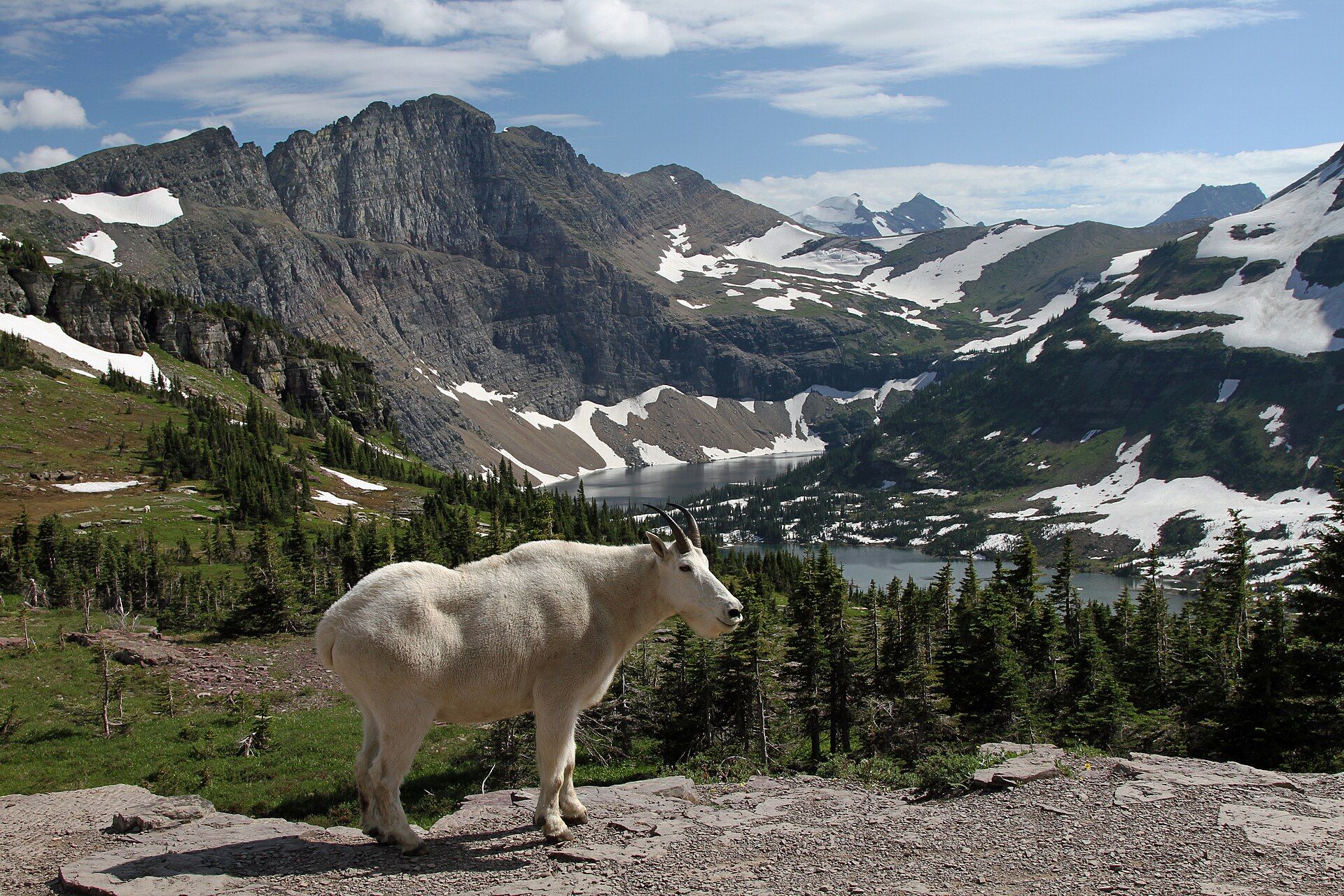
Just over a million acres (1,012,837) of Montana's northern Rockies, established as a national park in 1910 and joined with Canada's Waterton Lakes as the Waterton-Glacier International Peace Park in 1932, a World Heritage Site since 1995. It has 762 lakes and nearly 746 miles of trail, and the 50-mile Going-to-the-Sun Road crosses the Continental Divide at Logan Pass (6,646 ft / 2,026 m).
- Going-to-the-Sun Road, one of the great mountain drives, completed in 1932
- Big day hikes from the road, such as the Highline Trail along the Garden Wall
- A wilder feel, with no town inside the park
Banff
Turquoise lakes with a town at the centre
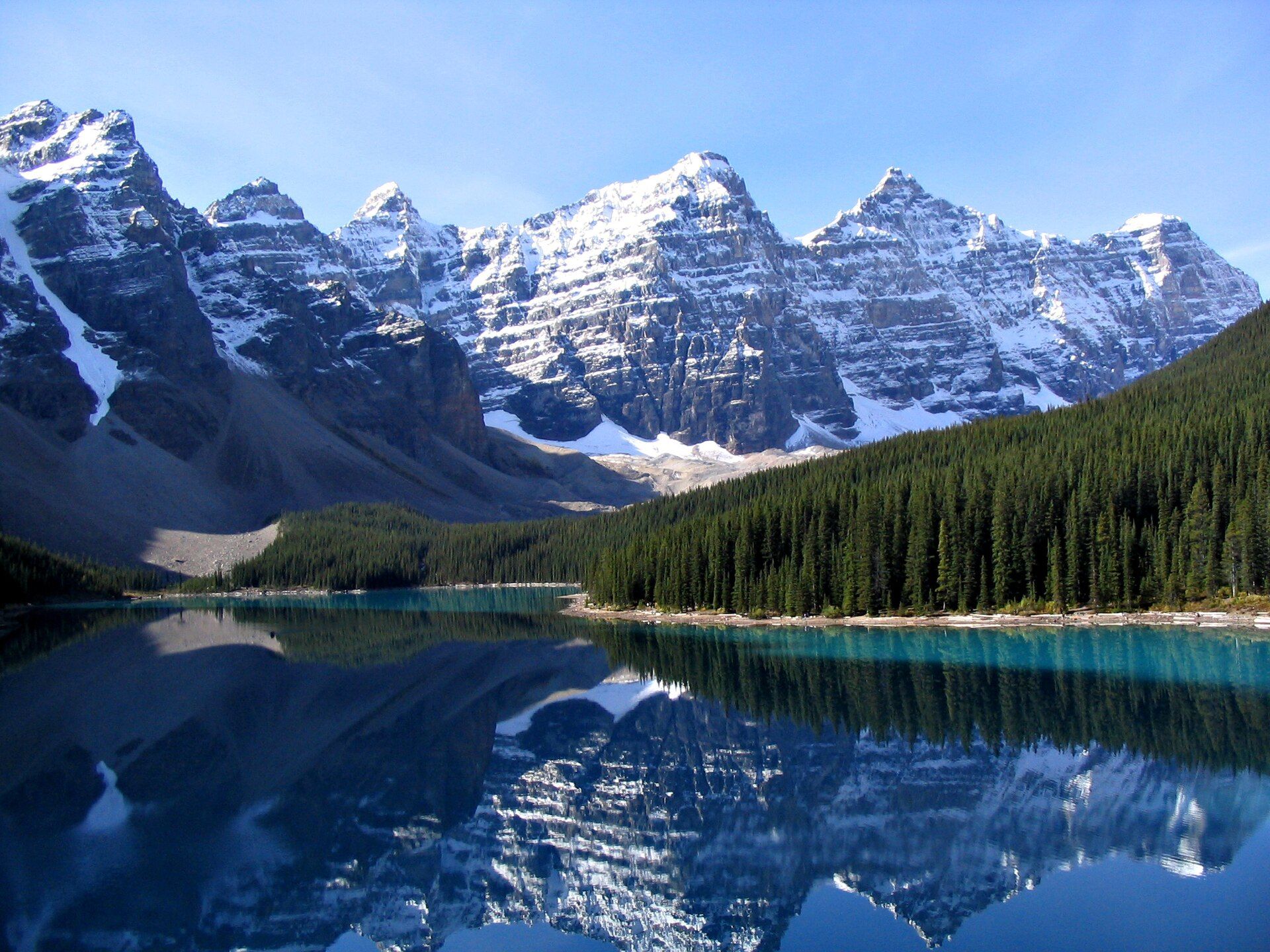
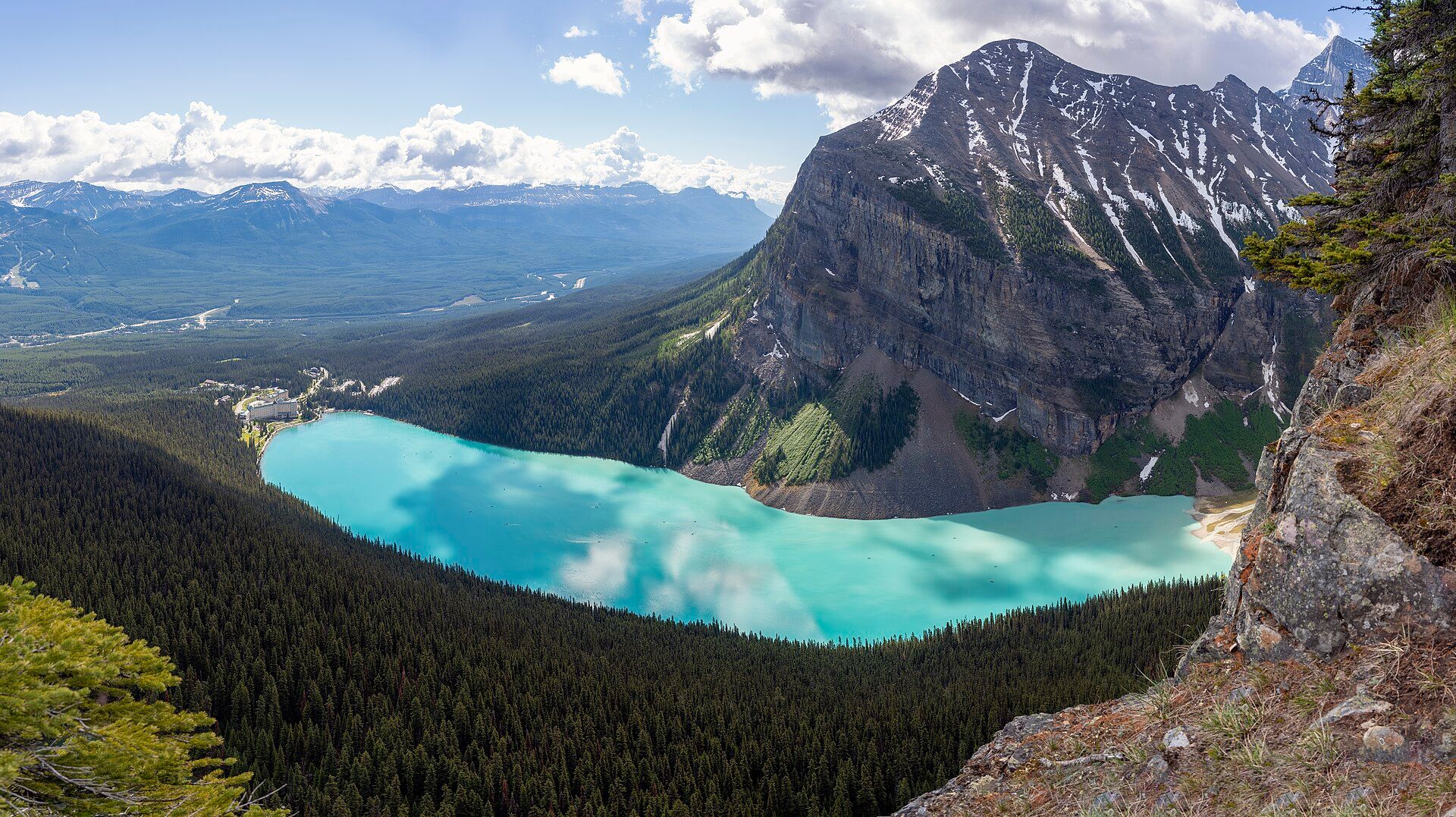
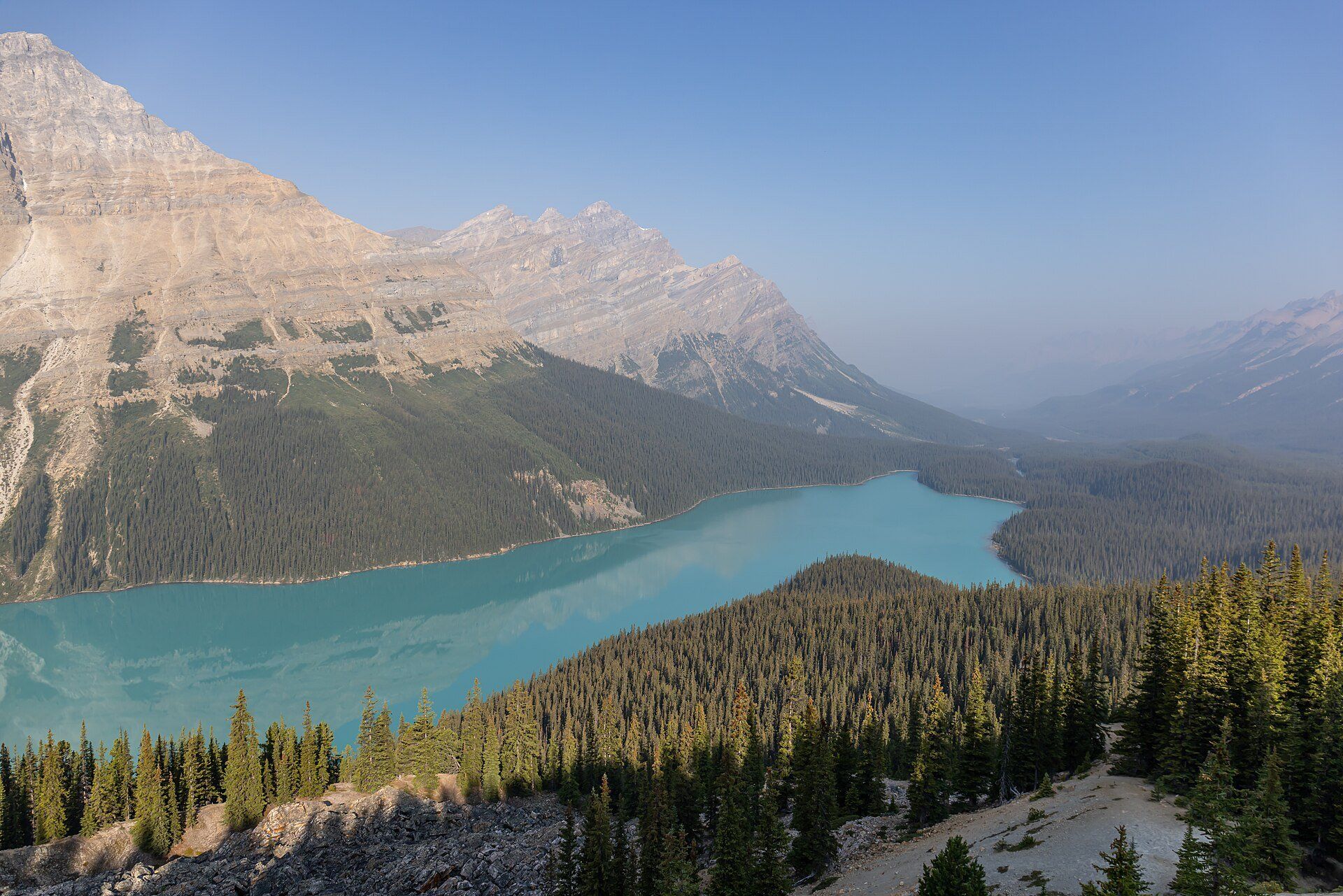
Canada's first national park, set aside in 1885, covering more than 6,000 km² and part of the Canadian Rocky Mountain Parks World Heritage Site, inscribed in 1984. Moraine Lake and Lake Louise glow turquoise from glacial rock flour, and the Icefields Parkway runs north past Peyto Lake towards the Columbia Icefield.
- Moraine Lake and Lake Louise — among the most recognisable lake views on Earth
- Full services in Banff town and Lake Louise village
- Worth visiting year-round, including winter
Head to head
| What matters | Glacier | Banff |
|---|---|---|
| The scenery Edge: Toss-up | Knife-edged ridges, horn peaks and hanging valleys around glacier-fed lakes such as St Mary and Hidden Lake, seen best from the high road and trails. | The classic turquoise lakes — Moraine, Louise, Peyto — beneath 3,000-metre peaks and glaciers, many seen from the shore or a short walk. |
| The signature drive Edge: Toss-up | Going-to-the-Sun Road: 50 miles, about two hours without stops; vehicles over 21 ft long or 8 ft wide are not allowed on the alpine section. | The Icefields Parkway: a long mountain highway past Bow Summit and Peyto Lake to the Columbia Icefield, with few services along the way. |
| Season Edge: Banff | Short. The alpine section of Going-to-the-Sun Road opens only once it is plowed, which varies year to year, and is typically fully open until the third Monday of October; high trails hold snow into July. | Long. Moraine Lake's shuttles run about June to mid-October, but Lake Louise and Banff town are open all year, with skating on Lake Louise in winter. |
| Getting there Edge: Toss-up | Kalispell (FCA) airport is roughly 40 minutes from the West Glacier entrance. | Calgary (YYC) is roughly 1h30 by road from Banff town. |
| Access rules Edge: Toss-up | Vehicle reservation requirements have applied to the Going-to-the-Sun corridor in recent seasons and change annually; the Logan Pass parking lot usually fills by sunrise. | A Parks Canada pass is required; Moraine Lake Road is closed to personal vehicles, so you arrive by reserved shuttle, transit or licensed operator. |
| Base and services Edge: Banff | Lodges, campgrounds and visitor centres, mostly seasonal; gateway towns sit outside the park. | Banff town and Lake Louise village provide hotels, food and fuel inside the park all year. |
Which should you choose?
Choose Glacier if…
…you can travel in July, August or September, want serious day hiking and a wilder park, and are happy to plan around road status and reservations.
Choose Banff if…
…you want the famous turquoise lakes, a comfortable base with restaurants and hotels, or need to travel outside the short summer window.
The honest verdict
In high summer, it really comes down to style: Glacier for hiking and one spectacular road through wilderness, Banff for iconic lakes and an easy base. Both are busiest in July and August, and both reward a very early start.
Outside roughly July to September, Banff is the safer choice — much of Glacier is snowbound for most of the year, while Banff town and Lake Louise stay open.
Access in both parks is managed and changes year to year: check the National Park Service for Going-to-the-Sun Road status and reservations, and Parks Canada for Moraine Lake shuttles, before fixing dates.
Wonders mentioned here
Added