Lake Louise
📍 Banff National Park, Alberta, Canada
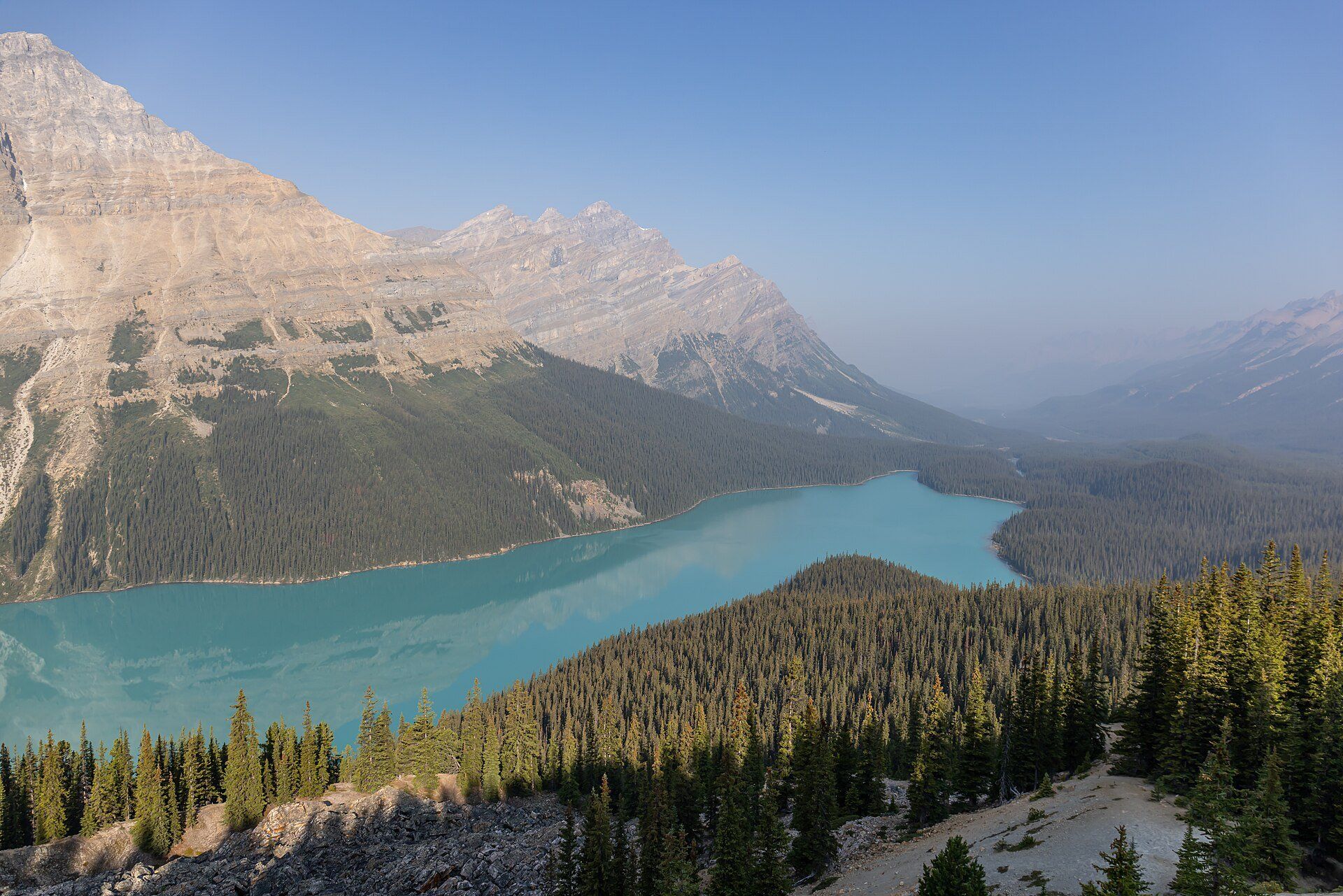
A glacier-fed lake of improbable turquoise beneath the Victoria Glacier, high in Banff National Park — the postcard of the Canadian Rockies.
What makes it marvelous
Lake Louise sits at 1,750 m in the Bow Valley, about 2 km long and up to 70 m deep, at the foot of peaks still carrying glaciers. Meltwater from those glaciers carries rock flour — stone ground to a fine powder by moving ice — and the suspended particles scatter sunlight to give the water its famous milky turquoise. The Stoney Nakoda knew it as Ho-run-num-nay, 'Lake of the Little Fishes'; it was later named after Princess Louise, a daughter of Queen Victoria.
Why visit
The view from the shore toward the hanging glaciers is one of the great mountain scenes on Earth, and it only gets better as you climb. Trails lead up to Lake Agnes and the Plain of Six Glaciers; in summer you can paddle a canoe across the turquoise water, and in winter the frozen lake is used for skating.
Still deciding?
Lake Louise comes up most often against these — each one weighs cost, effort, season and crowds side by side.
What to know before you go
🗓️ Best time
Mid-June to September for open water and colour; the lake is frozen through winter, when it becomes a skating rink.
🧭 Getting there & access
In Banff National Park, Alberta, about 5 km west of the village of Lake Louise and roughly 2 hours by road from Calgary. Parking at the lakeshore is limited; Parks Canada runs seasonal shuttles.
Good to know
- Arrive at sunrise or use the Parks Canada shuttle — the lakeshore car park fills very early in summer.
- Climb toward Lake Agnes for the view looking down on the lake.
- A Parks Canada pass is required to stop in the national park.
Plan your visit
Easy🧭 Getting there
From Calgary (YYC), Alberta
- Fly to Calgary
- Drive west on the Trans-Canada Highway through Banff — about 2 hours
- Continue to Lake Louise village and up to the lakeshore, or ride the seasonal shuttle
- Total travel
- About 2 hours from Calgary airport
- Time at site
- Half a day at the shore; a full day with the tea-house hikes
- Access
- A Parks Canada pass is needed in the national park. Lakeshore parking is limited and paid in season, and Parks Canada runs shuttles from the Park and Ride. Check bear warnings on the trails.
🎒 What to bring & consider
- A Parks Canada pass
- Layers — mountain weather turns quickly even in summer
- Bear spray for the trails, and knowing how to use it
- An early start
👁️ What to expect
- Crowds
- Among the busiest spots in the Rockies from June to September, especially mid-morning to late afternoon.
- Conditions
- Cool mountain weather; snow can linger on trails into early summer.
- Facilities
- The lakeshore has a hotel, washrooms, canoe rental in season and trailheads.
- The view
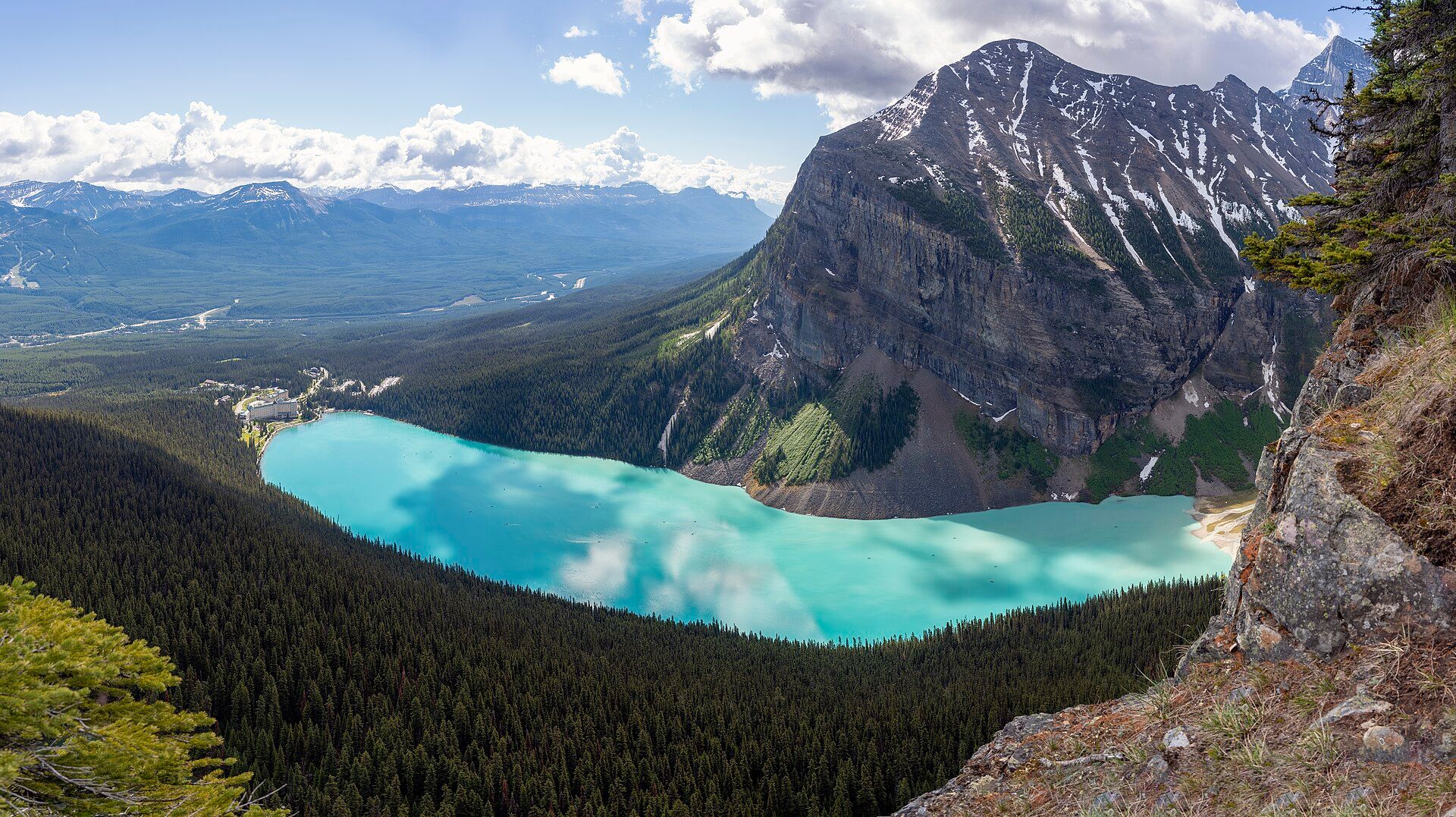
- The turquoise lake and Victoria Glacier from above, on the trail toward Lake Agnes.
Times and requirements are approximate and change with season, weather, and local rules — confirm permits, fares, and schedules with operators before you travel.
Natural riches of the area
- Turquoise water coloured by glacial rock flour
- The Victoria and Lefroy glaciers above the lake
- Subalpine forest and high mountain lakes
- Wildlife of the Rockies, including bears
Local food
- Alberta beef and bison
- Ranch country lies just east of the mountains.
- Saskatoon berries
- A native prairie and mountain berry, baked into pies and jams.
Lake Louise is the image most people picture when they think of the Canadian Rockies: a long sheet of turquoise water, dark forest down to the shore, and at the far end the white tongue of the Victoria Glacier hanging from the mountains. The colour is real, and it comes from the ice. Glaciers grinding over bedrock produce rock flour, and that fine sediment, suspended in the meltwater, scatters sunlight into the lake’s unmistakable blue-green.
The lake sits at 1,750 m in Banff National Park, about 2 km long and up to 70 m deep. Long before the railway arrived, the Stoney Nakoda called it the Lake of the Little Fishes; the name Lake Louise honours Princess Louise, the daughter of Queen Victoria whose husband was Governor General of Canada. The Canadian Pacific Railway later built the grand hotel on its eastern shore.
The shore view is just the beginning. Trails climb to Lake Agnes and toward the Plain of Six Glaciers, and from above the lake looks even more unreal. Come early or take the shuttle — in summer it is one of the busiest places in the Rockies — and keep an eye out for bears on the trails.
Lake Louise: common questions
How do you get to Lake Louise?
From Calgary (YYC), Alberta: Fly to Calgary; Drive west on the Trans-Canada Highway through Banff — about 2 hours; Continue to Lake Louise village and up to the lakeshore, or ride the seasonal shuttle. Total travel time: About 2 hours from Calgary airport.
When is the best time to visit Lake Louise?
Mid-June to September for open water and colour; the lake is frozen through winter, when it becomes a skating rink.
How long should you spend at Lake Louise?
Half a day at the shore; a full day with the tea-house hikes. Total travel time: About 2 hours from Calgary airport.
What should you bring to Lake Louise?
A Parks Canada pass Layers — mountain weather turns quickly even in summer Bear spray for the trails, and knowing how to use it An early start
Do you need a permit or guide for Lake Louise?
A Parks Canada pass is needed in the national park. Lakeshore parking is limited and paid in season, and Parks Canada runs shuttles from the Park and Ride. Check bear warnings on the trails.
Is Lake Louise crowded, and what are conditions like?
Among the busiest spots in the Rockies from June to September, especially mid-morning to late afternoon. Cool mountain weather; snow can linger on trails into early summer. Facilities: The lakeshore has a hotel, washrooms, canoe rental in season and trailheads.
Added
More wonders to explore