Jeti-Ögüz Rocks
📍 Jeti-Ögüz District, Issyk-Kul Region, near Karakol, Kyrgyzstan
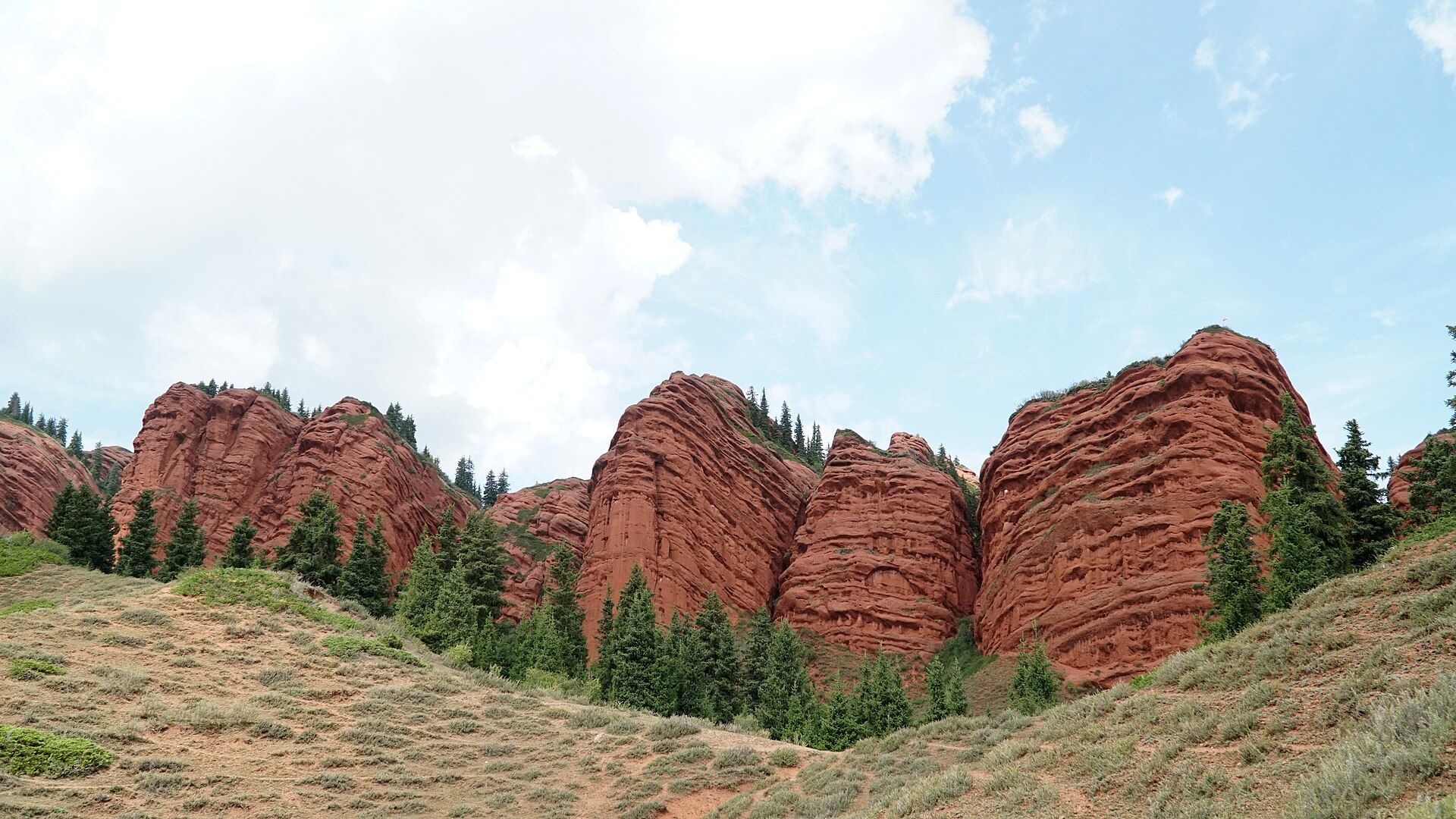
Sheer cliffs of red conglomerate rising from spruce-covered hills near Lake Issyk-Kul — Kyrgyzstan's 'Seven Bulls'.
What makes it marvelous
Jeti-Ögüz is a wall of red Tertiary conglomerate rock standing out of the green mountain foothills near the town of Karakol at the eastern end of Lake Issyk-Kul. Erosion has carved the cliffs into separate, rounded buttresses — the main formation is known as the Seven Bulls, and a split rock nearby is called the Broken Heart — their deep red set against dark spruce and pale grass.
Why visit
It is one of the most striking landscapes in Kyrgyzstan and an easy add-on to a trip around Issyk-Kul: red cliffs, alpine meadows and a valley that leads on into the mountains.
What to know before you go
🗓️ Best time
Summer and early autumn, when the meadows are green and mountain roads are open.
🧭 Getting there & access
The rocks lie near the Jeti-Ögüz resort and sanatorium, a short drive from Karakol, the main town at the eastern end of Lake Issyk-Kul.
Good to know
- Combine it with Karakol and the eastern shore of Issyk-Kul.
- Walk up the valley behind the rocks for meadow views.
- Late-afternoon light makes the red rock glow.
Plan your visit
Easy🧭 Getting there
From Karakol, Kyrgyzstan
- Travel from Bishkek along Lake Issyk-Kul to Karakol
- Drive a short distance west and south to the Jeti-Ögüz valley
- Walk from the resort to the viewpoints below the rocks
- Total travel
- A full day by road from Bishkek to Karakol
- Time at site
- Half a day; longer to walk up the valley
- Access
- Open countryside around a resort area; roads beyond the resort can be rough.
🎒 What to bring & consider
- Walking shoes
- Layers for cool mountain air
- Sun protection
👁️ What to expect
- Crowds
- Moderate in summer, mostly visitors from Karakol and Issyk-Kul resorts.
- Conditions
- Warm days and cool evenings in summer; snow in winter.
- Facilities
- A resort and sanatorium at the foot of the rocks; more in Karakol.
- The view
- The red buttresses of the Seven Bulls rising above dark spruce.
Times and requirements are approximate and change with season, weather, and local rules — confirm permits, fares, and schedules with operators before you travel.
Natural riches of the area
- Red conglomerate cliffs eroded into separate buttresses
- The Seven Bulls and Broken Heart formations
- Spruce forest and alpine meadows
Local food
- Ashlyan-fu
- A cold noodle soup that is Karakol's signature dish.
- Kymyz
- Fermented mare's milk, drunk across Kyrgyzstan in summer.
Jeti-Ögüz is where the green mountains of eastern Kyrgyzstan suddenly turn red. Near Karakol, at the eastern end of Lake Issyk-Kul, a line of sheer cliffs made of red conglomerate rises out of spruce forest and meadow, eroded into rounded, separate buttresses.
The main formation is known as the Seven Bulls — the meaning of the name Jeti-Ögüz — and a split rock nearby is called the Broken Heart. Their colour is the draw: deep rust against dark green trees and pale summer grass, glowing in the late-afternoon sun.
A resort and sanatorium sit at the foot of the rocks, and the valley behind them leads on into the mountains. It fits easily into a loop around Issyk-Kul, alongside Karakol and the lake’s eastern shore.
Jeti-Ögüz Rocks: common questions
How do you get to Jeti-Ögüz Rocks?
From Karakol, Kyrgyzstan: Travel from Bishkek along Lake Issyk-Kul to Karakol; Drive a short distance west and south to the Jeti-Ögüz valley; Walk from the resort to the viewpoints below the rocks. Total travel time: A full day by road from Bishkek to Karakol.
When is the best time to visit Jeti-Ögüz Rocks?
Summer and early autumn, when the meadows are green and mountain roads are open.
How long should you spend at Jeti-Ögüz Rocks?
Half a day; longer to walk up the valley. Total travel time: A full day by road from Bishkek to Karakol.
What should you bring to Jeti-Ögüz Rocks?
Walking shoes Layers for cool mountain air Sun protection
Do you need a permit or guide for Jeti-Ögüz Rocks?
Open countryside around a resort area; roads beyond the resort can be rough.
Is Jeti-Ögüz Rocks crowded, and what are conditions like?
Moderate in summer, mostly visitors from Karakol and Issyk-Kul resorts. Warm days and cool evenings in summer; snow in winter. Facilities: A resort and sanatorium at the foot of the rocks; more in Karakol.
Added
More wonders to explore