Cradle Mountain
📍 Cradle Mountain-Lake St Clair National Park, Central Highlands, northwest Tasmania, Australia
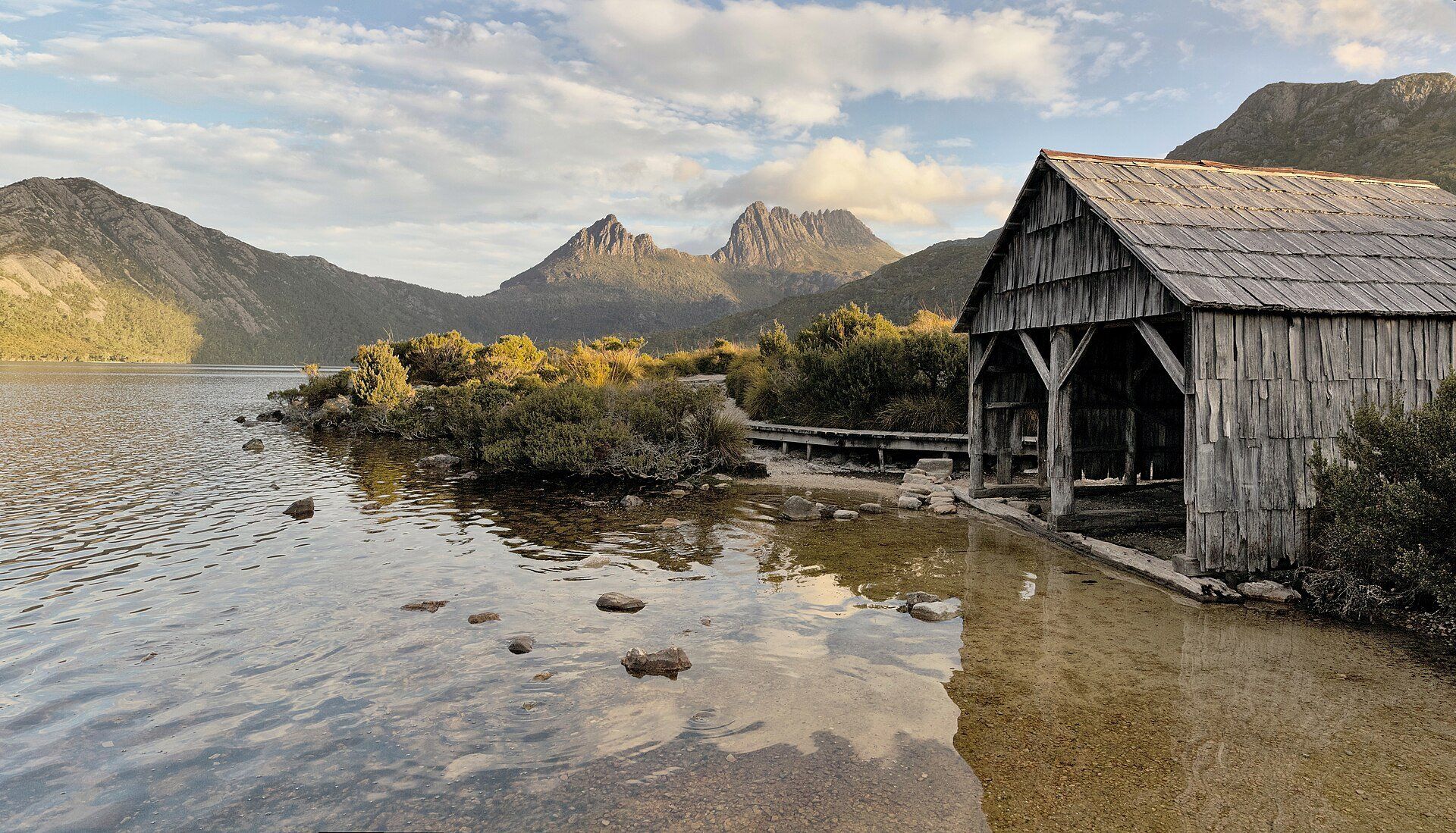
Tasmania's emblem: the jagged dolerite crown of Cradle Mountain rising above glacier-carved Dove Lake, in the heart of the Tasmanian Wilderness World Heritage Area, with wombats on the moors and golden fagus in autumn.
What makes it marvelous
Cradle Mountain rises to 1,545 m above the glacially carved basin of Dove Lake, its row of jagged summits — including Smithies Peak and Weindorfers Tower — formed of dolerite, an igneous rock that intruded older sedimentary layers. Glaciers shaped the area over roughly two million years, leaving lakes, tarns and the Dove River valley. The country around it holds Gondwanan plants such as King Billy, pencil and celery-top pines, and Tasmania's deciduous beech, or fagus — the island's only winter-deciduous native tree — which turns gold, orange and rust each autumn. Declared a scenic reserve in 1922, the area is now part of Cradle Mountain-Lake St Clair National Park, which joined the Tasmanian Wilderness World Heritage Area at its inscription in 1982.
Why visit
The classic Tasmanian walk: a 6 km circuit of Dove Lake beneath Cradle Mountain's craggy summits, with wombats grazing the moorland and the old boatshed reflected in the water.
What to know before you go
🗓️ Best time
Summer brings the longest days for walking. For colour, come in mid-autumn, when the fagus turns — it peaks around Anzac Day (25 April) and stays vivid for about a month. Weather in the alpine area changes fast, and snow, rain and wind are possible at any time of year.
🧭 Getting there & access
The Cradle Mountain Visitor Centre is at 4057 Cradle Mountain Road, at the northern end of the national park. From there a shuttle bus runs seven days a week to stops including Ronny Creek and Dove Lake — about 20 minutes one way — and private vehicles are restricted while the shuttle operates. Launceston and Devonport are the nearest gateway towns.
Good to know
- Walk the Dove Lake circuit clockwise, as the parks service recommends; allow 2–3 hours and expect steps and some rough, steep sections.
- The summit climb is a Grade 5 walk — 12.8 km return, about 600 m of ascent and around 8 hours — and is not suitable when wind, snow or rain is forecast.
- Pack a waterproof jacket and overtrousers and warm layers even in summer; hypothermia is a real risk in the alpine zone.
- Check shuttle times at the Visitor Centre — they change with the seasons.
Plan your visit
Moderate🧭 Getting there
From Launceston (LST) airport, or Devonport, the Spirit of Tasmania ferry port
- Fly into Launceston or arrive by ferry at Devonport
- Drive to the Cradle Mountain Visitor Centre on Cradle Mountain Road
- Ride the shuttle bus about 20 minutes to Dove Lake
- Walk the 6 km Dove Lake circuit beneath the mountain
- Total travel
- Best as one or two nights near the park entrance
- Time at site
- 2–3 hours for the Dove Lake circuit; a full day (about 8 hours) for the summit
- Access
- Park passes are required, and the shuttle needs its own ticket. Short walks near the Visitor Centre include the 1.1 km Enchanted Walk and the 750 m Weindorfers Forest Walk; the Dove Lake circuit is Grade 3, and the summit route Grade 5 for experienced bushwalkers only.
🎒 What to bring & consider
- Waterproof jacket and overtrousers
- Sturdy walking boots
- Warm layers, whatever the forecast
- Water and snacks for the circuit
👁️ What to expect
- Crowds
- Dove Lake is the park's best-known walk, so expect company on the circuit and the shuttle.
- Conditions
- Formed tracks and boardwalks with steps and short steep sections; weather can turn quickly to rain, wind or snow.
- Facilities
- Visitor Centre with park passes and Overland Track check-in at the entrance; shuttle stops and car park at Dove Lake.
- The view
- Cradle Mountain's jagged skyline behind the weathered Dove Lake boatshed in evening light.
Times and requirements are approximate and change with season, weather, and local rules — confirm permits, fares, and schedules with operators before you travel.
Natural riches of the area
- Cradle Mountain, 1,545 m, a dolerite massif with jagged summits
- Dove Lake, a glacially carved lake at the foot of the mountain
- Deciduous beech (fagus), Tasmania's only winter-deciduous native tree
- King Billy, pencil and celery-top pines
- Wombats, Tasmanian devils, spotted-tailed and eastern quolls, platypus and echidnas
Local food
- Leatherwood honey
- A strongly floral honey from the leatherwood trees of Tasmania's western rainforests.
- Tasmanian cheese and produce
- Dairy, berries and other farm produce from the island's north-west coast, on menus around Cradle Mountain.
Cradle Mountain is the picture most people carry of wild Tasmania. In the island’s Central Highlands, a jagged row of summits rises to 1,545 metres above Dove Lake, a glacially carved basin whose shore is traced by one of Tasmania’s premier walks.
The mountain is built of dolerite, an igneous rock that pushed into older sedimentary layers and now forms the craggy columns of its crest — Smithies Peak and Weindorfers Tower among them. Glaciers worked the landscape over roughly two million years, scooping out Dove Lake, scattering tarns across the plateau and shaping the Dove River valley. Around them grows a remnant of Gondwana: King Billy, pencil and celery-top pines, rainforest, buttongrass moorland and the deciduous beech, or fagus, Tasmania’s only winter-deciduous native tree, which turns the slopes gold and rust each autumn around late April.
The area was declared a scenic reserve in 1922 and is now part of Cradle Mountain-Lake St Clair National Park, which joined the Tasmanian Wilderness World Heritage Area when it was inscribed in 1982. Wombats graze the moors, and quolls, Tasmanian devils, platypus and echidnas live here too. The 6 km Dove Lake circuit takes two to three hours; the summit is a full-day Grade 5 climb for experienced walkers. Whatever you plan, pack for rain, wind and cold — the weather here can change in minutes.
Cradle Mountain: common questions
How do you get to Cradle Mountain?
From Launceston (LST) airport, or Devonport, the Spirit of Tasmania ferry port: Fly into Launceston or arrive by ferry at Devonport; Drive to the Cradle Mountain Visitor Centre on Cradle Mountain Road; Ride the shuttle bus about 20 minutes to Dove Lake; Walk the 6 km Dove Lake circuit beneath the mountain. Total travel time: Best as one or two nights near the park entrance.
When is the best time to visit Cradle Mountain?
Summer brings the longest days for walking. For colour, come in mid-autumn, when the fagus turns — it peaks around Anzac Day (25 April) and stays vivid for about a month. Weather in the alpine area changes fast, and snow, rain and wind are possible at any time of year.
How long should you spend at Cradle Mountain?
2–3 hours for the Dove Lake circuit; a full day (about 8 hours) for the summit. Total travel time: Best as one or two nights near the park entrance.
What should you bring to Cradle Mountain?
Waterproof jacket and overtrousers Sturdy walking boots Warm layers, whatever the forecast Water and snacks for the circuit
Do you need a permit or guide for Cradle Mountain?
Park passes are required, and the shuttle needs its own ticket. Short walks near the Visitor Centre include the 1.1 km Enchanted Walk and the 750 m Weindorfers Forest Walk; the Dove Lake circuit is Grade 3, and the summit route Grade 5 for experienced bushwalkers only.
Is Cradle Mountain crowded, and what are conditions like?
Dove Lake is the park's best-known walk, so expect company on the circuit and the shuttle. Formed tracks and boardwalks with steps and short steep sections; weather can turn quickly to rain, wind or snow. Facilities: Visitor Centre with park passes and Overland Track check-in at the entrance; shuttle stops and car park at Dove Lake.
Added