Avenue of the Baobabs
📍 Menabe, western Madagascar
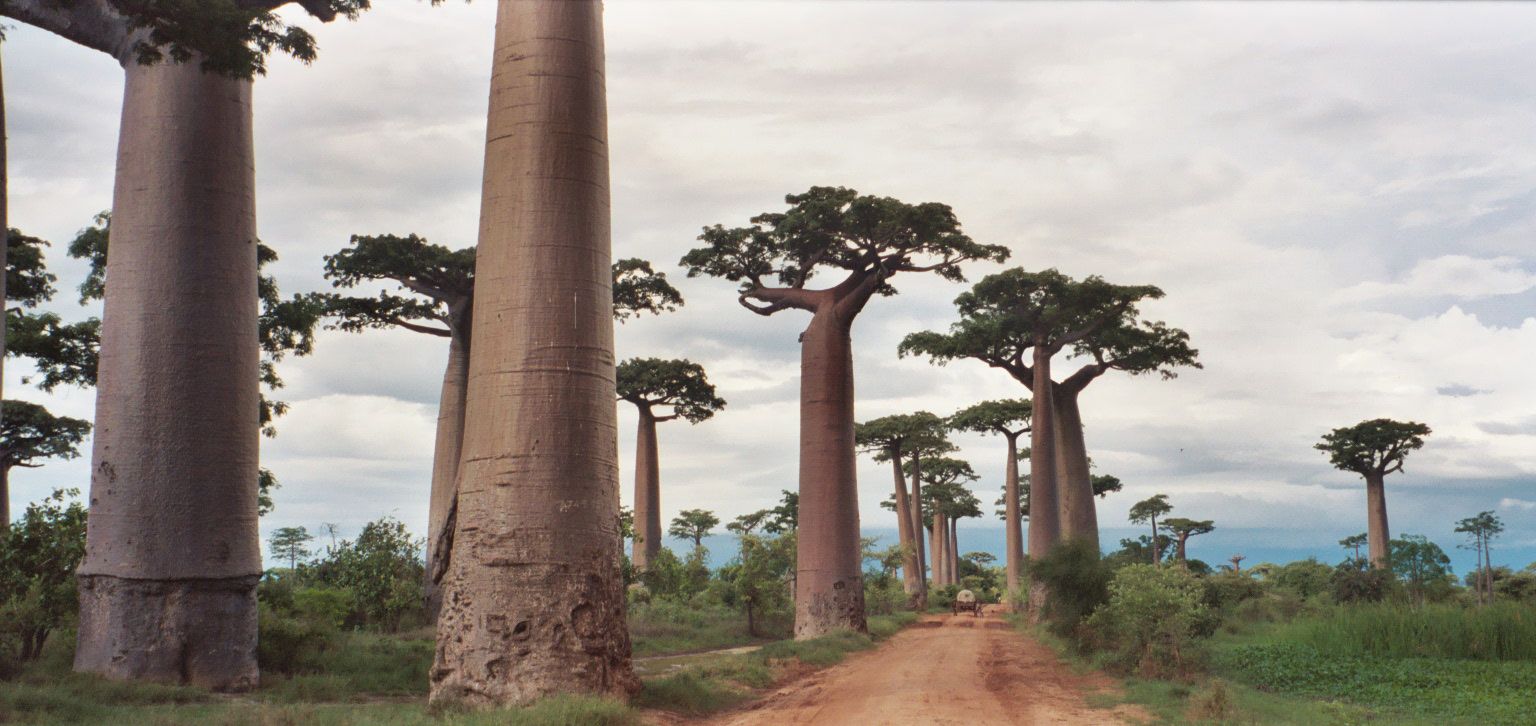
A dirt road lined with towering, ancient baobab trees — vast smooth trunks rising like columns, some close to a thousand years old, glowing at sunset in one of Africa's most iconic scenes.
What makes it marvelous
Along a stretch of red-dirt road in western Madagascar stand a few dozen giant baobabs of the species Adansonia grandidieri, the grandest of the island's baobabs — massive, near-cylindrical trunks up to 30 metres tall, crowned with a small flat cluster of branches that gives them their famous 'upside-down tree' look. Some are close to a thousand years old, survivors of the dense tropical forest that once surrounded them, now standing over farmland as living monuments. Baobabs store water in their swollen trunks to endure the long dry season, and Madagascar is their global heartland, home to six of the world's baobab species found nowhere else. At sunrise and sunset, when the trunks glow copper against the sky, the avenue becomes one of the most photographed and beloved natural sights in all of Africa.
Why visit
Walking the avenue as the setting sun turns the colossal trunks to burnished gold — ancient trees towering overhead in near silence — is a serene and unforgettable experience, and the signature image of Madagascar.
Still deciding?
Avenue of the Baobabs comes up most often against one other place — each one weighs cost, effort, season and crowds side by side.
What to know before you go
🗓️ Best time
The dry season (roughly April–November) for accessible roads and clear skies; sunrise and sunset are the magic hours for light on the trunks.
🧭 Getting there & access
Near Morondava in western Madagascar, reached by road from the town; the avenue is a short drive out and free to visit, best at either end of the day.
Good to know
- Come for sunrise or sunset, when the trunks glow and crowds thin.
- Visit in the dry season for firm roads and clear light.
- Support local guides and vendors, and avoid damaging the tree roots.
Plan your visit
Easy🧭 Getting there
From Morondava, Madagascar
- Fly Antananarivo → Morondava (MOQ) — roughly 1h
- Drive Morondava → the Avenue on the RN8 towards Belon'i Tsiribihina — about 30–45 minutes
- Time the drive for the hour before sunrise or sunset
- Total travel
- Under an hour from Morondava
- Time at site
- An hour or two around sunset, and again at dawn
- Access
- The Avenue is a public dirt road lined with the great Grandidier's baobabs, freely walked, though local guides and a small community fee are usual and worth it. There is no gate and no ticket in the formal sense; the practical constraints are the light and the road. The RN8 is dirt and the stretch beyond can be slow or cut in the rainy season, roughly December to March. The trees themselves are best in the low, warm light at each end of the day.
🎒 What to bring & consider
- A plan built around dawn and dusk, because midday sun flattens the trees and the whole point is the low golden light and long shadows
- A vehicle with decent clearance and a driver who knows the RN8, which is dirt and can be rutted or flooded in the wet season
- Small notes for the community fee and a local guide, who will also steer you away from the busiest patch of road
- Sun and dust protection for an open, unshaded roadside
- Patience with crowds at sunset, and the willingness to come back for a much quieter sunrise
👁️ What to expect
- Crowds
- Concentrated and surprisingly busy right at sunset. Dawn is far quieter for the same trees.
- Conditions
- Flat, easy walking on a dirt road. Hot and dusty by day, dramatic at the edges of it.
- Facilities
- Minimal — a few stalls and vendors. Morondava has the hotels and restaurants.
- The view
- The row of baobabs silhouetted against a burning sky, ideally with a local ox-cart passing through. Sunset is the classic; sunrise gives you the same trees with softer light and almost no one else in the frame.
Times and requirements are approximate and change with season, weather, and local rules — confirm permits, fares, and schedules with operators before you travel.
Natural riches of the area
- Giant Adansonia grandidieri baobabs up to ~30 m and ~1,000 years old
- Six baobab species endemic to Madagascar
- Water-storing trunks adapted to a long dry season
- Remnants of the island's once-vast dry forest
Local food
- Malagasy rice & romazava
- Rice with a traditional meat-and-greens stew, the national dish.
- Baobab fruit
- The tangy, vitamin-rich fruit of the baobab, eaten and made into drinks.
- Fresh seafood
- Fish and prawns from the nearby Mozambique Channel coast at Morondava.
Along a red-dirt road in western Madagascar stands one of Africa’s most beloved sights: a line of colossal baobabs, their vast smooth trunks rising like the columns of a ruined temple. These are Adansonia grandidieri, the grandest of the island’s baobabs — up to 30 metres tall, crowned with a small flat tuft of branches that lends them their famous ‘upside-down tree’ look, and some of them close to a thousand years old.
They are survivors. Once these giants stood within dense tropical forest; now they tower over farmland, living monuments to a vanished woodland. Baobabs hoard water in their swollen trunks to outlast the long dry season, and Madagascar is their world heartland, home to six species found nowhere else. At sunrise and sunset, when the trunks glow copper against a wide sky, the avenue becomes a place of quiet wonder — the signature image of Madagascar and one of the most serene natural scenes on the continent.
Avenue of the Baobabs: common questions
How do you get to Avenue of the Baobabs?
From Morondava, Madagascar: Fly Antananarivo → Morondava (MOQ) — roughly 1h; Drive Morondava → the Avenue on the RN8 towards Belon'i Tsiribihina — about 30–45 minutes; Time the drive for the hour before sunrise or sunset. Total travel time: Under an hour from Morondava.
When is the best time to visit Avenue of the Baobabs?
The dry season (roughly April–November) for accessible roads and clear skies; sunrise and sunset are the magic hours for light on the trunks.
How long should you spend at Avenue of the Baobabs?
An hour or two around sunset, and again at dawn. Total travel time: Under an hour from Morondava.
What should you bring to Avenue of the Baobabs?
A plan built around dawn and dusk, because midday sun flattens the trees and the whole point is the low golden light and long shadows A vehicle with decent clearance and a driver who knows the RN8, which is dirt and can be rutted or flooded in the wet season Small notes for the community fee and a local guide, who will also steer you away from the busiest patch of road Sun and dust protection for an open, unshaded roadside Patience with crowds at sunset, and the willingness to come back for a much quieter sunrise
Do you need a permit or guide for Avenue of the Baobabs?
The Avenue is a public dirt road lined with the great Grandidier's baobabs, freely walked, though local guides and a small community fee are usual and worth it. There is no gate and no ticket in the formal sense; the practical constraints are the light and the road. The RN8 is dirt and the stretch beyond can be slow or cut in the rainy season, roughly December to March. The trees themselves are best in the low, warm light at each end of the day.
Is Avenue of the Baobabs crowded, and what are conditions like?
Concentrated and surprisingly busy right at sunset. Dawn is far quieter for the same trees. Flat, easy walking on a dirt road. Hot and dusty by day, dramatic at the edges of it. Facilities: Minimal — a few stalls and vendors. Morondava has the hotels and restaurants.
Added
More wonders to explore