Congo Basin Rainforest
📍 Central Africa
The world's second-largest rainforest — an immense green heart of Africa that absorbs more carbon than it emits, home to bonobos, forest elephants, and okapi.
What makes it marvelous
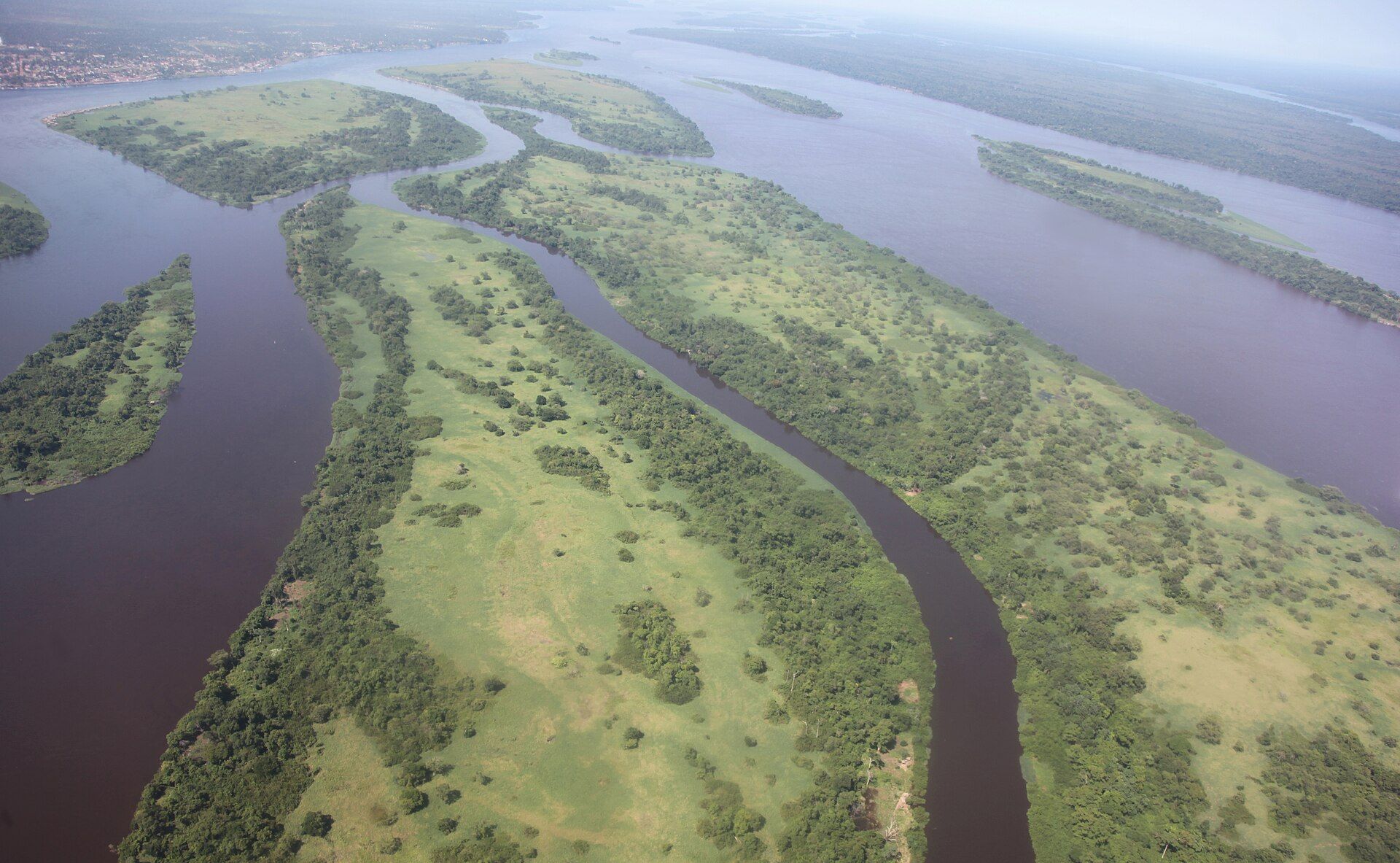
The Congo Basin holds the second-largest tropical rainforest on Earth after the Amazon, blanketing some 1.7 million square kilometres across six countries, with the greater part in the Democratic Republic of the Congo. It performs a service no other forest matches at this scale: the Congo is generally considered the world's largest remaining net carbon sink among tropical forests, absorbing more carbon than it releases, in large part thanks to its vast peatlands — among the biggest tropical peat deposits ever found, holding carbon locked away for millennia. It shelters species found nowhere else: bonobos, our closest relatives alongside chimpanzees, live only south of the Congo River; the okapi, a forest relative of the giraffe, was unknown to science until the twentieth century; and forest elephants and lowland gorillas move through the understory. Great rivers thread it, and Indigenous forest peoples have lived within it for millennia.
Why visit
Travelling into the Congo Basin — to track bonobos or lowland gorillas in a forest that is genuinely little changed — is difficult, rare, and unforgettable, though access depends heavily on region and conditions.
What to know before you go
🗓️ Best time
The drier windows (roughly June–August and December–February) for the most passable forest travel; conditions and access vary widely by country and region.
🧭 Getting there & access
Spread across the DR Congo, Republic of Congo, Cameroon, Gabon, Central African Republic, and Equatorial Guinea; visited via reserves such as Odzala and Nouabalé-Ndoki, usually by charter flight and river or road with specialist operators.
Good to know
- Go with specialist operators; independent travel here is not practical.
- Check security and health advisories carefully for the specific region.
- Primate tracking has strict distance and health rules — follow them exactly.
Plan your visit
Expedition🧭 Getting there
From Kinshasa, Brazzaville or Douala, depending which corner of the basin
- International flight to a regional capital
- Onward light aircraft or charter to a regional strip
- Then river boat and 4x4 transfers measured in days rather than hours — the managed reserves such as Odzala-Kokoua and Dzanga-Sangha are reached this way
- Total travel
- Two to three days from Europe to a lodge
- Time at site
- 7–10 days minimum, given how much of the trip is pure transit
- Access
- This is not one destination but the second-largest rainforest on earth across six countries, and practical visitor access is confined to a handful of managed reserves reached through specialist operators. Permits, visas and gorilla-tracking arrangements differ by country and change often. Yellow fever certificates are required. Check your government's travel advice, which for several parts of the basin is restrictive.
🎒 What to bring & consider
- Yellow fever vaccination, which is a hard entry requirement, plus malaria prophylaxis on travel-clinic advice
- Thorough insect protection — this is high-risk territory for mosquito- and fly-borne disease, not a nuisance-level problem
- Rubber boots and quick-dry clothing for swamp forest, where a good deal of the walking is in water
- Comprehensive evacuation insurance, because definitive medical care is days away rather than hours
- Complete self-sufficiency in medication; nothing can be replaced locally
👁️ What to expect
- Crowds
- Almost no tourism at all. You are likely to be one of very few visitors in the region.
- Conditions
- Heat, humidity, insects, swamp walking, and long unreliable transfers. This is genuine expedition travel.
- Facilities
- A small number of good lodges inside the managed reserves. Nothing whatsoever outside them.
- The view
- Lowland gorillas and forest elephants at the bais — natural forest clearings — are the dependable spectacle, because the animals come out onto open ground. Inside the forest itself the canopy is so dense that you will hear far more than you ever see.
Times and requirements are approximate and change with season, weather, and local rules — confirm permits, fares, and schedules with operators before you travel.
Natural riches of the area
- The world's second-largest rainforest (~1.7 million km²)
- The largest remaining net carbon sink among tropical forests
- Vast tropical peatlands storing millennia of carbon
- Bonobos, okapi, forest elephants, and lowland gorillas
Local food
- Fufu & cassava leaves
- Pounded starch with rich greens, the staple meal across the basin.
- River fish
- Fish from the Congo and its tributaries, smoked or stewed.
- Plantain & groundnut stew
- Everyday dishes across central Africa.
The Congo Basin holds the second-largest tropical rainforest on Earth, after the Amazon — some 1.7 million square kilometres of green spread across six countries, the greater part of it in the Democratic Republic of the Congo. And it does something no other forest matches at this scale: the Congo is generally reckoned the largest remaining net carbon sink among the world’s tropical forests, absorbing more carbon than it gives off, helped enormously by peatlands that rank among the biggest tropical peat deposits ever discovered.
Its wildlife is equally singular. Bonobos — with chimpanzees, our closest living relatives — exist only south of the Congo River and nowhere else on the planet. The okapi, a forest cousin of the giraffe, was unknown to science until the twentieth century. Forest elephants and lowland gorillas move through the understory, great rivers thread the whole basin, and Indigenous forest peoples have lived within it for millennia. It remains one of the least-visited great wildernesses on Earth.
Congo Basin Rainforest: common questions
How do you get to Congo Basin Rainforest?
From Kinshasa, Brazzaville or Douala, depending which corner of the basin: International flight to a regional capital; Onward light aircraft or charter to a regional strip; Then river boat and 4x4 transfers measured in days rather than hours — the managed reserves such as Odzala-Kokoua and Dzanga-Sangha are reached this way. Total travel time: Two to three days from Europe to a lodge.
When is the best time to visit Congo Basin Rainforest?
The drier windows (roughly June–August and December–February) for the most passable forest travel; conditions and access vary widely by country and region.
How long should you spend at Congo Basin Rainforest?
7–10 days minimum, given how much of the trip is pure transit. Total travel time: Two to three days from Europe to a lodge.
What should you bring to Congo Basin Rainforest?
Yellow fever vaccination, which is a hard entry requirement, plus malaria prophylaxis on travel-clinic advice Thorough insect protection — this is high-risk territory for mosquito- and fly-borne disease, not a nuisance-level problem Rubber boots and quick-dry clothing for swamp forest, where a good deal of the walking is in water Comprehensive evacuation insurance, because definitive medical care is days away rather than hours Complete self-sufficiency in medication; nothing can be replaced locally
Do you need a permit or guide for Congo Basin Rainforest?
This is not one destination but the second-largest rainforest on earth across six countries, and practical visitor access is confined to a handful of managed reserves reached through specialist operators. Permits, visas and gorilla-tracking arrangements differ by country and change often. Yellow fever certificates are required. Check your government's travel advice, which for several parts of the basin is restrictive.
Is Congo Basin Rainforest crowded, and what are conditions like?
Almost no tourism at all. You are likely to be one of very few visitors in the region. Heat, humidity, insects, swamp walking, and long unreliable transfers. This is genuine expedition travel. Facilities: A small number of good lodges inside the managed reserves. Nothing whatsoever outside them.
Added
More wonders to explore