Head to head · Tenerife's 3,715 m volcano vs Lanzarote's 18th-century lava fields
Teide vs Timanfaya: Tenerife or Lanzarote for Canary Island Volcanoes?
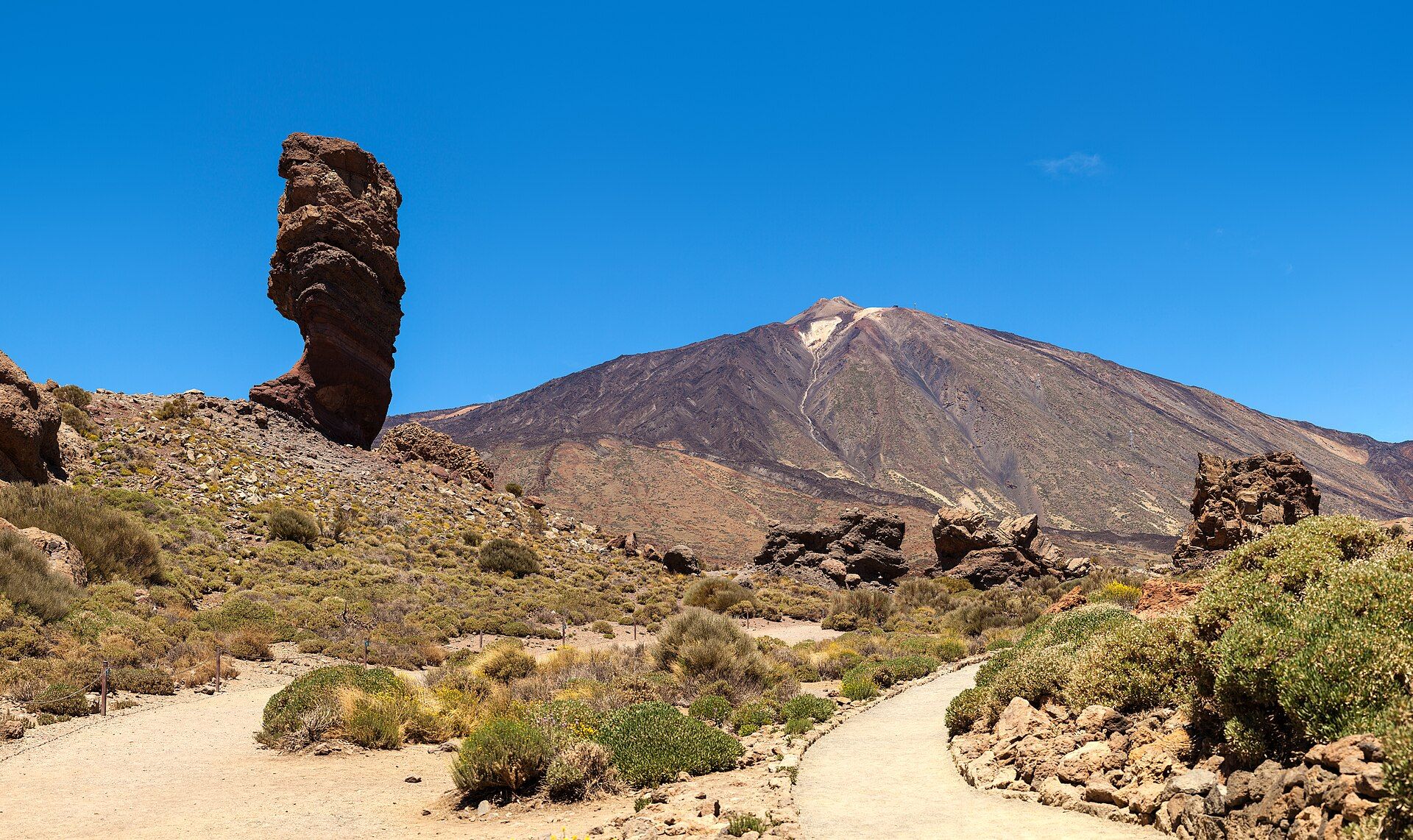
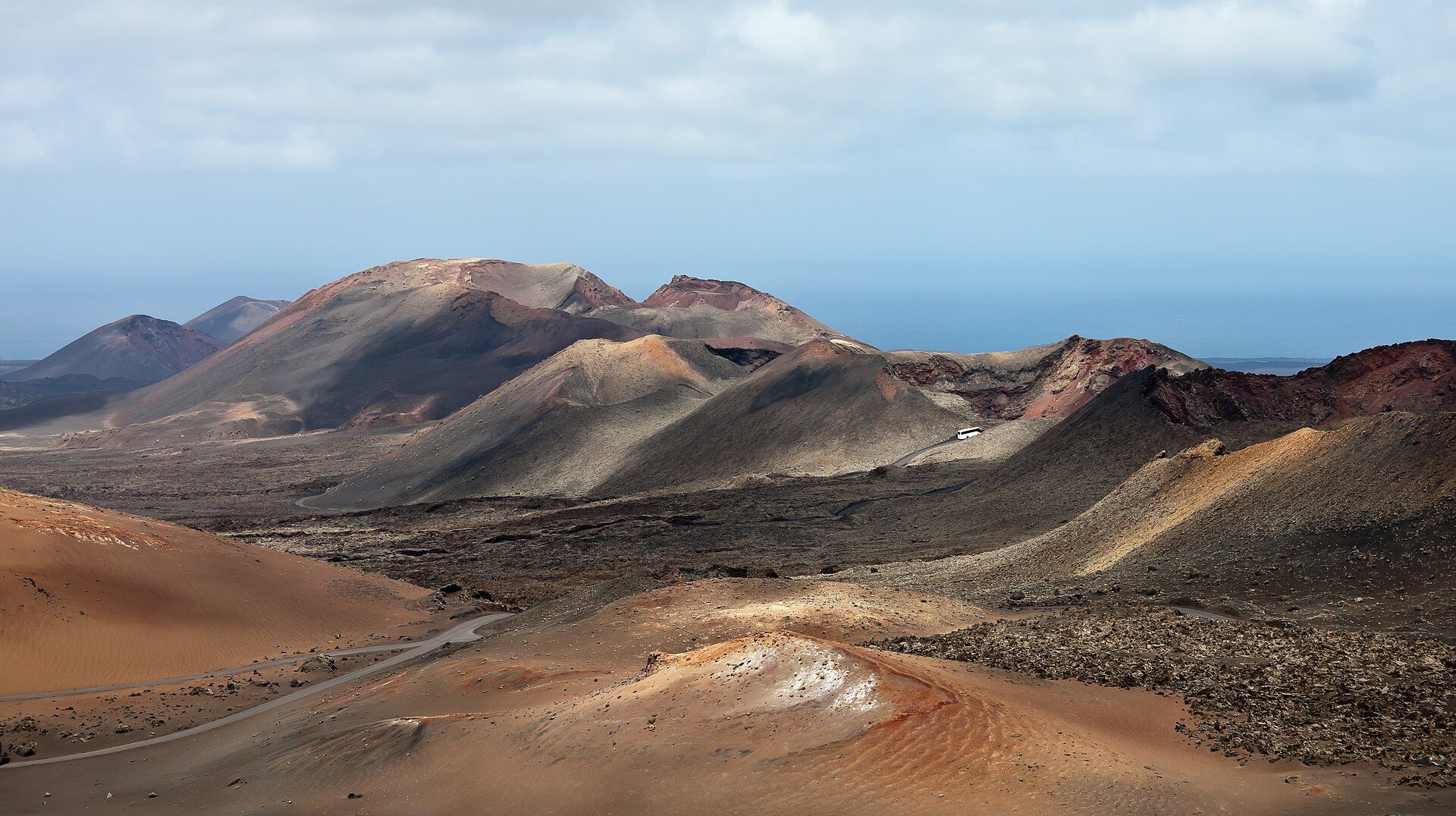
Both are Canary Island volcano national parks, and both are moonscapes of lava under a hard Atlantic sky. Teide, on Tenerife, is a 3,715 m stratovolcano — the highest point in Spain and in the whole Atlantic — standing inside Las Cañadas, a caldera about 24 km wide; it last erupted in 1909 and its national park is a UNESCO World Heritage Site. Timanfaya, on Lanzarote, is a 51 km² park of cinder cones and lava fields left by the eruptions of 1730–1736 and 1824, the island's last.
The visits are very different. On Teide you drive up, ride a cable car to about 3,555 m, and — with a free, capped permit booked well in advance — walk the final path to the summit. Timanfaya is mostly a strict reserve: the Ruta de los Volcanes can be seen only by coach, and walking on the lava outside marked, guided trails is prohibited.
Mount Teide
Spain's highest summit, above the clouds
A 3,715 m volcano inside a ~24 km caldera on Tenerife, with a cable car to 3,555 m and a permit-only path to the top; last eruption 1909.
- Cable car to 3,555 m; summit with a free permit
- Sea of cloud, sunrise shadow and stargazing
- Freely accessible park roads
Timanfaya
Lava fields that are still hot
A 51 km² national park on Lanzarote formed by the 1730–1736 and 1824 eruptions; the ground just below the surface still reaches hundreds of degrees.
- Geothermal demonstrations at Islote de Hilario
- Coach tour through the lava on the Ruta de los Volcanes
- Easy half-day visit; free visitor centre at Mancha Blanca
Head to head
| What matters | Mount Teide | Timanfaya |
|---|---|---|
| Scenery Edge: Toss-up | A huge cone above a caldera of lava flows and pumice in ochre, black and rust, often floating above a sea of cloud. | Rust-red and black cinder cones in rough 'aa' and smooth 'pahoehoe' lava fields, with volcanic tubes and caves. |
| Signature experience Edge: Toss-up | The cable car to 3,555 m and, with a permit, the summit — or Teide's triangular shadow at sunrise. | Geothermal demonstrations showing the heat just below the surface, then the coach route through the lava from Islote de Hilario. |
| Hiking freedom Edge: Mount Teide | The park is freely accessible by road, and the summit path is open to anyone holding the free permit. | Most of the park is a strict reserve: no leaving your vehicle outside designated car parks and no walking on the lava except on marked trails; the Tremesana walk is guided and must be booked. |
| Effort Edge: Timanfaya | Thin air and a rocky, exposed summit path; the cable car closes in high wind. | Easy: a paved road, a coach tour and guided walks on marked trails. |
| Getting there Edge: Timanfaya | Drive 1h–1h30 from Tenerife's coast to the cable-car base. | Lanzarote is small; the LZ-67 between Yaiza and Tinajo runs through the park. |
| Weather Edge: Toss-up | Near freezing and windy at the summit even in summer; snow on the cone in winter. | Little rain (no more than 125 mm a year), strong sun and little shade on the lava. |
| Best months Edge: Timanfaya | Spring and autumn (April–June, September–October); new moon for stargazing. | Open all year; book guided walks ahead in busy holiday periods. |
| Time needed Edge: Toss-up | Half a day for viewpoints and the cable car; a full day with the summit. | Half a day for the visitor centre, demonstrations and coach route; a full day with a guided walk. |
Which should you choose?
Choose Mount Teide if…
…you want to stand on Spain's highest summit or ride above the clouds, and can book a summit permit and leave spare days for wind.
Choose Timanfaya if…
…you want the rawest recent lava landscape in the Canaries on an easy half-day, and don't mind seeing most of it from a coach.
The honest verdict
Teide is the bigger mountain experience: a cable car to 3,555 m, a capped free permit for the final path, and the sea of cloud below. Book the permit well ahead and keep a spare day in case the cable car closes for wind.
Timanfaya is the more striking lava landscape at close range — cones and flows from the 1730s, and ground still hot enough for the geothermal demonstrations — but it is protected strictly, so you see the Ruta de los Volcanes by coach and walk only on guided or marked trails.
They are on different islands, so the choice is usually Tenerife or Lanzarote. Confirm current tickets and times with the parks before you go.
Wonders mentioned here
Timanfaya National Park
South-west Lanzarote, Canary Islands, Spain, in the municipalities of Yaiza and Tinajo
Added