Head to head · Washington's two big national parks
Mount Rainier vs Olympic: Which Washington National Park Should You Visit?
Mount Rainier and Olympic are the two big national parks within reach of Seattle, and a lot of Pacific Northwest trips have room for only one. Rainier is built around a single mountain: a 14,410-foot volcano covered in glaciers, with subalpine meadows on its flanks. Olympic is three different landscapes on one peninsula, with temperate rainforest, the glaciated Olympic Mountains and a wild Pacific coast.
That difference shapes the trip. At Rainier, one or two days at Paradise and Sunrise covers the classic views. Olympic has no road across its interior, so its rainforest, mountains and coast are hours apart on a loop highway, and it needs several days.
Mount Rainier
One glacier-hung volcano above wildflower meadows
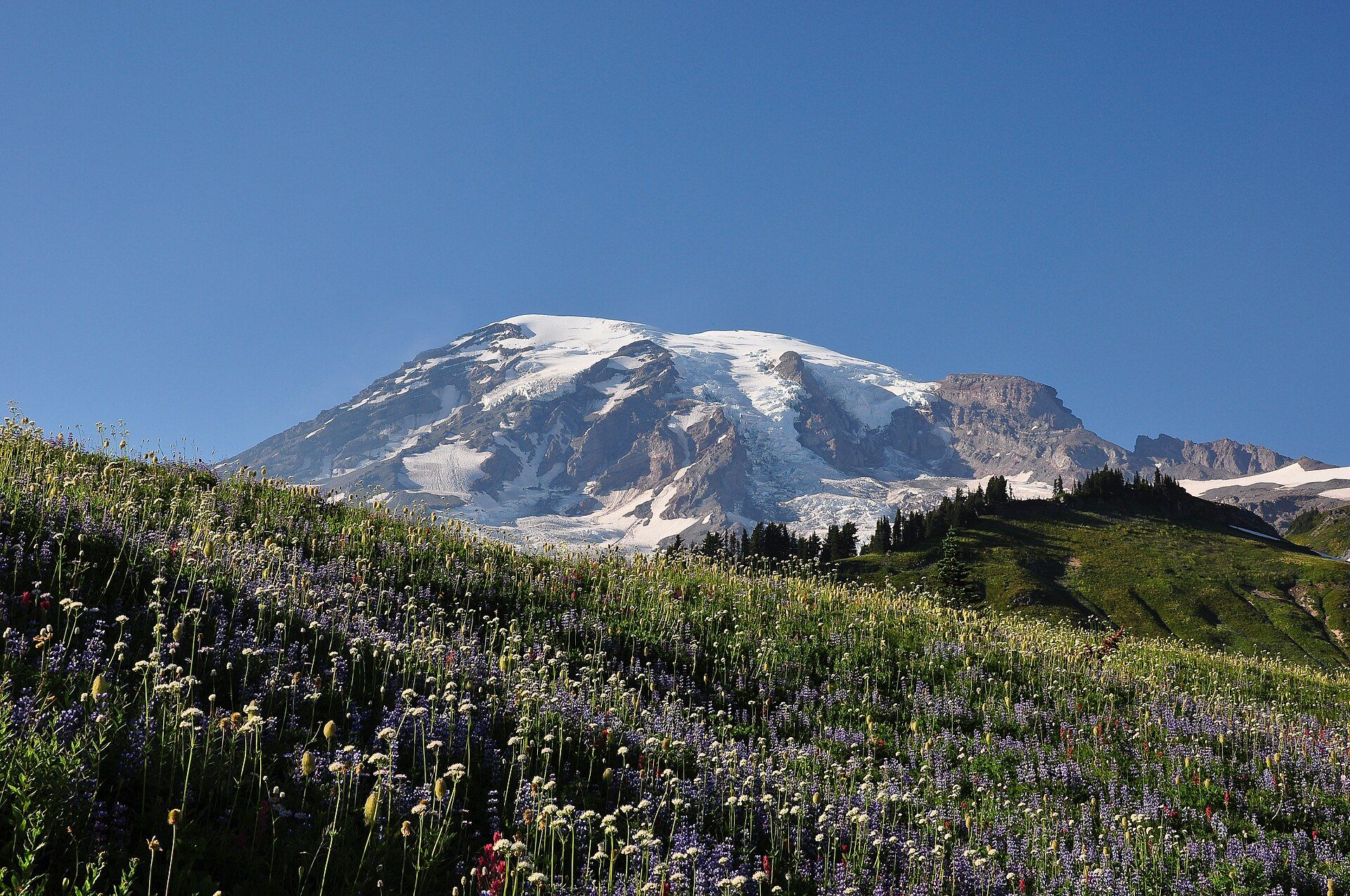
Mount Rainier rises to 14,410 ft (4,392 m), 9,000 to 11,000 ft above valley floors only three to six miles from its base, and 28 named glaciers cover about 35 square miles of its slopes. It became a national park in 1899, and about 97% of its 236,381 acres is designated wilderness. Most visitors come to Paradise, at about 5,400 ft on the south flank, or to Sunrise, at 6,400 ft on the north-east side, for the meadow trails beneath the mountain.
- The mountain itself, filling the sky above the meadows at Paradise and Sunrise
- Subalpine wildflower meadows in mid- to late summer
- The 93-mile Wonderland Trail, which circles the whole mountain
Olympic
Rainforest, mountains and wild coast on one peninsula
Olympic National Park was established in 1938 and protects 922,651 acres of three very different ecosystems: glacier-capped mountains, wild Pacific coast and old-growth temperate rainforest. It ranges from sea level to almost 8,000 ft, and the west slopes of Mount Olympus get about 200 inches of precipitation a year. More than 1,100 plant species grow in its meadows and forests. The park is also a UNESCO World Heritage Site.
- The moss-hung rainforests of the Hoh and Quinault valleys
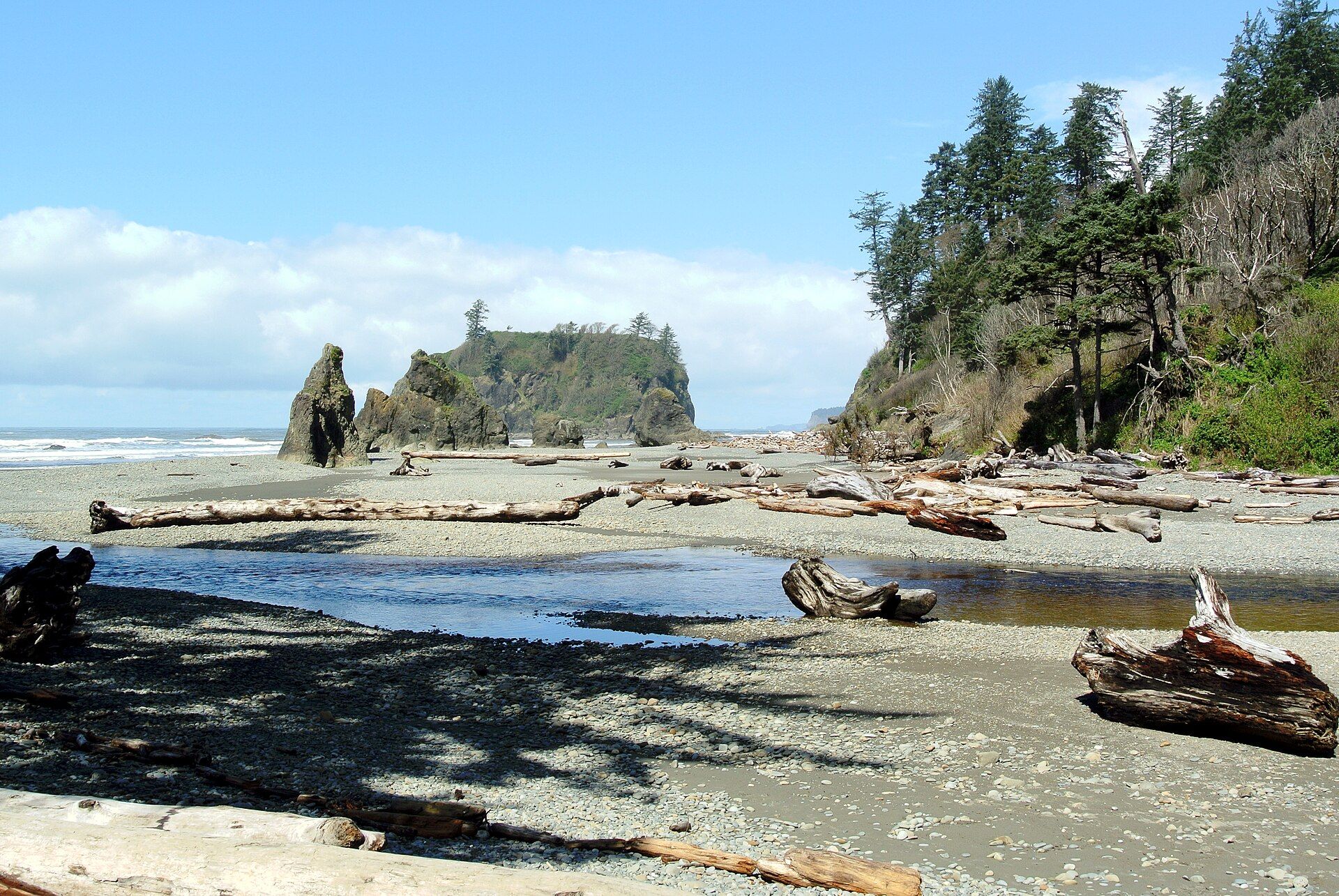
- A wild coast of driftwood beaches, tide pools and sea stacks
- Hurricane Ridge's alpine views over the Olympic Mountains
Head to head
| What matters | Mount Rainier | Olympic |
|---|---|---|
| The scenery Edge: Toss-up | One overwhelming view: a glaciated volcano above subalpine meadows, old-growth forest in the valleys below. | Variety: rainforest, alpine ridges and a foggy coast of sea stacks, each very different from the others. |
| Distance from Seattle Edge: Mount Rainier | The park's northern boundary is about 65 miles south-east of the Seattle–Tacoma area. Paradise is 19 miles beyond the Nisqually Entrance. | Three to four hours from Seattle to the peninsula, by road or ferry. From Port Angeles, Hurricane Ridge is about 40 minutes and the Hoh Rain Forest roughly 2h–2h30. |
| Time needed Edge: Mount Rainier | One full day for Paradise and its meadow trails, and a second day for Sunrise. Several days with a wilderness permit to hike the Wonderland Trail. | About four days, because the mountains, rainforest and coast are hours apart by road. |
| Season Edge: Toss-up | July to September is best. Snow can linger on trails at Paradise into June or July. In winter all roads except Nisqually–Paradise close, and Paradise becomes a snowshoe and ski area. | July to September for the driest weather and an open high country. The rainforest is atmospheric year-round, but winter is very wet, and the Hurricane Ridge road closes and reopens with winter weather. |
| Hiking Edge: Toss-up | Meadow walks and steep trails toward the glaciers, such as the strenuous 5.5-mile Skyline Trail loop at Paradise, plus the Wonderland Trail. | Easy rainforest loops such as the Hall of Mosses, alpine walks at Hurricane Ridge, and coastal hikes where some headlands can be passed only at low tide. |
| Access rules Edge: Toss-up | An entrance pass is required. Timed-entry reservations have applied to the Paradise and Sunrise corridors in recent summers, so check with the National Park Service before you go. | An entrance fee is required. Wilderness camping needs a permit, and a bear canister in some zones. Road closures and washouts happen, so check current status before you plan a day. |
| Crowds Edge: Toss-up | Paradise and Sunrise are very busy on summer weekends and during the wildflower bloom. The Carbon River and Mowich areas in the north-west are quieter. | Busy at Hurricane Ridge, the Hoh visitor centre and Ruby Beach in summer. The interior wilderness is empty. |
Which should you choose?
Choose Mount Rainier if…
…you have one or two days from Seattle, want one big mountain view and summer wildflowers, or plan a serious multi-day hike on the Wonderland Trail.
Choose Olympic if…
…you can give it three or four days, want rainforest and wild coast as well as mountains, and do not mind rain or long drives between sights.
The honest verdict
With only a day or two, choose Mount Rainier. It is closer to Seattle, the view at Paradise is the mountain's whole point, and one well-planned day there shows you the park at its best in July to September.
With four days or more, Olympic packs far more variety into one park: rainforest in the morning, alpine meadows or sea stacks later. In return you spend a lot of time driving, and the coast's tides and the western side's rain need planning.
You can also do both on one trip, starting with Rainier and finishing on the peninsula. Whichever you choose, check the National Park Service for Rainier's timed-entry rules and for Olympic's road and trail status before you set dates.
Wonders mentioned here
Mount Rainier
Cascade Range, western Washington, USA, about 65 miles southeast of the Seattle–Tacoma area
Added