Head to head · The highest point on Earth vs the Roof of Africa
Mount Everest vs Kilimanjaro: Height, Difficulty and Which Trek to Choose
Mount Everest, at 8,849 metres, is the highest point on Earth; Kilimanjaro, at 5,895 metres, is the highest mountain in Africa and the tallest free-standing mountain in the world. The heights are not the real comparison for most people, though, because most visitors do not climb Everest — they trek to its base camp. The usual choice is between the Everest Base Camp trek and a Kilimanjaro summit climb.
The difference is in what you get. On Kilimanjaro you can stand on the summit itself without technical climbing, on a 6–9 day climb through five climate zones. The Everest Base Camp trek is longer — about 12–16 days round trip from Lukla — and you look up at the summit rather than reaching it. On both, altitude sickness, not fitness or technical skill, is what turns people back.
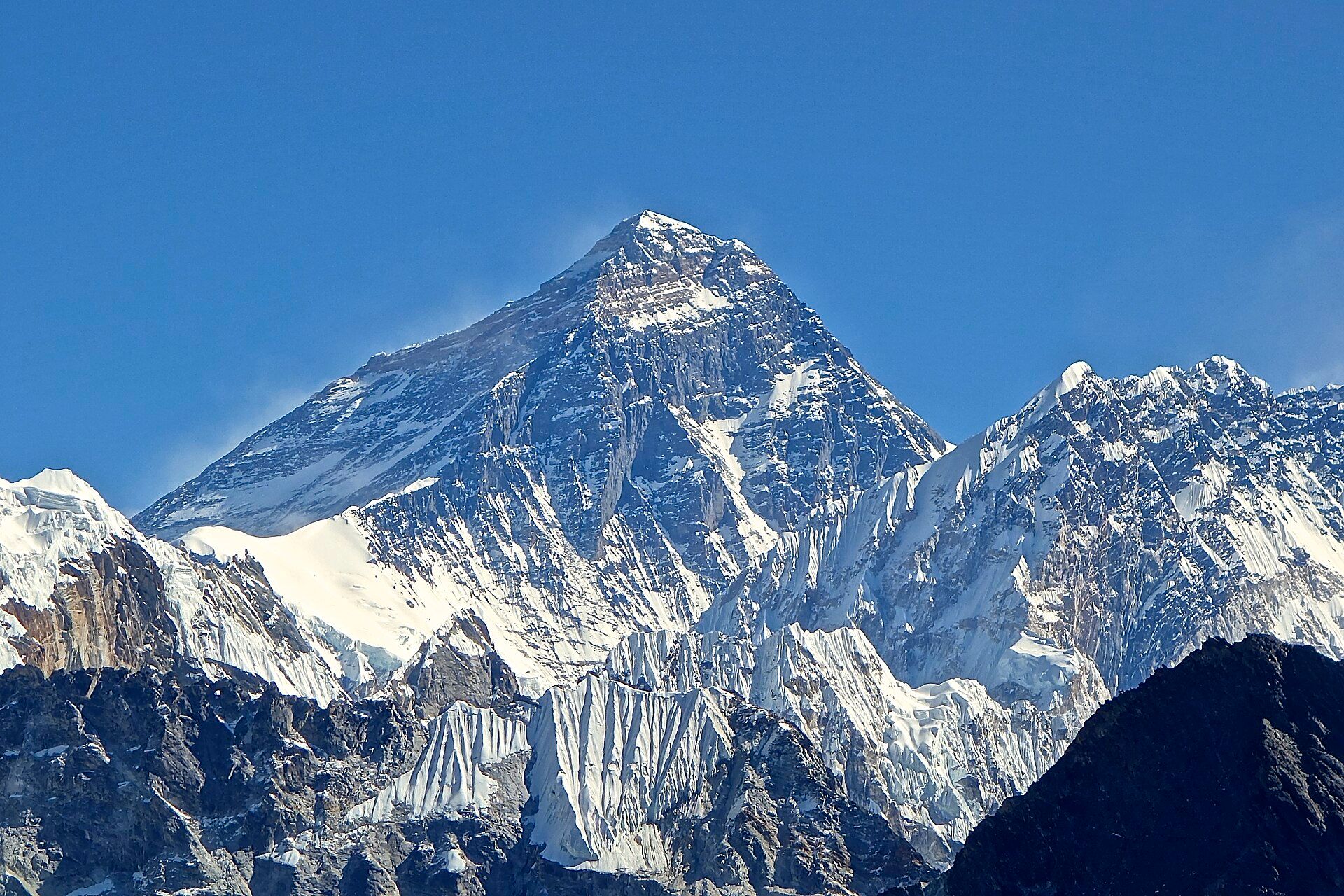
Mount Everest
The highest point on Earth — trekked to, rarely climbed
Everest (Sagarmāthā, Chomolungma) stands 8,849 metres on the Nepal–Tibet border, its summit made of marine limestone from an ancient seabed. It anchors Sagarmatha National Park, a UNESCO World Heritage Site and the homeland of the Sherpa people. The Base Camp trek walks up the Khumbu valley past Sherpa villages and monasteries.
- The Base Camp trek through the Khumbu valley
- Sunrise over Everest from Kala Patthar
- Teahouses with beds and hot food the whole way
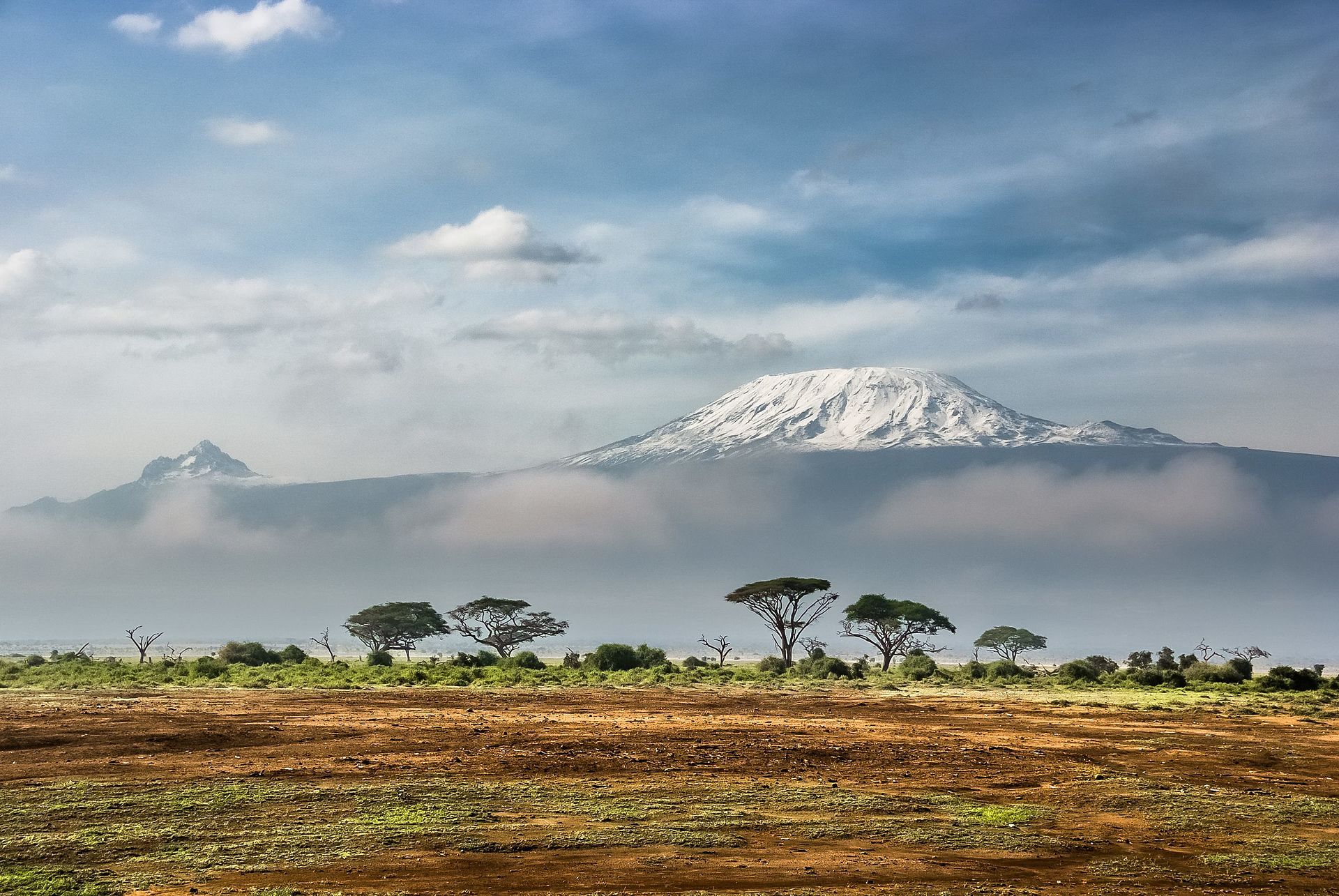
Kilimanjaro
A summit you can walk up
A dormant volcano with three cones rising alone from the Tanzanian plains to 5,895 metres. A climb passes through five climate zones — farmland, rainforest, heath, alpine desert and an arctic summit with shrinking glaciers — and is non-technical, though every ascent must go through a licensed operator with guides and porters.
- Standing on the summit of a continent
- Five climate zones in under a week
- Easy to combine with a safari in the Serengeti or Ngorongoro
Head to head
| What matters | Mount Everest | Kilimanjaro |
|---|---|---|
| Height Edge: Mount Everest | 8,849 m at the summit. Most trekkers reach Base Camp and Kala Patthar, below the summit. | 5,895 m — and most climbers aim for the summit itself. |
| What you reach Edge: Kilimanjaro | On the trek, Base Camp; the summit is a separate expedition that needs months of acclimatisation, an expedition permit from Nepal's Department of Tourism and experienced Sherpa support. | The summit, by non-technical routes such as Machame, Marangu, Lemosho or the Northern Circuit. |
| Time needed Edge: Kilimanjaro | 12–16 days round trip from Lukla, plus two days to get to the trailhead — and the Lukla flights are often delayed by weather. | 6–9 days on the mountain; the eight- or nine-day routes have markedly higher summit success. |
| Difficulty Edge: Toss-up | Rated an expedition: five to seven hours of walking most days on rocky trail at increasing altitude, in the cold. | Strenuous: shorter overall, but summit night starts around midnight, in temperatures far below freezing. |
| Best time Edge: Toss-up | Pre-monsoon (roughly March–May) and post-monsoon (roughly late September–November). | The drier windows of January–March and June–October. |
| Permits and rules Edge: Mount Everest | Sagarmatha National Park entry plus the Khumbu rural municipality permit. Nepal's rules on solo trekking and guides have changed several times — confirm with the Nepal Tourism Board. | No independent climbing: a licensed operator, registered guides and porters are mandatory, and park fees are paid through them. |
| Where you sleep Edge: Mount Everest | Teahouses with beds and hot food all the way; charging and hot water cost extra. | Huts on the Marangu route; tents with a cook and camp crew on every other route. |
Which should you choose?
Choose Mount Everest if…
…you have about three weeks, want a long walk through mountain villages among the world's highest peaks, and are happy to see the summit rather than stand on it.
Choose Kilimanjaro if…
…you want to stand on a summit, have about a week to ten days, or want to combine the climb with a safari in northern Tanzania.
The honest verdict
If the goal is a summit, choose Kilimanjaro: it is a continental high point that non-technical trekkers can reach with time to acclimatise. If the goal is the journey and the scenery — Sherpa villages, monasteries and the giants of the Himalaya all around — the Everest Base Camp trek is the richer walk.
Kilimanjaro takes less time; the Everest trek needs about two weeks plus slack for Lukla flight delays.
On both, give yourself extra acclimatisation days: altitude sickness is the main risk and the main reason people turn back. Carry insurance that covers high-altitude evacuation, and confirm current permits and fees with the Nepal Tourism Board or your Kilimanjaro operator.
Wonders mentioned here
Added