Head to head · Fiordland's two famous fiords
Milford Sound vs Doubtful Sound: Which Fiordland Cruise Should You Take?
Milford Sound and Doubtful Sound are the two Fiordland fiords most visitors choose between, and both sit inside Te Wāhipounamu, the South West New Zealand World Heritage Area. They are close on the map, but the trip to each is very different.
Milford has a road. The 120-kilometre Milford Road from Te Anau ends at a cruise terminal, so you can drive in, take a two-hour cruise and drive out. Doubtful has no road at all: you cross Lake Manapōuri by boat, ride a coach over the Wilmot Pass to Deep Cove, and only then board the cruise. That extra effort is the main trade-off. Milford has the bigger single view, and Doubtful is larger and much quieter.
Milford Sound
The icon you can drive to
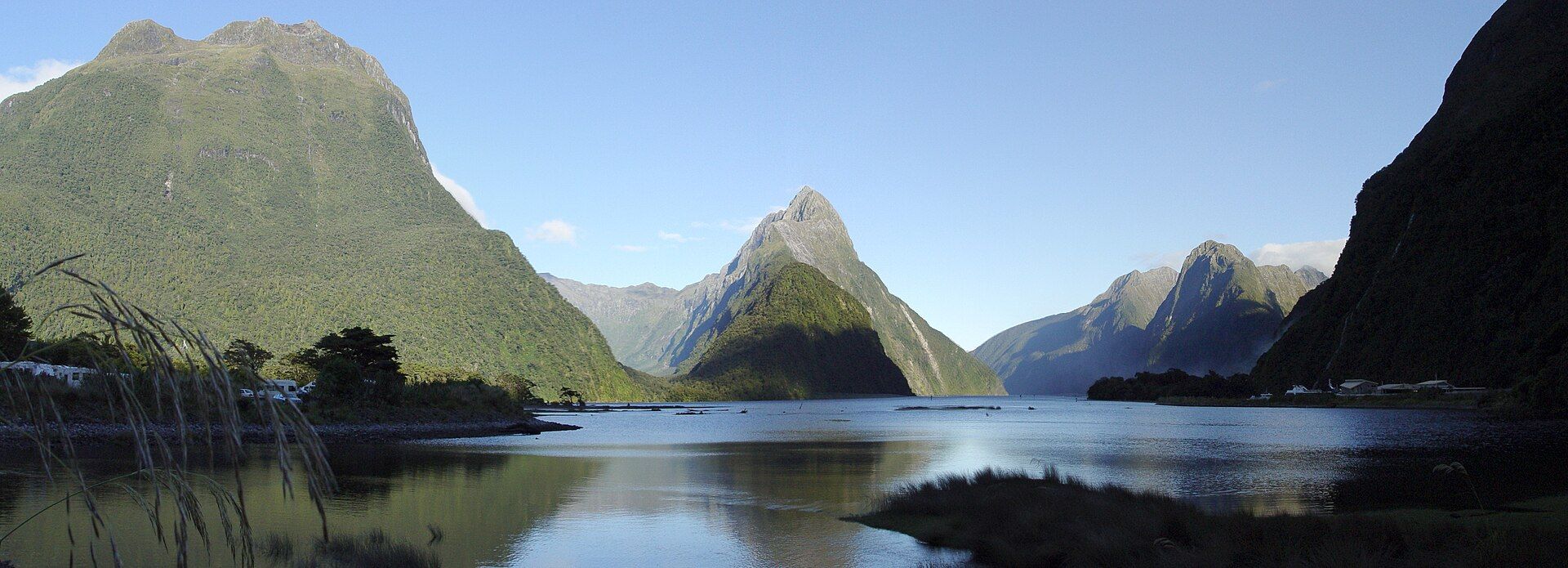
Piopiotahi sits at the end of the Milford Road, with a cruise terminal at the head of the fiord. Its walls rise straight from the water, with Mitre Peak climbing 1,692 m directly out of the fiord, and the water below goes down to about 265 m. Up to 7 m of rain a year sends temporary waterfalls down the cliffs within hours of a downpour, alongside permanent falls such as Stirling and Bowen.
- Mitre Peak, one of the most recognisable mountain views in New Zealand
- Reachable by road, with no transfers, and doable as a day trip from Te Anau
- Walls and waterfalls packed into a short fiord, so a cruise of about two hours shows you most of it
Doubtful Sound
The bigger, roadless 'Sound of Silence'
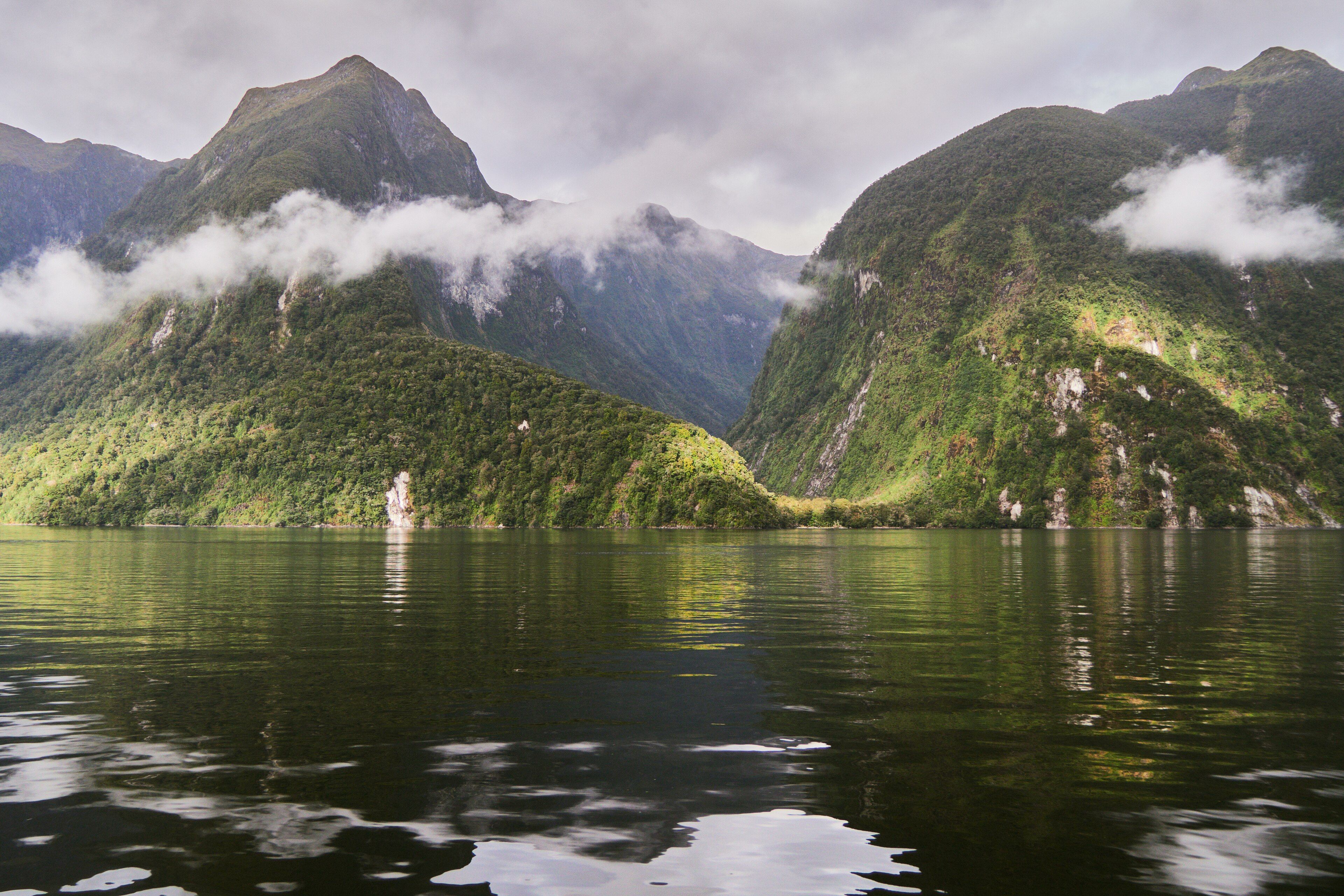
Patea is one of the largest fiords in Fiordland, with three main arms, and one of the region's longest and deepest. There is no direct road. From Pearl Harbour in Manapōuri a boat crosses the lake to West Arm, a coach climbs the Wilmot Pass to Deep Cove, and the cruise starts there. It holds one of the southernmost populations of bottlenose dolphins and three of Fiordland's ten marine reserves.
- Far fewer people, because the boat–coach–boat transfer limits numbers
- A larger, branching fiord with a wilder, more remote feel
- Resident bottlenose dolphins, fur seals and Fiordland crested penguins
Head to head
| What matters | Milford Sound | Doubtful Sound |
|---|---|---|
| The scenery Edge: Milford Sound | Steeper and more concentrated. Mitre Peak rises 1,692 m straight from the water, and the cliffs close in tightly, which makes it the more dramatic single frame. | Broader and more spread out, with three long arms between forested walls. It is less of one postcard shot and more of a big, quiet landscape. |
| Getting there Edge: Milford Sound | Drive the 120 km Milford Road from Te Anau, which takes about 2 hours without stops and has no fuel on the way. The road can close for weather, rockfall and winter avalanche risk, so check SH94 status before you go. | Manapōuri is about 20 minutes from Te Anau. From there the boat across the lake, the coach over Wilmot Pass and the cruise are booked as one trip with an operator. Private vehicles on Wilmot Pass Road need a permit. |
| Time needed Edge: Milford Sound | Cruises take roughly 1h45–2h. Most of the day goes on the road, and from Queenstown it is a long return trip. | A full day for a day cruise once the transfers are counted. Overnight cruises are the fuller version. |
| Crowds Edge: Doubtful Sound | Busy. Cruises bunch up around late morning when the Queenstown coaches arrive, and early or late sailings are noticeably quieter. | Quiet. The transfer limits numbers, and engines-off moments on the water are part of why people choose it. |
| Wildlife Edge: Doubtful Sound | Fur seals on the rocks, and dolphins and penguins at times. | One of the southernmost bottlenose dolphin populations, plus fur seals and Fiordland crested penguins, with three marine reserves in the fiord. |
| Weather Edge: Toss-up | Very wet. Rain is the normal condition, and it is what turns on the temporary waterfalls. | Equally wet and equally rewarding after rain. The longer open-water stretches towards the sea can be rougher. |
Which should you choose?
Choose Milford Sound if…
…you have limited time, are driving yourself, or most want the Mitre Peak view, and you're happy to share it with other boats. Book an early or late sailing.
Choose Doubtful Sound if…
…you can give it a full day or a night, want quiet and wildlife more than one famous view, and don't mind a boat–coach–boat journey to get there.
The honest verdict
If you have one day and are based in Te Anau, Milford is the easier and more dramatic choice. Go early to beat the coach-tour peak.
If you have the time, Doubtful is the better experience for people who dislike crowds. It is larger, quieter and better for dolphins, and an overnight cruise is the best way to see it. You give up Mitre Peak and spend more time getting there.
Both are in one of the wettest places in New Zealand, and rain makes the waterfalls better rather than ruining the trip. Before you fix dates, check Milford Road status with the transport agency and the current Doubtful Sound transfers with the Department of Conservation and the operators.
Wonders mentioned here
Added