Head to head · South Africa's bushveld vs Namibia's salt pan
Kruger vs Etosha: Which Self-Drive Safari Is Better?
Kruger in South Africa and Etosha in Namibia are Africa's two classic self-drive safaris — parks where you can rent a car, book a rest camp and find the animals yourself, without a guide. Kruger is the bigger, denser wilderness: nearly 20,000 km² of bushveld, riverine forest and granite koppies with the Big Five (lion, leopard, elephant, rhino and buffalo), cheetahs, wild dogs and more than 500 bird species. Etosha is a different kind of spectacle: a salt pan of roughly 4,800 km², visible from space, with almost no vegetation on it — the wildlife gathers at the springs and waterholes around its rim.
Both are dry-season parks. Kruger is easiest for game viewing in the dry winter, roughly May to September; Etosha from June to October, when the waterholes are the only reliable water for many kilometres and elephants, endangered black rhinos, lions, giraffe, zebra and springbok converge on them. Both enforce strict gate times, and both have rest camps that book out — Kruger's in South African school holidays, Etosha's state-run camps in peak season.
Kruger
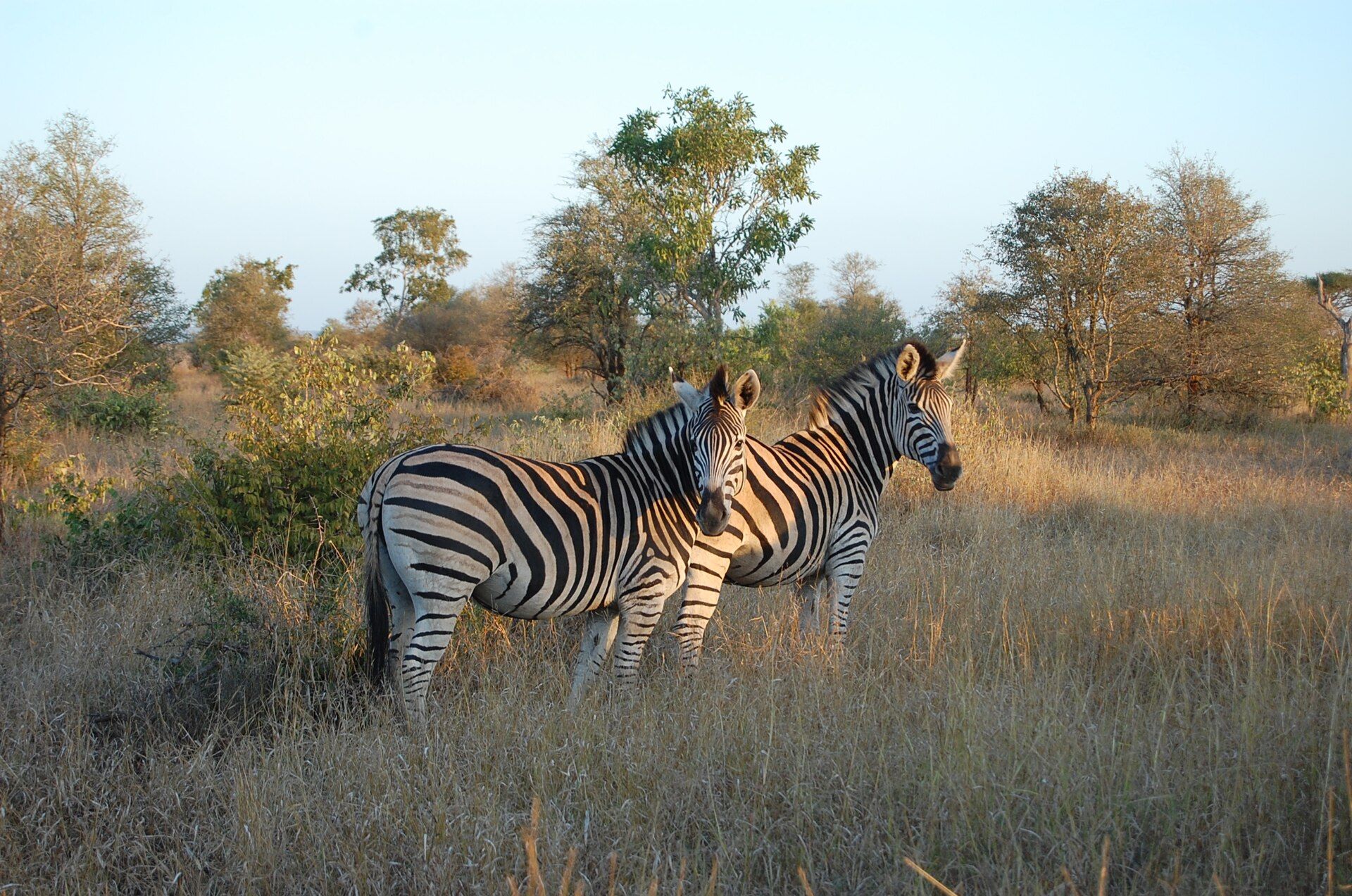
The Big Five in the bushveld
One of Africa's largest and most accessible national parks, part of the Great Limpopo Transfrontier Park, with a dense road network, rest camps and lodges, plus SANParks night drives and guided walks.
- All of the Big Five
- More than 500 bird species
- Fly-in option to Skukuza, inside the park
Etosha
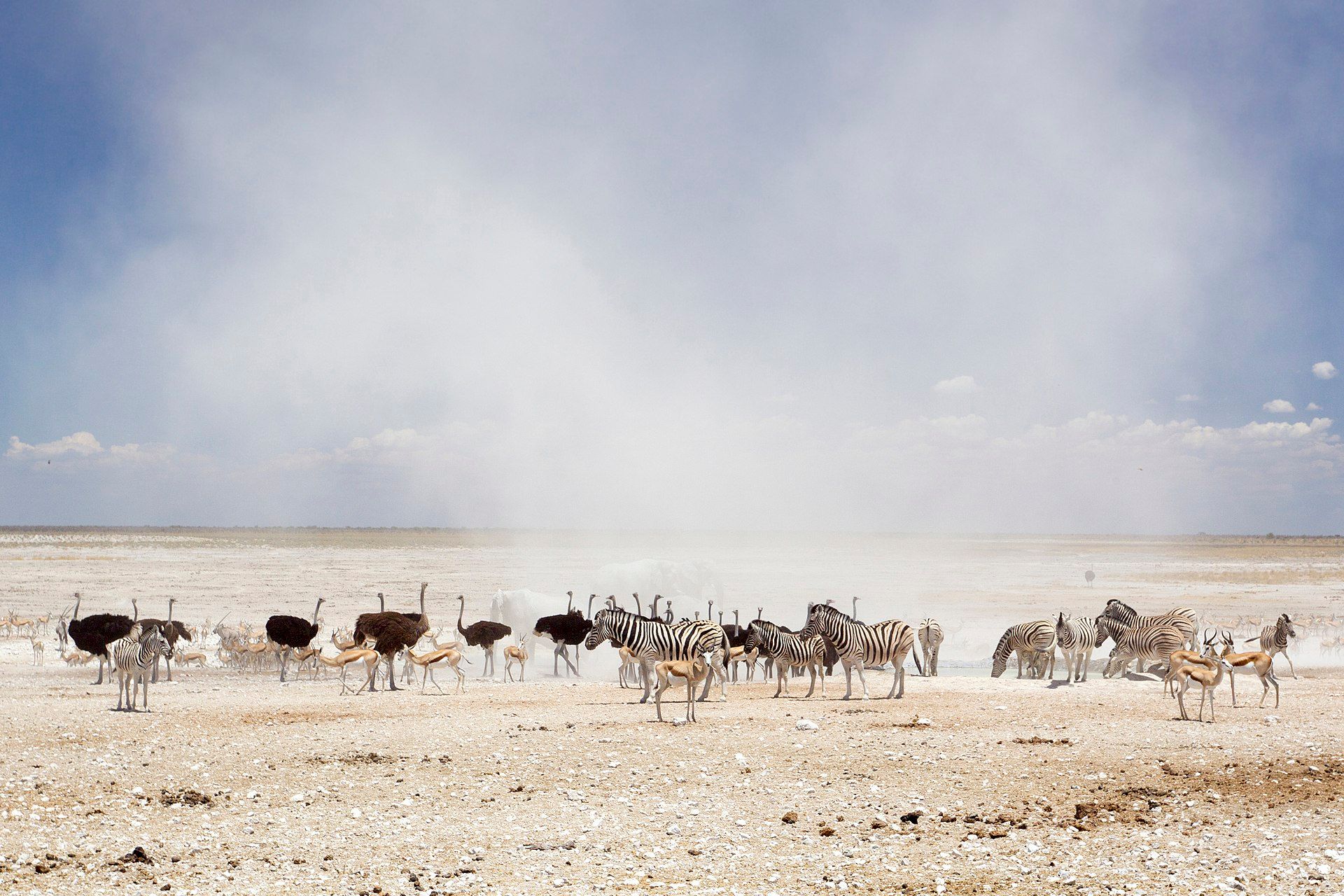
Waterhole drama on a white salt pan
The bed of an ancient lake in northern Namibia, now a shimmering salt flat; rest camps have floodlit waterholes for watching wildlife after dark, and in exceptionally wet years flamingos breed on the pan.
- Park, wait and watch at the waterholes
- Floodlit camp waterholes at night
- Endangered black rhinos
Head to head
| What matters | Kruger | Etosha |
|---|---|---|
| The landscape Edge: Toss-up | Varied bushveld, riverine forest and granite koppies — denser cover, so spotting takes effort. | A blinding white pan shimmering with mirages; open country where animals are often far out — bring binoculars. |
| Wildlife Edge: Kruger | The Big Five, plus cheetah, wild dog, giraffe, hippo and 500+ bird species. | Elephants, black rhinos, lions, giraffe and big herds of zebra and springbok at the waterholes, often several species at once. |
| Size Edge: Kruger | Nearly 20,000 km² — a week lets you work between the south and the north. | The pan alone is about 4,800 km²; camps inside are 1–2 hours apart. |
| Getting there Edge: Kruger | Fly Johannesburg → Kruger Mpumalanga (about 1h) then 1h–1h30 to a gate, or drive about 5–6h; Skukuza airport is inside the park. | Fly to Windhoek, then drive about 5–6h to the Andersson gate (or about 5h to Von Lindequist). |
| Self-drive Edge: Toss-up | Tarred main routes plus gravel roads (better with some clearance); low speed limits, stay in the vehicle except at designated points. | Well-graded gravel that a 2WD handles in the dry season; you must be inside a camp by sunset. |
| Best season Edge: Toss-up | Dry winter, roughly May–September. | Dry season, roughly June–October. |
| Health Edge: Toss-up | Malaria prophylaxis on travel-clinic advice; risk is higher in the northern half. | Hot, still hours in the car — carry far more water than you expect, and sun protection. |
| Time needed Edge: Toss-up | 3–4 days minimum; a week for south and north. | 3–4 days. |
Which should you choose?
Choose Kruger if…
…you want the best chance of the full Big Five and a wide variety of species, would rather fly close to (or into) the park, and like the option of SANParks night drives and guided walks.
Choose Etosha if…
…you want a slower, waterhole-centred safari in open country, are combining it with a Namibia road trip, and want to watch rhinos and elephants at a floodlit waterhole after dark.
The honest verdict
For sheer variety and the Big Five, Kruger wins — it is larger, more varied and easier to reach from Johannesburg.
Etosha is the more distinctive experience: the white pan, the waterhole gatherings and the floodlit camp waterholes make it the easier park to simply sit and watch.
Both are at their best in the dry months (May–September at Kruger, June–October at Etosha). Book rest camps months ahead for school holidays and peak season, and check each park's current conservation and entry fees with SANParks or Namibia's park authority before you go.
Wonders mentioned here
Added