Head to head · The Caribbean's two famous sinkholes
Great Blue Hole vs Yucatán Cenotes: Which Sinkhole Should You Dive?
Short answer: the cenotes for swimming and clear water, the Blue Hole for a bucket-list deep dive or a scenic flight. Both are collapsed limestone caves, but the Great Blue Hole is a single flooded sinkhole in the sea, about 318 m across and 124 m deep, while the Yucatán has thousands of freshwater cenotes opening into some of the longest underwater cave systems on Earth.
They suit very different visitors. The Blue Hole dive is a straight descent past 30 m to giant stalactites at around 40 m, and operators generally require advanced certification; the famous circular view is aerial. Many cenotes are open pools you can swim in with no certification at all, and certified divers can explore the cavern zones with a guide.
Seasons differ slightly: the Blue Hole is calmest and clearest roughly March–June, while the cenotes are good year-round and most comfortable in the drier months, roughly November–April.
The Great Blue Hole
One marine sinkhole ~318 m wide, ~124 m deep
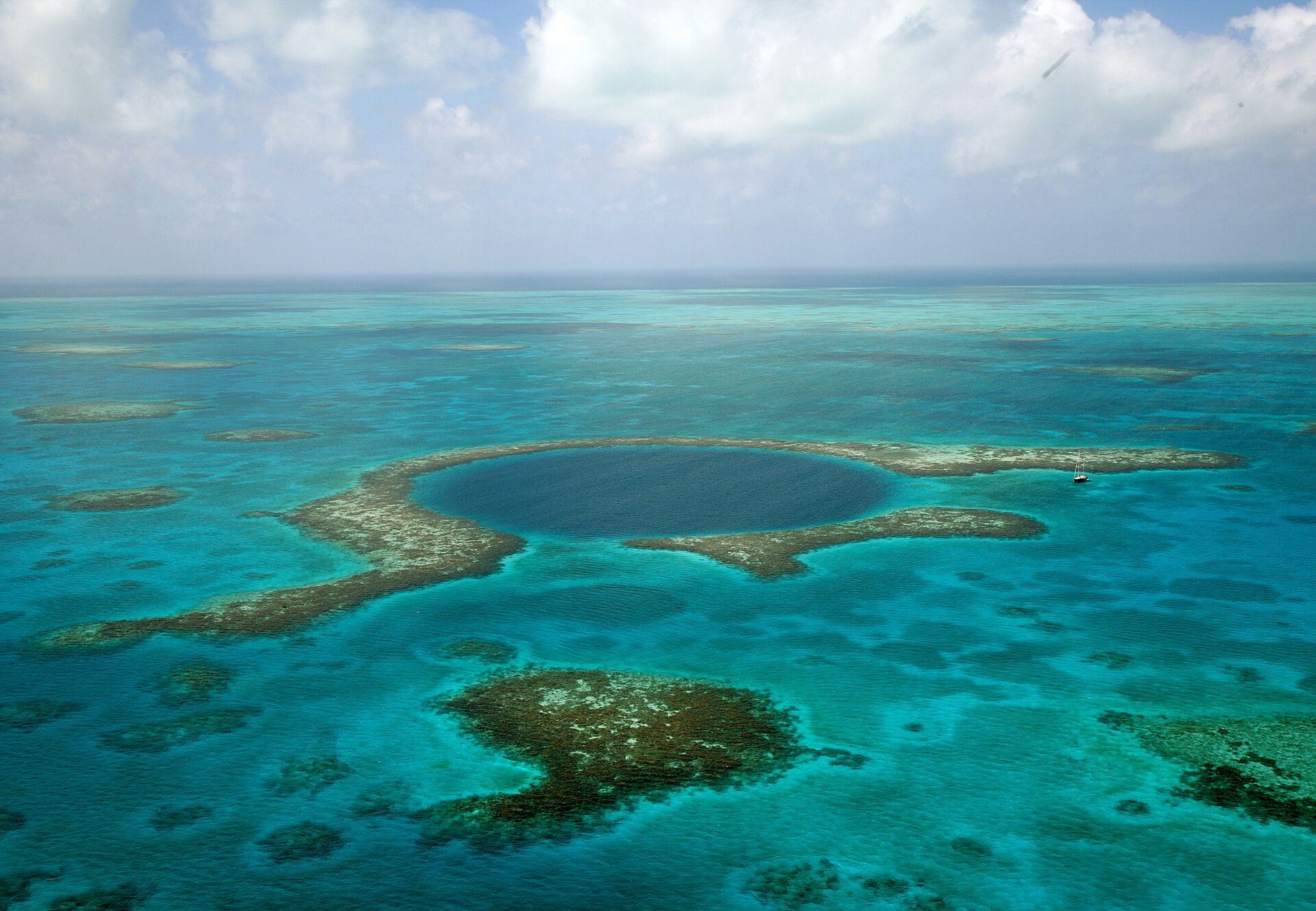
A collapsed ice-age cave on Lighthouse Reef, off Belize, flooded when the sea rose: a near-perfect deep-blue circle ringed by coral, inside the Belize Barrier Reef Reserve System, a UNESCO World Heritage Site. Divers descend past ancient stalactites; most of the famous imagery is shot from the air.
- One of the world's most famous dive sites
- Giant stalactites at around 40 m — proof the cave was once dry
- The iconic aerial view on a scenic flight
- Shallower reef dives and Half Moon Caye on the same day
The Yucatán Cenotes
Thousands of freshwater sinkholes
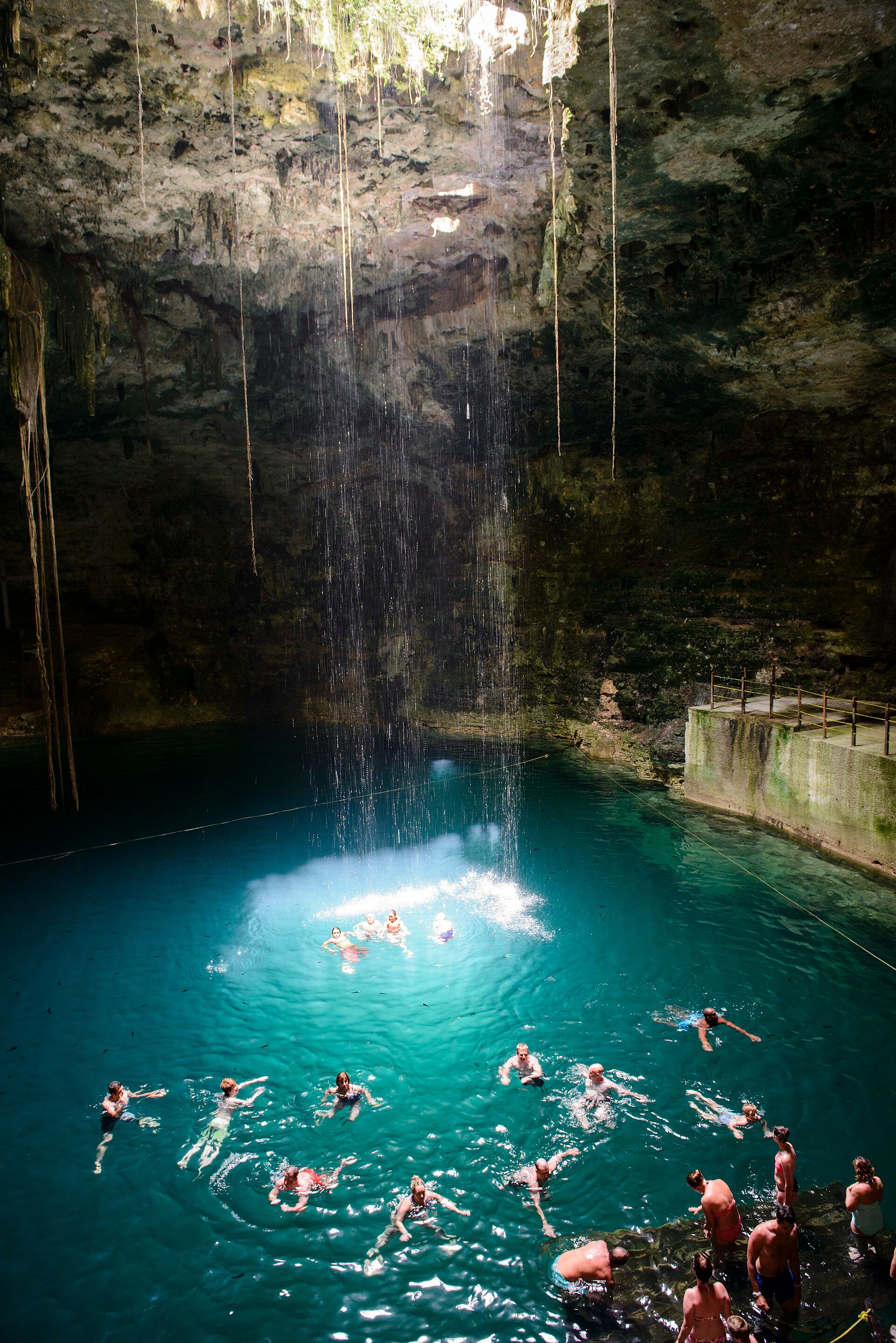
Sinkholes across Mexico's Yucatán Peninsula where the limestone collapsed into the aquifer beneath — glass-clear, cool fresh water, often lit by shafts of sunlight, many along the 'Ring of Cenotes' that traces the buried rim of the Chicxulub crater.
- Astonishingly clear, still fresh water
- Easy swimming in open pools — no certification needed
- Guided cavern dives for certified divers
- Short drives from Tulum, Valladolid and Mérida
Head to head
| What matters | The Great Blue Hole | The Yucatán Cenotes |
|---|---|---|
| What it is Edge: Toss-up | A single marine sinkhole about 318 m wide and 124 m deep, inside a coral atoll. | Thousands of freshwater sinkholes opening into vast flooded cave systems. |
| Underwater Edge: The Yucatán Cenotes | Still water that turns cold and dark below the thermocline; stalactites at around 40 m and very little marine life at depth. | Startlingly clear fresh water at around 24–25°C, with light shafts, roots and stalactites. |
| Who can go in Edge: The Yucatán Cenotes | Advanced or deep-certified divers with recent dives; snorkellers stay on the surrounding reefs. | Anyone can swim the open cenotes; cavern diving needs certification and a guide, true cave diving full cave certification. |
| Getting there Edge: The Yucatán Cenotes | Belize City or San Pedro, then roughly 2h30–3h30 each way by boat to Lighthouse Reef — a long single day. | Cancún, then roughly 1h45–2h30 to Tulum and 10–30 minutes to the Dos Ojos and Gran Cenote cluster. |
| The view Edge: Toss-up | The deep-blue circle ringed by turquoise reef — a photograph that needs a scenic flight or a drone. | A single shaft of midday light dropping into blue water inside a cave. |
| Best season Edge: The Yucatán Cenotes | Roughly March–June for calmer seas and the best visibility; winter northers often cancel trips. | Year-round; roughly November–April is most comfortable and less crowded than peak holidays. |
| Crowds Edge: Toss-up | Several day boats converge on the same mooring mid-morning. | The famous cenotes near Tulum fill with tour buses from mid-morning; inland around Homún is quieter. |
Which should you choose?
Choose The Great Blue Hole if…
Experienced divers who want one of the world's famous deep dives, and non-divers who book a scenic flight for the aerial view — with realistic expectations about what lies at depth.
Choose The Yucatán Cenotes if…
Swimmers, snorkellers and cavern divers who want clear fresh water and easy day trips from the Riviera Maya — rinsed of sunscreen and repellent before going in.
The honest verdict
For most travellers the cenotes win: they are easy to reach, open to swimmers, and the water clarity is extraordinary. Go at opening, or head inland, to beat the crowds.
The Great Blue Hole is worth it for its fame and geology — but it is an advanced dive with minutes of bottom time and little marine life at depth. If what you want is the famous circle, the scenic flight delivers it.
Wonders mentioned here
Added