Monarch Butterfly Reserve
📍 Michoacán / State of Mexico, central Mexico
High-altitude fir forests where hundreds of millions of monarch butterflies gather each winter after migrating up to 4,000 kilometres — one of the most astonishing wildlife spectacles on the planet.
What makes it marvelous
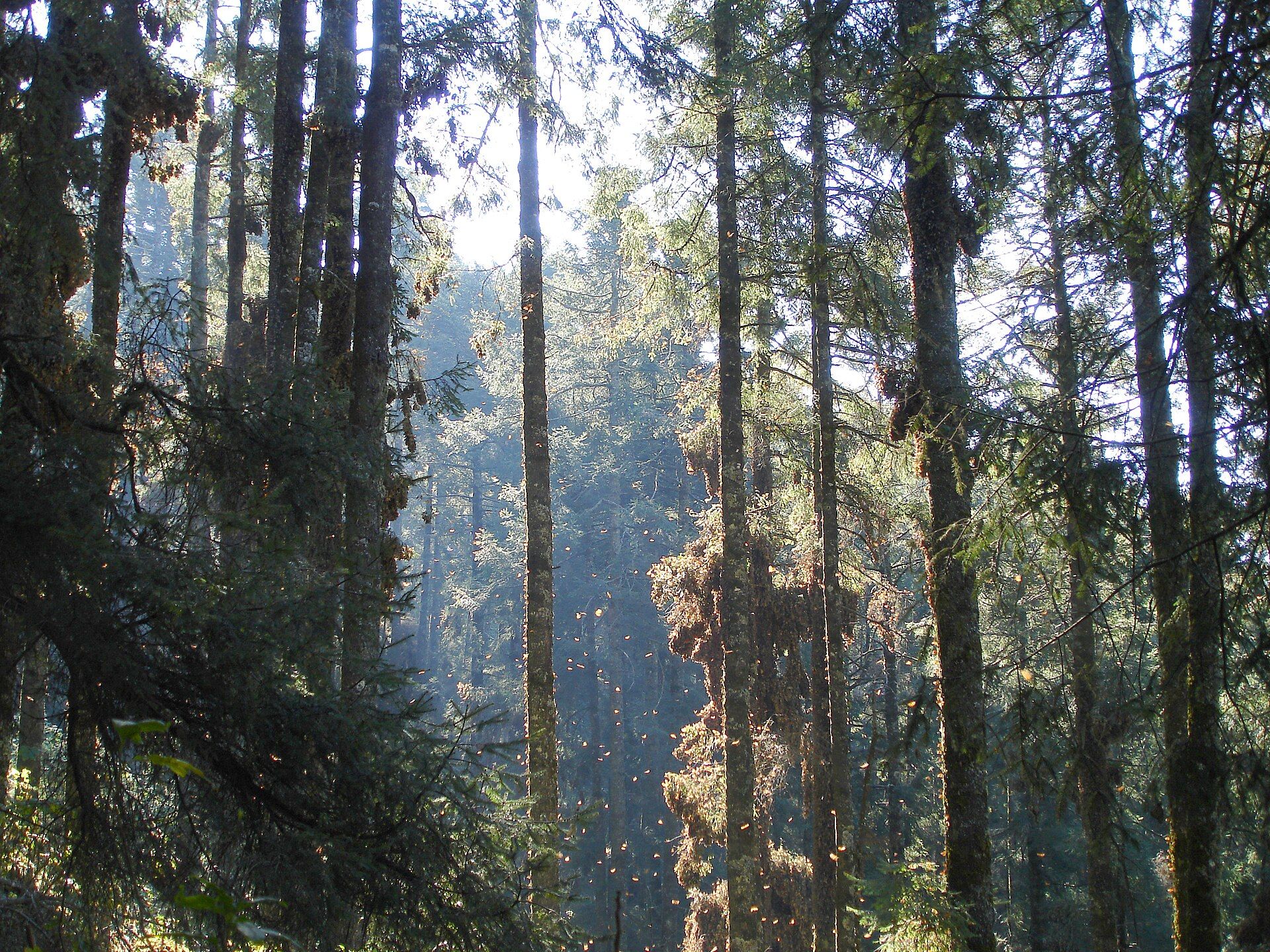
Every autumn, monarch butterflies from across eastern North America undertake a multi-generational migration of up to 4,000 kilometres to converge on a few small groves of oyamel fir forest in the mountains of central Mexico — a place none of them has ever been, navigated by instinct alone. They cluster so densely that branches bend under their weight and the trees turn orange; when the sun warms them, millions take flight at once in a shimmering, rustling cloud. It is a UNESCO World Heritage Site protecting a phenomenon found nowhere else.
Why visit
Standing quietly in a fir grove as the air fills with the soft rustle of millions of wings and the trees drip with butterflies is a genuinely moving, once-in-a-lifetime experience — a reminder of how extraordinary and fragile the natural world's great migrations are.
What to know before you go
🗓️ Best time
Roughly mid-November to March, when the monarchs overwinter; warm, sunny midday hours are best for seeing them take flight.
🧭 Getting there & access
From Mexico City or Morelia to reserves such as El Rosario and Sierra Chincua in Michoacán and the State of Mexico, then a guided walk or horseback ride up to the colonies at altitude.
Good to know
- Go on a warm, sunny day around midday to see the butterflies flying.
- Keep quiet and keep your distance — the resting colonies are easily disturbed.
- The colonies are at high altitude; take the climb slowly.
Plan your visit
Moderate🧭 Getting there
From Angangueo or Zitácuaro, Michoacán, Mexico
- Drive Mexico City → the reserve towns of Michoacán — roughly 3h30–4h30
- Transfer to a sanctuary entrance such as El Rosario or Sierra Chincua
- Hike or ride a horse up to the butterfly colonies — a climb to around 3,000m
- Total travel
- Around four hours from Mexico City
- Time at site
- A full day for one sanctuary
- Access
- The monarchs overwinter here on a strict calendar — roughly November to March, with the densest colonies and best flying weather often in the depths of winter into early March. Confirm the season with the reserve before travelling, as it shifts year to year. The sanctuaries sell entry and require a local guide, and the colonies sit high, around 3,000m, reached by an uphill hike that horses can shorten. The butterflies only take to the air when the midday sun warms them, so timing your climb for the warm middle of the day is the whole trick. Quiet is asked of everyone near the colonies.
🎒 What to bring & consider
- A visit inside the roughly November-to-March window, confirmed with the reserve, since outside it the butterflies are simply not here
- Timing the walk for the warm midday sun, when the monarchs actually fly rather than clustering still on the firs
- A readiness for altitude near 3,000m on an uphill trail, with a horse as the option if the climb is too much
- Warm layers for a cold mountain morning that turns mild by midday, and sun protection for the altitude
- Quiet and distance at the colonies, which the guides enforce to protect the resting butterflies
👁️ What to expect
- Crowds
- El Rosario, the most famous sanctuary, is busy on winter weekends. Weekdays and other sanctuaries are calmer.
- Conditions
- High, cold-then-mild mountain forest, on a steep uphill trail eased by horses.
- Facilities
- Basic at the sanctuary entrances — stalls, guides, horses. Towns below have lodging and food.
- The view
- Fir boughs bent under clustered monarchs, and the air filling with orange as the midday sun sets them flying. It only happens when the sun is warm and high, which is exactly why midday, and a clear day, matter.
Times and requirements are approximate and change with season, weather, and local rules — confirm permits, fares, and schedules with operators before you travel.
Natural riches of the area
- High-altitude oyamel fir forest (a fragile, specific habitat)
- The overwintering site of the monarch migration
- Mountain watersheds and endemic highland species
- A globally significant, protected natural phenomenon
Local food
- Corundas & Michoacán tamales
- Triangular steamed corn tamales from the region.
- Carnitas
- Michoacán's famous slow-cooked pork.
- Charanda & local sweets
- A regional sugar-cane spirit and traditional confections.
Each autumn, one of the planet’s most improbable journeys ends in a handful of small fir groves high in the mountains of central Mexico. Monarch butterflies from all over eastern North America migrate up to 4,000 kilometres south — across generations, so that no single butterfly ever makes the round trip — to converge, by instinct alone, on forests none of them has seen. They arrive in their hundreds of millions.
The sight defies belief: butterflies clustered so thickly that fir branches sag beneath them and whole trees glow orange, and when the sun breaks through, millions lift off at once in a rustling, shimmering cloud. It is a phenomenon found nowhere else, protected as a UNESCO World Heritage Site — and, with the monarch migration under threat, a fragile one. To stand quietly among the trees as the air fills with wings is to witness one of nature’s true marvels.
Monarch Butterfly Reserve: common questions
How do you get to Monarch Butterfly Reserve?
From Angangueo or Zitácuaro, Michoacán, Mexico: Drive Mexico City → the reserve towns of Michoacán — roughly 3h30–4h30; Transfer to a sanctuary entrance such as El Rosario or Sierra Chincua; Hike or ride a horse up to the butterfly colonies — a climb to around 3,000m. Total travel time: Around four hours from Mexico City.
When is the best time to visit Monarch Butterfly Reserve?
Roughly mid-November to March, when the monarchs overwinter; warm, sunny midday hours are best for seeing them take flight.
How long should you spend at Monarch Butterfly Reserve?
A full day for one sanctuary. Total travel time: Around four hours from Mexico City.
What should you bring to Monarch Butterfly Reserve?
A visit inside the roughly November-to-March window, confirmed with the reserve, since outside it the butterflies are simply not here Timing the walk for the warm midday sun, when the monarchs actually fly rather than clustering still on the firs A readiness for altitude near 3,000m on an uphill trail, with a horse as the option if the climb is too much Warm layers for a cold mountain morning that turns mild by midday, and sun protection for the altitude Quiet and distance at the colonies, which the guides enforce to protect the resting butterflies
Do you need a permit or guide for Monarch Butterfly Reserve?
The monarchs overwinter here on a strict calendar — roughly November to March, with the densest colonies and best flying weather often in the depths of winter into early March. Confirm the season with the reserve before travelling, as it shifts year to year. The sanctuaries sell entry and require a local guide, and the colonies sit high, around 3,000m, reached by an uphill hike that horses can shorten. The butterflies only take to the air when the midday sun warms them, so timing your climb for the warm middle of the day is the whole trick. Quiet is asked of everyone near the colonies.
Is Monarch Butterfly Reserve crowded, and what are conditions like?
El Rosario, the most famous sanctuary, is busy on winter weekends. Weekdays and other sanctuaries are calmer. High, cold-then-mild mountain forest, on a steep uphill trail eased by horses. Facilities: Basic at the sanctuary entrances — stalls, guides, horses. Towns below have lodging and food.
Added Updated