The Great Blue Hole
📍 Lighthouse Reef, off Belize
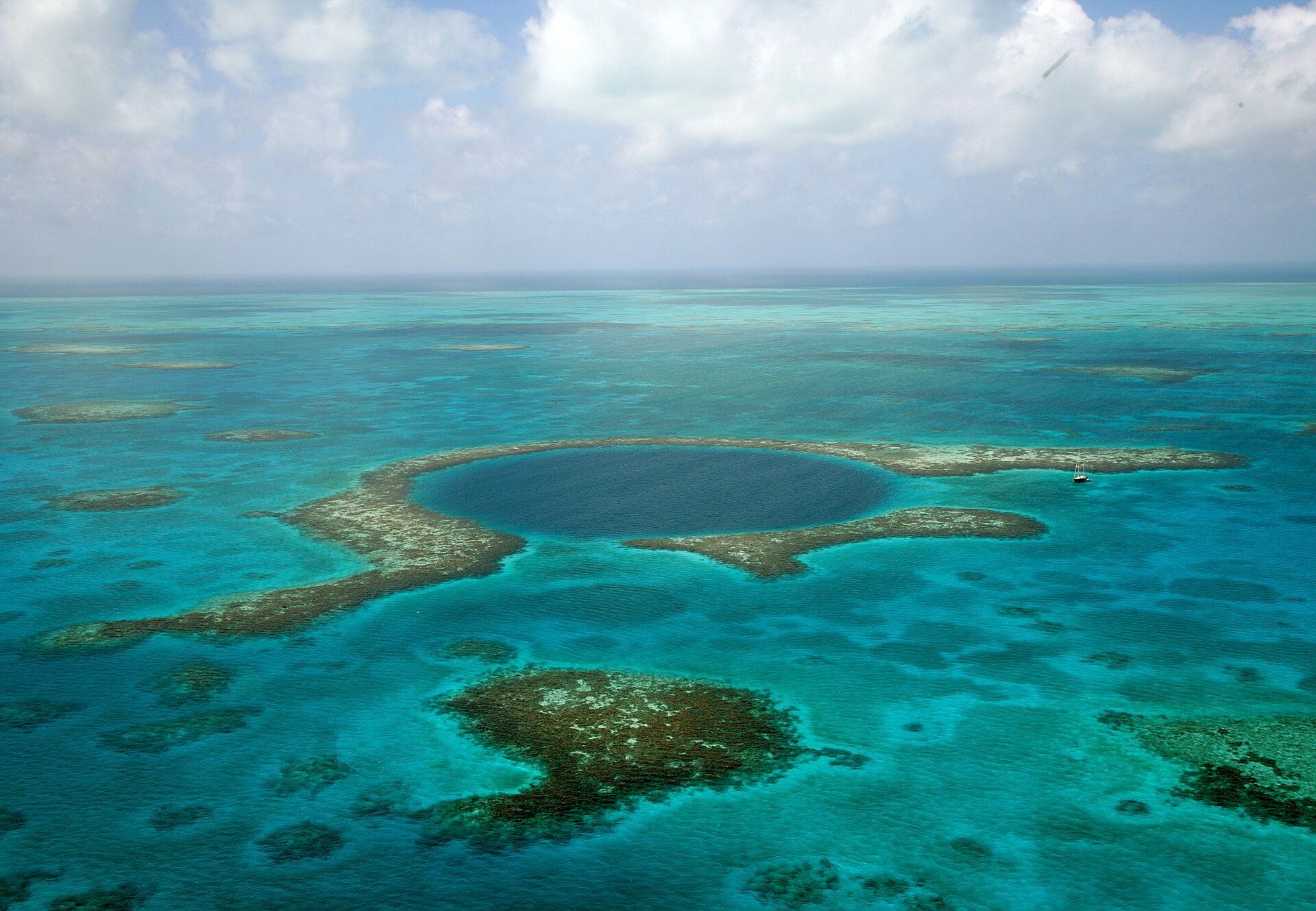
A perfect deep-blue circle in the turquoise Caribbean — a giant marine sinkhole over 300 metres across and 120 metres deep, ringed by coral reef and famed as one of the world's great dive sites.
What makes it marvelous
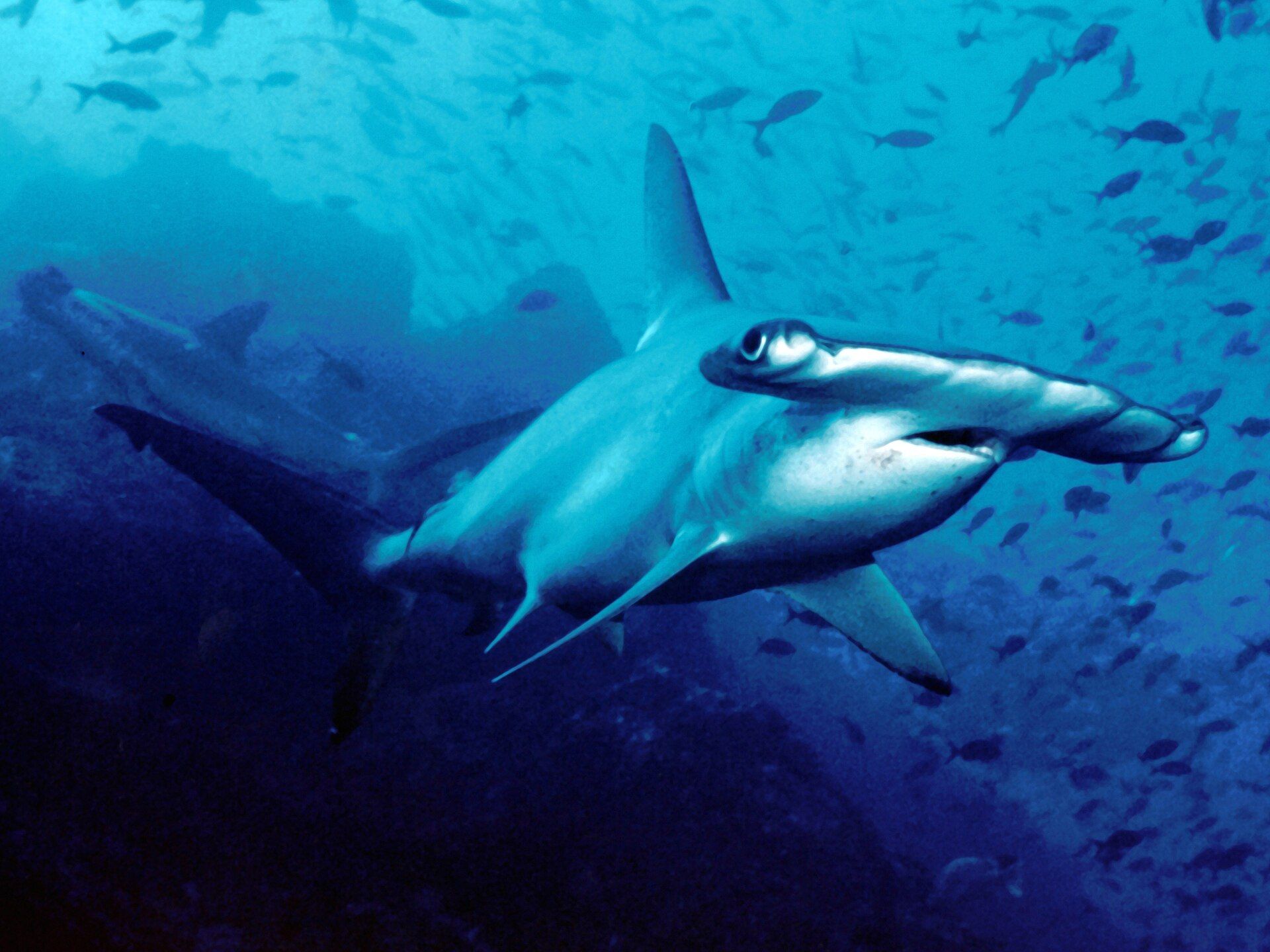
The Great Blue Hole is a collapsed limestone cave system: during the ice ages, when sea levels were far lower, this was a dry cavern whose roof eventually fell in, and when the seas rose again it flooded, leaving an almost circular sinkhole more than 300 metres wide and around 120 metres deep. Its still, deep water appears dark navy against the pale surrounding reef flats, and inside, divers descend past ancient stalactites — proof the cave was once above water — into a world of nurse and reef sharks. It sits within the Belize Barrier Reef Reserve System, a UNESCO World Heritage Site and the second-largest barrier reef on Earth.
Why visit
The aerial view — a deep-blue eye ringed by turquoise reef — is unforgettable, and for divers, dropping into the hole past its giant stalactites is a bucket-list descent. The surrounding reefs and atolls offer superb snorkelling and marine life.
What to know before you go
🗓️ Best time
The drier, calmer season (roughly March–June) for the best visibility and sea conditions; diving is possible year-round in the warm Caribbean water.
🧭 Getting there & access
By boat or liveaboard from Belize City or the cayes (a few hours out to Lighthouse Reef); scenic flights offer the classic aerial view. The hole is a permitted dive within the marine reserve.
Good to know
- The hole is an advanced dive (depth + walls); the surrounding reefs suit snorkellers.
- A scenic flight gives the famous circular view from above.
- Support the marine reserve's conservation fees and rules.
Plan your visit
Moderate🧭 Getting there
From Belize City or San Pedro, Ambergris Caye
- Fly → Belize City (BZE)
- Boat Belize City or San Pedro → Lighthouse Reef — roughly 2h30–3h30 each way depending on sea state and departure point
- Or join a live-aboard working the atolls over several days
- Total travel
- A long single day from the coast, boat time included
- Time at site
- One dive in the hole itself, plus two shallower reef dives on the same trip
- Access
- Part of the Belize Barrier Reef Reserve System, with marine park fees collected by your operator. Day trips run when the sea allows and are cancelled outright in rough weather, which is common in winter northers. The dive is deep — operators generally require advanced certification and often prior deep experience — and bottom time at depth is measured in minutes. Confirm requirements with your operator rather than assuming an open-water card is enough.
🎒 What to bring & consider
- Advanced or deep certification and recent dives logged, because this is a straight descent past 30m with a hard turnaround, not a gentle reef swim
- A computer you can actually read at depth in dim blue light, and the discipline to obey it — narcosis at 40m is the genuine hazard here
- Seasickness medication taken before you board: the open crossing to Lighthouse Reef is long and frequently rough
- Sun cover for several hours on an open boat with no shade
- Realistic expectations, which matter more here than kit
👁️ What to expect
- Crowds
- Several day boats converge on the same mooring in the same mid-morning window, so the descent can feel busy.
- Conditions
- A long, exposed crossing. Inside the hole the water is still, cold below the thermocline and increasingly dark. Very little marine life at depth.
- Facilities
- None at the site. Lunch is usually taken on Half Moon Caye between dives.
- The view
- The famous image is aerial, not underwater — a scenic flight or a drone from the boat is what produces it, and plenty of visitors book the flight instead of the dive for exactly that reason. Underwater you get the giant limestone stalactites at around 40m, which are extraordinary as geology and unremarkable as a photograph. Knowing that before you book is the difference between a great day and a disappointed one.
Times and requirements are approximate and change with season, weather, and local rules — confirm permits, fares, and schedules with operators before you travel.
Natural riches of the area
- A flooded collapsed-cave sinkhole (with ancient stalactites)
- Part of the second-largest barrier reef on Earth
- Reef and nurse sharks and rich coral ecosystems
- Atolls, cayes, and turquoise lagoons
Local food
- Rice and beans with stewed fish
- A Belizean staple, often with coconut-cooked rice.
- Conch ceviche & fritters
- Fresh Caribbean conch, cured or fried.
- Fry jacks & tropical fruit
- Fried dough for breakfast and abundant local fruit.
Seen from the air, the Great Blue Hole is almost too geometric to be natural — a deep navy circle set in a ring of pale turquoise reef off the coast of Belize. It is a marine sinkhole: during the ice ages, when the sea was far lower, this was a dry limestone cavern, and when its roof collapsed and the oceans later rose, it flooded, leaving a near-perfect shaft more than 300 metres across and around 120 metres deep.
Inside, the water turns from bright shallows to a dark, still blue, and divers descending its walls pass giant stalactites — hanging proof that the cave was once above the waterline — while nurse and reef sharks cruise the depths. It lies within the Belize Barrier Reef, the second-largest on Earth and a UNESCO World Heritage Site, so whether you take it in from a small plane or drop into it on a dive, the Blue Hole is one of the Caribbean’s true icons.
The Great Blue Hole: common questions
How do you get to The Great Blue Hole?
From Belize City or San Pedro, Ambergris Caye: Fly → Belize City (BZE); Boat Belize City or San Pedro → Lighthouse Reef — roughly 2h30–3h30 each way depending on sea state and departure point; Or join a live-aboard working the atolls over several days. Total travel time: A long single day from the coast, boat time included.
When is the best time to visit The Great Blue Hole?
The drier, calmer season (roughly March–June) for the best visibility and sea conditions; diving is possible year-round in the warm Caribbean water.
How long should you spend at The Great Blue Hole?
One dive in the hole itself, plus two shallower reef dives on the same trip. Total travel time: A long single day from the coast, boat time included.
What should you bring to The Great Blue Hole?
Advanced or deep certification and recent dives logged, because this is a straight descent past 30m with a hard turnaround, not a gentle reef swim A computer you can actually read at depth in dim blue light, and the discipline to obey it — narcosis at 40m is the genuine hazard here Seasickness medication taken before you board: the open crossing to Lighthouse Reef is long and frequently rough Sun cover for several hours on an open boat with no shade Realistic expectations, which matter more here than kit
Do you need a permit or guide for The Great Blue Hole?
Part of the Belize Barrier Reef Reserve System, with marine park fees collected by your operator. Day trips run when the sea allows and are cancelled outright in rough weather, which is common in winter northers. The dive is deep — operators generally require advanced certification and often prior deep experience — and bottom time at depth is measured in minutes. Confirm requirements with your operator rather than assuming an open-water card is enough.
Is The Great Blue Hole crowded, and what are conditions like?
Several day boats converge on the same mooring in the same mid-morning window, so the descent can feel busy. A long, exposed crossing. Inside the hole the water is still, cold below the thermocline and increasingly dark. Very little marine life at depth. Facilities: None at the site. Lunch is usually taken on Half Moon Caye between dives.
Added