Head to head · The two great rift-valley salt lakes
Dead Sea vs Lake Assal: Lowest Point on Earth or Lowest in Africa?
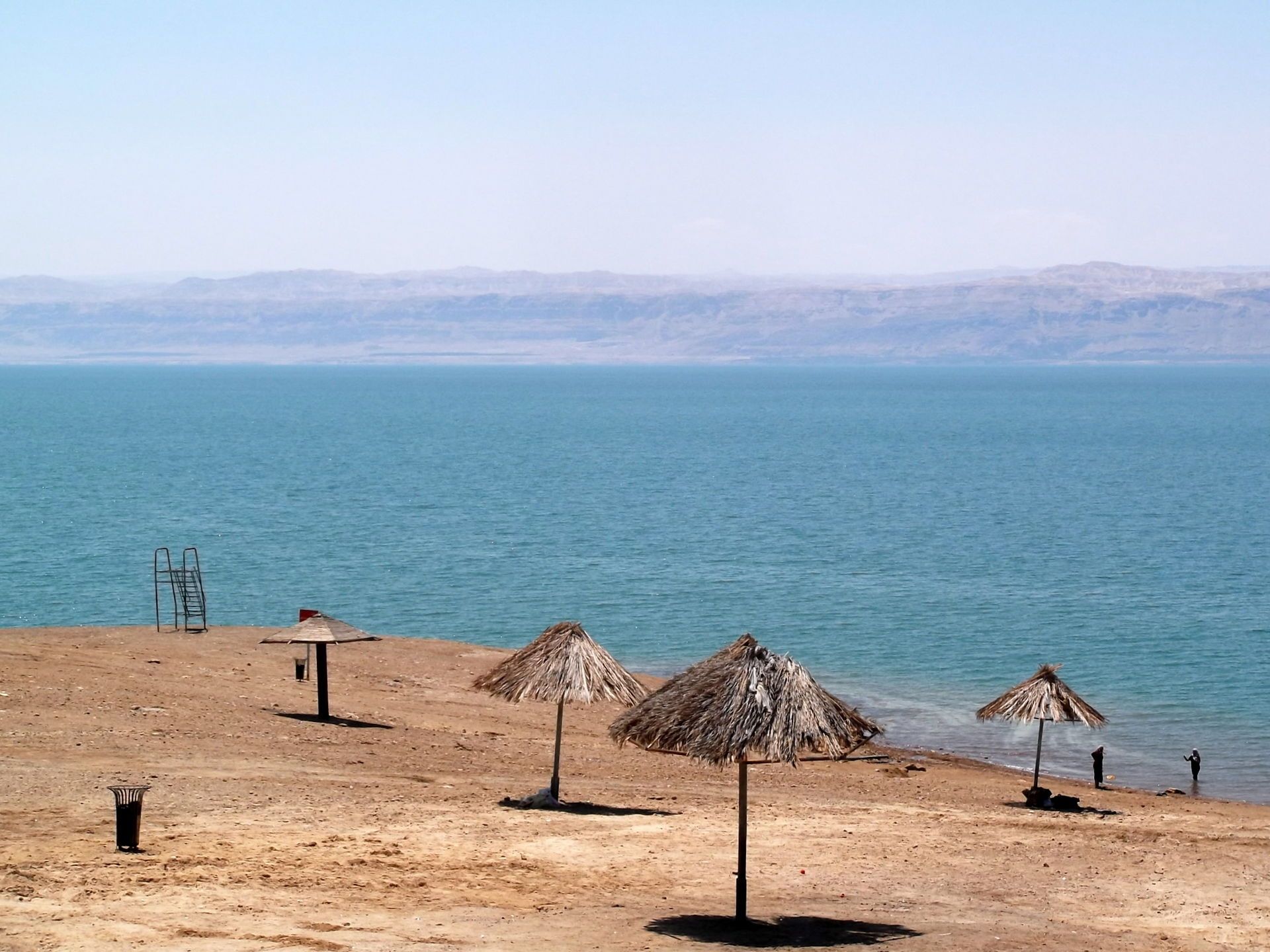
The Dead Sea and Lake Assal are the two great salt lakes of the rift valleys that run from the Middle East into Africa. Both sit far below sea level in closed basins with no outlet, both are roughly ten times as salty as seawater, and both are ringed by bare desert hills. The Dead Sea's surface is around 430 metres below sea level — the lowest exposed land on Earth. Lake Assal's is 155 metres below, the lowest point on land in Africa.
As trips they could hardly differ more. The Dead Sea is an hour from Amman or Jerusalem, lined with resort beaches, and the whole point is to lie back and float. Lake Assal, about 120 km west of Djibouti city, has no gate, no ranger, no shade, no water and no facilities; you come for the colours of white salt, turquoise brine and black basalt, in the few winter months when the heat allows it.
Dead Sea
Float at the lowest point on Earth
The Dead Sea lies in the deepest part of the Jordan Rift Valley. Water arriving from the Jordan River evaporates in the desert heat, leaving salt and minerals so concentrated that bathers float without effort, and people have coated themselves in its black mud since antiquity. It is also shrinking: the natural northern basin drops by roughly a metre a year, receding shores have opened sinkholes, and much of the southern basin seen in resort photos is industrial evaporation ponds.
- The lowest exposed land on Earth, about 430 m below sea level
- The float and the mineral mud — an experience no other large lake offers
- About an hour from Amman, with resort day passes, showers and cafés
Lake Assal
Africa's lowest point, a salt plain on a tectonic rift
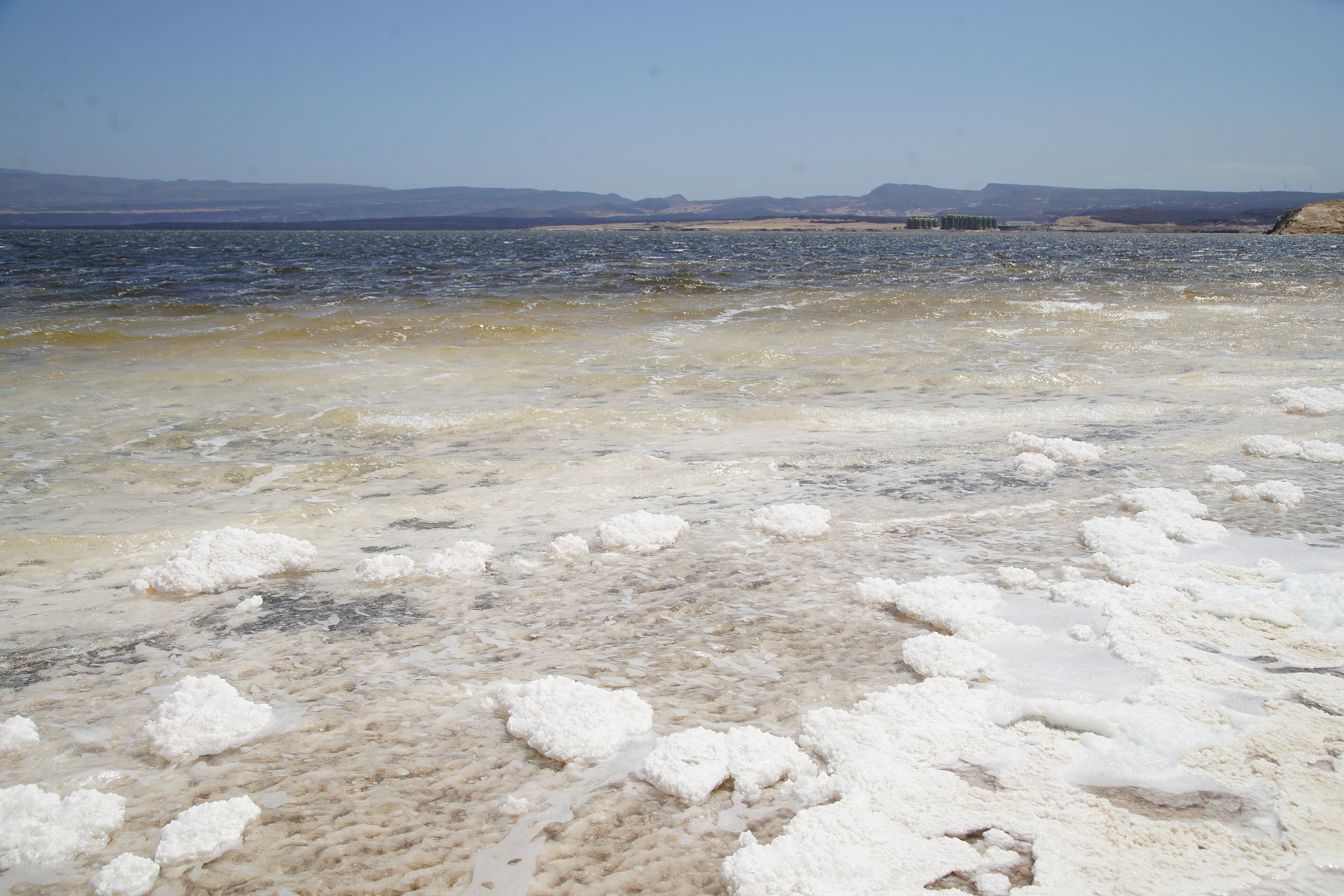
Lake Assal fills a closed depression in the Afar Triangle, where three tectonic plates are pulling apart. Seawater seeps in underground from the Gulf of Tadjoura; nothing flows out, and in summer heat of up to 52 °C it evaporates until salt crystallises into a plain 68 km² in extent and over 60 m thick, beside a brine body of 54 km² up to 40 m deep. Salt caravans have carried Assal salt to the Ethiopian highlands for centuries, and the tracks are still used.
- The lowest point on land in Africa, 155 m below sea level
- White salt, turquoise brine and black basalt, with the Ardoukoba volcano nearby
- Almost no visitors; a handful of vehicles at a time
Head to head
| What matters | Dead Sea | Lake Assal |
|---|---|---|
| Depth below sea level Edge: Dead Sea | Around 430 m — the lowest exposed land on the planet, and dropping. | 155 m — the lowest point on land in Africa. |
| Salt Edge: Toss-up | Nearly ten times as salty as the ocean, dense enough to float on. | Brine roughly ten times the salinity of seawater, with a crystallised salt plain over 60 m thick. |
| What you do Edge: Dead Sea | Float, coat yourself in mud, rinse off. Don't shave that morning and keep the water out of your eyes. | Walk the salt crust and look. The crust is sharp, the brine destroys leather and burns the eyes. |
| Scenery Edge: Lake Assal | A pale, hazy lake under the Judean and Moab hills. | White salt running into turquoise brine with dark basalt hills behind — best in the first hours of light. |
| Heat and season Edge: Dead Sea | March–May and September–November are pleasant; summer is extremely hot, but the sea is visited year-round. | November–February only. Even winter days reach around 34 °C; May–September can hit 52 °C, which makes time on the salt dangerous. |
| Getting there Edge: Dead Sea | About an hour by road from Amman or Jerusalem. | About 2 hours (roughly 120 km on paved road) west of Djibouti city, with a driver or on an organised half-day trip. |
| Facilities Edge: Dead Sea | Full at resort beaches — showers, loungers, cafés, mud; basic to none at free access points. | None: no gate, ticket, shade or water. A few informal stalls sell salt crystals. |
| Crowds Edge: Lake Assal | Resort beaches fill on weekends and holidays; weekday mornings are calmer. | Light — a few vehicles at a time. |
Which should you choose?
Choose Dead Sea if…
…you want the famous float and mud bath, easy access from Amman or Jerusalem, and showers and shade nearby.
Choose Lake Assal if…
…you are in Djibouti in winter, want a raw rift-valley landscape with almost no one else there, and are happy just to look rather than swim.
The honest verdict
Choose the Dead Sea for the experience: floating at the lowest point on Earth is the reason to go, and resort beaches make it easy. Stick to established beaches away from the receding flats, where sinkholes are a real hazard, and bring sandals for the sharp salt underfoot.
Choose Lake Assal for the landscape. It is a half-day trip from Djibouti city to a place with nothing on site at all — carry several litres of water each, wear shoes you can throw away, and go early on a winter day. The reward is white salt, turquoise brine and black basalt on a rift you can see in the landscape.
They are not substitutes. Most people who visit Assal are already in Djibouti; most people who want to float should go to the Dead Sea.
Wonders mentioned here
Added