Head to head · two ways to measure the top of the world
Chimborazo vs Everest: Which Is the Highest Mountain on Earth?
Short answer: Mount Everest is the highest mountain above sea level, at 8,849 m — about 2,586 m higher than Ecuador's Chimborazo (about 6,263 m). Measured from the centre of the Earth, though, Chimborazo wins: because it stands almost on the equator, where the planet bulges outward, its summit is about 6,384 km from the centre, roughly 2.1 km farther than Everest's.
So both claims are true, and they answer different questions. Everest holds the record that mountaineers and atlases use — elevation above sea level. Chimborazo holds the geometric record: its summit is the point on Earth's surface farthest from the planet's centre, and so the closest to space.
For a traveller the gap is just as big. You can drive to Chimborazo's Carrel refuge at about 4,850 m and walk to the Whymper refuge at about 5,000 m in a day trip from Riobamba. Seeing Everest means flying to Lukla and walking up the Khumbu valley for about two weeks to base camp.
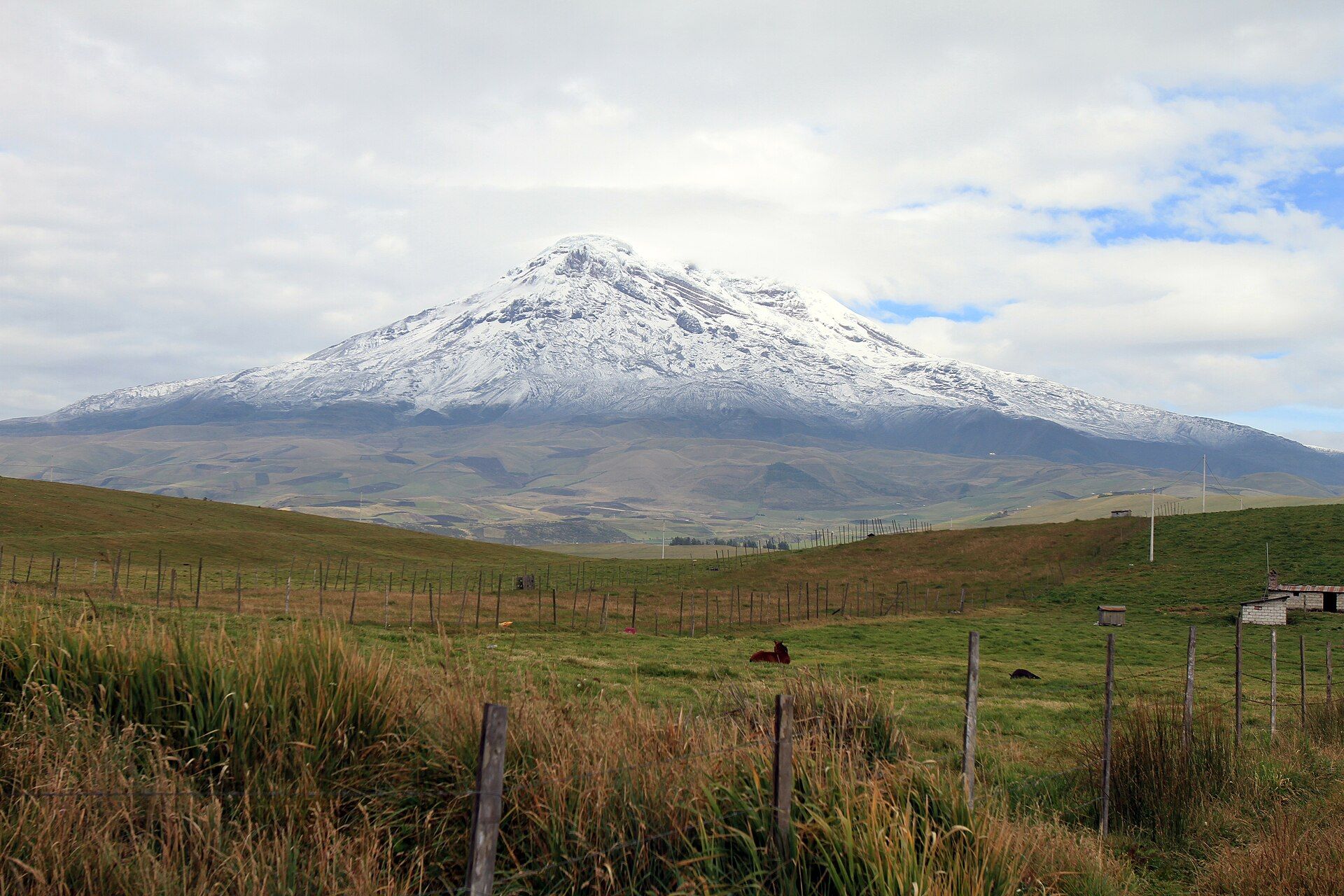
Chimborazo
Farthest from Earth's centre
Ecuador's highest mountain, an ice-capped volcano of about 6,263 m that last erupted around 550 AD. Its equatorial position on the planet's bulge puts the summit about 6,384 km from Earth's centre — farther than any other point on the surface. Its glaciers supply water to the surrounding provinces, though the ice has been shrinking for decades.
- The summit farthest from Earth's centre
- Drive to about 4,850 m and walk to about 5,000 m in a day
- Vicuñas grazing the high páramo of the Chimborazo reserve
- Two clearer windows a year: December–January and June–July
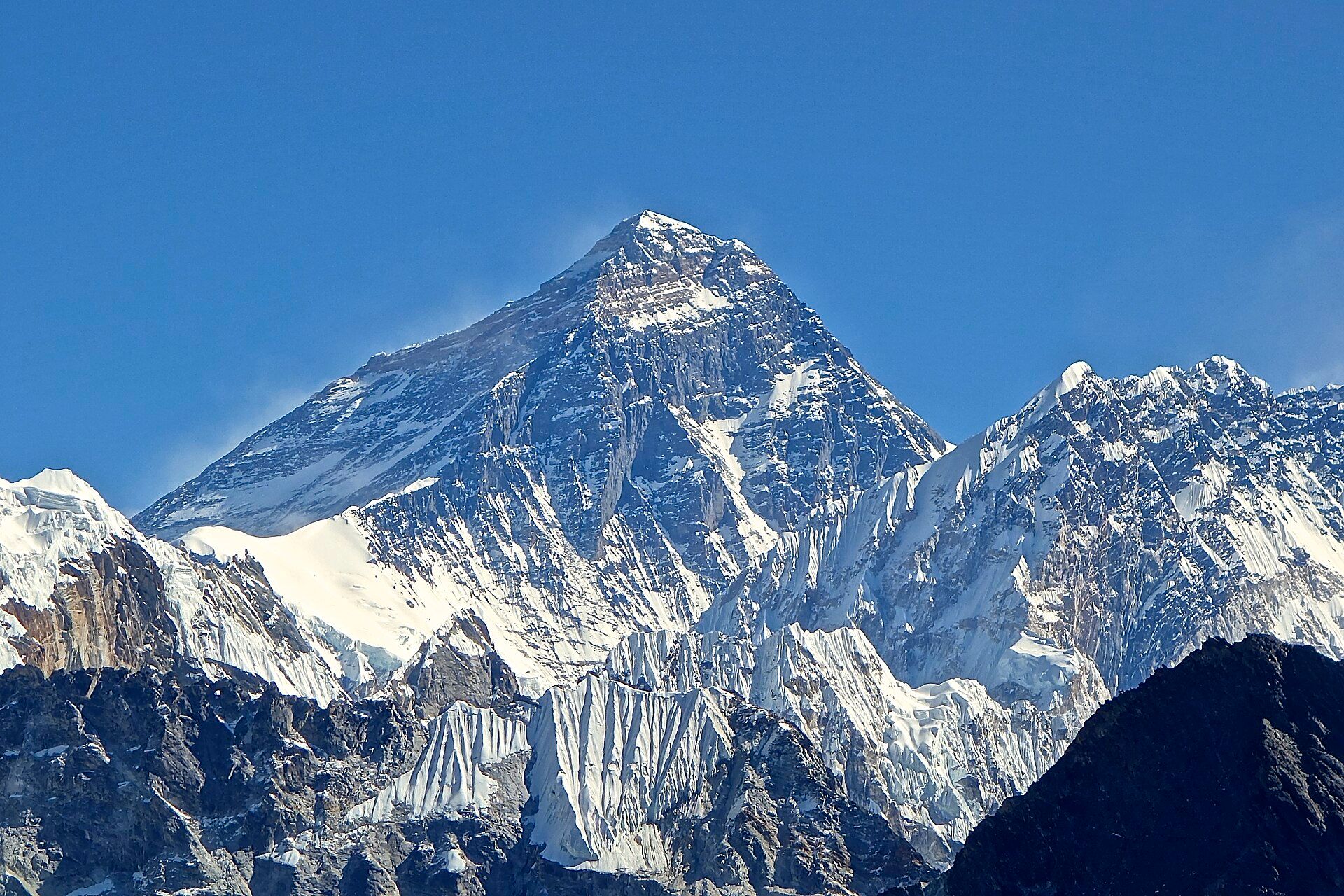
Mount Everest
Highest above sea level
The highest point on Earth above sea level at 8,849 metres, its summit made of marine limestone from an ancient seabed, thrown up by the collision of the Indian and Eurasian plates. Above about 8,000 metres lies the 'death zone', where there is too little oxygen to sustain life for long.
- The highest elevation on Earth, unambiguously
- Base camp reachable on a teahouse trek with no technical climbing
- Two seasons a year, before and after the monsoon
- Sherpa villages and monasteries all along the approach
Head to head
| What matters | Chimborazo | Mount Everest |
|---|---|---|
| Height above sea level Edge: Mount Everest | About 6,263 m — the highest point in Ecuador. | 8,849 m — the highest point on Earth, about 2,586 m higher. |
| Distance from Earth's centre Edge: Chimborazo | About 6,384 km — the farthest point on Earth's surface from the centre, thanks to the equatorial bulge. | Roughly 2.1 km closer to the centre than Chimborazo's summit. |
| Getting high without climbing Edge: Chimborazo | A road reaches the Carrel refuge at about 4,850 m; a short, steep walk leads to the Whymper refuge at about 5,000 m. Acclimatise for several days first. | Everest Base Camp is a trek of about two weeks up the Khumbu valley from Lukla, with teahouses along the way. |
| Climbing to the summit Edge: Chimborazo | A serious mountaineering climb requiring a guide, usually attempted from December to February and June to September. | An expedition: permits, months of acclimatisation and experienced Sherpa support. |
| Season Edge: Toss-up | December–January and June–July for the clearest weather. | Pre-monsoon (roughly March–May) and post-monsoon (roughly late September–November). |
| Getting there Edge: Chimborazo | Riobamba, about 30 km to the southeast, is the usual base. | Fly Kathmandu to Lukla, then walk; flight delays are routine. |
Which should you choose?
Choose Chimborazo if…
Anyone who wants to stand on the slopes of the 'farthest point from Earth's centre' without an expedition — a drive and a high-altitude walk from Riobamba, after a few days of acclimatisation in the Ecuadorian highlands.
Choose Mount Everest if…
Anyone who wants to see the highest mountain on Earth on a well-supported multi-week trek, with teahouses, two seasons and the Sherpa cultural landscape along the way.
The honest verdict
Everest is the highest mountain on Earth by the measure that counts for records — height above sea level — and nothing comes within 200 metres of it. Chimborazo's claim is real but geometric: the Earth is wider at the equator, so a 6,263-metre peak standing almost on it reaches farther from the centre than an 8,849-metre peak at Everest's latitude.
As trips, they are worlds apart. Chimborazo lets you reach about 5,000 metres on a day out from Riobamba; Everest Base Camp is a two-week trek. Either way, altitude is the hazard, so acclimatise before going high.
Wonders mentioned here
Added