Seoraksan
📍 Taebaek Mountains, Gangwon Province, South Korea, inland from Sokcho
South Korea's most dramatic mountains: about thirty granite peaks rising to Daecheongbong at 1,708 m, with the sheer dome of Ulsanbawi, deep forested valleys, and some of the country's most celebrated autumn colour.
What makes it marvelous
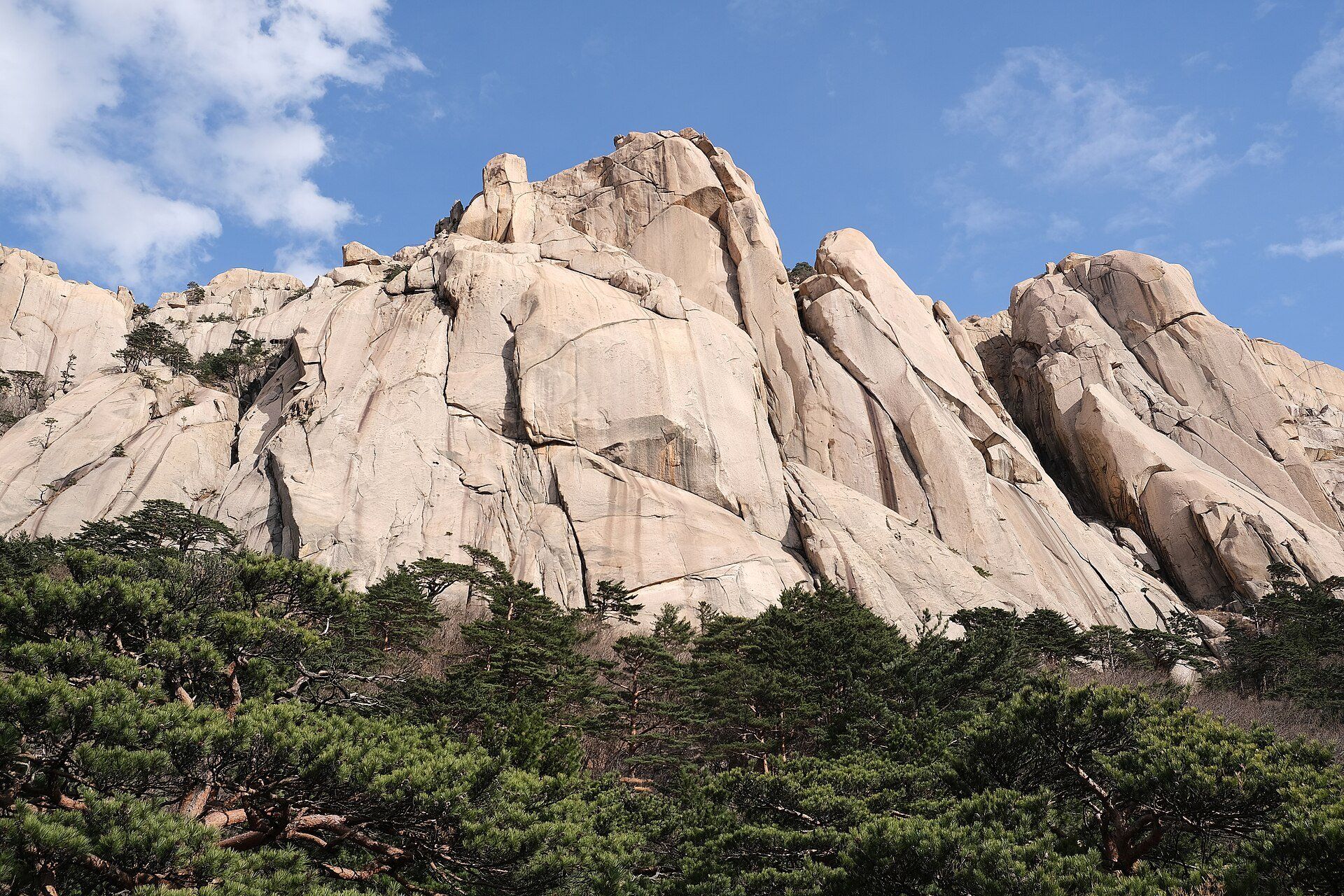
Seoraksan National Park protects about 398 km² of the Taebaek Mountains near the east coast. Its highest peak, Daecheongbong, reaches 1,708 m, and around it rise some thirty peaks of pale granite. The best known is Ulsanbawi, a granite massif about 4 km around whose cliffs stand some 200 m tall above the forest. Designated a national park in 1970, Seoraksan became Korea's first UNESCO Biosphere Reserve in 1982 and was added to the IUCN Green List of well-managed protected areas in 2014. The park is managed by the Korea National Park Service.
Why visit
Granite towers, clear mountain streams and blazing maples in October — and a cable car or a two-hour hike puts you among them from the edge of Sokcho.
What to know before you go
🗓️ Best time
October, when autumn colour sweeps down the mountains — leaves start turning in late September and usually peak around mid-October. Late spring and early summer are greener and quieter.
🧭 Getting there & access
Sokcho is the gateway. Express buses run from Seoul's Gangnam and Dong Seoul terminals about every 30 minutes, and city bus 7 runs from Sokcho to the Seorak-dong park entrance. Yangyang International Airport, to the south, has domestic flights.
Good to know
- The Ulsanbawi trail from the Sogongwon entrance is about 3.8 km each way — around two hours up, with steep stairs near the top.
- Weather near Ulsanbawi and the summit ridges changes quickly; carry a windproof layer.
- Book accommodation early for October weekends, when the foliage draws big crowds and prices rise.
Plan your visit
Moderate🧭 Getting there
From Sokcho, by express bus from Seoul or via Yangyang (YNY) airport
- Take an express bus from Seoul to Sokcho
- City bus 7 to the Seorak-dong (Sogongwon) entrance
- Hike to Ulsanbawi, or ride the Gwongeumseong cable car
- Total travel
- A long day trip from Seoul; better as 1–2 nights in Sokcho
- Time at site
- Half a day for Ulsanbawi or the cable car; 10–13 hours and often an overnight stay for Daecheongbong
- Access
- The Sogongwon entrance is the main gateway. The Gwongeumseong cable car climbs to a rocky summit at about 800 m in around ten minutes. Routes to Daecheongbong are long, strenuous hikes.
🎒 What to bring & consider
- Good walking shoes for steep stone steps
- Water and a windproof layer
- An early start in October to beat the crowds
👁️ What to expect
- Crowds
- Very busy in October and on summer weekends; much quieter on weekdays in spring.
- Conditions
- Paved paths in the valley, then steep steps and metal stairways on Ulsanbawi.
- Facilities
- Shops, restaurants and the cable car at Sogongwon; little on the high trails.
- The view
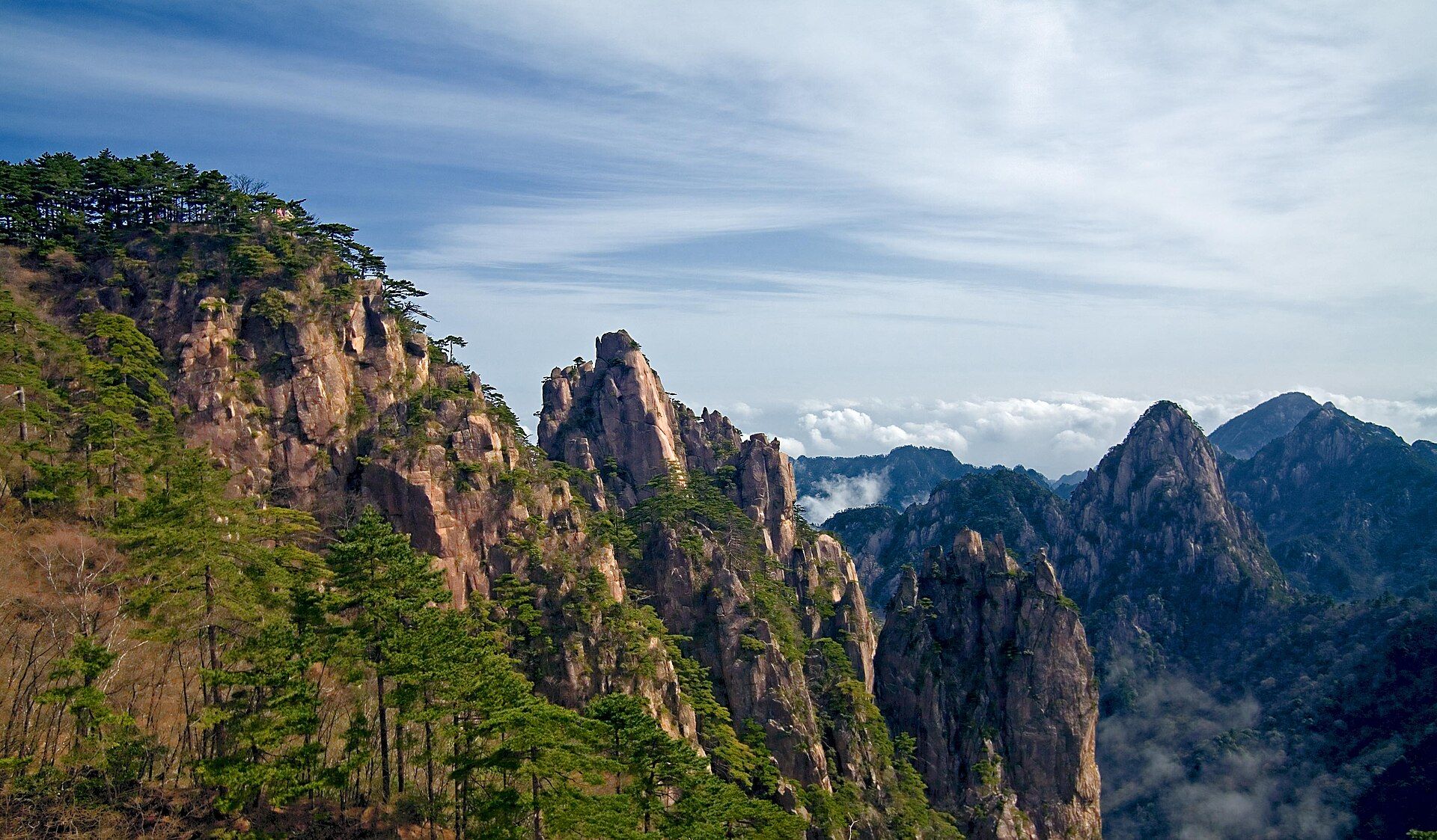
- The pale granite towers of Ulsanbawi above a forest of red and gold.
Times and requirements are approximate and change with season, weather, and local rules — confirm permits, fares, and schedules with operators before you travel.
Natural riches of the area
- Daecheongbong, 1,708 m, the park's highest peak
- Ulsanbawi, a granite massif with cliffs about 200 m high
- Around thirty granite peaks of the Taebaek Mountains
- Mixed forests famous for their autumn colour
Local food
- Ojingeo-sundae
- Squid stuffed with a savoury filling and sliced — a Sokcho speciality.
- Abai sundae gukbap
- A hearty sausage-and-rice soup tied to Sokcho's Abai Village.
Seoraksan is where South Korea’s mountains turn dramatic. Inland from the port city of Sokcho, around thirty peaks of pale granite rise out of deep forest, culminating in Daecheongbong at 1,708 metres — one of the highest summits in the country.
The rock is the star. Ulsanbawi, a granite massif about four kilometres around, stands in sheer cliffs some 200 metres above the trees, and a steep two-hour trail with metal stairways near the top brings walkers onto its crest for a view out to the East Sea. For an easier taste, a cable car lifts visitors to the rocky summit of Gwongeumseong in about ten minutes.
Seoraksan was designated a national park in 1970 and in 1982 became South Korea’s first UNESCO Biosphere Reserve. It is at its most famous in autumn: the leaves begin turning in late September and usually peak around mid-October, when red maples and golden oaks pour down the valleys and half the country seems to come to see them. Spring and early summer offer the same granite with far fewer people.
Seoraksan: common questions
How do you get to Seoraksan?
From Sokcho, by express bus from Seoul or via Yangyang (YNY) airport: Take an express bus from Seoul to Sokcho; City bus 7 to the Seorak-dong (Sogongwon) entrance; Hike to Ulsanbawi, or ride the Gwongeumseong cable car. Total travel time: A long day trip from Seoul; better as 1–2 nights in Sokcho.
When is the best time to visit Seoraksan?
October, when autumn colour sweeps down the mountains — leaves start turning in late September and usually peak around mid-October. Late spring and early summer are greener and quieter.
How long should you spend at Seoraksan?
Half a day for Ulsanbawi or the cable car; 10–13 hours and often an overnight stay for Daecheongbong. Total travel time: A long day trip from Seoul; better as 1–2 nights in Sokcho.
What should you bring to Seoraksan?
Good walking shoes for steep stone steps Water and a windproof layer An early start in October to beat the crowds
Do you need a permit or guide for Seoraksan?
The Sogongwon entrance is the main gateway. The Gwongeumseong cable car climbs to a rocky summit at about 800 m in around ten minutes. Routes to Daecheongbong are long, strenuous hikes.
Is Seoraksan crowded, and what are conditions like?
Very busy in October and on summer weekends; much quieter on weekdays in spring. Paved paths in the valley, then steep steps and metal stairways on Ulsanbawi. Facilities: Shops, restaurants and the cable car at Sogongwon; little on the high trails.
Added