Valley of Flowers
📍 Uttarakhand, India
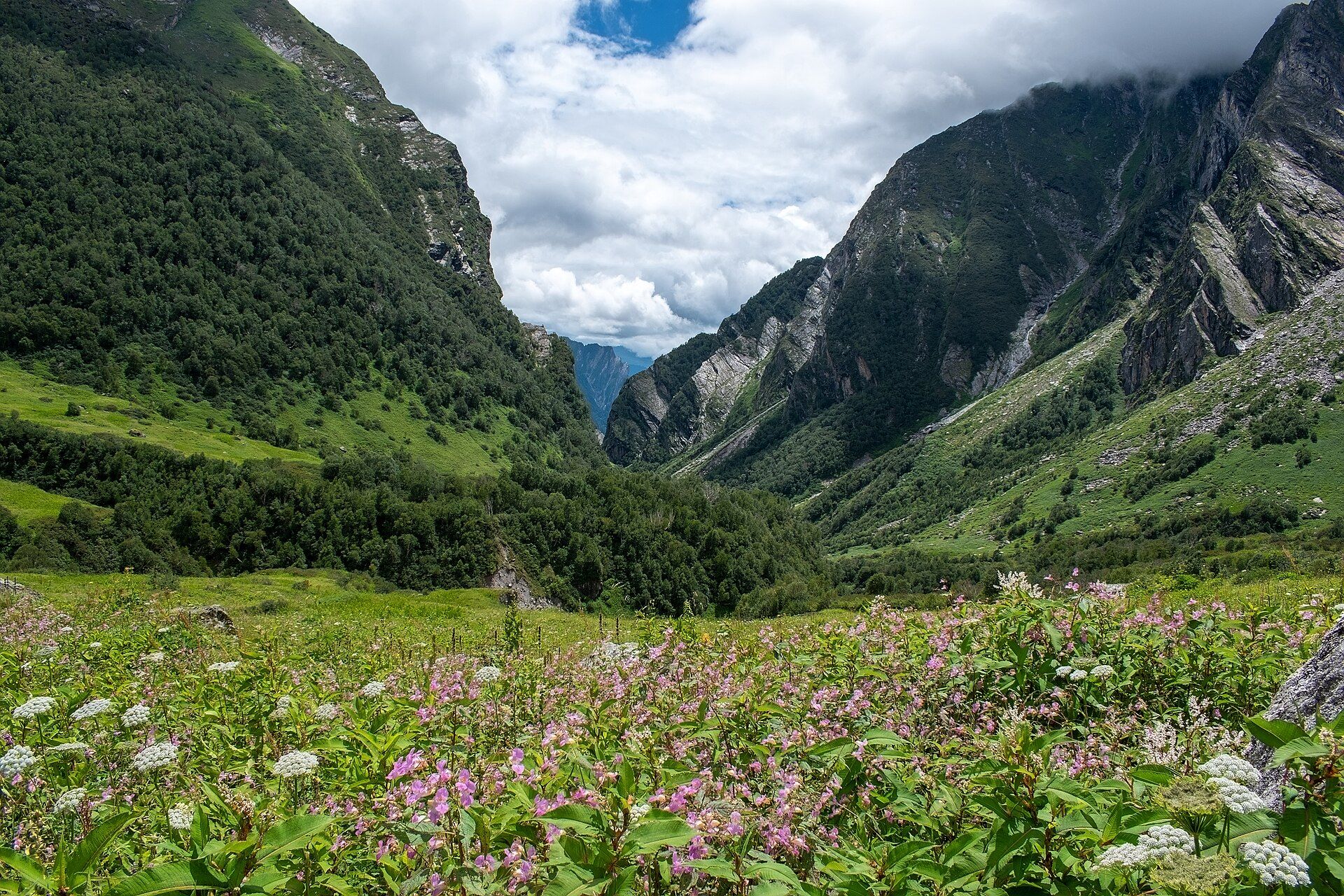
A high Himalayan valley that erupts each monsoon into a carpet of alpine wildflowers — hundreds of species blooming beneath snow peaks and glaciers in one of the world's great floral spectacles.
What makes it marvelous
Cradled at around 3,500 metres in the Indian Himalaya, the Valley of Flowers spends most of the year under snow — but for a few weeks each monsoon it transforms into one of the most beautiful alpine meadows on Earth. Fed by mist and snowmelt, the valley floor bursts into bloom with hundreds of species of wildflowers — blue poppies, primulas, anemones, orchids, and rare Himalayan blooms — spreading in drifts of colour beneath glaciers and snow-clad ridges. The valley shelters rare wildlife too, from blue sheep to the elusive snow leopard, and it sits within Nanda Devi and Valley of Flowers National Park. It is a UNESCO World Heritage Site, prized as both a botanical treasure and a scene of pure mountain beauty.
Why visit
Trekking into a hidden Himalayan valley to find it awash with wildflowers below snow peaks — a spectacle that lasts only a few short weeks — is one of the most magical seasonal experiences in all the mountains of Asia.
What to know before you go
🗓️ Best time
The monsoon bloom, roughly mid-July to mid-September, when the flowers peak; the valley is snowbound and closed the rest of the year.
🧭 Getting there & access
In Uttarakhand's Garhwal Himalaya, reached by road to Govindghat and a multi-day trek via Ghangaria; the valley is a day hike beyond, open only in the short summer season.
Good to know
- Come mid-July to mid-September for peak bloom; the valley closes in winter.
- Acclimatize and prepare for monsoon rain and high-altitude trekking.
- No camping or picking flowers is allowed — it is a strictly protected park.
Plan your visit
Strenuous🧭 Getting there
From Dehradun (DED) or Rishikesh, then Govindghat, Uttarakhand
- Fly Delhi → Dehradun — about 1h
- Road Dehradun → Govindghat — a long 9–11h on mountain roads
- Trek Govindghat → Ghangaria — around 13km, 5–7h on foot or by pony
- Ghangaria → the valley — a further 3–4km climb
- Total travel
- Two days from Delhi
- Time at site
- 2–3 days based at Ghangaria
- Access
- National park entry with a permit issued at Ghangaria for a set number of days. The park opens only for a short season, roughly June to early October, and the flowering peak is narrower still — broadly late July into August. Outside it you get green slopes or snow. Overnight stays inside the valley are prohibited, so you walk in and out from Ghangaria each day. Landslides close the approach road regularly through the monsoon.
🎒 What to bring & consider
- Full waterproofs, because the flowering season is the monsoon and it rains most days you are there
- Boots with grip for wet rock and deep mud on a steep trail
- A walking pole for the long descent, which punishes knees more than the climb punishes lungs
- Cash — Ghangaria has no ATM and patchy connectivity
- Altitude awareness; the valley lies above 3,300m
👁️ What to expect
- Crowds
- Ghangaria is busy, since it also serves the Hemkund Sahib pilgrimage. The valley itself thins out considerably.
- Conditions
- A long steep trek in rain, at altitude, over mud and river crossings.
- Facilities
- Guesthouses and eateries at Ghangaria. Nothing in the valley.
- The view
- The bloom peaks in a narrow window that shifts each year with the monsoon, and those same days bring cloud and rain. Overcast is actually kind to the colours, so this is not a trip to write off for weather.
Times and requirements are approximate and change with season, weather, and local rules — confirm permits, fares, and schedules with operators before you travel.
Natural riches of the area
- Hundreds of alpine wildflower species, including the blue poppy
- Glaciers, snow peaks, and high Himalayan meadows
- Rare wildlife: blue sheep, Himalayan monal, and snow leopard
- A UNESCO-listed botanical and scenic treasure
Local food
- Garhwali cuisine
- Hill cooking of Uttarakhand — lentils, mandua (finger millet) bread, and local greens.
- Rajma & rice
- Himalayan kidney beans with rice, a staple of the mountain valleys.
- Trekker's fare
- Simple dal, rice, and parathas at the trail base of Ghangaria.
For most of the year the Valley of Flowers lies silent under Himalayan snow. But for a few short weeks each monsoon, this hidden valley in Uttarakhand — cradled at around 3,500 metres among glaciers and snow-clad ridges — erupts into one of the most beautiful alpine meadows on Earth. Hundreds of wildflower species bloom at once: blue poppies, primulas, anemones, orchids, and rare Himalayan flowers spreading in drifts of colour across the valley floor.
The spectacle is fleeting and hard-won, reached only by a multi-day trek, and that is part of its magic. Blue sheep graze the slopes and, rarely, a snow leopard passes through; the valley was unknown outside the region until a British mountaineering party stumbled into it in 1931, coming down from Kamet. A UNESCO World Heritage Site treasured as both a botanical wonder and a scene of pure mountain beauty, it rewards those who climb into it during its brief, glorious bloom.
Valley of Flowers: common questions
How do you get to Valley of Flowers?
From Dehradun (DED) or Rishikesh, then Govindghat, Uttarakhand: Fly Delhi → Dehradun — about 1h; Road Dehradun → Govindghat — a long 9–11h on mountain roads; Trek Govindghat → Ghangaria — around 13km, 5–7h on foot or by pony; Ghangaria → the valley — a further 3–4km climb. Total travel time: Two days from Delhi.
When is the best time to visit Valley of Flowers?
The monsoon bloom, roughly mid-July to mid-September, when the flowers peak; the valley is snowbound and closed the rest of the year.
How long should you spend at Valley of Flowers?
2–3 days based at Ghangaria. Total travel time: Two days from Delhi.
What should you bring to Valley of Flowers?
Full waterproofs, because the flowering season is the monsoon and it rains most days you are there Boots with grip for wet rock and deep mud on a steep trail A walking pole for the long descent, which punishes knees more than the climb punishes lungs Cash — Ghangaria has no ATM and patchy connectivity Altitude awareness; the valley lies above 3,300m
Do you need a permit or guide for Valley of Flowers?
National park entry with a permit issued at Ghangaria for a set number of days. The park opens only for a short season, roughly June to early October, and the flowering peak is narrower still — broadly late July into August. Outside it you get green slopes or snow. Overnight stays inside the valley are prohibited, so you walk in and out from Ghangaria each day. Landslides close the approach road regularly through the monsoon.
Is Valley of Flowers crowded, and what are conditions like?
Ghangaria is busy, since it also serves the Hemkund Sahib pilgrimage. The valley itself thins out considerably. A long steep trek in rain, at altitude, over mud and river crossings. Facilities: Guesthouses and eateries at Ghangaria. Nothing in the valley.
Added Updated