The Twelve Apostles
📍 Great Ocean Road, Victoria, Australia
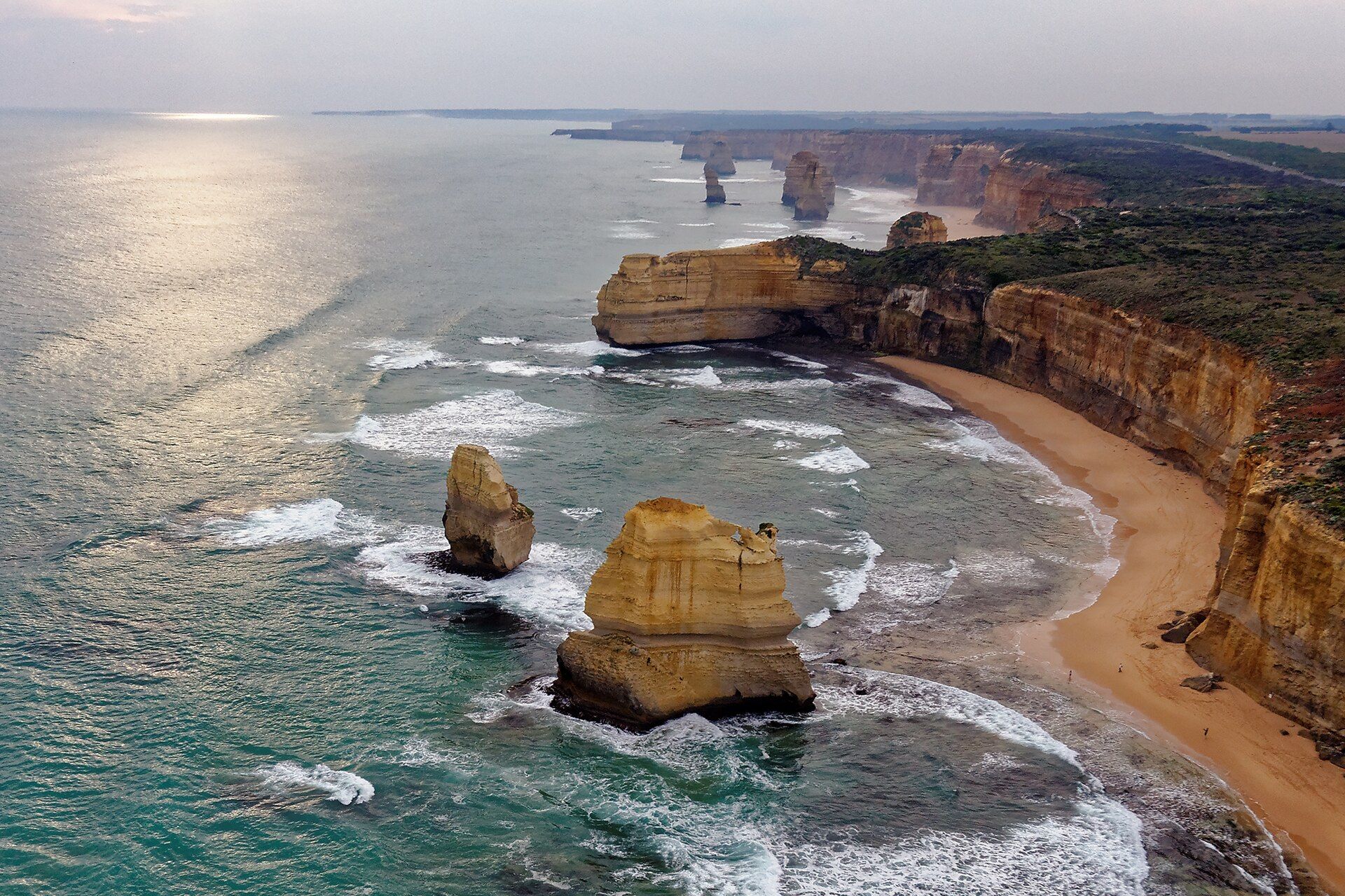
A row of towering limestone sea stacks rising from the Southern Ocean along Victoria's Great Ocean Road — sculpted from crumbling coastal cliffs by the relentless waves, and constantly, visibly changing.
What makes it marvelous
The 'Apostles' are stacks of soft limestone, once part of the mainland cliffs, isolated as the Southern Ocean's powerful swell carved caves, then arches, then free-standing pillars up to 45 metres tall. It is erosion caught mid-act: the sea is still at work, and stacks occasionally collapse (there were never actually twelve, and one famous stack fell in 2005). The exposed, storm-battered coastline glows warm gold in low sun against the wild blue-grey ocean.
Why visit
The lookout over the Apostles at sunrise or sunset — golden pillars standing in the surf below sheer cliffs — is one of Australia's iconic views, and the dramatic highlight of the Great Ocean Road drive. Boardwalks and a helicopter option reveal the scale of the coastal sculpture.
Still deciding?
The Twelve Apostles comes up most often against one other place — each one weighs cost, effort, season and crowds side by side.
What to know before you go
🗓️ Best time
Year-round; sunrise and sunset give the best light. Winter storms make for dramatic seas but wilder weather.
🧭 Getting there & access
On the Great Ocean Road in Victoria, a few hours' drive southwest of Melbourne. A visitor centre, lookouts, and boardwalks; the wider coast has many more stacks, gorges, and arches.
Good to know
- Arrive for sunrise or sunset when the limestone glows and crowds thin.
- Stay behind railings — the cliff edges are unstable and undercut.
- Make it part of a Great Ocean Road trip to see the whole sculpted coast.
Plan your visit
Easy🧭 Getting there
From Melbourne, Victoria, Australia
- Drive Melbourne → the Twelve Apostles along the Great Ocean Road — roughly 3h direct, longer scenic
- Or approach faster via the inland route to Port Campbell — about 3h
- Walk the clifftop boardwalks, and take the Gibson Steps down to the beach when open
- Total travel
- Around three hours from Melbourne
- Time at site
- A few hours, or overnight to catch both sunset and sunrise
- Access
- The Apostles are viewed free from clifftop boardwalks reached from a visitor-centre car park, with a pedestrian underpass keeping you off the road. To reach the sand beneath the cliffs, the nearby Gibson Steps drop to the beach — but that access depends on the tide and the conditions and is closed when the sea is up, so check before counting on it. The limestone stacks are actively eroding; some have collapsed within living memory, which is part of what makes them worth seeing now. The clifftop is fully exposed to a wind that comes straight off the Southern Ocean.
🎒 What to bring & consider
- A windproof and warm layer, because the clifftops are exposed to a cold Southern Ocean wind even on a fine day
- A tide and conditions check if the Gibson Steps beach is the goal, since it closes when the sea is up
- An overnight nearby if you can, to catch the stacks at both sunset and the quieter sunrise
- Sensible shoes for the boardwalks and the steep Gibson Steps down and back
- Patience with tour-bus timing, since coaches from Melbourne cluster at the main viewpoint in the afternoon
👁️ What to expect
- Crowds
- The main boardwalk is busy in the afternoon and at sunset. Sunrise is far quieter for the same view.
- Conditions
- Windy and often cool, on flat, easy boardwalks with an optional steep beach descent.
- Facilities
- A visitor centre with toilets at the Apostles; food and lodging in Port Campbell nearby.
- The view
- The stacks standing off the cliffs in the warm light of sunset or sunrise, ideally with some surf and cloud. A helicopter flight gives the aerial line of them, but the free boardwalk at golden hour does most of the work.
Times and requirements are approximate and change with season, weather, and local rules — confirm permits, fares, and schedules with operators before you travel.
Natural riches of the area
- Soft limestone coastal cliffs and sea stacks
- The powerful erosive force of the Southern Ocean
- Seabird colonies and rich cold-water marine life
- A dynamic, ever-changing coastline
Local food
- Southern rock lobster & fish
- Cold-water seafood from Victoria's wild southern coast.
- Cheese & produce
- Dairy and farm produce from the green hinterland along the Great Ocean Road.
- Meat pie
- The classic Australian handheld pie, a road-trip staple.
The Twelve Apostles are erosion frozen at its most photogenic. Along Victoria’s storm-lashed coast, the Southern Ocean has spent millennia gnawing at soft limestone cliffs — first caves, then arches, then free-standing pillars up to 45 metres tall, marooned in the surf just offshore. The name is a bit of a fiction: there were never actually twelve, and the sea keeps rewriting the count, most famously when one stack collapsed in 2005.
That impermanence is part of the appeal. This is a coastline caught mid-sculpture, still changing, and at sunrise or sunset the golden pillars standing in the wild blue-grey ocean below sheer cliffs make one of Australia’s great views — the dramatic centrepiece of the Great Ocean Road. Come for the light, stay behind the railings, and watch the sea at work on the land.
The Twelve Apostles: common questions
How do you get to The Twelve Apostles?
From Melbourne, Victoria, Australia: Drive Melbourne → the Twelve Apostles along the Great Ocean Road — roughly 3h direct, longer scenic; Or approach faster via the inland route to Port Campbell — about 3h; Walk the clifftop boardwalks, and take the Gibson Steps down to the beach when open. Total travel time: Around three hours from Melbourne.
When is the best time to visit The Twelve Apostles?
Year-round; sunrise and sunset give the best light. Winter storms make for dramatic seas but wilder weather.
How long should you spend at The Twelve Apostles?
A few hours, or overnight to catch both sunset and sunrise. Total travel time: Around three hours from Melbourne.
What should you bring to The Twelve Apostles?
A windproof and warm layer, because the clifftops are exposed to a cold Southern Ocean wind even on a fine day A tide and conditions check if the Gibson Steps beach is the goal, since it closes when the sea is up An overnight nearby if you can, to catch the stacks at both sunset and the quieter sunrise Sensible shoes for the boardwalks and the steep Gibson Steps down and back Patience with tour-bus timing, since coaches from Melbourne cluster at the main viewpoint in the afternoon
Do you need a permit or guide for The Twelve Apostles?
The Apostles are viewed free from clifftop boardwalks reached from a visitor-centre car park, with a pedestrian underpass keeping you off the road. To reach the sand beneath the cliffs, the nearby Gibson Steps drop to the beach — but that access depends on the tide and the conditions and is closed when the sea is up, so check before counting on it. The limestone stacks are actively eroding; some have collapsed within living memory, which is part of what makes them worth seeing now. The clifftop is fully exposed to a wind that comes straight off the Southern Ocean.
Is The Twelve Apostles crowded, and what are conditions like?
The main boardwalk is busy in the afternoon and at sunset. Sunrise is far quieter for the same view. Windy and often cool, on flat, easy boardwalks with an optional steep beach descent. Facilities: A visitor centre with toilets at the Apostles; food and lodging in Port Campbell nearby.
Added Updated
More wonders to explore