Gotland & the Raukar
📍 Baltic Sea, southeastern Sweden
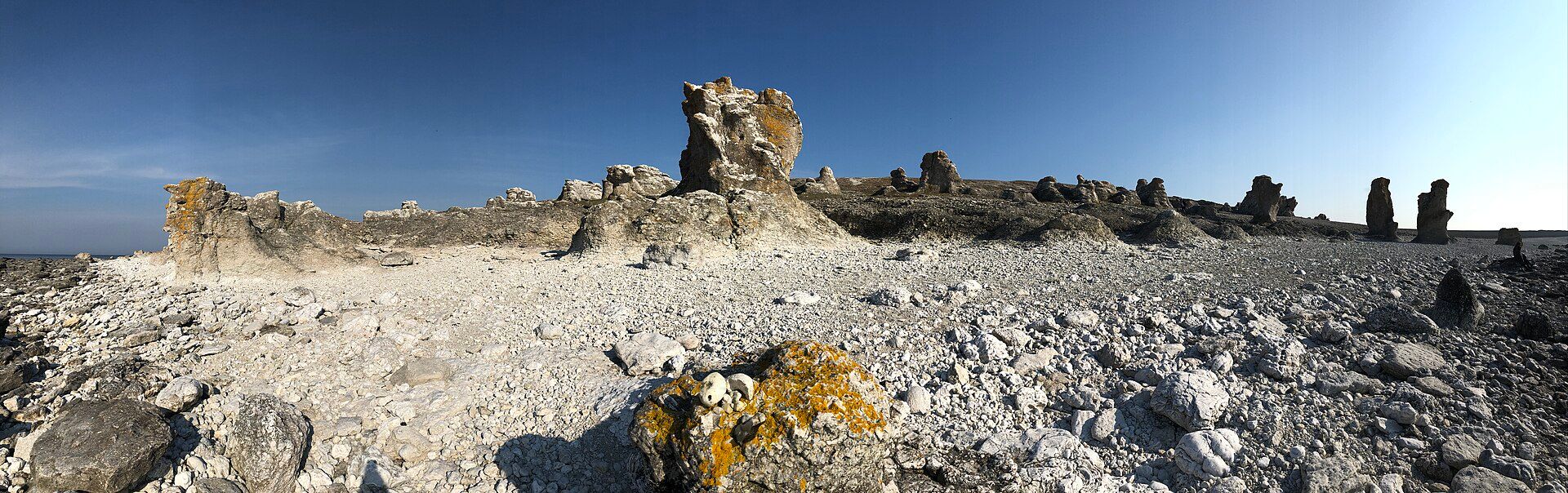
Sweden's largest island, rimmed by raukar — weathered limestone sea stacks that stand along the shore like a gallery of stone figures carved by the Baltic.
What makes it marvelous
Gotland is built from limestone laid down on the floor of a tropical sea more than 400 million years ago, when this part of the Earth lay near the equator. Along parts of its coast, the softer rock has worn away to leave raukar — free-standing pillars and columns of harder limestone, sculpted by waves, frost, and time into strange, often figure-like shapes. The best fields of them, at Langhammars and Digerhuvud on the island of Fårö, form eerie stone forests at the water's edge, rich too in the fossils of that ancient reef.
Why visit
Wandering among the raukar at sunset, as the pale stone figures glow against the Baltic, is Gotland's signature experience. But the island offers much more: the perfectly preserved medieval walled town of Visby, wide beaches, pine forest and orchid-rich meadows, and the wild, windswept moods of neighbouring Fårö. Long summer days and a mild climate make it Sweden's beloved island escape.
More views of Gotland & the Raukar
Additional photographs of the actual site — each freely licensed, with its photographer and licence credited.
What to know before you go
🗓️ Best time
Late spring to early autumn (roughly May–September) for warm days, long light, and full ferry and island services; the shoulder seasons are quiet and atmospheric.
🧭 Getting there & access
Reached by ferry from Nynäshamn or Oskarshamn on the Swedish mainland, or by a short flight to Visby. The raukar fields are on the coast and on Fårö, reached by a free car ferry from northern Gotland.
Good to know
- Visit the Fårö raukar at Langhammars near sunset for the best light and fewest people.
- Rent a bike or car — the island is large and the sights are spread out.
- Don't climb on or damage the fragile raukar; they erode and topple naturally over time.
Plan your visit
Easy🧭 Getting there
From Visby (VBY) or the mainland ferry ports, Sweden
- Fly to Visby, or take the car ferry from Nynäshamn or Oskarshamn (~3h)
- Drive or cycle north across Gotland toward Fårö
- Free car ferry to Fårö, then on to the Langhammars and Digerhuvud raukar
- Total travel
- Half a day from Stockholm via the flight; longer by ferry
- Time at site
- 2–3 days to see the raukar, Visby, and Fårö properly
- Access
- The island and raukar coasts are freely accessible; nature-reserve rules ask you not to climb or disturb the stacks. Ferries to Fårö are free and frequent in season; the mainland ferry and flights are ticketed.
🎒 What to bring & consider
- Layers and a windproof — the Baltic coast is breezy even in summer
- A bike or car for the island's spread-out sights
- Sturdy shoes for the rocky shore around the raukar
- Sun protection for long, bright summer days
👁️ What to expect
- Crowds
- Busy in the Swedish summer, especially Visby; the raukar coasts and shoulder seasons stay peaceful.
- Conditions
- Easy coastal and island exploring, on foot, bike, or car, with rocky footing near the stacks.
- Facilities
- Full services in Visby and the towns; simpler on Fårö and the remote coasts.
- The view
- The raukar as dark figures against a glowing Baltic sunset at Langhammars. Long summer evenings give the softest light.
Times and requirements are approximate and change with season, weather, and local rules — confirm permits, fares, and schedules with operators before you travel.
Natural riches of the area
- Limestone sea stacks (raukar) sculpted by the Baltic
- Ancient reef limestone rich in marine fossils
- Beaches, pine forest, and orchid-filled meadows
- A mild island climate and long summer days
Local food
- Saffron pancake
- Saffranspannkaka — a golden Gotland dessert served with cream and berries.
- Gotland lamb
- The island’s renowned pasture-raised lamb, a regional specialty.
Gotland, Sweden’s largest island, is ringed in places by one of the Baltic’s strangest sights: the raukar. These free-standing limestone pillars are what remains after the sea wore away the softer rock around harder cores, leaving columns that wind, frost, and waves have carved into figures — some looking uncannily like people or animals frozen at the water’s edge. The finest stand on the island of Fårö, at Langhammars and Digerhuvud, where whole fields of them form an eerie stone gallery, studded with the fossils of the tropical reef this rock once was, over 400 million years ago.
There is far more to the island than its sea stacks. Gotland holds the astonishingly complete medieval walled town of Visby, a UNESCO site of cobbled lanes and church ruins, along with wide beaches, fragrant pine forest, and meadows full of wild orchids. Wild, windswept Fårö adds its own spare beauty. With a mild climate and the long light of Nordic summer, it is Sweden’s most beloved island — and the raukar at sunset are its unforgettable image.
Gotland & the Raukar: common questions
How do you get to Gotland & the Raukar?
From Visby (VBY) or the mainland ferry ports, Sweden: Fly to Visby, or take the car ferry from Nynäshamn or Oskarshamn (~3h); Drive or cycle north across Gotland toward Fårö; Free car ferry to Fårö, then on to the Langhammars and Digerhuvud raukar. Total travel time: Half a day from Stockholm via the flight; longer by ferry.
When is the best time to visit Gotland & the Raukar?
Late spring to early autumn (roughly May–September) for warm days, long light, and full ferry and island services; the shoulder seasons are quiet and atmospheric.
How long should you spend at Gotland & the Raukar?
2–3 days to see the raukar, Visby, and Fårö properly. Total travel time: Half a day from Stockholm via the flight; longer by ferry.
What should you bring to Gotland & the Raukar?
Layers and a windproof — the Baltic coast is breezy even in summer A bike or car for the island's spread-out sights Sturdy shoes for the rocky shore around the raukar Sun protection for long, bright summer days
Do you need a permit or guide for Gotland & the Raukar?
The island and raukar coasts are freely accessible; nature-reserve rules ask you not to climb or disturb the stacks. Ferries to Fårö are free and frequent in season; the mainland ferry and flights are ticketed.
Is Gotland & the Raukar crowded, and what are conditions like?
Busy in the Swedish summer, especially Visby; the raukar coasts and shoulder seasons stay peaceful. Easy coastal and island exploring, on foot, bike, or car, with rocky footing near the stacks. Facilities: Full services in Visby and the towns; simpler on Fårö and the remote coasts.
Added
More wonders to explore