Head to head · The Namib's red dunes vs Jordan's Valley of the Moon
Sossusvlei vs Wadi Rum: Which Desert Should You Visit?
Sossusvlei in Namibia and Wadi Rum in Jordan are two of the most photographed red deserts in the world, and both are UNESCO World Heritage Sites — Sossusvlei as part of the Namib Sand Sea, Wadi Rum as a mixed natural and cultural site. They answer different questions, though: Sossusvlei is about dunes, Wadi Rum about mountains standing in sand.
They also differ in how you visit. At Sossusvlei you drive yourself through Namib-Naukluft National Park and no guide is needed. In Wadi Rum you leave your car at the village and travel with Bedouin operators, usually by 4x4, and the best version of the trip is a night in a desert camp.
Sossusvlei
Giant red dunes and Deadvlei's dead trees
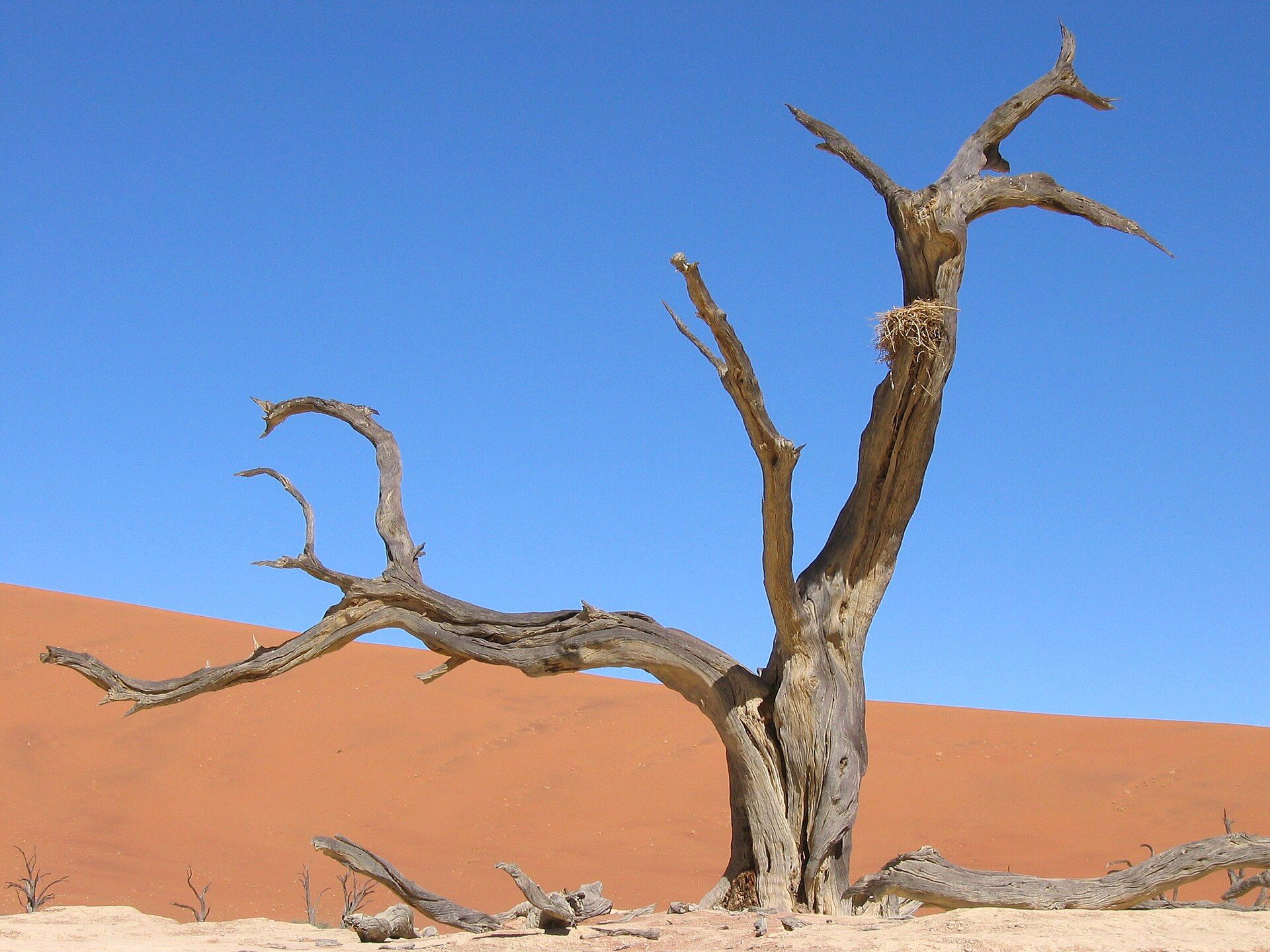
The Namib is one of the oldest deserts in the world, and its iron-rich sand has oxidised to deep rust-red. At Sossusvlei the dunes rise to some of the greatest heights anywhere — 'Big Daddy' tops 300 metres. Next to it lies Deadvlei, a white clay pan where camelthorn trees died centuries ago and, too dry to rot, still stand black against the orange dunes, roughly 900 years old.
- Climbing a 300-metre dune at sunrise
- Deadvlei's dead camelthorn trees against the dune wall
- Self-drive freedom — no guide required
Wadi Rum
Sandstone and granite mountains in red sand
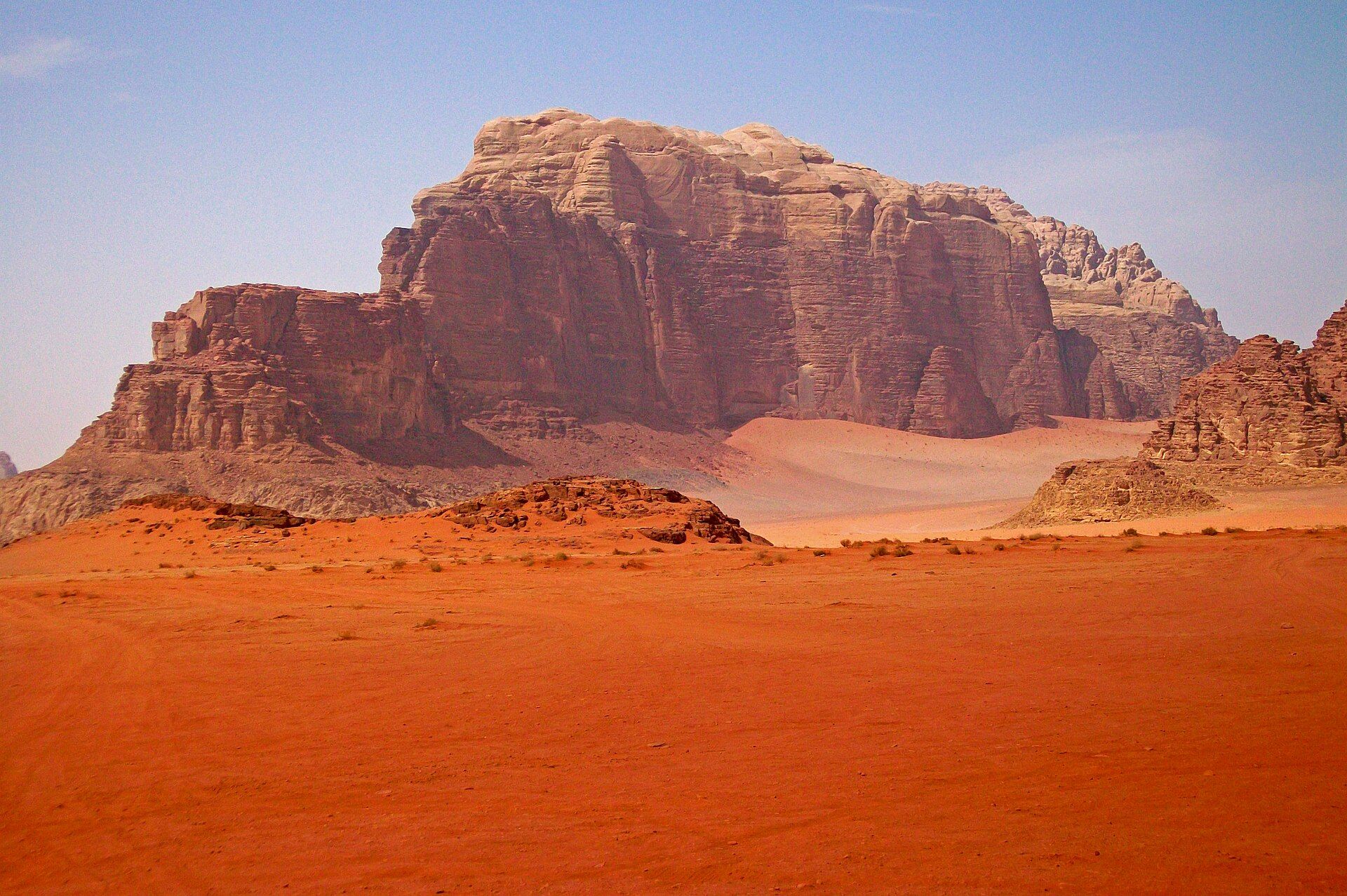
Huge sandstone and granite massifs rise abruptly from wind-rippled red sand, carved over millions of years into natural arches, narrow siqs and sheer cliffs that carry rock art and inscriptions spanning some 12,000 years. It is the ancestral land of Bedouin, who still herd and guide here, and its dark, dry skies are excellent for stargazing.
- A night in a Bedouin desert camp under the stars
- Natural arches, siqs and ancient rock inscriptions
- Easy to combine with Petra and Aqaba
Head to head
| What matters | Sossusvlei | Wadi Rum |
|---|---|---|
| The scenery Edge: Toss-up | Sand at its biggest: sharp-crested dunes over 300 m and a white pan of dead trees. | Mountains and cliffs rising out of the sand, with arches and canyons between them. |
| Getting there Edge: Wadi Rum | Fly to Windhoek, then roughly 5–6 hours by road, largely on gravel, to Sesriem; Sossusvlei is about an hour beyond the gate. | About an hour by road from Aqaba, or roughly 4 hours from Amman. |
| Getting around Edge: Toss-up | Your own vehicle. The last few kilometres are deep sand and need a 4x4 or the park shuttle. | With Bedouin operators by 4x4 (or camel) — the desert has no signed roads. |
| Time needed Edge: Wadi Rum | Two nights, so you are inside the gate for sunrise. The gate opens earlier for guests staying inside the park. | A day trip is possible; an overnight in a camp is far better. |
| Season Edge: Toss-up | Roughly April–October, the cooler months, for dune climbing. | March–May and October–November; summer days are scorching and winter nights very cold. |
| Effort Edge: Wadi Rum | Moderate: steep, soft dune climbs in heat that is severe by mid-morning — start at first light and finish by ten. | Easy: most of the distance is covered by 4x4, with short scrambles on sandstone and dunes. |
| Facilities Edge: Wadi Rum | Fuel, a shop and toilets at Sesriem; little beyond basic toilets inside. Punctures on the gravel approach are very common. | A visitor centre and Bedouin camps from simple to luxurious; camps book up in spring and autumn. |
Which should you choose?
Choose Sossusvlei if…
…you are already planning a Namibia road trip, want the tallest dunes and Deadvlei's trees, and like driving yourself.
Choose Wadi Rum if…
…you want a shorter trip, a night in a desert camp, and a desert you can combine with Petra in the same week.
The honest verdict
For the dune landscape itself, Sossusvlei is in a class of its own: the dunes are far taller, and nothing in Wadi Rum looks like Deadvlei at dawn. It is a bigger trip, though — a long gravel drive from Windhoek and two nights to do it properly.
Wadi Rum is the easier and more varied desert: mountains, arches and canyons rather than pure sand, an hour from Aqaba, and a Bedouin camp overnight that is the highlight for many visitors.
In both, go at dawn or dusk — midday light flattens the colour — and carry more water than you think you need. Check current entry arrangements with Namibia's park authorities at Sesriem and with the Wadi Rum visitor centre.
Wonders mentioned here
Added