Head to head · The two great tepui journeys of Canaima National Park
Mount Roraima vs Angel Falls: Which Venezuelan Tepui Trip Should You Do?
Mount Roraima and Angel Falls are both tepuis of Venezuela's Canaima National Park, a UNESCO World Heritage Site, and both are guided trips into roadless country. They are very different journeys. Roraima is a walk: a six-day camping trek from the village of Paraitepui up the one non-technical ramp onto a summit plateau of black sandstone, crystal pools and endemic plants at about 2,800 m.
Angel Falls is a ride: a light aircraft to Canaima, then 4–5 hours by motorised canoe up the Carrao and Churún rivers and an hour's forest walk to the Laime viewpoint below a 979 m drop — the highest waterfall on Earth. Their best seasons are opposite, and both need a current check of your government's travel advice for Venezuela.
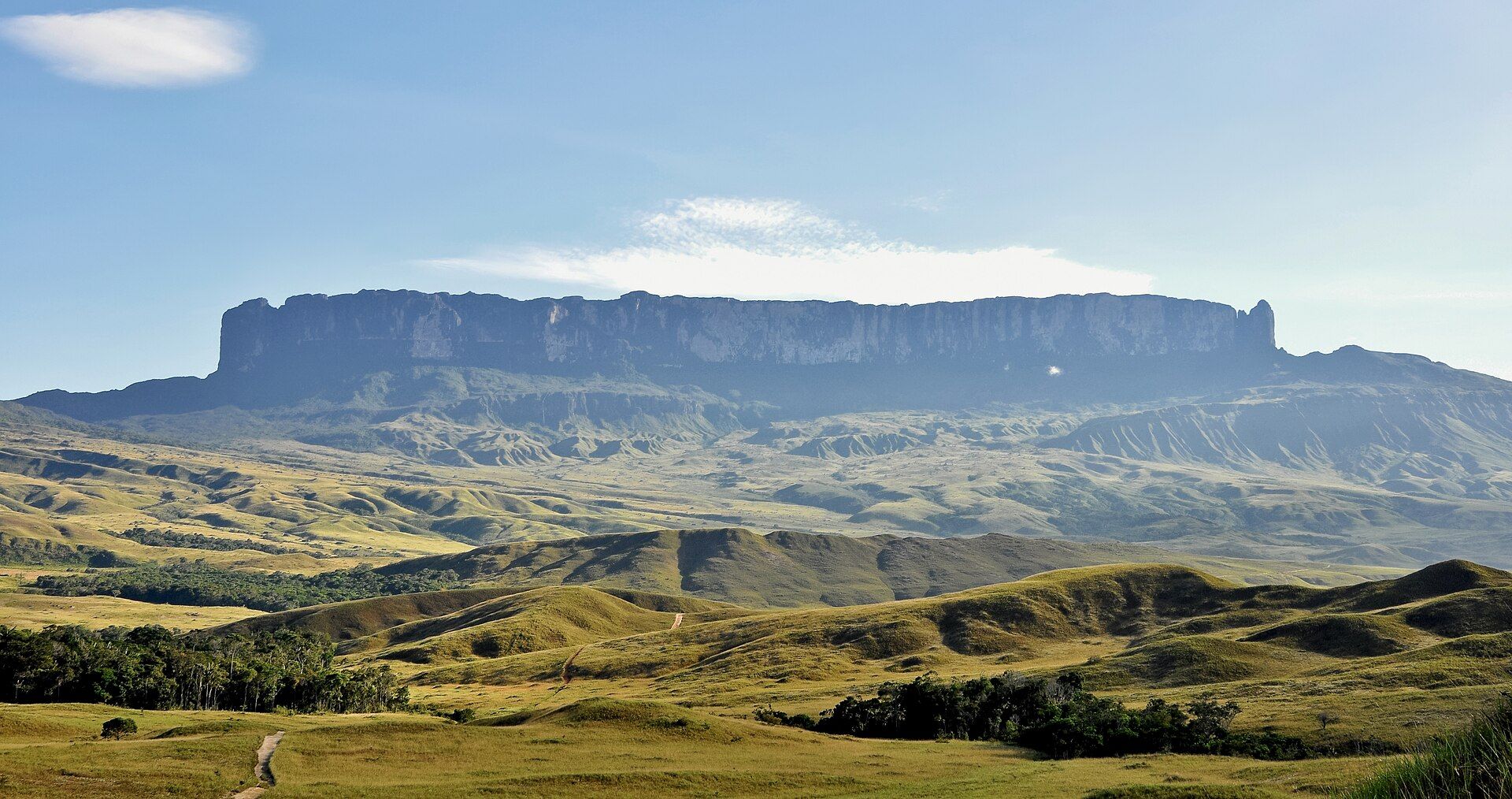
Mount Roraima
Six days on foot to the summit of a 'lost world' table mountain
Roraima is the greatest of the tepuis, where Venezuela, Brazil and Guyana meet: a summit plateau nearly a kilometre above the savanna, ringed by cliffs up to 400 m high. On top is a landscape of rain-sculpted black sandstone, quartz fields and pools, with carnivorous plants and species found nowhere else. You reach Santa Elena de Uairén in the Gran Sabana, take a 4x4 a few hours to Paraitepui, and trek up and back with a licensed guide and porters — both compulsory — camping throughout and carrying out all waste.
- Standing on top of a tepui, not just looking at one
- Endemic plants and a prehistoric-looking summit of black rock and pools
- A real expedition — you may see only your own group for days
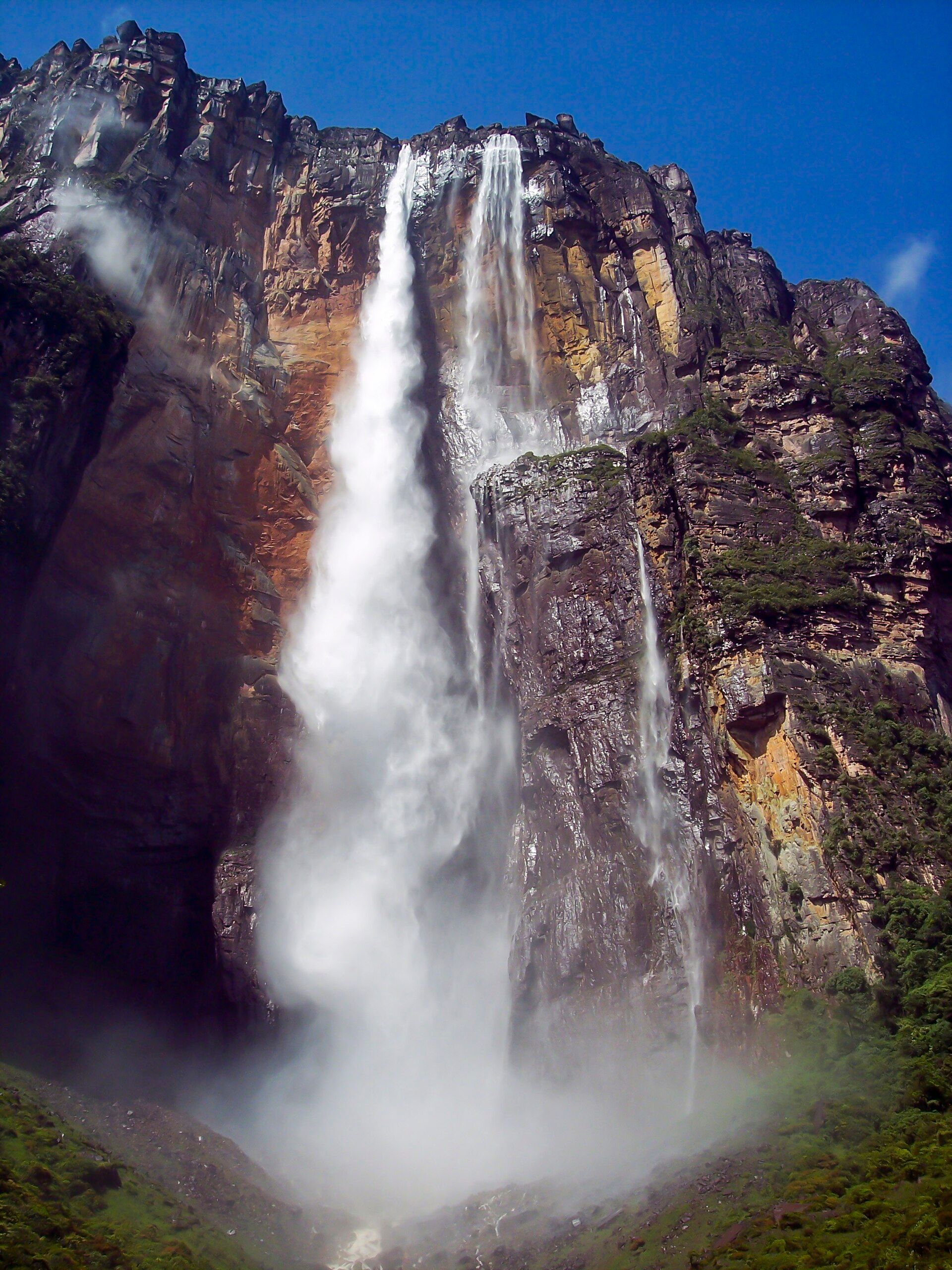
Angel Falls
A 979 m waterfall reached by small plane and river canoe
Angel Falls (Kerepakupai Merú) drops 979 m from the rim of Auyán-tepui — the highest uninterrupted waterfall in the world, about fifteen times the height of Niagara. You fly by light aircraft from Caracas or Ciudad Bolívar to Canaima (roughly 1h–1h30 when weather allows), then ride a motorised canoe 4–5 hours upriver and walk about an hour to the Laime viewpoint. The standard package is three days with a night in a riverside hammock camp, and the boats only run when the rivers are high.
- The world's highest waterfall, seen from its base
- Shorter and less physical — three days, mostly by plane and canoe
- Lodges and an airstrip at Canaima village
Head to head
| What matters | Mount Roraima | Angel Falls |
|---|---|---|
| What you see Edge: Toss-up | The summit plateau itself: black sandstone shapes, crystal pools, quartz fields and endemic plants, with cliffs up to 400 m below you. | A 979 m freefall from Auyán-tepui — in the dry season it can dissolve into mist before reaching the ground. |
| Effort Edge: Angel Falls | Expedition: about six days of trekking and camping, deep mud, river crossings and slick rock on the ramp. | Strenuous but short: long hours in an open canoe through rapids, then a slippery walk over roots and boulders. |
| Best season Edge: Toss-up | The drier months, roughly December–April — safer trekking and a summit less often in cloud. | The wetter months, roughly June–November — full flow, and the only time the river boats can get up. |
| Getting there Edge: Toss-up | Overland to Santa Elena de Uairén near the Brazil border, then a few hours by 4x4 to Paraitepui. | Light aircraft to Canaima, then motorised canoe and a forest walk — about two days to the base of the falls. |
| Time needed Edge: Angel Falls | A six-day guided trek, plus the long approach to the trailhead. | Three days as a standard package. |
| Where you sleep Edge: Angel Falls | Tents under rock overhangs (called 'hotels') on the summit; no facilities at all. | Basic hammock shelters at the river camps; lodges at Canaima village. |
| Rules Edge: Toss-up | Licensed guide and porters mandatory; you pack out all waste, including human waste. | Park entry with a licensed guide and an organised trip; independent travel to the falls isn't realistic. |
| Hazards Edge: Toss-up | Constant wet and cold on top — the tepui makes its own weather year-round. | Relentless puri-puri blackflies on the rivers, and everything gets soaked in the canoe. |
Which should you choose?
Choose Mount Roraima if…
…you want to be on top of a tepui, are fit and happy to camp wet for six days, and can travel in the drier months (roughly December–April).
Choose Angel Falls if…
…you want to see the world's highest waterfall at full power, have about three days, and can travel in the wetter months (roughly June–November).
The honest verdict
Choose Mount Roraima for the experience of walking onto a table mountain: six days of mud, rock and rain to reach a summit of black sandstone, pools and plants found nowhere else. Go with the compulsory licensed guide and porters, bring serious waterproofs, and aim for the drier December–April window.
Choose Angel Falls for the single most dramatic sight in the Guiana Highlands, reached in about three days by small plane, canoe and a short walk. Go in June–November: in the dry season the falls thin to a thread and the boats can't get up the river at all.
Because their best seasons are opposite, it is hard to do both well on one trip. Whichever you choose, check your government's current travel advice for Venezuela and whether your insurance covers it before booking.
Wonders mentioned here
Added