Head to head · Borneo's granite giant vs the Philippines' highest volcano
Mount Kinabalu vs Mount Apo: Which Is Harder, and Which Should You Climb?
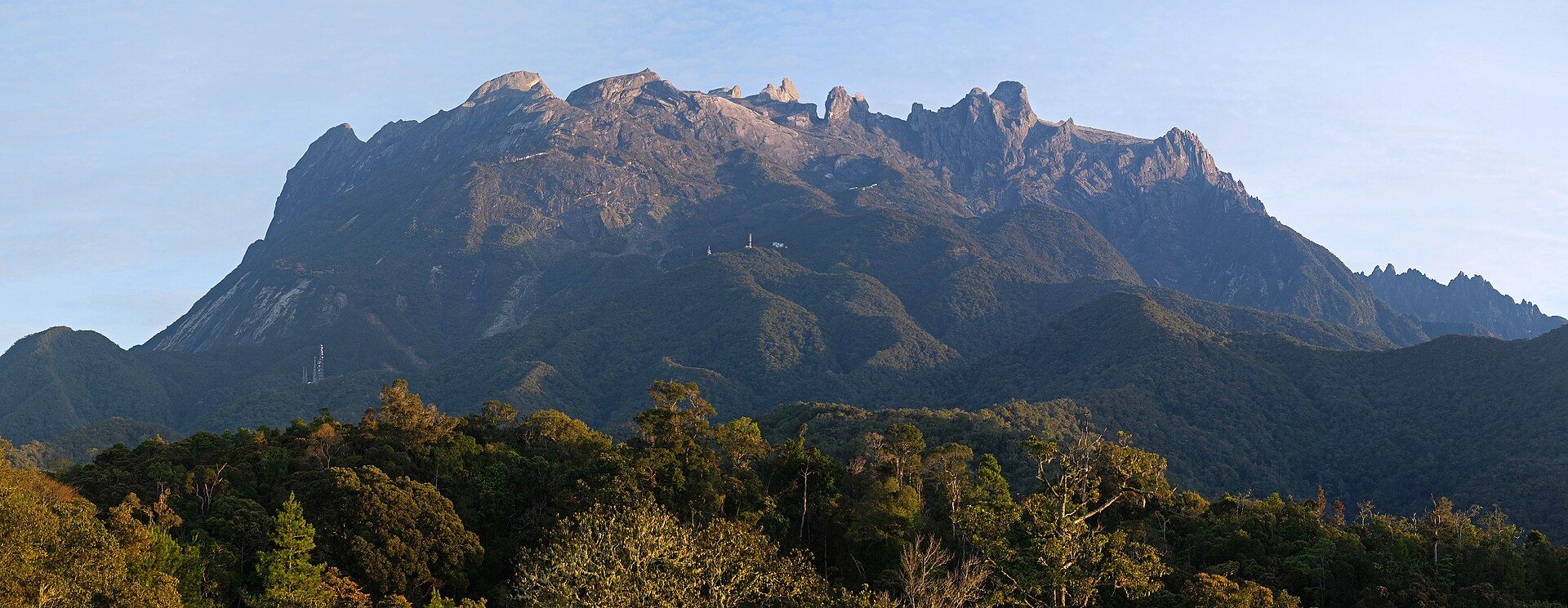
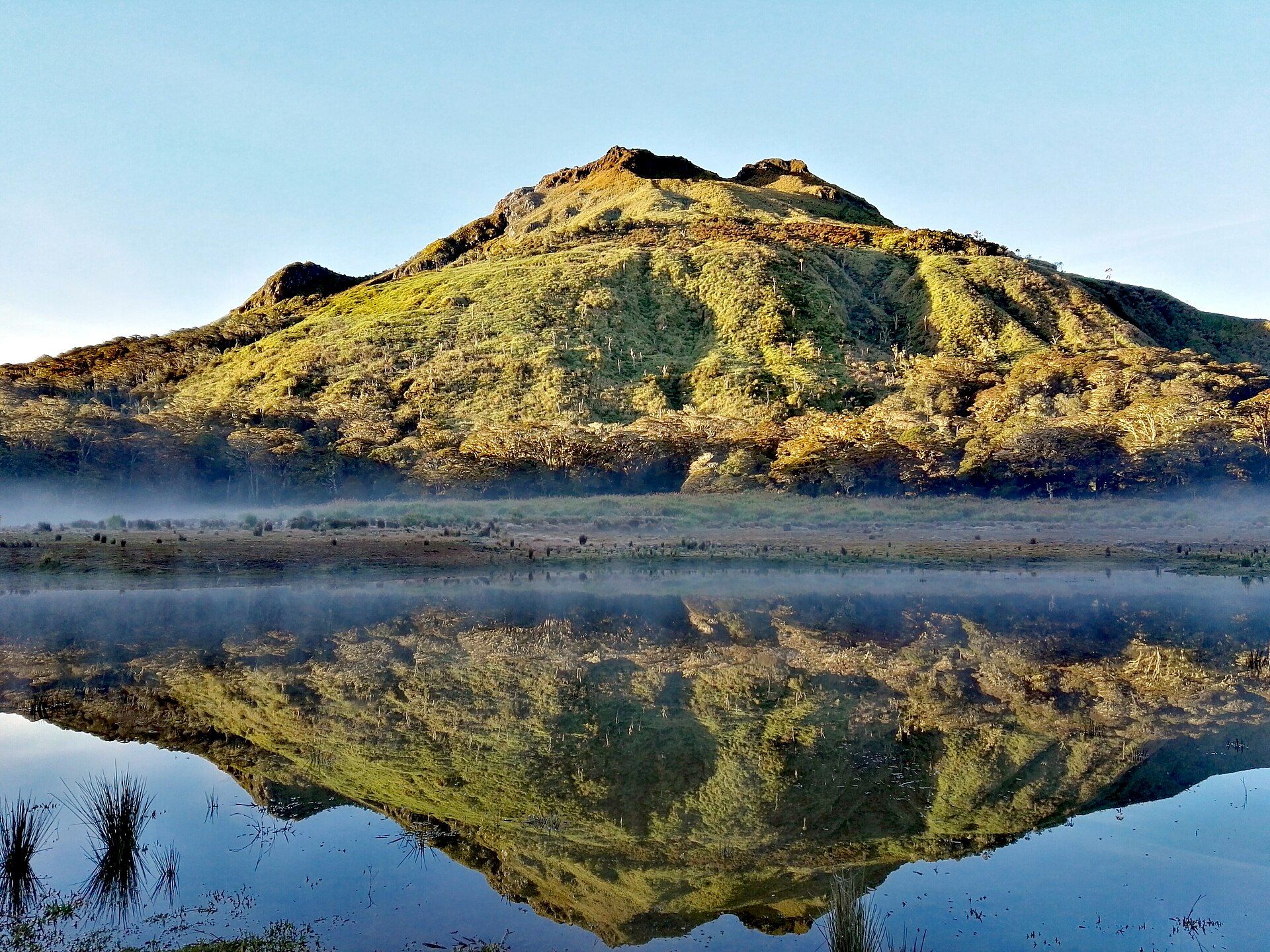
Kinabalu and Apo are both tropical summits that fit, non-technical trekkers can reach, but they are very different climbs. Kinabalu, in Sabah, rises to about 4,095 metres — over a kilometre higher than Apo — and is a young granite massif whose bare, ice-polished summit plateau is crowned with jagged pinnacles. Apo, in Mindanao, is the highest mountain in the Philippines at 2,954 metres: a potentially active volcano with sulfur vents, crater lakes and a summit boulder field, and a refuge for the Philippine eagle.
Despite the height gap, the higher mountain is the more organised climb. Kinabalu is a two-day, one-night ascent on endless engineered steps, with meals and a bed at Laban Rata and fixed ropes on the granite slabs above the treeline. Apo takes 2–4 days depending on the trail, with designated campsites only, everything carried, limited water above the last river crossing and an exposed face of loose volcanic rock below the summit.
Mount Kinabalu
Two days to a granite plateau above Borneo
Kinabalu Park, a UNESCO World Heritage Site in Sabah: lowland rainforest, cloud forest and alpine scrub on one mountain, with Rafflesia, orchids and endemic pitcher plants.
- Over 4,000 m with no technical climbing
- Hut with meals at Laban Rata
- World-class botany even without summiting
Mount Apo
The roof of the Philippines
Mount Apo Natural Park and ASEAN Heritage Park in Mindanao: sulfur vents, Lake Venado and other crater lakes, pitcher plants and orchids, and Philippine eagle habitat.
- The highest point in the Philippines
- A true multi-day camping trek
- Volcanic summit with fumaroles
Head to head
| What matters | Mount Kinabalu | Mount Apo |
|---|---|---|
| Height Edge: Mount Kinabalu | About 4,095 m. | 2,954 m — the highest point in the Philippines. |
| Time on the mountain Edge: Mount Kinabalu | Two days and one night: park HQ to Laban Rata (about 4–6 h of stairs), then a summit push from around 2 a.m. and all the way down. | 2–4 days: typically 3–4 via Kidapawan, 2–3 via Kapatagan. |
| Terrain Edge: Toss-up | Engineered steps through montane forest, then bare granite slabs with fixed ropes. The one-day descent on stone steps is what most people struggle with. | Long forest ascents, a wet mossy section, then an exposed boulder field of loose volcanic rock; sulfur vents near the summit. |
| Overnight Edge: Mount Kinabalu | A heated resthouse with meals at Laban Rata — a busy dormitory. | Designated campsites only; everything is carried in and rubbish carried out. |
| Permits and guides Edge: Toss-up | Daily cap enforced through Laban Rata beds — no bed, no climb; a licensed mountain guide is mandatory. Arranged through Sabah Parks and its appointed operators, often months ahead. | Registration with the LGU for your trail, an accredited guide, a recent medical certificate and, on some routes, a daily quota. |
| Closures Edge: Toss-up | Sections can close after seismic activity or heavy rain; the route was reshaped by the 2015 earthquake. | The mountain has closed outright for extended rehabilitation, notably after fire damage; schedules are set season by season. |
| Getting there Edge: Toss-up | Fly to Kota Kinabalu, then about 2 h by road to Kinabalu Park. | Fly to Davao, then about 2–3 h by road to Kidapawan, Digos or Kapatagan. |
| Best season Edge: Toss-up | Roughly March–September for the best chance of a clear summit; the mountain makes its own weather all year. | March–May, the drier months, for safer trails and clearer summits. |
| Cold Edge: Toss-up | The summit plateau at over 4,000 m is near freezing and windy before dawn. | The summit and Lake Venado camps drop close to freezing. |
| Wildlife and plants Edge: Toss-up | Thousands of plant species, including Rafflesia, orchids and endemic pitcher plants. | Philippine eagle habitat, endemic birds, pitcher plants and orchids. |
Which should you choose?
Choose Mount Kinabalu if…
…you want a summit over 4,000 m without carrying a tent, can book a Laban Rata bed months ahead, and have strong knees for a whole-mountain descent in one day.
Choose Mount Apo if…
…you want the Philippines' highest point and a real multi-day camping trek with volcanic terrain, and can carry your own food, water and cold-weather gear.
The honest verdict
Kinabalu is higher, but Apo is the more self-reliant trip. On Kinabalu the logistics are the hard part — the capped Laban Rata beds decide whether you climb at all — while the climb itself is two long days of stairs, ropes and a punishing descent, with meals and a roof in between.
Apo asks for more days, more carrying and more care: camping, water rationing above the last river crossing and a loose boulder face below the summit. Kinabalu's extra altitude, though, makes its summit noticeably colder and thinner-aired, so pace yourself whichever you choose.
Both close at short notice — Kinabalu after earthquakes or heavy rain, Apo for rehabilitation — so confirm with Sabah Parks (Kinabalu) or the trail's LGU tourism office and DENR (Apo) before booking flights.
Wonders mentioned here
Added