Head to head · Bali's walkable subak terraces vs the Ifugao terraces of the Cordillera
Jatiluwih vs Banaue: Bali's or the Philippines' Rice Terraces — Which to Visit?
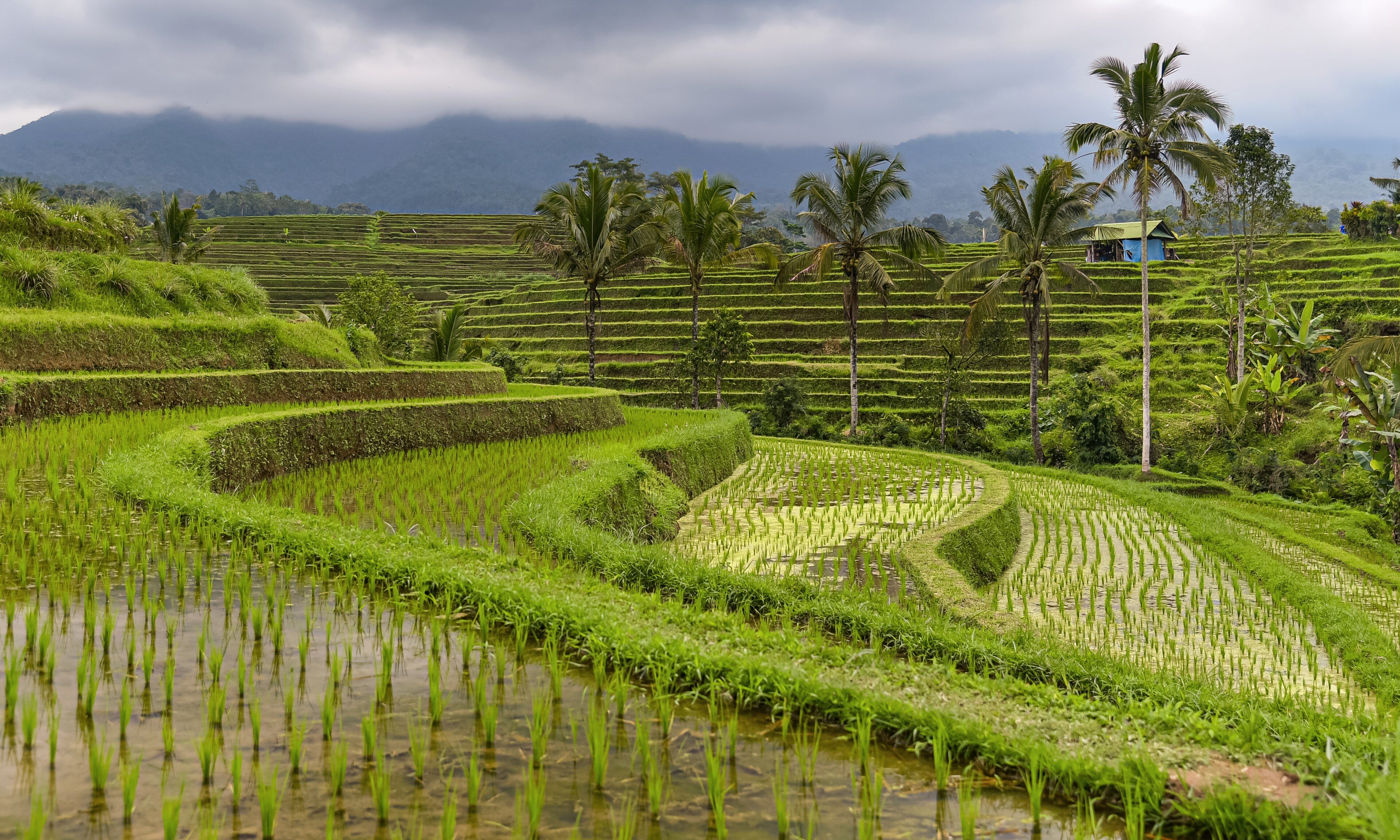
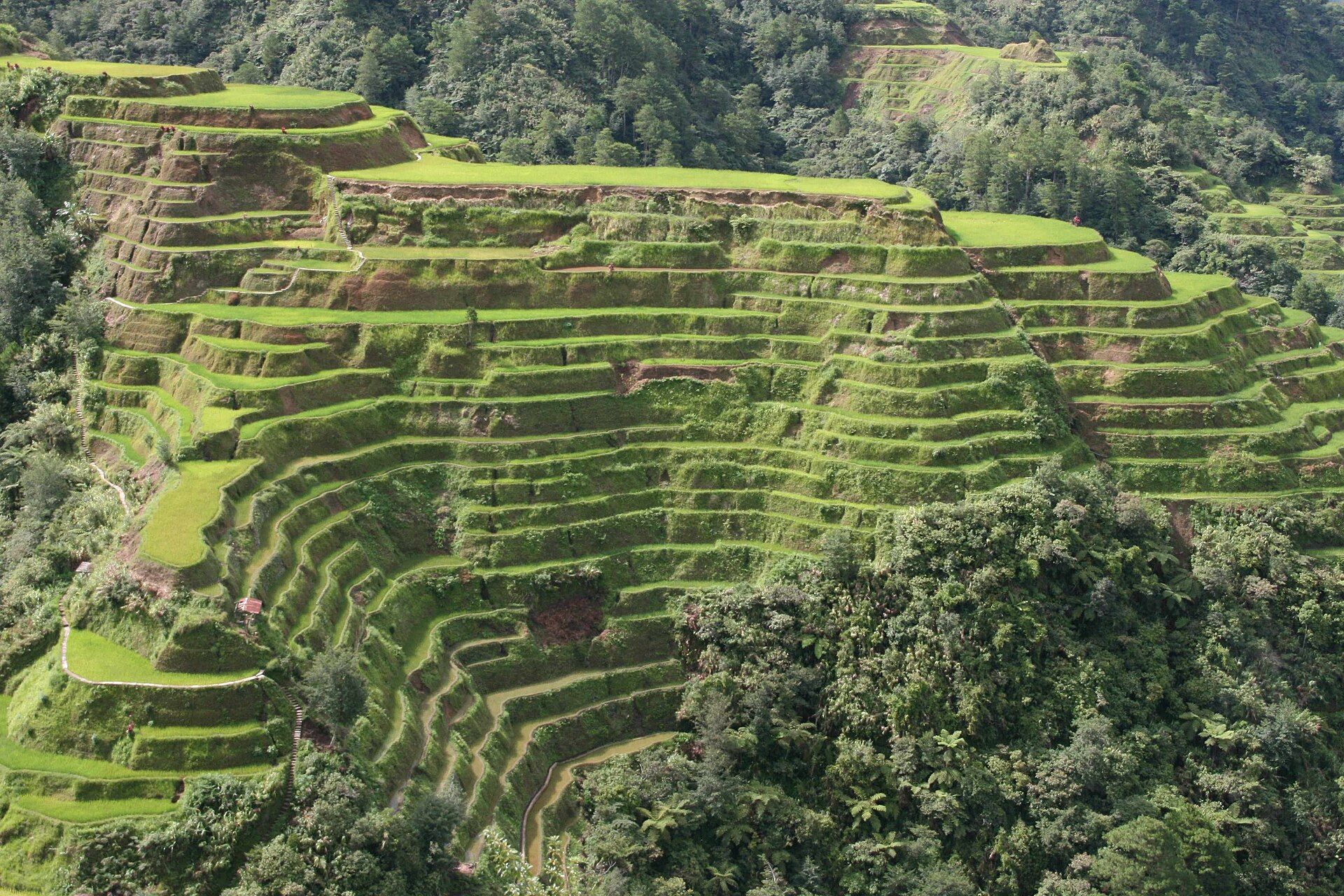
Both are UNESCO-listed rice landscapes still farmed by the communities that built them, and both are run on water management older than most nations. They differ in slope and in effort. Jatiluwih, on the southern flank of Mount Batukaru in Bali, is some 600 hectares of broad terraces that follow the contours in long, gentle curves, irrigated by subak — farmer cooperatives that schedule every block's flooding. Banaue's Ifugao terraces climb steep Cordillera mountainsides to 1,500 m and more, fed by a protected muyong watershed forest above.
Jatiluwih is a half-day trip from anywhere in southern Bali, about 2 hours by car from Ubud, with colour-coded walking loops and no guide required. Banaue is an overnight bus of roughly 8–10 hours from Manila, and the World Heritage core at Batad means a jeepney ride and a steep walk down with a local guide.
Jatiluwih
Long green contours you can walk into
Bali's largest surviving expanse of traditional terraces, about 600 ha beneath Mount Batukaru, run by the subak irrigation cooperatives (UNESCO 2012).
- Easy, marked walking loops
- Half a day from Ubud or the beach resorts
- Green for most of the year
Banaue
A mountainside carved into steps
Ifugao terraces built over some two thousand years on the steep slopes of the Cordillera, with the amphitheatre of Batad in the World Heritage core.
- Steep, dramatic amphitheatres
- Batad: a walk-in World Heritage village
- Heirloom tinawon rice and living Ifugao culture
Head to head
| What matters | Jatiluwih | Banaue |
|---|---|---|
| The landscape Edge: Banaue | Broad, gently stepped terraces in long curves at roughly 600–800 m, with Batukaru's forested cone behind. | Steep stone-and-mud walls climbing to 1,500 m and more, fanning up the mountain like an amphitheatre. |
| Getting there Edge: Jatiluwih | About 2 h by car from Ubud, about 2.5 h from the southern resorts; hired car, driver or scooter — no practical public transport. | Overnight bus from Manila, roughly 8–10 h, then 45 min–1 h by jeepney or tricycle to Batad's trailhead and a 20–45-minute walk down. |
| Walking Edge: Jatiluwih | Easy: colour-coded loops of several kilometres along the contours; 2–4 hours for a full loop. | Moderate: steep stone steps, narrow terrace edges with real drops, mud after rain; trekking poles help. |
| Guides Edge: Jatiluwih | Not required; local guides are available at the gate. | Required for some village treks and strongly recommended for Batad — trails are unmarked and steep. |
| Best months Edge: Toss-up | Dry season, roughly April–October; staggered planting keeps fields green most of the year. | March–June: lush green before harvest and the golden pre-harvest weeks; after harvest the terraces are bare mud. |
| World Heritage Edge: Toss-up | Showpiece of the Cultural Landscape of Bali Province — the subak system (2012). | The listing covers five clusters (Batad, Bangaan, Mayoyao, Hungduan, Nagacadan); the amphitheatre around Banaue town sits just outside it. |
| Crowds Edge: Toss-up | Coaches reach the main viewpoint around midday; the walking loops stay near-empty. | Tour traffic at Banaue's roadside viewpoints; Batad is far quieter because of the walk in. |
| Time needed Edge: Jatiluwih | A half to full day from southern Bali. | A full day minimum; 2–3 days to walk between villages properly. |
| Money and signal Edge: Toss-up | Cash in rupiah for the entry ticket and warungs; patchy mobile signal. | Small viewpoint and village fees; cash only, no reliable ATMs, patchy or no signal in the valleys. |
Which should you choose?
Choose Jatiluwih if…
…you are already in Bali, have half a day, and want to walk out into working terraces on easy, marked trails without a guide.
Choose Banaue if…
…you have two or three days in northern Luzon, want the steep, dramatic amphitheatres and the World Heritage village of Batad, and don't mind a long bus ride and a guided hike.
The honest verdict
Jatiluwih is the easy one: two hours from Ubud, open loops you can walk alone, and green for most of the year. It is the best way to see how subak works without planning a trip around it.
Banaue is the bigger landscape and the bigger commitment. The terraces are steeper and more theatrical, but the real reward — the Batad amphitheatre — is a steep, guided walk at the end of an overnight bus. Go in March–June, when the paddies are green or turning gold.
At both, these are working farms: keep to the paths and field banks, which double as the walls that hold the water.
Wonders mentioned here
Added