Head to head · hottest place vs largest hot desert
Death Valley vs Sahara: Which Is Hotter?
Short answer: Death Valley holds the record. The highest reliably measured air temperature on Earth — about 57°C (134°F) — was taken there, and its floor at Badwater Basin sits 86 metres below sea level. The Sahara is not the record-holder for heat but it is the largest hot desert on the planet, roughly 9.2 million km² across North Africa.
So the two are records of different kinds. Death Valley is one deep, mountain-ringed basin where heat pools; the Sahara is a desert the size of a continent's whole northern third, met by most travellers at a single sand sea such as Morocco's Erg Chebbi.
Both are dangerous in summer and both are at their best in the cool months. Here is how they compare on what actually matters if you go.
Death Valley
The hottest, lowest, driest place in North America
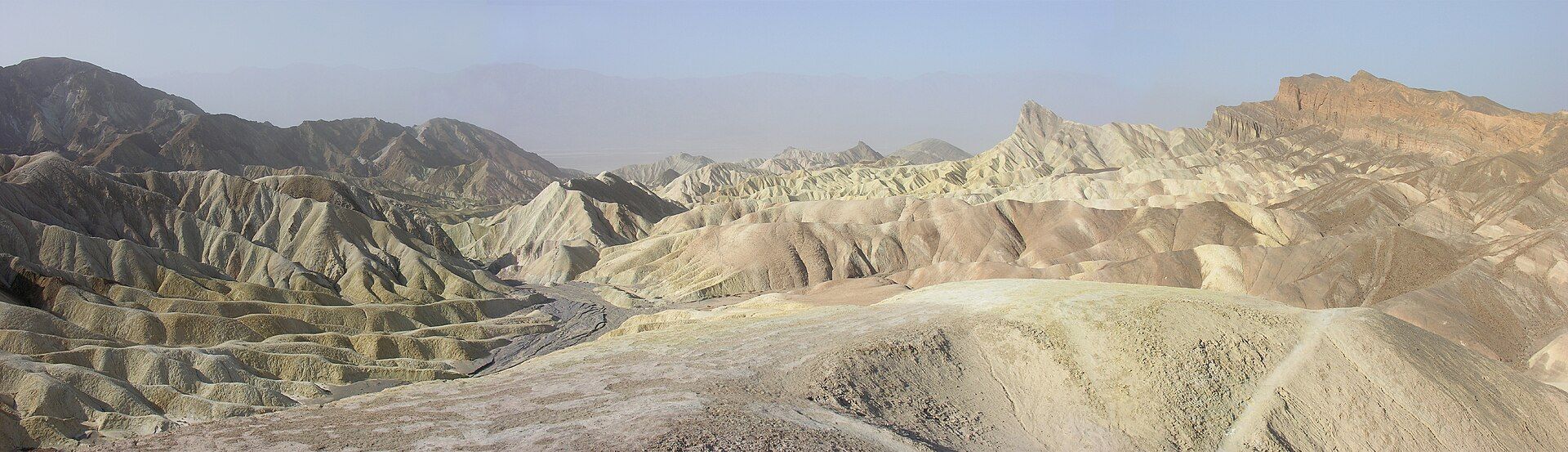
A desert basin on the California–Nevada border whose floor at Badwater Basin lies 86 metres below sea level — the lowest point in North America. High mountains on every side wring the moisture out of passing storms, which is why it is so dry and why the heat builds. Its landscape is unusually varied for a desert: white salt flats, the Mesquite dunes, the painted badlands of Zabriskie Point and Artist's Palette, and, in rare wet years, a wildflower super bloom. It is the largest national park in the contiguous United States.
- The highest reliably measured air temperature on Earth (about 57°C)
- Below-sea-level salt flats at Badwater Basin (−86 m)
- Salt pans, dunes and badlands all reachable by paved road
- International Dark Sky Park
The Sahara
The largest hot desert on Earth
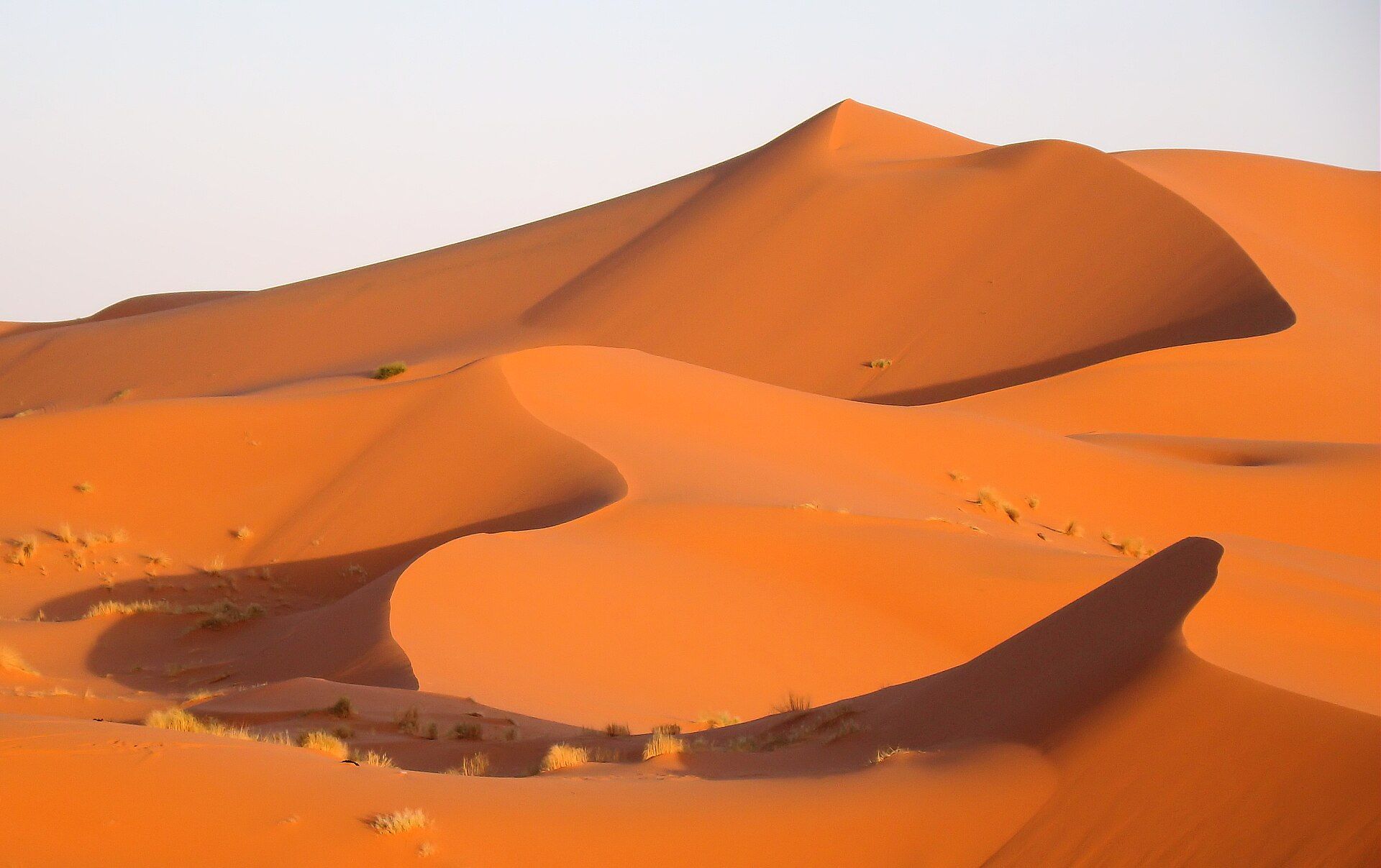
About 9.2 million km² of North Africa — nearly the size of the United States. Most visitors meet it at a sand sea like Erg Chebbi near Merzouga in south-eastern Morocco, where wind has piled dunes up to about 150 metres high that migrate and re-form over time. Beneath the sand lie fossil aquifers that surface as palm-shaded oases, and the dry, dark air makes the night sky exceptional.
- The largest hot desert on the planet, about 9.2 million km²
- Sand seas with dunes to about 150 m at Erg Chebbi
- Overnight desert camps and camel treks with Amazigh guides
- Exceptionally dark, clear skies
Head to head
| What matters | Death Valley | The Sahara |
|---|---|---|
| Which is hotter Edge: Death Valley | Holds the world record for the highest reliably measured air temperature, about 57°C (134°F). Summer heat here can be lethal. | Not the record-holder, but summer across the desert is dangerously hot, and it spreads across an area hundreds of times the size of Death Valley National Park. |
| Size Edge: The Sahara | One national park — the largest in the contiguous United States, but a single basin and its ranges. | About 9.2 million km², nearly the size of the United States. |
| Landscape Edge: Toss-up | Unusually varied: salt flats, salt-cracked polygons, sand dunes, painted badlands and, after rare rain, wildflowers. | The classic sand sea — towering, rippling dunes up to about 150 m that glow gold and rose at dawn and dusk, with oases fed by fossil aquifers. |
| Lowest point Edge: Death Valley | Badwater Basin, 86 m below sea level — the lowest point in North America. | Erg Chebbi is a dune field, not a depression; the draw is height of sand, not depth below sea level. |
| Night sky Edge: Toss-up | An International Dark Sky Park with superb stargazing. | Almost no light or moisture — a desert-camp night under the stars is the signature experience. |
| Best time to go Edge: Toss-up | November to March. Summer is genuinely dangerous; blooms, when they happen, are usually late winter to spring. | October to April. Summer is dangerously hot; spring and autumn nights are cool and clear. |
| Getting there Edge: Death Valley | From Las Vegas or Los Angeles by car; paved roads reach the main sights. Carry plenty of water and watch vehicle temperatures. | A long drive from Marrakech or Fes to Merzouga, then camel treks or 4x4 trips into the dunes with local guides. |
Which should you choose?
Choose Death Valley if…
Anyone who wants to stand at the hottest and lowest point on the continent, see salt flats, dunes and badlands in one trip, and do it from a car on paved roads.
Choose The Sahara if…
Anyone who wants the archetypal desert — a night in a camp among great dunes, the silence and the stars — and is happy to travel a long way to reach it.
The honest verdict
On the question most people ask, Death Valley wins: it holds the highest reliably measured air temperature on Earth. The Sahara's record is size, not heat — at about 9.2 million km² it is the largest hot desert on the planet.
As places to visit they offer different deserts. Death Valley is a self-drive park of salt, badlands and a below-sea-level floor; the Sahara at Erg Chebbi is the sand-sea experience, best done overnight with a guide.
Both share one rule: go in the cool season. Summer heat in either place is a genuine danger, not an inconvenience.
Wonders mentioned here
Added