Head to head · salt landscapes
Dead Sea vs Salar de Uyuni: The Lowest Place vs the Highest Mirror
Both are what happens when water with nowhere to drain sits in a hot, dry basin and evaporates for a very long time, leaving its dissolved salts behind. Beyond that shared chemistry they could hardly be less alike: one is 430 metres below sea level and still liquid, the other is a dry crust at 3,656 metres, and they sit at opposite extremes of altitude.
Here is how the Dead Sea and the Salar de Uyuni compare on what actually shapes a visit — what there is to do, when to go, how hard each is to reach, and what state each is in.
The Dead Sea
The lowest exposed land on Earth
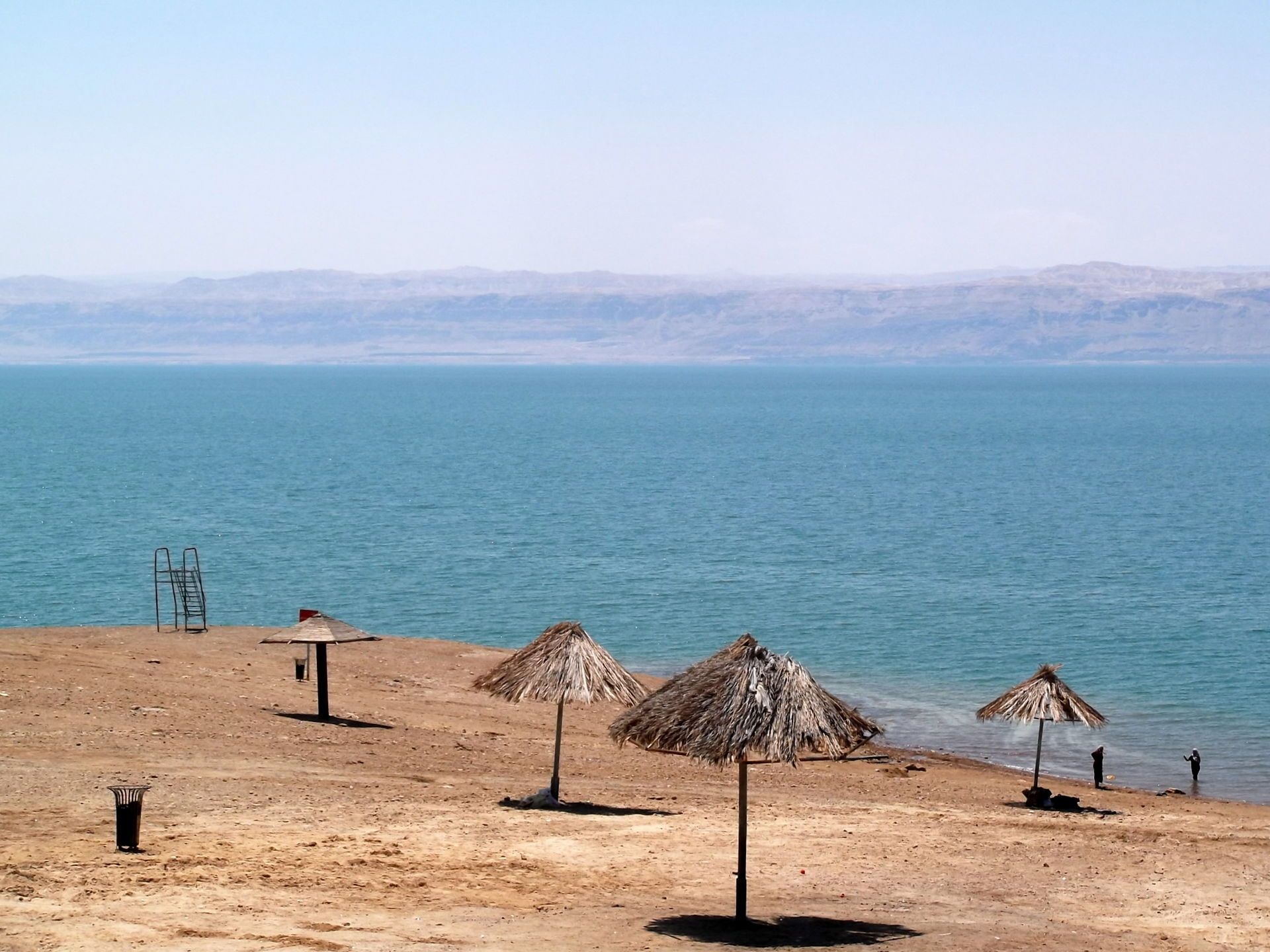
A hypersaline lake in the deepest trench of the Jordan Rift Valley, its surface around 430 metres below sea level. Rivers flow in and none flow out, so evaporation has concentrated the brine to nearly ten times the salinity of the ocean — dense enough that a swimmer simply cannot sink. It is an easy half-day from Amman or Jerusalem, with resort infrastructure right on the shore.
- Floating unaided is a genuinely unrepeatable sensation
- The lowest point on any land surface on the planet
- Very easy access from major cities and airports
- Mineral mud and spa culture built around the water
Salar de Uyuni
The world's largest salt flat
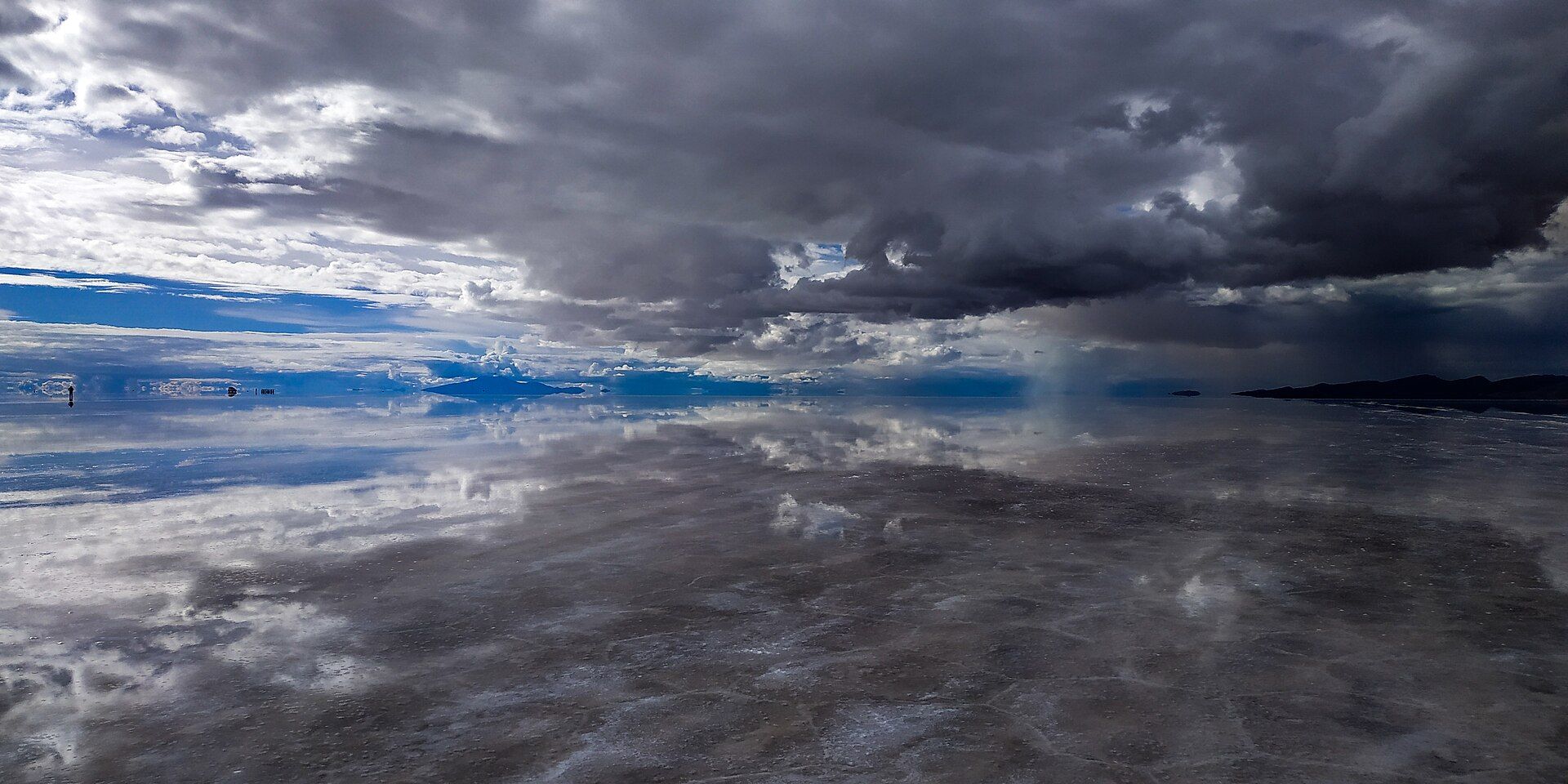
A salt crust of over 10,000 square kilometres on the Bolivian altiplano at about 3,656 metres, left behind by a chain of prehistoric lakes. It is remarkable for being almost perfectly flat — so flat it is used to calibrate satellite altimeters — and for what happens in the wet season, when a thin film of water turns the whole surface into an enormous mirror.
- The largest and flattest salt flat on Earth
- The wet-season mirror effect is genuinely singular
- Cactus islands, flamingo lagoons and geyser fields nearby
- Exceptionally dark skies at altitude
Head to head
| What matters | The Dead Sea | Salar de Uyuni |
|---|---|---|
| What you actually do Edge: Toss-up | Float in the brine, coat yourself in mineral mud, and use the shoreline spas. | Drive out across the crust, shoot reflections and forced-perspective photographs, tour the lagoons. |
| The geology Edge: Toss-up | An active rift lake still holding water, at the lowest exposed land anywhere. | A dry evaporite crust metres thick, over a brine rich in the world's largest lithium reserves. |
| Altitude and comfort Edge: The Dead Sea | Below sea level — oxygen-rich air, but ferocious summer heat well above 40°C. | 3,656 metres, so altitude sickness is a real risk and nights drop below freezing. |
| Ease of access Edge: The Dead Sea | A short drive from Amman or Jerusalem on good roads, with hotels on the shore. | A long journey to Uyuni by bus, flight or overnight train, then a 4x4 tour. |
| Best season Edge: Toss-up | Spring and autumn — summer heat at that depth is genuinely dangerous. | Depends entirely on what you want — roughly December to April for the mirror, May to November for dry-crust driving. |
| Condition and outlook Edge: Salar de Uyuni | Shrinking by roughly a metre a year, with thousands of sinkholes opening along the retreating shore. | Stable as a landform, but under growing pressure from lithium extraction on the brine beneath. |
Which should you choose?
Choose The Dead Sea if…
Anyone who wants a genuinely strange physical experience without a difficult journey — you can be floating in the world's lowest water within an hour or two of a major airport.
Choose Salar de Uyuni if…
Anyone willing to travel hard and sleep cold for a landscape with no visual equivalent anywhere, especially in the wet months when the crust floods and the horizon disappears.
The honest verdict
It depends on how much journey you want. The Dead Sea is a remarkable thing you can slot into an existing trip; the Salar is an expedition you build a trip around.
If you are chasing the photograph, the Salar in the wet season is not comparable to anything else — but go in the dry season and you get a white plain rather than a mirror, so timing decides the trip.
If altitude is a concern, the choice makes itself. One sits 430 metres below sea level; the other is high enough that a proportion of visitors feel genuinely unwell.
Wonders mentioned here

Added