Monteverde Cloud Forest
📍 Puntarenas / Alajuela, Cordillera de Tilarán, Costa Rica
A misty mountaintop cloud forest dripping with life — where clouds snag on the ridge and feed a green world of orchids, epiphytes, and rare wildlife, from the resplendent quetzal to hundreds of bird species.
What makes it marvelous
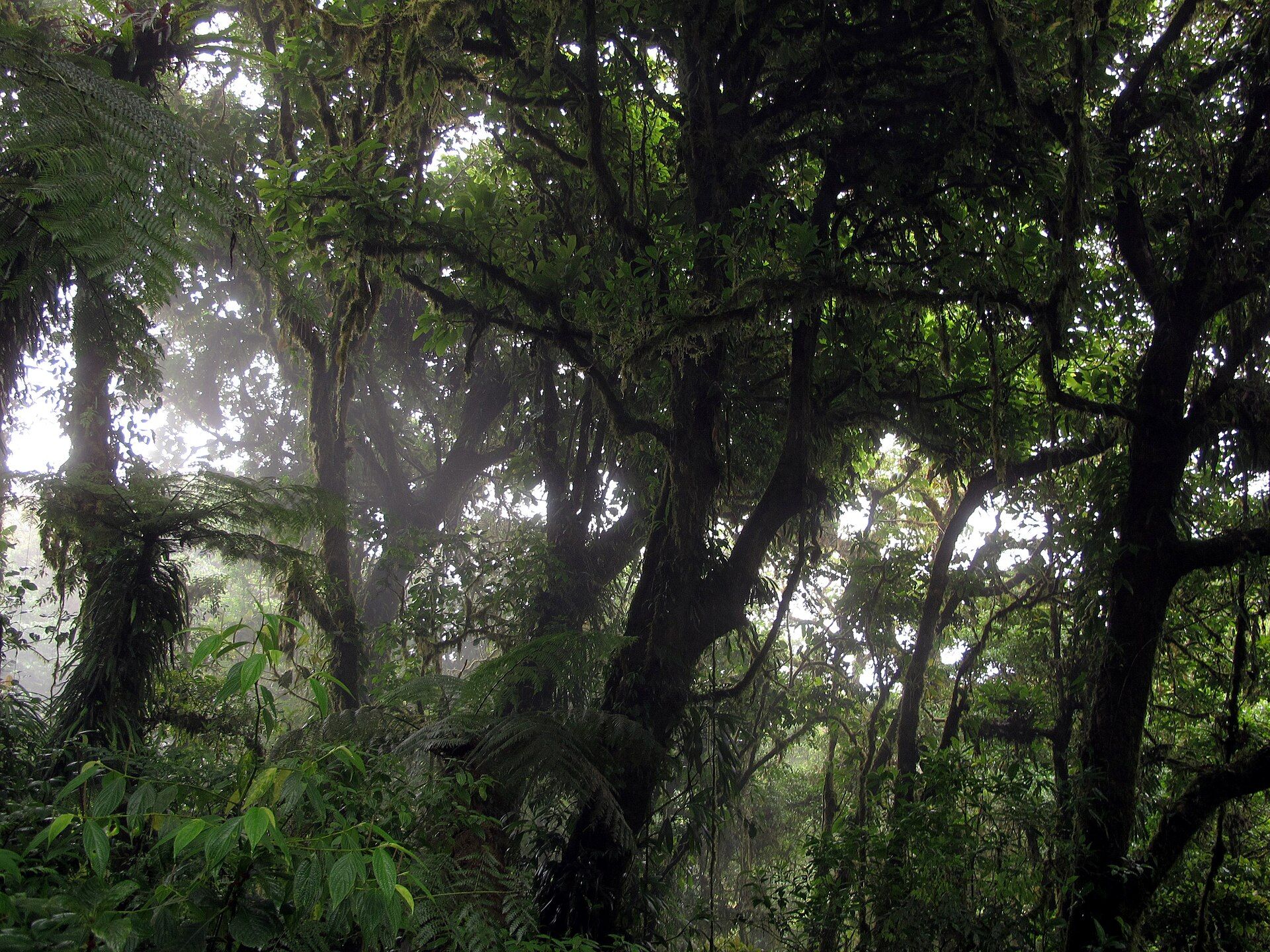
Monteverde sits high on the Continental Divide, where moist trade winds rising off the lowlands cool and condense into near-constant cloud that bathes the forest in moisture. That perpetual damp turns the trees into gardens: their branches are laden with orchids, bromeliads, mosses, and ferns (epiphytes) growing on other plants, and the biodiversity is extraordinary — thousands of plant species, hundreds of birds, and iconic residents like the resplendent quetzal and the three-wattled bellbird. Community-founded and fiercely protected, it helped make Costa Rica a global model for ecotourism.
Why visit
Walking suspended hanging bridges through the canopy, or forest trails wrapped in mist, you enter one of the most atmospheric and biodiverse ecosystems on Earth — hummingbirds whirring, the forest dripping, and the chance of a quetzal flashing emerald and crimson through the cloud.
What to know before you go
🗓️ Best time
The drier season (roughly December–April) for easier trails, though the cloud forest is misty and green by nature all year; quetzals are often most visible in the early-year breeding season.
🧭 Getting there & access
In the Cordillera de Tilarán, a few hours from San José or Liberia (the final roads are winding). The Monteverde and Santa Elena reserves offer trails, hanging bridges, and canopy tours with naturalist guides.
Good to know
- Bring a rain jacket and go with a naturalist guide to spot elusive wildlife.
- Early morning is best for birds, including the quetzal.
- Walk the hanging bridges for a canopy-level view of the epiphyte gardens.
Plan your visit
Easy🧭 Getting there
From Monteverde / Santa Elena, Costa Rica
- Drive San José → Monteverde — roughly 3h30–4h30, the last stretch on rough unpaved road
- Base in Santa Elena, the gateway town
- Enter the Monteverde or Santa Elena cloud forest reserves, or ride the hanging bridges and ziplines
- Total travel
- Around four hours from San José, slow at the end
- Time at site
- Two or three days
- Access
- Getting there is part of the story: the final approach to Monteverde is deliberately unpaved and slow, which is how the community has kept the place from being overrun. The cloud-forest reserves charge entry and cap numbers, so book ahead in peak season, and a naturalist guide vastly improves your odds with the wildlife. The resplendent quetzal, the headline bird, is most reliably seen in its breeding season, roughly February to July. This is cloud forest — expect wind, mist and rain as the norm, and the famous canopy views to come and go with the cloud.
🎒 What to bring & consider
- Patience with the rough final road, which is unpaved by local choice and slower than the distance suggests
- Full rain gear and layers, because cloud forest means wind, mist and drizzle even when the lowlands are hot
- A booked reserve entry in high season, since numbers are capped, plus a guide if the wildlife is the point
- Binoculars and realistic hopes for the quetzal, which is seasonal and never guaranteed
- Shoes with grip for muddy, root-crossed forest trails and swaying canopy bridges
👁️ What to expect
- Crowds
- The reserves manage numbers, so trails rarely feel packed; the bridges and ziplines are busier.
- Conditions
- Cool, wet and windy, on well-maintained but muddy forest trails and high bridges.
- Facilities
- Good in Santa Elena — lodging, food, tour operators. Basic within the reserves.
- The view
- Mist streaming through moss-laden canopy from a hanging bridge, or — the prize — a resplendent quetzal with its long tail streamers in the breeding season. The light is soft and grey, which suits the forest.
Times and requirements are approximate and change with season, weather, and local rules — confirm permits, fares, and schedules with operators before you travel.
Natural riches of the area
- High-altitude tropical cloud forest and its watersheds
- Exceptional biodiversity (thousands of plants, hundreds of birds)
- Epiphytes — orchids, bromeliads, mosses — draping the canopy
- Iconic wildlife (resplendent quetzal, bellbird, hummingbirds)
Local food
- Gallo pinto & casado
- Costa Rica's staple rice-and-beans breakfast and set-plate lunch.
- Monteverde cheese
- Cheese from the area's Quaker-founded dairy tradition.
- Highland coffee & tropical fruit
- Costa Rican coffee and abundant fresh fruit.
Monteverde is a forest built by cloud. High on Costa Rica’s Continental Divide, moist winds rising from the lowlands cool as they reach the ridge and condense into near-constant mist, wrapping the trees in perpetual moisture. That dampness turns the forest into a hanging garden: branches are laden with orchids, bromeliads, mosses, and ferns growing on other plants, and every surface seems alive.
The biodiversity is staggering — thousands of plant species, hundreds of birds, and celebrity residents like the resplendent quetzal, all-emerald with a scarlet breast, and the strange, bell-voiced three-wattled bellbird. Founded and defended by its local community, Monteverde helped turn Costa Rica into a global model for ecotourism. To walk its misty trails and hanging canopy bridges, hummingbirds whirring past and the forest dripping all around, is to step into one of the most atmospheric ecosystems on Earth.
Monteverde Cloud Forest: common questions
How do you get to Monteverde Cloud Forest?
From Monteverde / Santa Elena, Costa Rica: Drive San José → Monteverde — roughly 3h30–4h30, the last stretch on rough unpaved road; Base in Santa Elena, the gateway town; Enter the Monteverde or Santa Elena cloud forest reserves, or ride the hanging bridges and ziplines. Total travel time: Around four hours from San José, slow at the end.
When is the best time to visit Monteverde Cloud Forest?
The drier season (roughly December–April) for easier trails, though the cloud forest is misty and green by nature all year; quetzals are often most visible in the early-year breeding season.
How long should you spend at Monteverde Cloud Forest?
Two or three days. Total travel time: Around four hours from San José, slow at the end.
What should you bring to Monteverde Cloud Forest?
Patience with the rough final road, which is unpaved by local choice and slower than the distance suggests Full rain gear and layers, because cloud forest means wind, mist and drizzle even when the lowlands are hot A booked reserve entry in high season, since numbers are capped, plus a guide if the wildlife is the point Binoculars and realistic hopes for the quetzal, which is seasonal and never guaranteed Shoes with grip for muddy, root-crossed forest trails and swaying canopy bridges
Do you need a permit or guide for Monteverde Cloud Forest?
Getting there is part of the story: the final approach to Monteverde is deliberately unpaved and slow, which is how the community has kept the place from being overrun. The cloud-forest reserves charge entry and cap numbers, so book ahead in peak season, and a naturalist guide vastly improves your odds with the wildlife. The resplendent quetzal, the headline bird, is most reliably seen in its breeding season, roughly February to July. This is cloud forest — expect wind, mist and rain as the norm, and the famous canopy views to come and go with the cloud.
Is Monteverde Cloud Forest crowded, and what are conditions like?
The reserves manage numbers, so trails rarely feel packed; the bridges and ziplines are busier. Cool, wet and windy, on well-maintained but muddy forest trails and high bridges. Facilities: Good in Santa Elena — lodging, food, tour operators. Basic within the reserves.
Added Updated
More wonders to explore