Ma'in Hot Springs
📍 Between Madaba and the Dead Sea, Madaba Governorate, Jordan
A cluster of geothermal waterfalls tumbling down a desert canyon near the Dead Sea — hot, mineral-rich water heated deep underground and prized for its healing warmth since Roman times.
What makes it marvelous
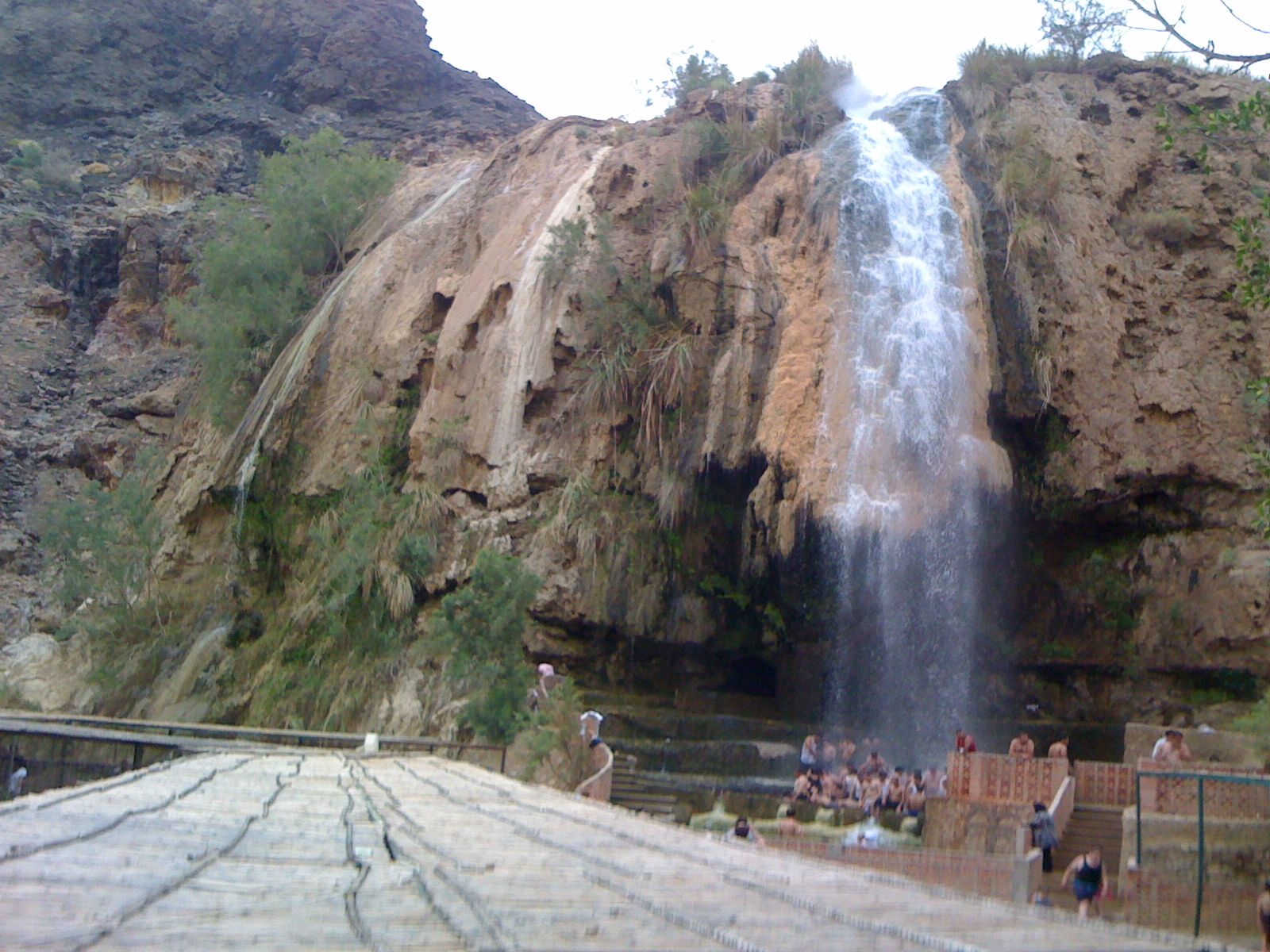
At Ma'in, rain that fell on the highland plateau seeps underground, is heated by hot rock along the Dead Sea rift, and re-emerges partway down a deep canyon as a series of thermal springs and waterfalls — the whole site lying about 264 metres below sea level. The water surfaces at temperatures ranging from a bathable warmth to a scalding sixty-plus degrees Celsius, carrying dissolved potassium, magnesium, calcium and other minerals long reputed to soothe skin and aching joints. The result is a startling desert scene: hot cascades pouring over dark rock into steaming pools, framed by the arid walls of a canyon draining toward the lowest point on Earth.
Why visit
Few places let you stand beneath a naturally hot waterfall in the open desert. The main cascade tumbles beside the road and resort, warm enough to bathe under, with cooler and hotter falls nearby; the setting — steam rising in a stark canyon near the Dead Sea — is as memorable as the soak itself. It pairs naturally with the Dead Sea's mineral floating and with nearby Madaba and Mount Nebo.
More views of Ma'in Hot Springs
Additional photographs of the actual site — each freely licensed, with its photographer and licence credited.
What to know before you go
🗓️ Best time
Autumn to spring, roughly October to April, when the desert heat eases and a hot soak is most welcome; summer at this low elevation is intense.
🧭 Getting there & access
About an hour's drive from Madaba or from the Dead Sea resorts; the main falls sit beside the Ma'in Hot Springs resort, with a day-use entrance fee for the public bathing area.
Good to know
- The hottest falls can scald — test the water and keep to the cooler, signposted bathing cascades.
- Bring swimwear, sandals for hot wet rock, and water to stay hydrated in the heat.
- Combine a visit with the Dead Sea, Madaba's mosaics or Mount Nebo, all close by.
Plan your visit
Easy🧭 Getting there
From Madaba (via Amman, airport AMM)
- Drive from Amman to Madaba, then descend the canyon road to Ma'in — about 1.5 hours total
- Bathe at the public falls or enter the resort's thermal area
- Total travel
- About 1.5 hours from Amman
- Time at site
- A few hours to half a day for bathing and the canyon
- Access
- Open with a day-use fee for the public bathing falls; the adjacent resort offers spa facilities separately.
🎒 What to bring & consider
- Swimwear and water sandals for hot, wet rock
- Drinking water to offset the heat and hot soaking
- A towel and change of clothes
- Care around the scalding upper falls
👁️ What to expect
- Crowds
- Busiest on weekends and holidays; weekdays are calmer.
- Conditions
- Easy access to hot waterfalls and pools in a warm desert canyon.
- Facilities
- Resort, changing areas and parking at the main falls.
- The view
- Steam rising off the hot cascade as it pours over dark rock into the pool below.
Times and requirements are approximate and change with season, weather, and local rules — confirm permits, fares, and schedules with operators before you travel.
Natural riches of the area
- Geothermal springs heated along the Dead Sea rift
- Hot mineral waterfalls and pools in a desert canyon
- Mineral-rich water carrying potassium, magnesium and calcium
- A canyon draining toward the Dead Sea, the lowest point on land
Local food
- Mansaf
- Jordan's national dish of lamb, fermented yoghurt sauce and rice.
- Maqluba
- A turned-out pot of rice, meat and fried vegetables.
- Knafeh
- Warm shredded pastry over melting cheese in sweet syrup.
Ma’in Hot Springs are one of the more surprising sights in Jordan: a run of naturally hot waterfalls tumbling down a stark desert canyon near the Dead Sea. Rain that falls on the highland plateau sinks underground, is heated by hot rock deep along the Dead Sea rift, and bursts back out partway down the gorge — the whole site lying some 264 metres below sea level.
The water emerges anywhere from pleasantly warm to a scalding sixty-plus degrees Celsius, laden with potassium, magnesium, calcium and other minerals long believed to ease skin complaints and aching joints. People have come here to bathe since Roman times, drawn by the same steaming cascades that pour over dark rock into pools below.
The scene is unforgettable — hot water falling through arid canyon walls, steam drifting up into the desert air, a short drive from the lowest point on the planet. Cooler cascades are set aside for bathing while the hottest are left well alone, and a visit slots easily alongside a float in the Dead Sea and the mosaics of nearby Madaba.
Ma'in Hot Springs: common questions
How do you get to Ma'in Hot Springs?
From Madaba (via Amman, airport AMM): Drive from Amman to Madaba, then descend the canyon road to Ma'in — about 1.5 hours total; Bathe at the public falls or enter the resort's thermal area. Total travel time: About 1.5 hours from Amman.
When is the best time to visit Ma'in Hot Springs?
Autumn to spring, roughly October to April, when the desert heat eases and a hot soak is most welcome; summer at this low elevation is intense.
How long should you spend at Ma'in Hot Springs?
A few hours to half a day for bathing and the canyon. Total travel time: About 1.5 hours from Amman.
What should you bring to Ma'in Hot Springs?
Swimwear and water sandals for hot, wet rock Drinking water to offset the heat and hot soaking A towel and change of clothes Care around the scalding upper falls
Do you need a permit or guide for Ma'in Hot Springs?
Open with a day-use fee for the public bathing falls; the adjacent resort offers spa facilities separately.
Is Ma'in Hot Springs crowded, and what are conditions like?
Busiest on weekends and holidays; weekdays are calmer. Easy access to hot waterfalls and pools in a warm desert canyon. Facilities: Resort, changing areas and parking at the main falls.
Added
More wonders to explore