🇲🇪 Natural wonders of Montenegro
A small Balkan country where limestone mountains rise straight off the Adriatic — glacial lakes and 2,000-metre peaks in Durmitor, and the Tara cutting the deepest river canyon in Europe.
🗓️ Best time for nature: June to September for the mountains, when the high trails are clear and the Tara rafting season is running. The coast is busiest in July and August; May and October are quieter and still comfortable.
The lay of the land
Montenegro is essentially limestone stood on end. The Dinaric Alps run the length of the country and meet the Adriatic so abruptly that coastal mountains rise more than a kilometre within a few kilometres of the sea. Inland, the limestone has been worked into classic karst — sinkholes, caves, poljes and underground drainage — then glaciated during the ice ages into the cirques and small dark lakes of the Durmitor massif, which carries more than forty peaks above 2,000 metres. Cutting through all of it is the Tara, which has carved a canyon roughly 80 kilometres long and up to 1,300 metres deep, the deepest in Europe. For a country of only about 13,800 square kilometres, the vertical range is remarkable.
Where to begin
-
Durmitor & the Tara Canyon
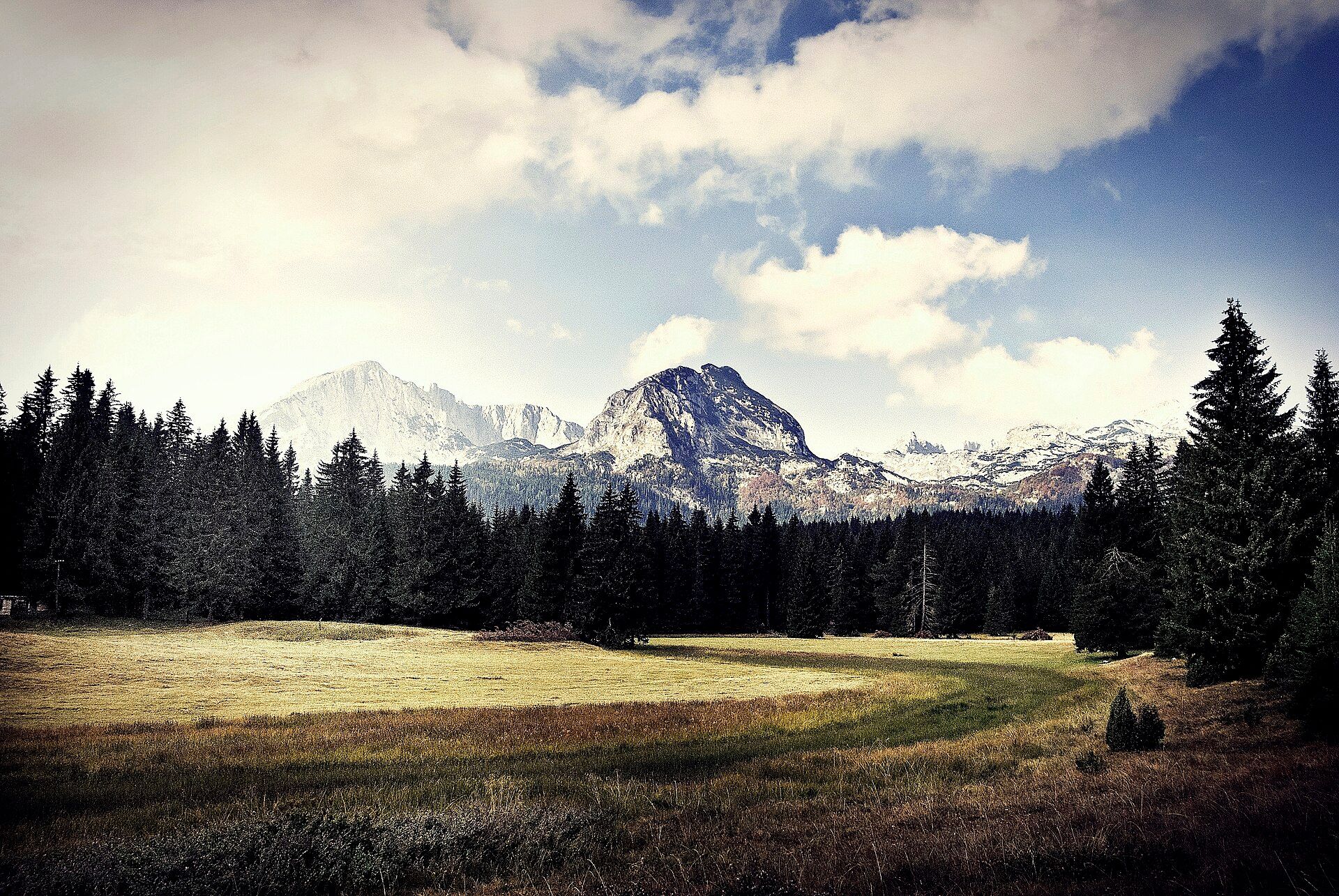
Glacial lakes and limestone peaks above the Tara, Europe's deepest river canyon.
A taste of the place
The mountains and the coast eat quite differently: inland it is smoked Njeguši ham, sheep's cheese, lamb cooked under a metal bell and freshwater trout; on the Adriatic it turns Mediterranean, with grilled fish, olive oil and squid-ink risotto.
Traveling responsibly
- Distances look short and take far longer — the mountain roads here are slow and winding.
- Durmitor is a summer destination; snow closes much of it from late autumn.
- Pair the Tara canyon with the coast, which feels like an entirely different country.
Montenegro is a small country with an improbable amount of vertical in it. The Dinaric Alps run its length and meet the Adriatic so sharply that coastal peaks rise more than a kilometre within sight of the water. Inland, the same limestone has been dissolved into textbook karst — sinkholes, caves, and rivers that disappear underground — and then scoured by ice-age glaciers into the cirques and dark tarns of the Durmitor massif, where more than forty summits pass 2,000 metres.
The defining feature is the Tara. Over roughly 80 kilometres the river has cut down as much as 1,300 metres through the limestone plateau, making it the deepest river canyon in Europe. Durmitor and the canyon were inscribed together by UNESCO in 1980. All of this sits in a country of about 13,800 square kilometres — you can stand on a glacial lake in the morning and swim in the Adriatic the same afternoon, though the roads will make you work for it.
Added
All wonders in Montenegro
1 places