Head to head · China's sandstone pillars vs its granite peaks
Zhangjiajie vs Huangshan: Which Chinese Mountain Landscape Should You Visit?
Zhangjiajie and Huangshan are the two Chinese mountain landscapes that end up on the same shortlist, and both are UNESCO World Heritage Sites. They look alike in photographs — peaks rising out of mist — but they are different rock and different trips.
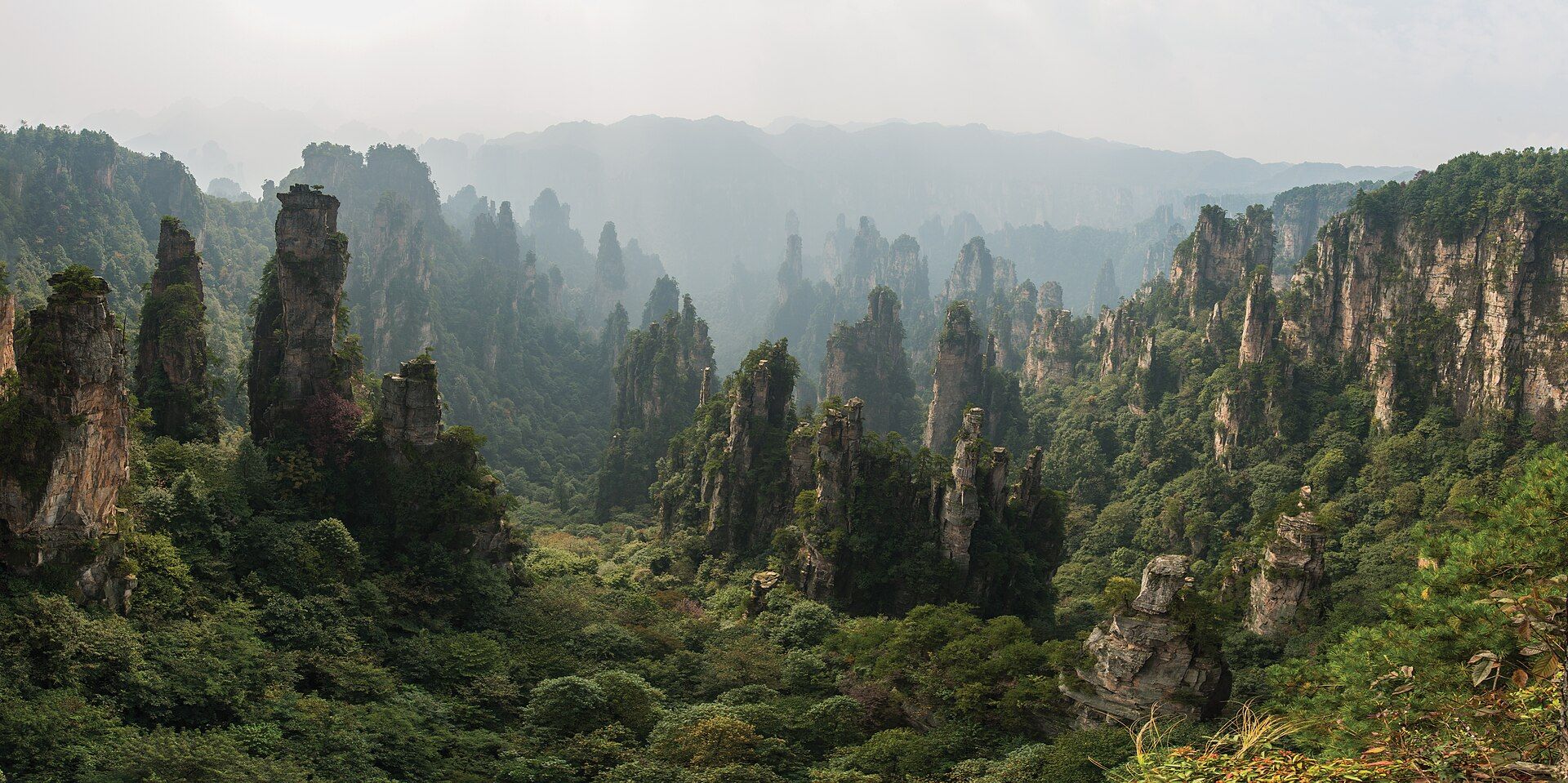
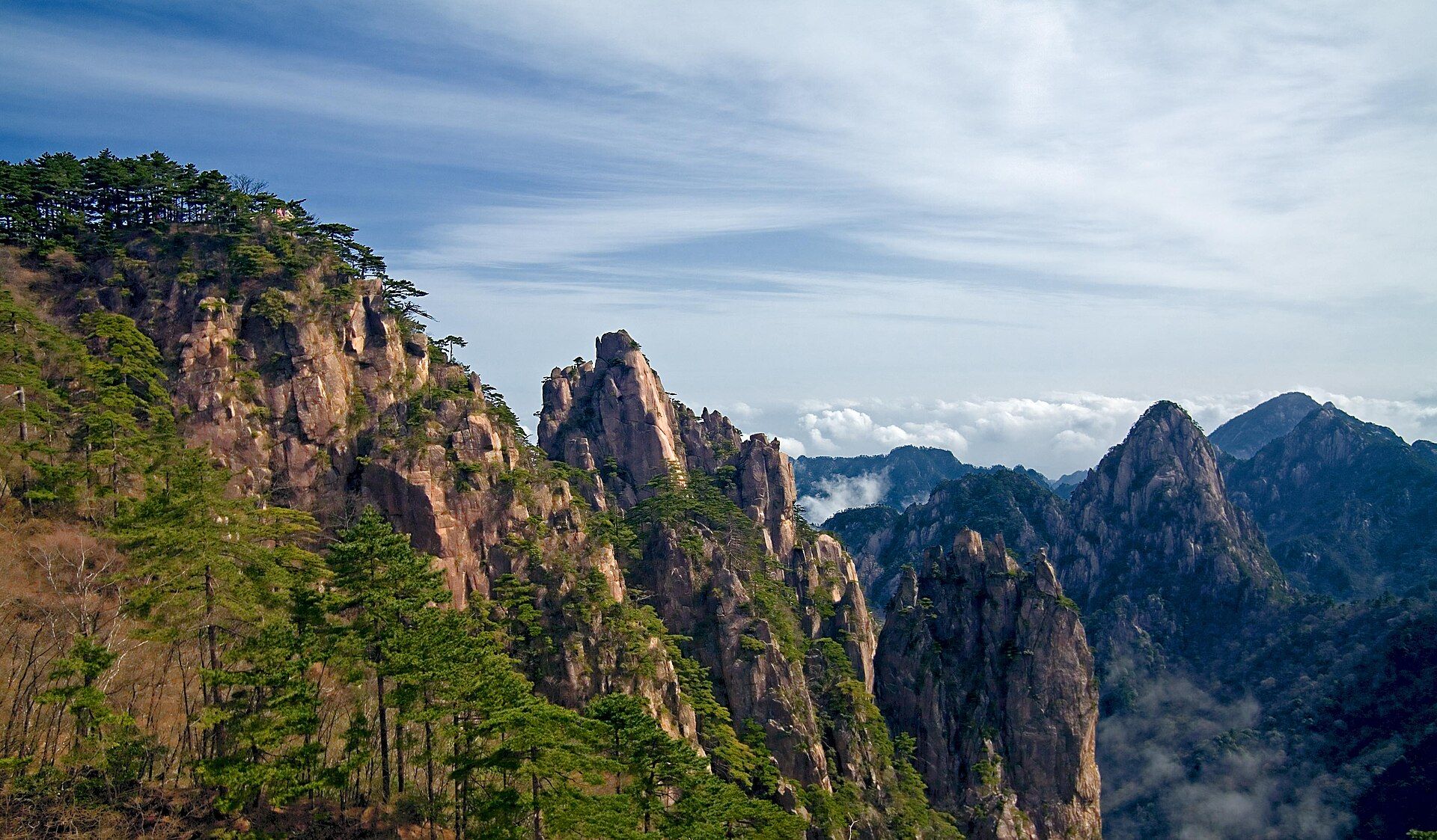
Zhangjiajie, in the Wulingyuan area of Hunan, is a forest of more than 3,000 quartzite-sandstone pillars, some over 200 metres tall. Huangshan, the Yellow Mountains of Anhui, is a range of granite peaks to about 1,860 metres with pines growing from bare rock, the scenery behind centuries of Chinese landscape painting. Zhangjiajie is a large park you move around by shuttle, lift and cable car. Huangshan is a mountain you go up, ideally for a night on the summit.
Zhangjiajie
A forest of floating sandstone pillars
Wulingyuan holds more than 3,000 near-vertical pillars and peaks of quartzite sandstone, some over 200 metres tall, left standing as water and freeze–thaw weathering wore away the fractured rock around them. Cloud and forest often wrap the pillars so they seem to hover. Glass platforms, the Bailong outdoor elevator, cable cars and clifftop trails carry visitors among and above them.
- A landscape that looks like nowhere else — thousands of free-standing pillars
- Easy walking: paved paths, lifts and shuttles link the viewpoints
- Several sectors to spread out over two or three days
Huangshan
Granite peaks, pines and seas of cloud
Huangshan's sharp granite spires, gnarled pines clinging to bare rock and seas of cloud lapping at the summits have drawn painters, poets and pilgrims for well over a thousand years. Its 'four wonders' are its pines, rocks, cloud seas and hot springs. Cable cars climb to stone paths along the high ridges, where summit hotels let you watch sunrise with the peaks floating above the cloud.
- Sunrise above a sea of cloud from the summit ridge
- The classic Chinese landscape-painting scene, in granite and pine
- Closer to Shanghai — about half a day away
Head to head
| What matters | Zhangjiajie | Huangshan |
|---|---|---|
| The scenery Edge: Toss-up | Thousands of separate sandstone columns rising from subtropical forest, seen from above and between. | A connected range of granite peaks and ridges with wind-shaped pines, best seen above the clouds. |
| Getting there Edge: Huangshan | Fly or take high-speed rail to Zhangjiajie in Hunan — most of a day from Beijing or Shanghai. | Fly to Huangshan or take high-speed rail to Huangshan North — about half a day from Shanghai. |
| Time needed Edge: Huangshan | Two to three days; the park is far larger than most people expect. | Two days, with a night on the summit for sunset and sunrise. |
| Effort Edge: Zhangjiajie | Moderate. Many steps, but lifts and shuttles do the climbing; the day is long rather than hard. | Strenuous if you walk: thousands of steep stone steps, exposed in places. Cable cars cut out much of the climb. |
| Tickets Edge: Toss-up | A multi-day park ticket with fingerprint registration; the Bailong elevator, cable cars and the glass bridge in the neighbouring canyon are ticketed separately. | A park ticket plus separate cable car tickets, priced differently in peak and off-peak seasons. Summit hotels must be booked far ahead. |
| Best season Edge: Toss-up | April–June and September–November for mild weather and mist. | April–May and September–November for clear light and cloud seas; winter brings snow-frosted pines. Summer is often hazy. |
| Crowds Edge: Toss-up | Very heavy in Chinese holidays and through summer, with long shuttle queues. Early entry and quieter sectors such as Yangjiajie help. | Extremely busy during public holidays, with cable car queues of hours and bottlenecks on narrow paths. Weekdays outside holidays are much calmer. |
Which should you choose?
Choose Zhangjiajie if…
…you want the most otherworldly scenery, prefer lifts and shuttles to long climbs, and can give it two or three days.
Choose Huangshan if…
…you want sunrise above the clouds, the classic painted-landscape view and a real mountain walk, or are travelling from Shanghai.
The honest verdict
If you have only one, choose by the experience you want. Zhangjiajie is the stranger landscape and the easier day out; Huangshan is the more beautiful mountain and the better overnight, but asks more of your legs.
Huangshan is the easier add-on to a Shanghai or Hangzhou trip. Zhangjiajie fits better with a route through Hunan or towards Guilin.
Whichever you pick, avoid Chinese public holidays. At both parks, holiday crowds turn the best viewpoints into queues.
Wonders mentioned here
Added